


More news on this day
Severe disruption on Thursday evening out of London Waterloo left thousands of commuters stranded in the capital, prompting South Western Railway to tell affected passengers they could book taxis home, in some cases for journeys of well over 100 miles, and reclaim the fares.
Get the latest news straight to your inbox!
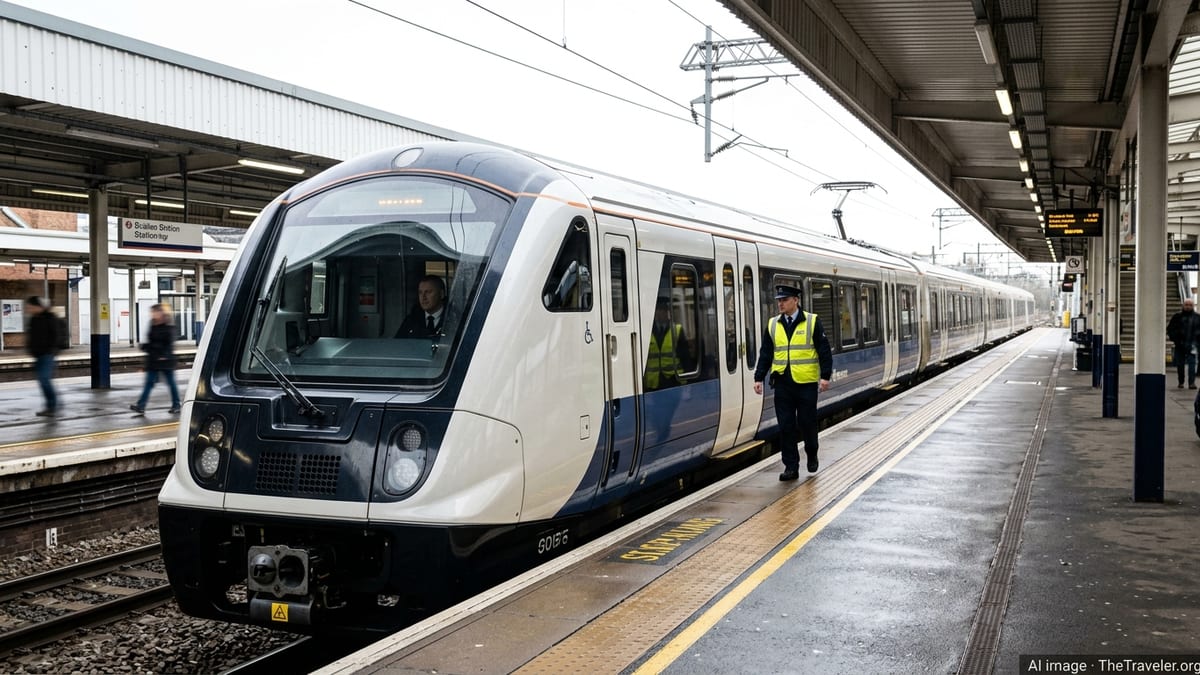
Police incident near Woking triggers rush-hour meltdown
Publicly available information shows that the disruption began during the Thursday 22 October evening peak, when a police incident between Woking and Brookwood in Surrey brought all lines to a standstill on one of the busiest sections of the South Western Railway network.
Coverage in London-based outlets describes services from London Waterloo towards Woking, Guildford, Basingstoke, Salisbury and the south coast being halted or heavily delayed as trains were held outside stations and platforms quickly filled with evening rush-hour crowds. Some passengers reported being stuck at Waterloo for hours as departure boards showed a succession of cancellations and severe delays.
National Rail updates later confirmed that lines reopened in the early hours of Friday, with disruption officially declared over shortly before 4 a.m., leaving many travellers facing late-night arrivals or forced to abandon their rail journeys altogether in favour of alternative transport.
Separate reports indicated that London Euston also experienced overcrowding on Thursday evening, with images circulating of hundreds of passengers waiting on the main concourse for news of northbound departures, underscoring how a single incident can cascade across the wider rail network.
Free taxis offered for journeys of up to 170 miles
According to multiple published reports, South Western Railway responded to the Waterloo disruption by authorising stranded customers to book their own taxis from the capital and claim the cost back, rather than waiting for limited rail replacement buses or heavily disrupted later services.
Messages shared by passengers show the instruction applied to journeys from London Waterloo to a wide range of destinations, including Woking, Guildford, Alton, Basingstoke, Salisbury, Southampton Central, Bournemouth, Weymouth and Exeter St Davids. Coverage in UK news outlets notes that this effectively meant taxi journeys of up to around 170 miles could be claimed on expenses in some cases.
Reports indicate that replacement buses were arranged from Woking later in the evening, but the scale of the disruption and the distances involved meant that taxis were often the fastest way for people to complete their trips home, particularly for those heading beyond key interchange stations.
The scale of the offer has drawn attention because, while train operators do sometimes arrange taxis during major disruption, authorising thousands of passengers to book long-distance cabs independently and seek reimbursement is considered unusual on such a busy commuter corridor out of London.
How passengers can claim back taxi and delay costs
Information shared by South Western Railway and summarised in news coverage sets out a detailed process for travellers seeking refunds for taxi fares incurred during the disruption. To make a claim, passengers are expected to provide their full contact details, the date and time of travel, the starting and finishing stations, and a description of what happened to disrupt the journey.
They must also supply copies of their valid train tickets and an itemised taxi receipt showing the pick-up and drop-off locations and the total fare paid. Reports indicate that claims are being handled through the operator’s standard customer relations and Delay Repay channels, with taxi reimbursement treated separately from compensation for delayed rail services.
Guidance based on the National Rail Conditions of Travel explains that when disruption prevents a passenger from completing a journey, the train company responsible is expected, where reasonably possible, to provide alternative transport or accommodation. Published examples from previous incidents show that this can include pre-booked taxis, organised coaches, or covering reasonable taxi costs claimed back after the event.
Consumer advice shared in public forums and travel columns recommends that passengers keep all original tickets and receipts, take note of staff announcements, and submit claims as soon as possible after travel. Where disputes arise over whether a fare is “reasonable,” claims can be escalated through the operator’s complaints process and, ultimately, to the Rail Ombudsman.
What the disruption means for UK rail reliability
The events at Waterloo have reignited debate about the resilience of Britain’s rail network and the experience of passengers when major incidents strike at peak times. Industry-commissioned research published earlier in 2024 highlighted recurring challenges around communication, on-the-day decision making, and the availability of alternative transport when large numbers of people are stranded.
That research, examining several past incidents involving stranded trains and overcrowded London termini, noted that sourcing enough taxis at short notice is often difficult, particularly late at night or in bad weather. Passengers have previously reported confusion at stations as crowds compete for limited cabs, as well as uncertainty over whether fares will be reimbursed in full.
Commentary following the latest Waterloo disruption points out that, while authorising long-distance taxis can help individual travellers get home, it is an expensive and logistically complex solution that raises questions about how the rail industry plans for and manages rare but high-impact events. Observers have also stressed the importance of clear, consistent messaging so passengers understand when they are entitled to book their own transport and reclaim the cost.
Despite ongoing investment in signalling upgrades, new trains and digital information systems, the incident between Woking and Brookwood demonstrates that a single problem on a busy main line can still bring one of London’s key commuter routes close to a standstill, with consequences rippling across the wider network and onto the road system.
Practical guidance for travellers caught up in similar chaos
Travel advice drawn from the National Rail Conditions of Travel and recent incident reporting suggests several concrete steps for passengers who find themselves stranded by disruption out of London or other major hubs. First, travellers are encouraged to speak to station or train staff as soon as it becomes clear they may not reach their destination that night, as arrangements for taxis or accommodation are often coordinated on the ground.
Second, passengers considering booking their own taxi are advised to choose standard, reasonably priced services rather than premium options, and to obtain a printed or digital receipt showing the full journey details. Keeping screenshots of journey planners, disruption alerts and any operator messages about authorised alternative travel can also help support later claims.
Third, travellers can normally combine taxi reimbursement with standard Delay Repay payments where eligibility rules are met, although the two processes may require separate claim forms or online submissions. Publicly available information from operators emphasises that each case is assessed individually, so outcomes may vary depending on circumstances such as the time of night, the availability of replacement services and the distance travelled.
For regular commuters and visitors alike, the disruption at Waterloo serves as a reminder to build contingency time into evening journeys, especially during periods of severe weather or when major events place additional pressure on the network. It also underlines the value of understanding passenger rights in advance, so that when rail chaos does strike, travellers are better prepared to secure a safe route home, whether by train, coach or taxi.