


More news on this day
Evening rush hour turned into an ordeal for thousands of rail passengers leaving London, as widespread disruption around Waterloo left commuters stranded for up to five hours and relying on taxis to get home.
Get the latest news straight to your inbox!
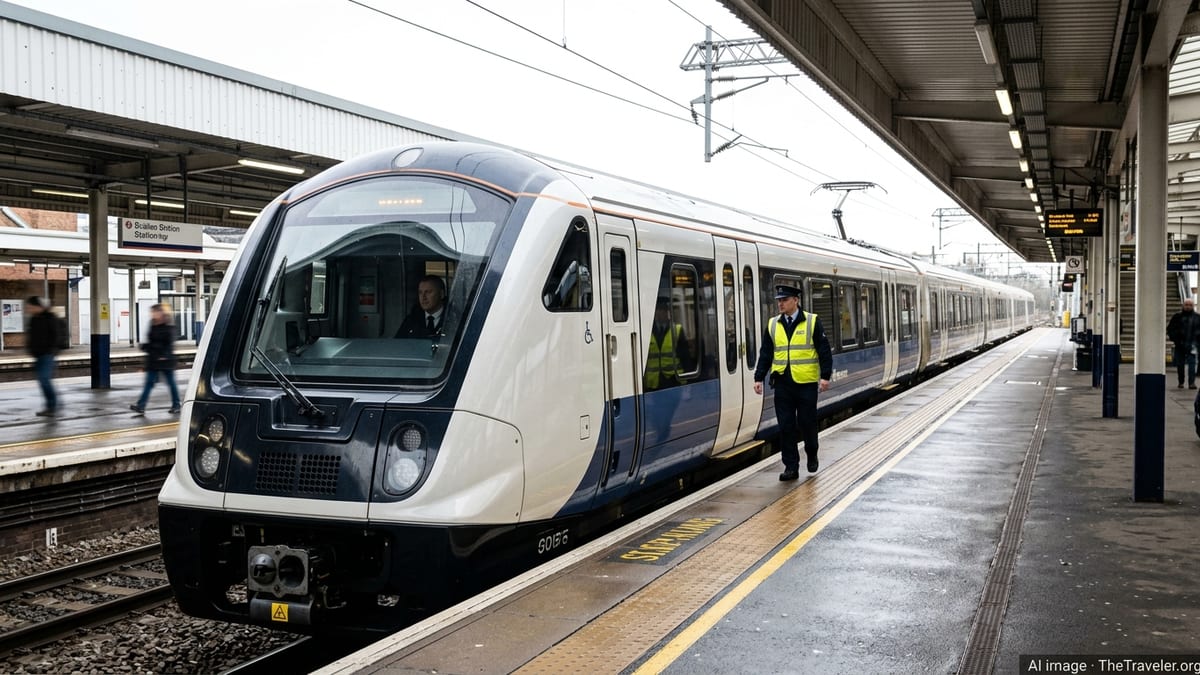
Major disruption at London Waterloo halts evening rush
Severe disruption on routes serving London Waterloo on Thursday 22 October 2026 brought large parts of the South Western Railway network to a standstill, according to live service information and media reports. Services towards Surrey, Hampshire, Dorset and the south west of England were heavily affected, with trains cancelled or terminating short of their destinations.
Coverage in London-based media indicates that a combination of signalling problems and an incident near Woking led to lines being blocked in the busy evening peak, affecting services between Waterloo and key hubs such as Guildford, Basingstoke, Salisbury and Southampton. Publicly available disruption feeds described the situation as a major incident, with third-rail power switched off on parts of the route and services unable to move for extended periods.
The knock-on impact was felt across the wider network, with journey planners advising passengers not to attempt travel on some routes and to expect substantial delays on others. Some commuters reported being held on trains outside London terminals before being taken back to the capital when it became clear services could not continue.
By later in the evening, operators were still warning that disruption would continue into the late night period, with replacement buses running on some stretches and a limited number of services able to depart the capital.
Free taxis authorised for long-distance journeys home
As the scale of the disruption became clear, South Western Railway issued guidance confirming that stranded passengers could arrange their own taxis and claim the cost back for travel between London Waterloo and a wide list of destinations. According to published information, the authorisation covered routes as far as Exeter St Davids and Weymouth, which are roughly 170 and 140 miles from London respectively.
The instruction meant that passengers who would normally rely on late evening trains to reach towns and cities across the south and south west were effectively told to complete their journeys by road. Reports indicate that alternative transport included both rail replacement buses from Woking, Basingstoke and Southampton, and taxi journeys booked directly by passengers and later reclaimed from the operator.
Information shared through disruption-tracking services shows that ticket restrictions were relaxed, with tickets dated for Thursday 22 October accepted on Friday 23 October because of the scale and duration of the delays. This allowed those who abandoned attempts to travel on Thursday evening to rearrange their journeys without penalty the following day.
Publicly available material on passenger rights notes that under the National Rail Conditions of Travel, operators are expected, where they reasonably can, to provide onward transport or overnight accommodation when disruption prevents completion of a journey. In this case, the extensive taxi authorisation represented a notable example of that policy being applied over long distances from London.
Passengers report waits of up to five hours
Accounts shared through social media and online forums describe passengers waiting for several hours at London Waterloo and at intermediate stations. One commuter described arriving in the late afternoon and still searching for a route home in the evening, while others reported journeys that stretched to five hours or more once extended waits and diverted road transport were taken into account.
Images posted online showed crowded concourses at Waterloo and long queues forming near taxi ranks and information points. Rail-focused discussion forums highlighted the difficulty of sourcing enough road vehicles at short notice to carry large numbers of passengers to destinations spread across southern England.
Some travellers described being advised to take any train that was running to an intermediate hub such as Woking or Basingstoke, only to find services there also severely limited. Others opted to remain in London overnight and travel the next morning, taking advantage of the relaxed ticket-validity rules.
While experiences varied, the consistent picture from publicly available accounts is that the combination of unexpectedly long waits, changing advice, and the need to compete for scarce taxis or replacement buses turned routine commutes into late-night odysseys.
Context: a challenging period for rail reliability
The Waterloo disruption adds to a series of recent rail problems around London and the south east. In the week leading up to the incident, National Rail’s live updates recorded separate issues at locations including Vauxhall, Hackney Downs and Reading, affecting services into other major London terminals.
Industry reports and independent analyses have highlighted stranded passengers as a recurring concern, particularly when trains are held between stations or when incidents occur late in the day and cut off the last scheduled services. A report commissioned by the Office of Rail and Road in 2024 pointed to difficulties passengers face in arranging onward travel from major London stations during severe disruption, including competition for taxis and limited information about entitlements.
Campaign groups and passenger-focused services have responded by publishing detailed guides on what travellers can expect when their final train of the day is cancelled. These guides draw on the National Rail Conditions of Travel and individual train company policies, noting that while compensation for delays is widely publicised, entitlement to alternative transport or accommodation when stranded is less clearly understood.
The events at Waterloo underline that, when large volumes of travellers are affected at once, even generous policies can be challenging to deliver in practice, particularly where long-distance taxi journeys from London are involved.
What disrupted rail travellers from London should know
For passengers planning to travel from London in the coming days, operators and National Rail continue to advise checking journey planners up to the time of departure, as residual disruption can linger after major incidents. This is especially important where engineering works or separate infrastructure projects, such as resignalling schemes on parts of the Wessex route, are already altering normal timetables.
Publicly available guidance indicates that if disruption prevents completion of a journey and there is no reasonable rail alternative, passengers can request assistance with alternative transport or overnight accommodation. In practice, this may involve being directed to scheduled rail replacement buses, being placed into prebooked taxis, or, as in the latest Waterloo incident, being authorised to book a taxi independently and claim back the cost.
Travellers are encouraged by consumer advice bodies to retain tickets, taxi receipts and any written or digital confirmation of authorisation when seeking reimbursement. Where major problems originate or end at London terminals such as Waterloo, Paddington or Liverpool Street, demand for taxis and hotel rooms can become intense, making it important to document expenses clearly if claims need to be submitted after the event.
While Thursday’s disruption has since eased, the experience of passengers stranded for several hours after leaving central London highlights the value of understanding both timetable information and passenger rights before setting out, particularly during the busy autumn period when the rail network around the capital is under heavy pressure from commuters and long-distance travellers alike.