


More news on this day
Updated figures following the fatal train collision near Bedford indicate that 28 people remain in hospital, including nine in critical condition, as investigators continue to examine how two London-bound services ended up on the same track.
Get the latest news straight to your inbox!
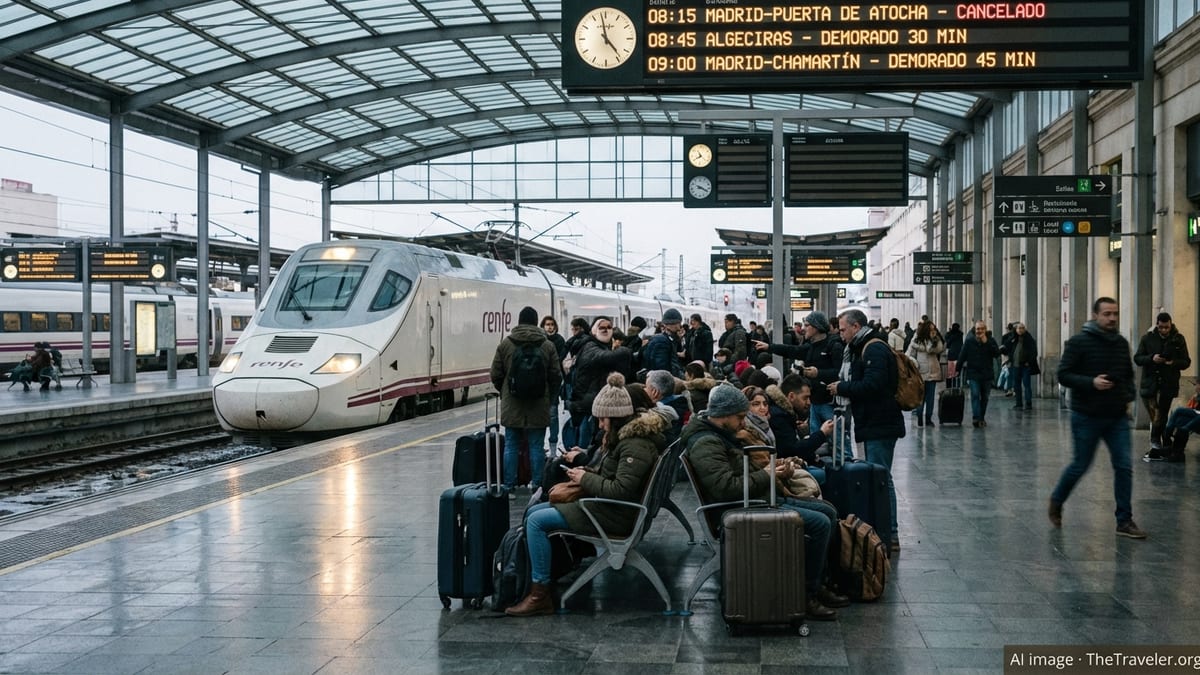
Revised hospital numbers after major rail emergency
According to publicly available information from British Transport Police and regional health services, a total of 33 people were taken to hospital following the collision between two East Midlands Railway services south of Bedford on Friday 19 June. Subsequent updates over the weekend indicate that 28 patients are still receiving hospital care.
Reports indicate that nine of those patients are in critical condition, with others described as having serious but not life-threatening injuries. Earlier figures had suggested a higher number of serious cases, reflecting the scale of the initial emergency response and the evolving clinical picture as patients were assessed.
Dozens more passengers were treated at the scene or in outpatient facilities for minor trauma, shock and non-life-threatening injuries. Rail-focused outlets and regional media report that more than 80 people received some form of medical treatment in the immediate aftermath of the crash, underlining its severity despite the relatively low fatality count compared with historic rail disasters.
The updated hospital figures have become a focal point for understanding the human impact of the incident, as rail services gradually resume and attention turns from immediate rescue efforts to longer-term recovery and investigation.
How the Bedford collision unfolded
Published coverage from national and regional outlets describes how the crash occurred on Friday afternoon on a key north–south corridor linking the East Midlands with London St Pancras. Both trains were operating southbound, one from Corby and the other from Nottingham, when they collided on the same line near Bedford South junction.
Images from the scene show the leading cab of one train heavily damaged after striking the rear of the other service. Rail specialist reporting indicates that a Class 360 unit ran into the back of a more modern intercity unit, leaving the front driving cab of the rear train bearing the brunt of the impact.
Emergency calls prompted a large-scale response from police, fire and ambulance services across Bedfordshire and surrounding counties. Air ambulances, hazardous area response teams and multiple road ambulances were deployed to a location that is relatively constrained by surrounding infrastructure, complicating access for heavy rescue equipment and medical teams.
The collision was quickly declared a major incident, with local hospitals activating surge plans to cope with a sudden influx of casualties. Public information released on Friday evening and Saturday morning stressed that residents should avoid emergency departments unless urgently needed, in order to free capacity for crash victims.
Victims, families and the wider rail community
One of the two train drivers died at the scene, according to widely shared police statements cited across national and international reporting. The driver’s death has resonated strongly within the UK rail community, where fatal incidents involving operating staff are comparatively rare.
Rail industry publications and online forums reflect a wave of tributes from colleagues, with many commentators highlighting the safety record of modern passenger services and the particular risks borne by front-line operating staff in rare high-impact collisions. The Bedford crash has prompted renewed discussion among drivers and signallers about cab protection standards, braking distances and the psychological toll of near misses and major incidents.
For passengers, accounts collated by broadcasters and newspapers describe scenes of sudden impact followed by confusion in darkened carriages, with people thrown from their seats and luggage strewn along the aisles. Several travelers spoke of assisting fellow passengers with visible fractures and head injuries while waiting for rescue teams to arrive.
Local communities in and around Bedford have begun to respond with practical support, including offers of accommodation for stranded passengers and informal fundraising efforts for those seriously injured. Community reaction, as reflected in regional media, emphasizes both shock at the severity of the crash and relief that the casualty toll was not even higher given the number of people on board at peak travel time.
Investigation focuses on signals and safety systems
Accident investigators from the Rail Accident Investigation Branch are now examining the sequence of events that led to two trains occupying the same section of track. Early specialist commentary in rail media suggests that attention is likely to focus on signalling at Bedford South, including whether a signal was passed at danger or whether a technical malfunction contributed to the collision.
Reports indicate that both trains were controlled by conventional colour-light signalling, with additional train protection systems intended to prevent overspeeding or signal overruns. Industry analysts writing over the weekend note that investigators will review signal aspects, data recorder outputs, braking performance and the condition of the track and rolling stock to reconstruct the approach to the collision point.
Transport-focused outlets highlight that the line forms part of a critical intercity and commuter artery into London, handled by a mixture of modern intercity sets and older electric units. The combination of relatively high line speeds, dense traffic and junction complexity around Bedford means that any loss of separation or signalling irregularity can have significant consequences.
Investigators are also expected to look at how information was shared between control centres, signallers and train crews on the day, as well as any temporary restrictions in place due to engineering work or earlier disruption. While formal findings are not expected for some time, preliminary updates are anticipated to address immediate safety lessons if any urgent issues are identified.
Travel disruption and gradual service restoration
In the hours after the crash, rail operators suspended services through the affected section, with long-distance and commuter trains either cancelled, diverted or subject to severe delays. Passenger information shared by East Midlands Railway and other operators over the weekend points to a phased reopening of lines as damaged rolling stock is removed and infrastructure checks are completed.
Travel reports for the corridor between Bedford, Luton and London St Pancras describe residual delays and crowding on alternative routes, particularly on nearby Thameslink services and parallel motorway corridors. Many travelers heading to or from the East Midlands and South Yorkshire encountered extended journey times and multiple changes as operators worked around the blocked section.
As of Monday, published journey planners show a gradual normalization of timetables, although some short-notice cancellations and speed restrictions remain while engineers complete inspections. Travel advice continues to recommend checking services before departure and allowing extra time for connections, especially during peak hours.
For the wider rail network, the Bedford crash has served as a reminder of how a single high-impact incident at a busy pinch point can ripple across hundreds of miles of track and affect tens of thousands of journeys. The latest hospital figures, confirming 28 people still being treated, keep attention firmly on the human dimension of that disruption as inquiries continue.