


More news on this day
August 2026 is shaping up as a pivotal month for the global rail industry, with a mix of high speed corridors, urban rail extensions and digital upgrades moving from planning tables to implementation.
Get the latest news straight to your inbox!
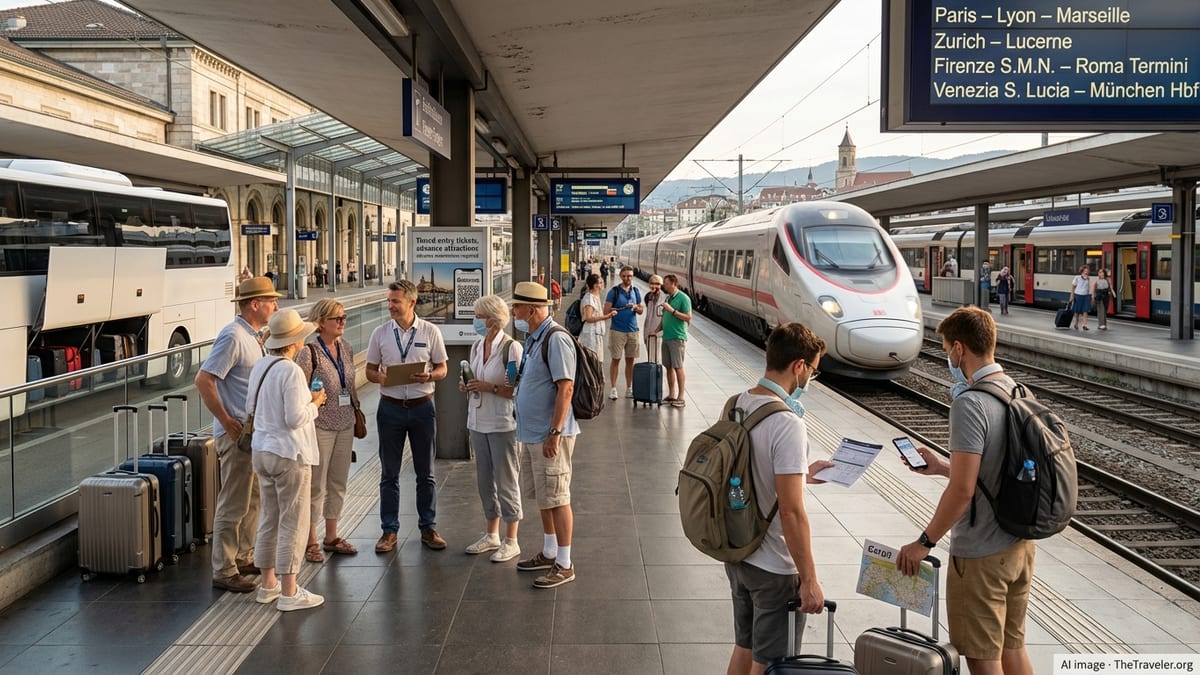
High speed corridors advance in Europe and Asia
Recent coverage in specialist rail media indicates that several high speed projects in Europe and Asia are approaching critical milestones during August 2026. Governments and infrastructure managers are aligning funding, procurement and construction schedules to bring new corridors into service over the next decade, reflecting continued confidence in long distance rail as an alternative to short haul air travel.
In Europe, work linked to the wider network of transcontinental corridors is progressing through a sequence of detailed design, tunnelling and systems contracts. Publicly available information suggests that contractors are focusing on complex civil works, including base tunnels and long viaducts, in order to secure future journey time savings between major capitals and regional hubs.
Across Asia, national railway operators are preparing for the introduction of additional high speed services on existing corridors, supported by incremental upgrades to track, electrification and signalling. Reports from trade publications highlight that rolling stock orders placed earlier in the decade are now feeding into fleet acceptance and testing programmes, with manufacturers concentrating on energy efficiency and higher capacity interiors.
Analysts following the sector note that these high speed schemes are increasingly framed in terms of regional development and climate objectives, rather than purely as flagship engineering projects. As a result, there is growing emphasis on integrating new lines with conventional networks, urban transport and airports, to spread the benefits more widely.
Urban and suburban rail networks expand capacity
August 2026 also sees continued momentum behind metro, light rail and suburban rail expansion, particularly in fast-growing cities. According to recent project updates collated by industry outlets, several metropolitan areas are advancing new lines and extensions intended to relieve road congestion and support denser, transit-oriented growth.
In Europe, municipal transport authorities are pushing ahead with tramway modernisation and light rail schemes that replace or complement heavily used bus corridors. These projects often combine track renewals with improvements to streetscapes, adding segregated alignments, priority at intersections and better facilities for pedestrians and cyclists along the route.
In Latin America and parts of Asia, automated metro lines continue to feature strongly in investment plans. Public documents and project briefings point to the procurement of driverless trainsets, platform screen doors and upgraded control centres, as cities prioritise frequent, high-capacity services on radial lines connecting residential districts with employment zones.
Commuter rail corridors serving larger conurbations are also being reconfigured to act more like urban metros, with higher frequencies, modern signalling and step-free access at stations. This trend is particularly visible in regions where historic main lines are being repurposed to accommodate both regional and urban services on shared infrastructure.
Rolling stock orders focus on efficiency and flexibility
Rolling stock manufacturers are using the late summer period to advance deliveries and complete testing of new fleets ordered earlier in the 2020s. Coverage in Railway Gazette International and other titles highlights an emphasis on modular train platforms, allowing operators to tailor configurations for different routes and service patterns while keeping lifecycle costs under control.
Electric multiple units remain the primary focus for main line and suburban operators, supported in many cases by long term financing packages arranged through public investment banks or leasing companies. Technical specifications published by suppliers underline efforts to cut energy consumption through lightweight bodyshells, regenerative braking and improved traction systems.
At the same time, manufacturers are ramping up production of alternative traction fleets, including battery and hydrogen-powered multiple units, for use on non-electrified or partially electrified lines. Rail industry reports indicate that these trains are being positioned as a bridge solution, enabling decarbonisation of regional services where full electrification would be prohibitively expensive or slow to deliver.
Interior design continues to evolve as operators respond to shifting passenger expectations around comfort, accessibility and on-board connectivity. Many new fleets entering service over the next few years are specified with flexible seating layouts, enhanced luggage space and upgraded passenger information systems, reflecting the growing importance of customer experience in competitive markets.
Digital signalling and automation reshape operations
Another strand of activity in August 2026 concerns the continued rollout of digital signalling and automation technologies. Recent project summaries in the technical press describe a steady expansion of communication-based train control and European Train Control System deployments, which are intended to unlock capacity and improve punctuality on heavily used routes.
Infrastructure managers are coordinating signalling upgrades with track renewals and station modernisation, seeking to minimise disruption while introducing more sophisticated traffic management tools. Supplier briefings stress that integrated control centres, real-time condition monitoring and decision-support software are becoming standard features of new signalling programmes.
Automation is also advancing beyond urban metro applications. Trials of driver assistance and partial automation functions on main line networks are being expanded, with the aim of supporting consistent driving styles and reducing energy use. Publicly available project information suggests that early results are encouraging, although full automation on open main line routes remains a longer-term prospect.
Cybersecurity is an increasingly prominent part of these programmes, as railways connect more operational equipment and back-office systems to digital networks. Industry analyses emphasise the need for resilient architectures, staff training and clear incident response procedures to safeguard both safety-critical systems and passenger data.
Policy, funding and climate commitments frame investment
The policy context for rail investment is also evolving as governments refine long term climate and mobility strategies. In Europe, regulatory reforms adopted over the past decade continue to influence how infrastructure managers and train operators structure their businesses, with an ongoing focus on open access and competitive tendering in some markets.
National recovery and resilience plans, along with green investment frameworks, are providing additional channels of finance for rail infrastructure and rolling stock. Public documents outlining these programmes stress the role of rail in cutting transport emissions, strengthening regional connectivity and supporting domestic manufacturing supply chains.
Beyond Europe, several countries are revisiting national rail strategies to prioritise freight capacity, cross-border links and better integration with ports and logistics hubs. Reports from international financial institutions highlight growing interest in multi-country corridors that combine passenger and freight functions, often supported by blended finance models.
Across all regions, the emerging picture in August 2026 is of a sector that is investing heavily in both physical assets and digital systems, while navigating complex regulatory and funding environments. Trade outlets such as Railway Gazette International are tracking these parallel developments closely, underscoring the central role of rail in broader debates about sustainable transport and economic resilience.