


Airport parking comparison sites like Parkos promise to take the hassle out of leaving your car at the airport. In many cases they do exactly that, surfacing affordable off-site car parks that would be hard to find on your own. Yet Parkos is not a perfect fit for every traveler or every trip. For some people, the way Parkos operates as an intermediary rather than a parking operator can introduce extra risk, confusion, or cost. Understanding where things can go wrong, and which types of travelers are most exposed, will help you decide whether to book through Parkos or look at alternatives instead.
Get the latest updates straight to your inbox!
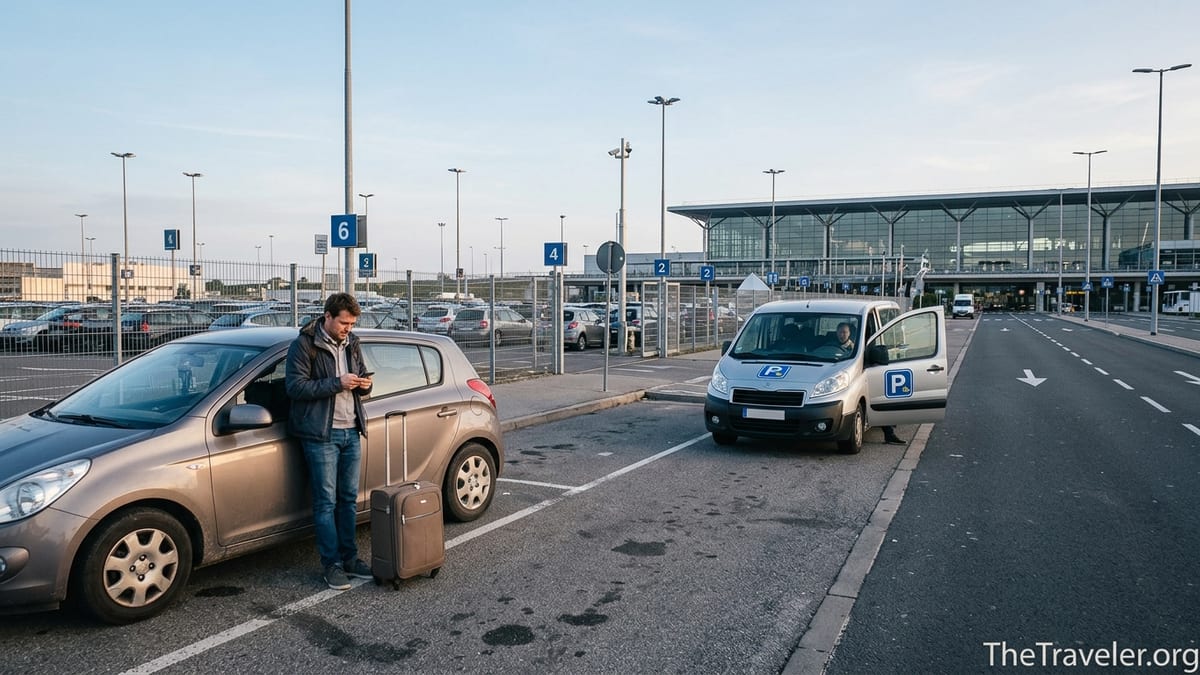
How Parkos Works and Where the Risk Really Lies
Parkos is an airport parking comparison and booking platform, not a car park operator. When you search for parking at an airport such as Barcelona, Paris or Seattle, Parkos displays a list of independent parking providers with prices, distance to the terminal, shuttle details and user ratings. You pay Parkos at the time of booking, receive a confirmation, and on the day of travel you drive directly to the third party car park, which is responsible for storing your vehicle and providing any shuttle or valet service.
This marketplace model is not unusual. UK sites like Holiday Extras and Purple Parking, and European platforms such as ParkVia, work in a similar way, connecting travelers with dozens or hundreds of off-airport operators around major hubs like Heathrow, Gatwick, Frankfurt or Geneva. The upside is choice and potentially lower prices versus official airport parking. The downside is that your experience depends heavily on the local operator you are matched with, and when something goes wrong you may find yourself bounced between Parkos and the car park about who is responsible.
Recent user reports and review summaries paint a mixed picture. On Trustpilot, Parkos has an overall rating in the mid-3 out of 5 range, with a noticeable share of 1-star reviews that describe serious issues such as arriving to find that a prepaid lot was full or apparently non-existent, damage to vehicles, shuttles not operating as advertised, and slow or unhelpful responses when customers tried to claim refunds or compensation. At the same time there are plenty of positive reviews, including from travelers who parked for one or two weeks near London, Amsterdam or Barcelona without any issues, praising quick shuttles and friendly staff.
The pattern is clear: Parkos can work well if the underlying car park is well run and you never need after-sales support. It can be risky if your trip is complex, your tolerance for disruption is low, or you are relying on strong customer service in case plans change.
Travelers Who Need Rock-Solid Reliability
If your number one priority is reliability rather than price, Parkos may not be the right tool. This includes travelers catching once-a-day long-haul flights, people connecting to cruises, or parents traveling solo with children who cannot afford last-minute surprises. Several Parkos reviewers describe turning up to a lot near secondary European airports and finding no staff on site, no shuttle operating despite the confirmation stating 24/7 service, or being asked to move to a different location at short notice. In one widely shared complaint from North America, a traveler parking near Seattle-Tacoma airport reported that the hotel-based shuttle promised in their Parkos confirmation did not operate in the early morning hours they needed, forcing them to pay out of pocket for taxis both ways.
In contrast, if you book directly with an official airport car park at a place like Heathrow, Schiphol or Frankfurt, you are typically dealing with a facility that is physically on airport property, with clearly signposted entry and exit, 24-hour staffing and more consistent shuttle operations. You might pay considerably more, but you all but eliminate the risk of the car park being closed or unreachable when you arrive. Some long-standing intermediaries such as Holiday Extras in the UK and large brands like Purple Parking have also invested heavily in vetting and auditing their partners, and have multi-decade track records with millions of bookings, which can provide extra peace of mind if you still prefer a comparison site.
If you are traveling for something you absolutely cannot miss, such as a wedding, specialist medical appointment or once-in-a-lifetime safari, paying extra to book directly with the airport or a highly established operator is often a smarter choice than chasing the lowest rate through Parkos.
Drivers With High-Value or Special Vehicles
Another group that should think twice before using Parkos is anyone parking a high-value or specialist vehicle: luxury sedans, sports cars, classic cars, campervans or heavily modified trucks. Many Parkos-listed car parks are small independent businesses on industrial estates or farmland outside airport boundaries. Reviews and traveler reports mention cars being parked very close together on gravel or dirt, moved multiple times during a trip, or stored on overflow land that does not resemble a conventional paved lot.
One recent Trustpilot review described a customer returning from a European city break to discover roughly €2,000 of damage to their vehicle and struggling to obtain any meaningful assistance. Another reviewer alleged that the lot they had booked through Parkos turned out to be an empty field with no visible security or staff. While these cases do not represent every car park on the platform, they highlight that oversight can be inconsistent and that Parkos itself is rarely the party physically handling your car.
If you drive a new electric SUV with expensive paintwork or a classic car whose parts are hard to replace, you may prefer to book an on-airport multi-storey car park, even if that means paying, for example, 15 to 20 dollars per day instead of under 10 at an off-site lot. At major US airports like Denver or Dallas, or European hubs such as Munich and Zurich, the official garages are usually well lit, covered by CCTV, and you typically keep your keys, reducing the chance of heavy handling. Some long-established comparison brands in markets like the UK and Germany clearly label which partner car parks allow you to keep your keys and provide detailed information on security measures; Parkos listings can vary in the depth and clarity of these details.
The more attached you are to the condition of your car, the more you should be willing to pay for a provider with obvious, transparent security standards and traceable liability. For many owners, that means avoiding opaque aggregators altogether.
Travelers Uncomfortable With Fine Print and Claims Processes
Parkos terms and conditions specify that they act as a booking agent. In practice this means that if your car is damaged, stolen, or your shuttle fails to appear, Parkos will often direct you to pursue compensation with the local parking operator or through your own travel or auto insurance. Several reviewers describe sending emails and documentation to Parkos after problems such as non-existent shuttles or overbooked lots, only to receive delayed responses, requests to contact the operator directly, or no reply at all after initial acknowledgment.
For travelers who are comfortable documenting issues, taking photos, saving receipts and pushing claims through, this might be an annoyance but not a deal-breaker. You can, for example, photograph the state of your car at drop-off, record the company signage, and keep taxi receipts in case you need to argue that the operator breached the service description by failing to provide a shuttle. Over time, persistent customers do sometimes recover partial refunds.
However, many travelers are not inclined to dig through terms or chase cross-border companies for small sums. If you dread the idea of exchanging multiple emails with a Dutch booking platform, a Spanish valet company, and your own insurer over a 60 or 80 dollar dispute, Parkos may not be the best fit. Booking directly with an airport-operated lot or a hotel park-and-fly package often makes responsibility more straightforward: the entity who took your payment is the same one running the car park.
In markets like the UK, established brands such as Holiday Extras or Purple Parking also provide dedicated customer support teams that are easier to reach by local phone numbers and have more reputational incentive to resolve disputes quickly, given their long presence in consumer media and on national comparison sites. If you value clear, local accountability, you may want to prioritise those channels over Parkos.
Last-Minute Planners and Travelers With Fluid Itineraries
Many Parkos offers are designed for travelers with fixed itineraries, such as a seven-night trip departing Friday and returning the following week. If your schedule is likely to change, or you tend to book flights at very short notice, Parkos may not give you the flexibility you need. Some Parkos-listed car parks offer free cancellation up to a certain cut-off time, but policies vary between operators and may be stricter than you expect. In busy periods, such as school holidays at major European airports, it is not unusual for cheaper lots to be non-refundable or to charge fees for date changes.
By comparison, some newer comparison platforms in North America heavily promote free cancellation on most bookings up to 24 hours before check-in, and allow you to see that policy clearly flagged as you compare prices near airports like JFK, LAX or Chicago. Similarly, booking directly through large hotel and parking chains or through online travel agencies often gives more flexible change and cancellation options, especially if you are part of a loyalty program.
A practical example: a traveler flying from New York to Europe on a flexible ticket might need to move their trip forward or back by a day at short notice. If they had booked Parkos parking with a small off-airport lot that only allows changes more than 72 hours in advance, they could end up paying twice for parking. By contrast, an airport-owned long-stay car park or a hotel park-and-fly package booked with a flexible rate might allow free amendments within a much shorter window.
If you know your plans are likely to shift, focus on providers and platforms that highlight flexible terms prominently in the booking flow, and read those conditions in full before paying. That may mean choosing an alternative to Parkos even if the headline daily rate is slightly higher.
When Local or Direct Alternatives Make More Sense
In many cases, travelers can find safer or more transparent deals by looking beyond Parkos to a mix of official airport parking, national comparison brands, and local hotel or parking packages. At UK airports, for instance, sites like Holiday Extras, Airparks and Purple Parking specialise in airport parking and have operated for decades, with clear distinctions between on-airport, park-and-ride, and meet-and-greet services. They often negotiate exclusive rates with providers and publish detailed information on transfer times, security measures, and whether you keep your keys.
Across continental Europe, airports such as Amsterdam Schiphol, Zurich, Frankfurt and Munich run their own multi-storey car parks and long-stay lots that can be booked directly via the airport. While these are rarely the very cheapest option, they offer the reassurance of dealing with a single, well-regulated entity. Some airports also bundle parking with fast-track security or lounge access, which can offset part of the higher price for business travelers who value time and comfort.
In North America, alternative approaches include using hotel park-and-fly packages near major hubs like Newark, O’Hare or Orlando. A traveler might, for example, book a night at a mid-range chain hotel that includes up to 7 or 14 days of parking and a shuttle to the terminal. The nightly room rate plus parking can sometimes undercut on-airport tariffs, while giving you a clearly branded company to deal with in case anything goes wrong. Other travelers rely on large-scale online travel agencies or specialist parking platforms that emphasize transparent fees and extensive user reviews.
For ultra-budget travelers, there are also community-based options in some cities, such as renting private driveways near airports through dedicated apps, or using regional parking companies that sell spaces directly on their own sites. These alternatives come with their own trade-offs, but they remove at least one layer of intermediation, which can simplify communication and claims if necessary.
Red Flags to Watch For If You Do Use Parkos
Even if you decide that Parkos is suitable for a particular trip, there are specific warning signs that should prompt you either to pick a different lot on the platform or to abandon Parkos and book elsewhere. Extremely low prices compared with official airport parking or with well-known competitors should always trigger caution. For example, if on-airport parking at a European capital city airport is pricing at the equivalent of 80 to 120 dollars per week, but a Parkos listing advertises a field 10 or 15 minutes away for less than half that, ask yourself how that operator is covering secure land, staffing and shuttle costs.
Read recent reviews carefully, looking for consistent patterns such as late or missing shuttles at certain times of day, difficulty finding the entrance, or reports of cars being relocated to undisclosed overflow areas. A single angry review might just reflect bad luck, but several similar complaints in the past few months are a strong signal. Pay attention too to how Parkos responds. Brief templated replies without concrete information about investigations or remedies are less reassuring than responses that address specific facts of a case.
Also scrutinise the practical details. If you are landing at 23:00 on a Sunday, make sure the shuttle really operates late into the evening and not just “office hours.” If you are parking in winter at an airport prone to snow, consider whether an unpaved lot is wise. Confirm whether you keep your keys or must hand them over, and check that your own car insurance or travel insurance covers damage or theft from third-party car parks.
Finally, always have a backup plan, particularly at smaller airports where alternative parking may be limited. This could mean budgeting for the possibility of paying for on-airport parking at published drive-up rates if your Parkos booking fails, or identifying a nearby hotel with paid parking as a fallback. Knowing your options in advance turns a potential crisis into an inconvenience.
The Takeaway
Parkos fills a genuine need by making it easier to discover and book off-airport parking at dozens of airports, often at attractive prices. Many travelers use it without incident. However, its role as an intermediary and the variability of local operators mean it is not suitable for everyone. People who require absolute reliability, own high-value vehicles, dislike dealing with claims and fine print, or have flexible itineraries that may change at short notice are often better served by booking directly with airports, established national parking brands, or hotel park-and-fly packages.
Before you book with Parkos, consider what you most value on this particular trip: the lowest possible price, or the highest possible certainty. Compare its offers with at least one or two alternatives at your departure airport, and read recent, detailed reviews rather than relying solely on overall scores. For some travelers and routes, Parkos will be a useful tool. For others, especially those most exposed to operational hiccups or disputes, avoiding Parkos and choosing a more straightforward provider can buy valuable peace of mind.
FAQ
Q1. Is Parkos itself a scam, or are the problems mostly with local car parks?
Most evidence suggests Parkos is a legitimate booking platform, but some of the local parking providers it lists have caused serious problems for customers, including no-show shuttles, poor security and overbooking. The main risk is inconsistent quality and slow resolution when things go wrong, rather than Parkos simply taking money and disappearing.
Q2. Who should definitely avoid using Parkos?
Travelers who cannot risk disruption, such as those catching once-a-day long-haul flights, connecting to cruises, attending important events, or traveling alone with small children, are better off booking directly with official airport parking or very well-established national brands that have clearer accountability and proven reliability.
Q3. Is Parkos a good idea if I drive a luxury or classic car?
Generally no. Many Parkos-listed car parks are basic outdoor lots or fields where cars are parked close together and may be moved several times. Owners of expensive, rare or heavily modified vehicles are usually safer using on-airport multi-storey car parks or premium, well-reviewed operators where security standards and liability are clearly defined.
Q4. How does Parkos compare with other airport parking comparison sites?
Parkos works in a similar way to competitors by listing third party lots with prices and reviews, but it has a smaller footprint and a more mixed recent review profile than some long-established brands in markets like the UK. Other platforms and official airport sites sometimes offer clearer information on security, cancellation terms and whether you keep your keys.
Q5. What are the biggest red flags when looking at a Parkos listing?
Watch out for very low prices compared with airport-operated parking, vague or incomplete shuttle information, lots that require you to hand over keys without explaining where cars are stored, and recent reviews mentioning non-existent shuttles, closed lots or difficulty obtaining refunds. Any of these should prompt you to consider alternatives.
Q6. Can I rely on Parkos customer service if something goes wrong?
Experiences vary. Some travelers report helpful responses, while others describe slow replies, being referred back to the local operator, or struggling to obtain compensation. If strong, proactive customer service is important to you, booking directly with an airport, a large hotel chain or a long-established parking brand may be more reassuring.
Q7. What alternatives should I look at instead of Parkos?
Good alternatives include official airport long-stay or multi-storey car parks, national comparison brands and parking specialists in your country, and hotel park-and-fly packages that include parking and shuttle transfers. In some cities, renting a private driveway near the airport through dedicated platforms can also be an option.
Q8. Is Parkos suitable for last-minute or very flexible travel plans?
Not usually. Many Parkos offers are best for fixed dates and may have stricter cancellation or change policies than you expect. If you book flights at short notice or often change travel dates, you may be better off with official airport parking or providers that highlight flexible or refundable rates.
Q9. Does using Parkos save a lot of money compared with airport parking?
It can, especially at airports where official parking is expensive and there is plenty of off-site competition. In some cases off-airport lots advertised through intermediaries cost roughly half of drive-up on-airport prices. However, those savings come with extra risk, so weigh the potential cost difference against the consequences if something goes wrong.
Q10. How can I protect myself if I decide to book through Parkos anyway?
Choose only car parks with recent, detailed positive reviews, read terms and cancellation policies carefully, take time-stamped photos of your car at drop-off, keep all receipts, and have a backup plan such as knowing the price and location of on-airport parking in case your original lot is unusable. This preparation will not eliminate risk but can make problems easier to resolve.