


More news on this day
Persistent summer rain is hampering the cleanup of a hazardous chemical spill after a freight train derailed near the United States border, disrupting a key trade corridor and triggering fresh concerns over rail safety for travelers moving through the region.
Get the latest news straight to your inbox!
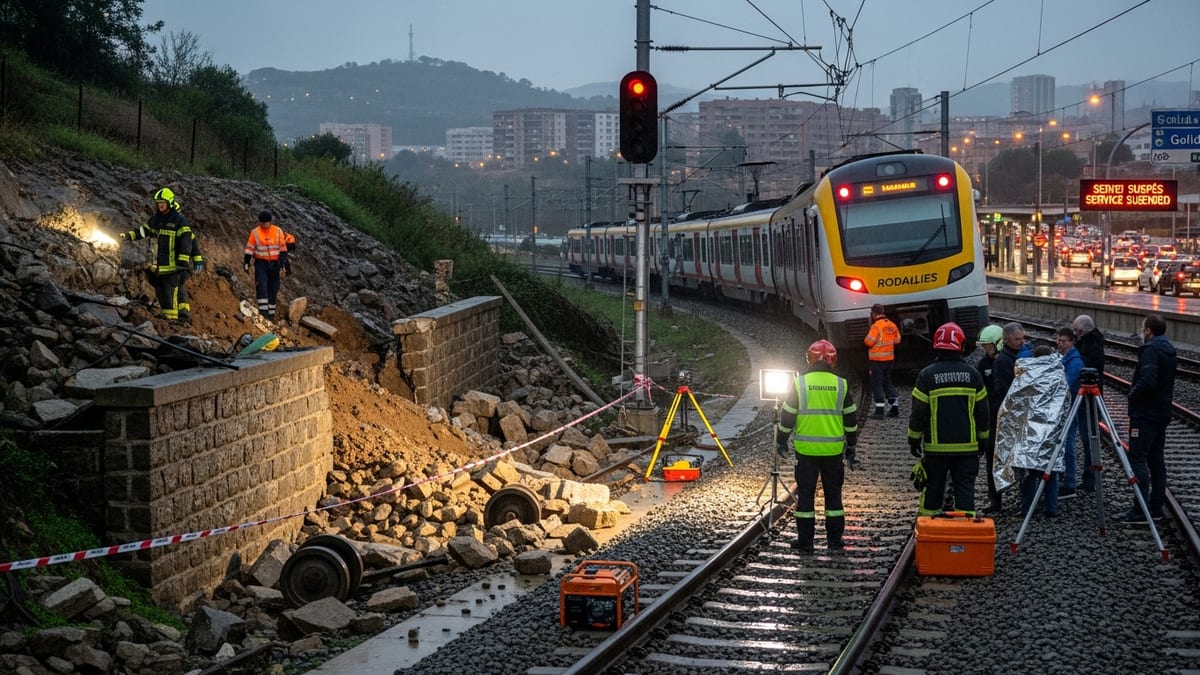
Stormy Weather Complicates Containment Efforts
According to published coverage from regional outlets and transport agencies, the derailment occurred on a mixed-freight train running close to the international boundary, where several tank cars carrying industrial chemicals left the tracks and either leaked or were considered at high risk of leaking. Emergency plans were activated on both sides of the line, with response teams focusing first on stabilizing damaged cars and preventing ignition of flammable cargo.
Initial assessments indicated that at least one tank car released a liquid chemical used in heavy industry, prompting the establishment of safety perimeters and air monitoring. Subsequent rounds of rain have complicated that early work. Publicly available information shows that showers and thunderstorms in the days following the crash repeatedly swept across the site, forcing intermittent pauses in ground operations and raising the risk that spilled product could migrate away from the immediate impact zone.
Specialized crews have placed absorbent booms, temporary earthen berms and portable storage tanks around low-lying areas and drainage channels to intercept any contaminated runoff. However, responders cited in local and national coverage describe a challenging balance between working quickly enough to stay ahead of changing weather and moving slowly enough to avoid disturbing wreckage in ways that could worsen leaks.
Rainfall has also affected visibility and terrain stability along the right-of-way. Softened soil, rutted access tracks and standing water around the derailed consist have all made it more difficult to position heavy cranes and vacuum trucks needed to offload product and remove damaged cars, lengthening the expected cleanup timeline.
Cross-Border Corridor Faces Extended Disruption
The derailment occurred along a corridor that carries a significant volume of cross-border freight and provides a rail alternative to nearby highways used by travelers and commercial transport. Rail dispatch summaries and media reports indicate that traffic has been halted through the immediate area while investigators document the scene and engineers assess damage to track, ballast and signaling systems.
Passenger connections that rely on the same route, or on parallel lines sharing key junctions, are experiencing schedule changes and, in some cases, substitute bus transportation. Travelers heading to border towns or onward into the neighboring country are being advised through carrier alerts and airport-style boards to allow additional time and remain flexible about connections.
Published reports note that freight traffic is being rerouted where possible, but capacity on alternate lines is limited. Some intermodal shipments are shifting to nearby highways, adding volume to cross-border road crossings that are already busy during the summer travel season. Logistics analysts quoted in trade coverage suggest that delays of several days are possible for certain commodity flows while hazardous-materials cars are safely secured and removed.
Local tourism boards and visitor centers near the affected stretch of track are using social channels and traditional media to clarify what remains open. While the derailment scene itself is restricted, most urban centers and natural attractions in the border region remain accessible, although travelers may encounter detours or slowdowns near rail overpasses and grade crossings where equipment is staged.
Environmental Risks Heightened by Heavy Rain
Environmental agencies on both sides of the border are tracking how persistent rain may influence the spread of contamination. Experience from previous derailments involving hazardous chemicals, including incidents in the United States that generated concern over air and water quality, shows that intense precipitation can mobilize residues and ash over long distances.
Publicly available technical briefings on this latest crash indicate that surface water bodies, roadside ditches and small tributaries near the line are under particular scrutiny. Field teams are sampling water and soil, with initial readings guiding the placement of additional booms and barriers. The goal is to prevent contaminated runoff from reaching larger rivers or municipal water intakes that serve communities in both countries.
Rain-soaked ground complicates this effort. Even as responders install containment systems, new downpours can overtop temporary berms or shift contaminated sediment downslope. Environmental specialists contributing to open-source risk assessments warn that the combination of saturated soils and repeated storms may extend the period during which low-level contamination remains mobile.
For visitors and residents in nearby recreation areas, such as riverside parks, campgrounds and wildlife reserves, public notices are advising caution around small streams and ponds downstream of the derailment. While no broad evacuation tied specifically to water contamination has been reported in public documentation, some trails, boat launches and informal river access points close to the rail corridor have been closed or posted with warnings as a precaution.
Travelers Weigh Safety Precautions and Alternatives
The derailment and subsequent chemical spill are arriving during a peak travel window, when many visitors use cross-border trains to avoid highway congestion. Trip-planning resources and transport-focused coverage suggest that travelers assessing upcoming journeys through the affected region should pay close attention to real-time updates from rail operators and road agencies.
Recommendations circulating in public guidance emphasize several practical steps. Travelers with flexible itineraries are encouraged to consider alternate routes that avoid rail segments still under restriction, including flights to secondary airports or highway crossings farther from the spill site. Those who must transit the corridor by road are advised to fuel vehicles in advance, carry extra drinking water and be prepared for intermittent lane closures near staging areas.
Hotels and short-term rentals in communities just outside the restricted zone are experiencing a mixed impact. Some properties report, through hospitality trade coverage, an uptick in bookings from displaced rail passengers or cleanup contractors, while others closer to the scene are seeing cancellations from visitors wary of potential odors, noise or visual disruption. Destination managers are working to communicate that most attractions remain open, even as crews focus on the localized hazard.
For cross-border commuters who rely on rail, the disruption underscores broader questions about redundancy in regional transport networks. Policy commentary and rail-industry analyses note that when a single corridor carries both hazardous materials and passenger services, any major accident can ripple across leisure, business and supply-chain travel alike, particularly when severe weather slows remediation.
Derailment Renews Debate on Hazardous Rail Cargo
Although the precise mechanical cause of the derailment near the border remains under formal investigation, the incident is already feeding into a wider debate about how hazardous materials move by rail through populated and environmentally sensitive areas. Previous high-profile derailments involving toxic cargo have prompted congressional hearings, regulatory proposals and legal disputes over responsibility for long-term cleanup.
According to rail-safety research and government records, trains carrying hazardous substances routinely traverse border regions, often within sight of homes, schools and small businesses that cater to travelers. Studies comparing the risks of unit trains and mixed-freight consists transporting dangerous goods highlight that while rail transport is generally more fuel-efficient than trucking, the consequences of a major derailment can be severe, especially when weather and terrain complicate response.
Recent policy discussions summarized in public documents have focused on tighter tank car standards, improved track inspection technologies and more detailed digital manifests that can be quickly shared among emergency responders in multiple jurisdictions. The latest derailment is likely to reinforce calls from local communities for real-time information about what passes through their area and clearer evacuation and shelter guidance for residents and visitors.
Travel-focused observers point out that confidence in rail as a convenient, lower-emission option for cross-border tourism depends partly on how transparently such incidents are managed. As cleanup crews continue to work around persistent rainfall to secure the site and remove contaminated material, attention will remain fixed on whether environmental monitoring, communication with the public and restoration of service address lingering safety and health concerns for those who live in and travel through the border corridor.