


More news on this day
Unusually active space weather and a packed calendar of celestial shows are transforming 2026 into a breakout year for stargazing travel across the United States, as aurora chasers, eclipse fans and meteor enthusiasts converge on the country’s darkest skies and most accessible viewing spots.
Get the latest news straight to your inbox!
Solar Cycle Peak Brings Aurora South and Interest Up
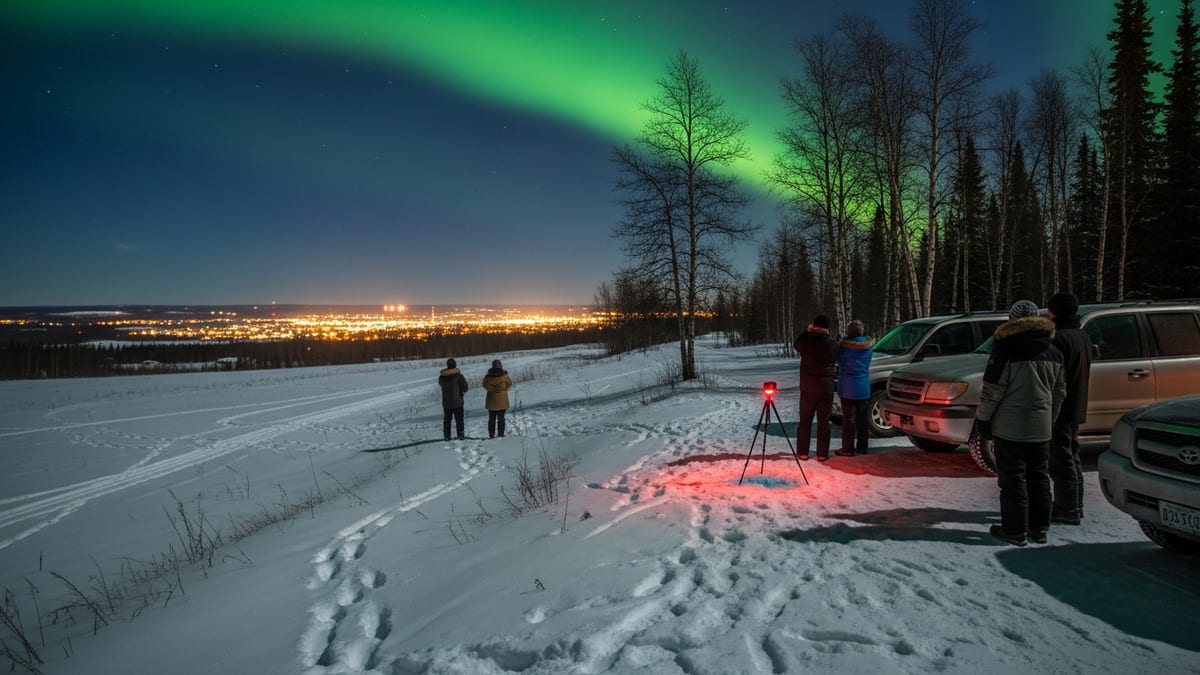
Solar Cycle 25 is now in a high-activity phase, and recent geomagnetic storms in January and July 2026 have already produced vivid aurora displays visible well beyond the usual high-latitude zones. Reports from space weather agencies show multiple strong geomagnetic events this year, including a January solar radiation storm categorized among the most intense since the early 2000s. Enthusiast communities have documented aurora sightings from locations in the northern United States that rarely see such activity, prompting renewed attention to where and how Americans can catch the northern lights without leaving the country.
Forecast products from federal space weather services now highlight short-range aurora visibility in a way that is designed for the public as much as for scientists and infrastructure operators. Experimental dashboards and 30 minute forecast models give real-time indications of where auroral arcs are likely to appear over North America, letting travelers time late night drives to dark-sky lookouts when geomagnetic conditions spike. The combination of elevated solar activity and more accessible forecasting tools is a key factor behind the 2026 surge in aurora tourism.
Researchers have also begun publishing new probabilistic visibility models that factor in not only solar wind and geomagnetic conditions but also cloud cover and moonlight. This work underpins commercial aurora apps and tour operators’ planning tools, giving travelers more confidence that long distance trips to see the lights have a realistic chance of success. Industry studies of auroral tourism point to rising global revenue over the rest of the decade, and the strong storms of early 2026 are reinforcing perceptions of the current solar cycle as a rare opportunity.
America’s Emerging Aurora and Dark Sky Hotspots
Within the United States, the most consistent aurora viewing still belongs to Alaska, particularly Fairbanks and interior communities that sit beneath the main auroral oval. However, the powerful storms of January 2026 and subsequent events have pushed visible displays much farther south at times, spotlighting new hotspots in the Lower 48. Local reports and amateur photography from northern Minnesota, Michigan’s Upper Peninsula, North Dakota and Montana show colorful curtains and bands over frozen lakes and rural farmland, scenes that are now circulating widely on social platforms and travel forums.
Dark-sky parks in the western United States are also experiencing a rise in attention from stargazers planning for 2026 and 2027. Protected areas in states such as Utah, Nevada, Arizona and New Mexico, originally promoted for clear views of the Milky Way and regular meteor showers, are now being discussed as potential aurora vantage points during periods of strong geomagnetic disturbance. Tourism boards and park operators are updating visitor information to emphasize night sky etiquette, including minimizing light pollution and preparing for cold overnight conditions at high elevation.
In the Pacific Northwest and northern New England, coastal and mountain locations are drawing travelers who hope to combine winter sports or fall foliage trips with the chance of a rare aurora display. Heavy snow and blizzards that affected large parts of the region earlier in 2026 demonstrated the weather risks of shoulder season travel, but they have not dampened interest. Travel planners describe a growing pattern of flexible itineraries, where visitors book several nights in an area and use real-time aurora charts and local weather forecasts to decide which evening to dedicate to skywatching.
Perseid Peak and a Standout Meteor Season
Beyond the aurora, 2026 is being promoted by astronomy outlets as a notable year for meteor watching, led by an especially favorable Perseid meteor shower in August. Astronomers forecast that the Perseid peak will coincide with a dark or near-new Moon phase, a relatively rare alignment that can transform an already reliable shower into a dramatic spectacle for those under clear, dark skies. Travel and science publications are flagging this combination as a highlight of the northern hemisphere observing year.
National and state parks in the interior West and upper Midwest, from high desert plateaus to Great Plains grasslands, are emerging as favored destinations for the Perseid peak. These regions offer broad horizons, relatively low humidity and, in many cases, official dark sky designations. Visitor information centers are preparing for increased night use around the expected peak dates, with guidance on safe nighttime hiking, wildlife awareness and the importance of red-light headlamps to preserve night vision.
Smaller communities located near dark sky preserves and observatories see the 2026 meteor calendar as a chance to attract first time visitors. Lodges and campgrounds in rural areas of states such as Colorado, Wyoming and South Dakota are marketing multi night packages that combine daytime outdoor activities with evening meteor viewing sessions. Organizers emphasize that meteor showers, unlike eclipses, can be enjoyed over several nights, increasing the odds of at least one clear sky window for travelers who build in schedule flexibility.
Tourism Businesses Adapt to a Space Weather Boom
The rising popularity of aurora and meteor oriented trips is prompting rapid adaptation across the U.S. travel industry. Adventure tour companies that once focused on hiking or wildlife excursions are adding late night skywatching outings to their portfolios, often pairing them with photography instruction. Hotels and lodges in high latitude or dark sky regions are adopting informal aurora alert systems, encouraging guests to opt in to text or phone notifications if the lights become visible during overnight hours.
Market research on auroral tourism highlights the sector’s growth trajectory, with global revenue projected to almost double between the mid 2020s and the end of the decade. Analysts point to a combination of social media visibility, improved forecasting, and the perception of solar maximum as a time limited opportunity. For American destinations already competing for outdoor and adventure travelers, positioning around sky events such as the 2026 storms and meteor showers is seen as a way to differentiate beyond hiking trails or scenic drives.
At the same time, operators must navigate challenges that come with relying on inherently unpredictable natural phenomena. Space weather forecasts, though more sophisticated than in previous cycles, still carry uncertainty, and extended cloudy periods can disappoint visitors who travel specifically for a sky event. Many businesses are responding by bundling aurora or meteor watching as one component of broader itineraries that include hot springs, winter sports, wildlife viewing or cultural experiences, ensuring value even if clouds or geomagnetic conditions do not cooperate.
Planning Ahead for Rare 2026 Sky Moments
For individual travelers, advance planning is emerging as a key theme for making the most of 2026’s sky opportunities. Publicly available tools from space weather prediction centers offer three day geomagnetic outlooks, short term aurora probability maps and alerts for significant solar storms, while astronomy calendars detail major meteor shower peaks and lunar phases. Travel writers recommend using these resources as a framework, then layering in local weather forecasts and light pollution maps when choosing bases and specific viewing nights.
Travel demand patterns this year suggest that many enthusiasts are willing to travel long distances on short notice when conditions look promising, particularly for strong geomagnetic storms that might push the aurora into mid latitude states. Airlines, car rental agencies and lodging providers in northern tier regions may see compressed booking windows around such events, mirroring the behavior observed during past total solar eclipses and rare conjunctions. Some rural communities are responding by keeping flexible capacity in campgrounds and short term rentals to accommodate last minute arrivals.
With more intense solar activity expected to continue into 2027, the rare sky spectacles of 2026 are likely to be remembered as part of a broader multi year boom in space weather tourism. From Alaska’s established aurora lodges to newly popular dark sky towns in the continental United States, destinations are racing to capture the attention of travelers who are as interested in the night sky as they are in traditional sightseeing. For many, the coming months offer a chance to experience the kind of vivid aurora and meteor displays that, in quieter solar years, might come only once in a generation.