


More news on this day
An American Airlines flight operating as AA1760 made an emergency landing near Myrtle Beach on August 10 after passengers reported seeing flames from one of the aircraft’s engines shortly after departure, prompting a rapid return and drawing renewed attention to inflight safety and maintenance oversight in the busy Carolinas leisure corridor.
Get the latest news straight to your inbox!
Emergency Return After Reported Engine Flames
According to early accounts from passengers and local media coverage, the incident occurred shortly after AA1760 departed the Myrtle Beach area on the evening of August 10. Shortly into the climb, travelers seated on the left side of the aircraft reported flashes and visible flames coming from the engine under the wing as the jet turned out over the Atlantic shoreline.
Witness descriptions circulating on social platforms describe a brief but intense burst of orange light and streaks of flame trailing the engine before the aircraft leveled off and began a wide turn back toward the coast. Cabin lights reportedly remained on, and the aircraft appeared to continue flying normally as the crew initiated an immediate return.
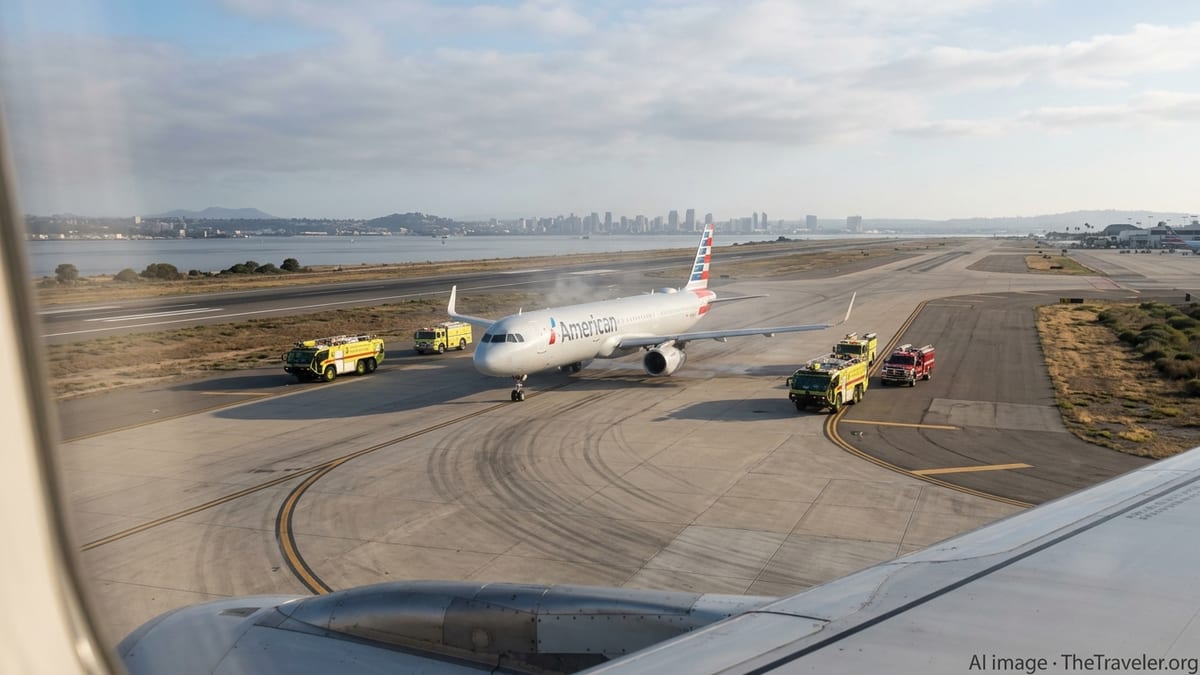
Tracking data referenced in published aviation coverage shows the flight’s climb was interrupted only minutes after takeoff, with the jet entering a holding pattern and then descending back toward the Myrtle Beach area. Emergency vehicles were positioned along the runway and apron areas as a precaution as the aircraft landed.
Publicly available information so far does not indicate any injuries among passengers or crew. The aircraft taxied to a remote stand, where travelers were disembarked and buses were brought in to return them to the terminal for further rebooking.
Passenger Experience and Onboard Response
Reports from travelers on board suggest the cabin remained calm despite the alarming sight of flames outside the windows. Some passengers described feeling a brief shudder or vibration coinciding with the flash of light from the engine, while others recalled only the visual spectacle without any noticeable change in the aircraft’s behavior.
According to passenger accounts shared publicly, there was a period of limited information in the cabin as the cockpit crew focused on managing the aircraft. Flight attendants continued routine safety checks and reassured travelers, while the jet turned back toward land and descended.
Once the aircraft was established on its return approach, announcements in the cabin reportedly informed passengers that the aircraft would be landing back near Myrtle Beach due to a suspected engine issue. Safety briefings remained in line with standard procedures, and there were no indications of smoke or fire inside the cabin.
Travelers described the landing itself as controlled and uneventful, with the aircraft coming to a normal stop on the runway. The presence of fire trucks and airport emergency equipment alongside the taxiway underscored the seriousness of the precautionary response, even as passengers disembarked quietly and proceeded to the terminal for updates.
Airline Response and Flight Rebooking
Based on airline statements summarized in news reports, AA1760 was taken out of service for inspection following the emergency landing. Maintenance crews were dispatched to examine the aircraft’s affected engine, nacelle, and surrounding structures for any signs of damage or fuel residue.
Passengers faced overnight disruptions as the airline rebooked travelers on later flights and alternative routings through major hubs along the East Coast. Some were reportedly provided hotel and meal vouchers due to missed connections and late-night schedule changes, while others opted to delay their trips entirely and remain in the Myrtle Beach area.
Publicly available information indicates that the airline has not yet released detailed technical findings about the cause of the flames. Engine events of this type can be linked to issues such as compressor stalls, fuel ignition irregularities, or ingestion of foreign objects, and carriers typically await full maintenance inspections before attributing a specific cause.
Travel operations at Myrtle Beach International Airport continued through the evening, with the affected aircraft moved away from primary gates so that other departures and arrivals could proceed with minimal delay. The episode nonetheless added strain to an already busy late-summer travel weekend, with some travelers scrambling to adjust onward plans.
Regulatory Oversight and Safety Context
Events involving visible engine flames, while rare from a passenger perspective, are part of a broader category of inflight incidents that are closely monitored by regulators and industry analysts. Publicly available Federal Aviation Administration guidance underscores that modern jet engines are designed with robust containment and fire-suppression systems intended to prevent localized anomalies from escalating into full-blown onboard fires.
In many cases, dramatic visuals captured from cabin windows or from the ground can reflect short-lived events such as fuel residual burning or compressor surges that resolve once power settings are adjusted or the engine is throttled back. Aircraft are typically certified to continue flying safely on a single engine if necessary, and crews train extensively for scenarios involving engine malfunctions shortly after takeoff.
Industry data shows that unplanned returns to the departure airport remain a standard precaution whenever crews receive cockpit indications of a potential engine issue or when cabin reports of flames cannot be immediately reconciled with instrument readings. By returning promptly, crews ensure that the aircraft is close to emergency services and that maintenance teams can assess the situation before the jet continues on its route.
Investigations into similar events in recent years have led to a mix of outcomes, ranging from confirmation of minor, self-limited engine disturbances to identification of components in need of replacement or overhaul. The AA1760 incident near Myrtle Beach is expected to undergo the same process, with findings feeding into the carrier’s broader maintenance and safety programs.
Impact on Travelers and the Myrtle Beach Corridor
The emergency landing of AA1760 comes at a busy moment for Myrtle Beach and nearby coastal airports, which see heavy traffic from leisure travelers in early August. The sudden disruption left some passengers seeking last-minute hotel rooms in a market already tight with vacation demand and sports tournaments.
Travel advisers note that such events highlight the value of flexible itineraries, travel insurance, and familiarity with airline self-service tools that can speed up rebooking after a disruption. Passengers on AA1760 who were able to quickly access mobile apps and customer service channels reportedly secured alternative flights more rapidly than those relying only on airport counters.
The incident also places renewed focus on the importance of clear, timely communication in the cabin and at the gate whenever emergency procedures affect a flight. While the technical outcome of the engine inspection will be of interest to aviation specialists, many travelers are likely to remember most vividly how information was conveyed and how efficiently they were assisted on the ground.
As the investigation into the engine flames reported near Myrtle Beach continues, AA1760 joins a small but closely watched list of recent precautionary landings involving large U.S. carriers. For frequent flyers in and out of the Carolinas, the episode serves as a reminder of both the resilience of modern aircraft systems and the inevitability of occasional disruptions in a complex air travel network.