


More news on this day
Travelers across the United States faced cascading disruption on July 7, 2026, as Ronald Reagan Washington National Airport recorded 101 flight cancellations and 257 delays, stranding thousands and snarling operations for PSA Airlines, Republic Airways, JetBlue, Southwest and several other carriers.
Get the latest news straight to your inbox!
Heavy Disruptions at a Key East Coast Hub
Publicly available flight-tracking statistics for Washington Ronald Reagan National indicate that by late evening on July 7 the airport had surpassed 100 cancellations alongside more than 250 delayed services, placing it among the most disrupted facilities in the country for the day. The figures reflect both departing and arriving flights, underscoring the scale of the operational breakdown affecting passengers in the Washington region and across connecting markets.
The disturbance at the close-in capital airport came amid broader turbulence in the national air travel system, with multiple states reporting elevated cancellation and delay counts. Recent industry coverage notes that Virginia has been among the harder hit states in early July, with Reagan National frequently featuring near the top of disruption tables alongside major Northeast hubs such as New York’s LaGuardia and John F. Kennedy airports.
While precise causes can vary by individual flight, the pattern at Reagan National fits into a wider picture of congestion in some of the country’s most heavily used air corridors. Washington’s airspace remains tightly managed and often vulnerable to traffic flow restrictions, creating a knock-on effect when weather or operational constraints emerge along the East Coast.
PSA, Republic, JetBlue and Southwest Among the Hardest Hit
The day’s problems were felt most acutely by passengers booked on regional carriers that handle large volumes of short-haul traffic in and out of Reagan National. PSA Airlines and Republic Airways, both major providers of feeder services under the banners of larger U.S. airlines, were prominent in the disruption statistics, with cancellations and rolling delays affecting routes that link Washington to cities such as Philadelphia, Boston and other key connection points.
Low-cost and hybrid carriers also experienced notable difficulties. JetBlue and Southwest, which operate a mix of point-to-point and connecting flights through the Washington area, recorded multiple disrupted services, complicating travel plans for both leisure and business passengers at the height of the summer season. Published reports on national cancellation trends for early July highlight these airlines among those facing some of the most persistent schedule challenges.
Because many of the affected flights involve short segments and time-sensitive connections, even modest delays at Reagan National have the potential to ripple through airline networks. A single cancellation or long delay on a regional leg can sever onward links for dozens of travelers, forcing mass rebookings and extended waits as already full summer flights limit the options available.
Weather, Congestion and Airspace Constraints Combine
Data from federal aviation platforms on July 7 shows ongoing airspace management measures across portions of the United States, including potential ground delay programs and traffic flow controls aimed at balancing demand and capacity. When these restrictions intersect with localized weather events or staffing limitations, airports like Reagan National can quickly experience bottlenecks that lead to sustained queues for takeoff and landing slots.
Industry observers note that the airport’s location within one of the country’s densest aviation corridors compounds its vulnerability to disruption. When traffic backs up at nearby hubs, including those in New York and along the Mid-Atlantic, Reagan National often absorbs additional pressure as aircraft are rerouted, slowed or held on the ground to manage flows safely.
On days of heavy demand, airlines typically attempt to protect longer-haul and international connections, which can result in shorter domestic segments being more exposed to cancellation. With PSA Airlines and Republic Airways operating many of these shorter flights on behalf of larger carriers, and JetBlue and Southwest running dense schedules along the Eastern Seaboard, their passengers frequently bear the brunt of those operational decisions during systemwide stress.
Passengers Face Long Lines and Limited Options
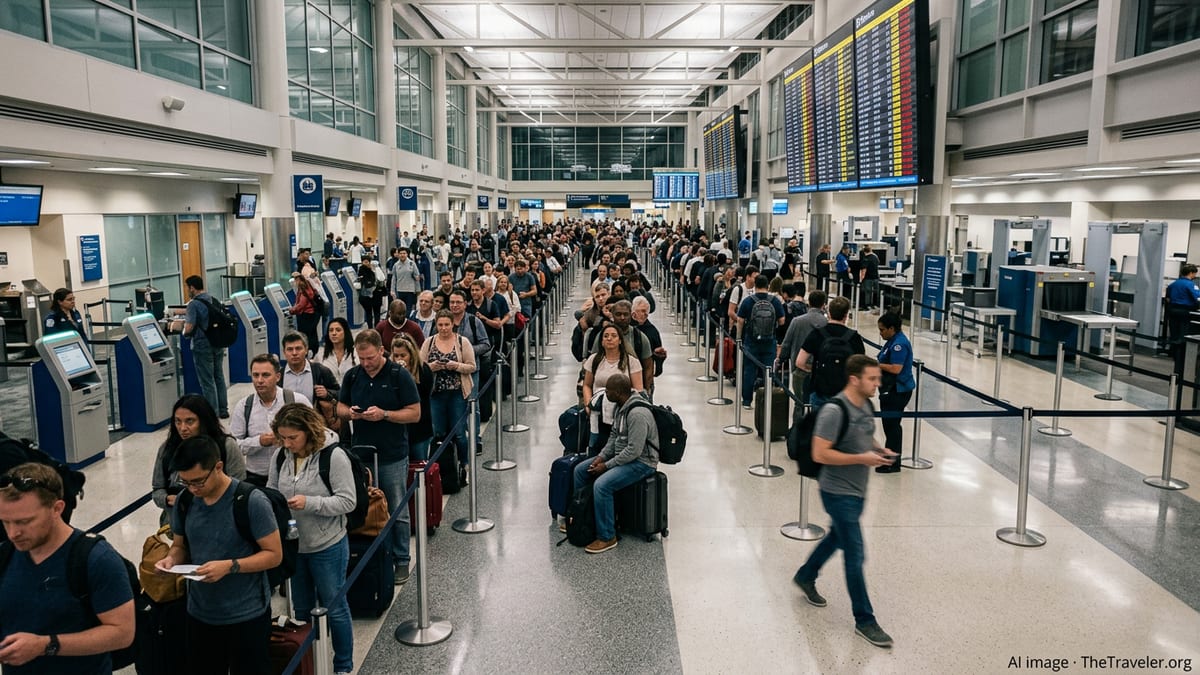
By late in the day on July 7, travelers at Reagan National were contending with crowded terminals, extended customer service queues and limited same-day rebooking availability. With summer flights running near capacity across many U.S. airlines, disrupted passengers often had few alternatives beyond standby lists or re-routing through secondary airports, including Baltimore and Washington Dulles.
Travel guidance from consumer-rights platforms and airline advisories emphasizes the importance of monitoring flight status closely on days when disruption indicators begin to climb. Passengers are encouraged to use airline mobile apps and digital channels to seek rebooking and track gate changes, as airport desks can quickly become overwhelmed when hundreds of flights are delayed or cancelled.
For some travelers, overnight stays became unavoidable as late-evening cancellations removed the possibility of reaching final destinations on July 7. Hotels near the airport and in central Washington were expected to see increased demand, adding another layer of cost and complexity for those caught in the disruption.
Broader Implications for Summer Air Travel
The difficulties at Reagan National form part of a broader pattern of volatility in U.S. summer air travel, where concentrated storms, high passenger volumes and limited slack in airline schedules have left little room to absorb shocks. Recent nationwide tallies show hundreds of cancellations and several thousand delays in a single day across multiple states, with airlines such as Southwest, American, PSA, JetBlue and Republic appearing repeatedly in disruption summaries.
Analysts point out that while overall reliability has improved compared with some previous peak seasons, concentrations of delays at a few key hubs can still dominate the traveler experience. Airports that serve as both origin and connection points, like Reagan National, can quickly become focal points when weather cells or airspace constraints strike at the wrong moment.
The July 7 episode at Washington’s close-in airport is likely to reinforce calls for travelers to build additional buffer time into itineraries involving tight connections through congested corridors. It also highlights the continuing sensitivity of the U.S. aviation system to localized disruptions, even as airlines and regulators work to enhance resilience during one of the busiest travel periods of the year.