

More news on this day
Travelers flying through Washington, D.C.’s Ronald Reagan Washington National Airport this summer are being urged to plan for significant delays and schedule changes as America’s 250th anniversary celebrations take over the capital’s skies, including a near-total shutdown of flights on July 4 itself.
Get the latest news straight to your inbox!
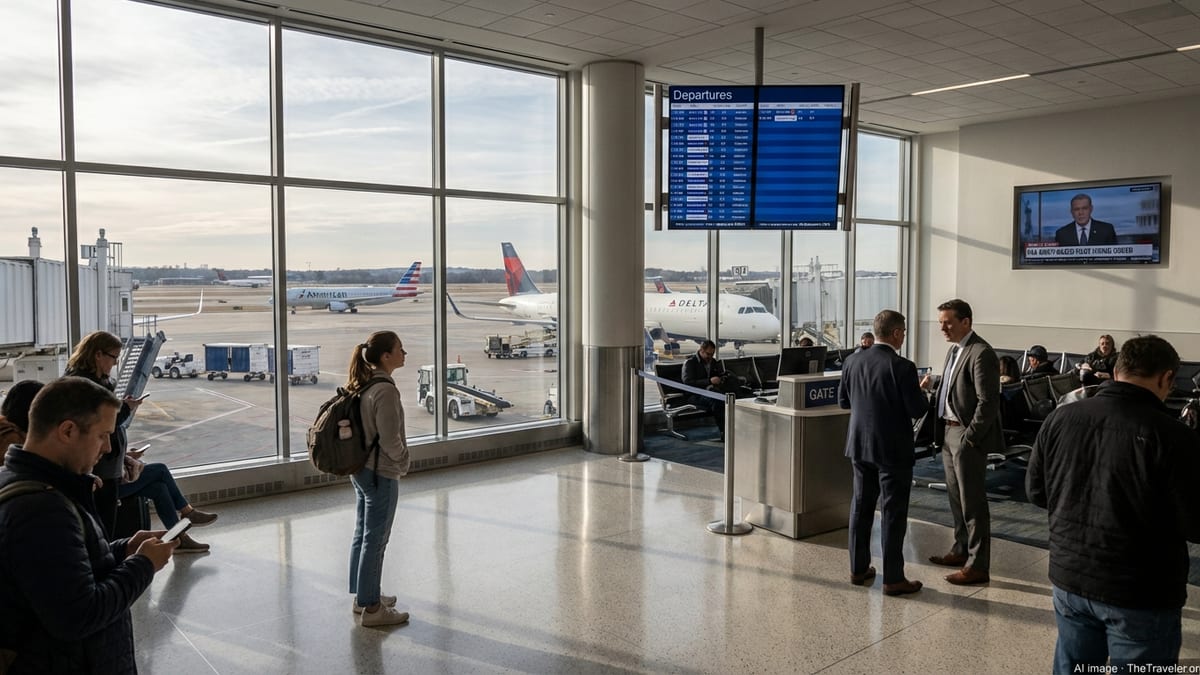
Reagan National Plans Midday Shutdown on July 4
Ronald Reagan Washington National Airport, one of the main gateways to the U.S. capital, is preparing for a rare midday halt of nearly all operations on July 4, 2026. Publicly available information from the Metropolitan Washington Airports Authority indicates that flights are scheduled to stop after 12 p.m. local time to clear airspace for America 250 festivities, including large-scale military flyovers, skydiver demonstrations, and an expanded fireworks display centered on the National Mall.
Reports from national and regional news outlets note that the closure is expected to last for much of the afternoon and evening, far longer than the short pauses that have accompanied previous Independence Day flyovers and fireworks. Travelers who might otherwise choose to fly on the holiday itself will find very limited options at Reagan National after midday, and many airlines have preemptively adjusted schedules or moved departures earlier in the day.
The shutdown follows a series of temporary flight restrictions already in effect on select June weekends as America 250 events ramp up. Aviation industry coverage points out that Reagan National’s close proximity to downtown Washington makes it uniquely exposed to airspace closures whenever large-scale aerial displays are staged over the city.
Summer of Disruptions Around America 250 Events
The July 4 ground stop is only one piece of a broader pattern of planned disruptions at Reagan National tied to America 250 programming in and around Washington. Published event calendars for the capital list a dense slate of activities stretching from late June through August, including the Freedom 250 Great American State Fair on the National Mall, a National Independence Day Parade, a Military Appreciation Day, and additional flyovers and parachute demonstrations.
Travel coverage and local reporting highlight key dates likely to impact flight operations. Among them are the state fair’s opening weekend in late June, rehearsal days on July 3, and a closeout flyover and parachute jump scheduled for July 10. Aviation advisories indicate that air traffic may be periodically slowed or rerouted as temporary flight restrictions are activated for each event.
Further into the summer, authorities have outlined additional disruptions around a planned Grand Prix event near the Mall in late August, which is expected to trigger more airspace management measures. While not all of these events will require full ground stops, travelers are being told to anticipate rolling delays, schedule changes, and occasional cancellations at Reagan National on these peak days.
Record Holiday Crowds Add Pressure to the System
The timing of the closures coincides with what is shaping up to be one of the busiest Independence Day travel periods on record. According to national transportation and travel forecasts, tens of millions of Americans are expected to be on the move between late June and early July, with a sharp increase in air travel layered on top of the 250th anniversary festivities and the FIFA World Cup matches taking place in multiple U.S. cities.
The Transportation Security Administration has projected that nearly 19 million passengers could be screened at U.S. airports during the July 4 holiday week. Industry observers note that crowd levels at security checkpoints and gate areas are likely to be especially high at major hubs such as Reagan National, where airlines have shifted more flights into the morning hours on July 4 to work around the planned midday shutdown.
Travel organizations also expect heavy demand on highways and rail, particularly into and out of the Washington region. While some state transportation departments are lifting highway construction lane closures to ease congestion, they are still advising drivers to budget extra time for traffic and diversions near major celebration sites.
What Passengers Should Expect If Flying Through DCA
Airlines operating at Reagan National have begun issuing schedule changes and travel waivers around the peak America 250 dates, and travelers are being encouraged to monitor their reservations closely. Public guidance from the airport and airlines emphasizes that flight times could shift repeatedly as federal airspace restrictions are finalized, and that some flights may be consolidated or rerouted through other airports in the Washington region.
Travel experts tracking the situation suggest that passengers with flexibility should avoid booking departures or arrivals at DCA after late morning on July 4 and should allow additional buffer time on surrounding dates, particularly July 3 and July 10. Early-morning and late-night flights may offer the best chance of avoiding ground stops or cascading delays when airspace closures are in place.
Travelers connecting through Reagan National are being advised to pay particular attention to minimum connection times. Even modest delays caused by a temporary restriction or an extended taxi queue can be enough to jeopardize a tight connection, especially during peak summer travel days when rebooking options are limited.
Planning Strategies for a Complicated Holiday Weekend
For those who must travel through Washington around the July 4 weekend, careful planning may help reduce the risk of major disruption. Consumer travel reporting recommends considering alternative airports such as Washington Dulles International or Baltimore/Washington International on the most affected days, since those facilities are farther from the National Mall and may experience fewer or shorter interruptions.
Passengers are also encouraged to build in redundancy where possible by choosing earlier flights, avoiding the last departure of the day, and allowing extra time between connections. Keeping airline apps and notifications activated, checking flight status frequently in the 24 hours before departure, and staying alert to gate changes can make it easier to respond quickly if schedules shift.
On the ground, travelers heading to or from Reagan National should anticipate heavier-than-normal congestion on roads and public transit lines serving the airport, particularly in the hours before the July 4 shutdown and after evening celebrations conclude. Regional transportation agencies have indicated that service adjustments, crowd-control measures, and security perimeters near the Mall may indirectly affect access routes to the airport, even when flights are operating.
Despite the complications, tourism boards and local officials see the semiquincentennial as a generational travel moment for Washington and the United States. For visitors and residents who build extra time and flexibility into their plans, the payoff could be a front-row seat to one of the most ambitious Independence Day celebrations in the country’s history.