


Monaco is shorthand for wealth: superyachts stacked in Port Hercule, roulette wheels spinning in Monte Carlo and Lamborghinis growling past designer boutiques. It is also one of the smallest countries on earth, wedged into a few steep square kilometers between France and the Mediterranean. That combination of scarcity and glamor makes many travelers wonder: is Monaco genuinely worth visiting, or is it simply too expensive for most people to enjoy?
Get the latest updates straight to your inbox!
Monaco in Reality: Tiny, Polished and Built for High Spenders
Before talking about money, it helps to understand what Monaco actually is. The principality is less a classic city break destination and more a compact, vertical resort. Hotels, residential towers and casinos climb up the hillsides, while elevators and escalators connect different levels of the city. Official tourism data shows that overnight visitors typically stay just a couple of days on average, and a very large share of tourists are cruise passengers or day trippers who do not sleep in Monaco at all. The country lives off short, high value visits rather than long budget holidays.
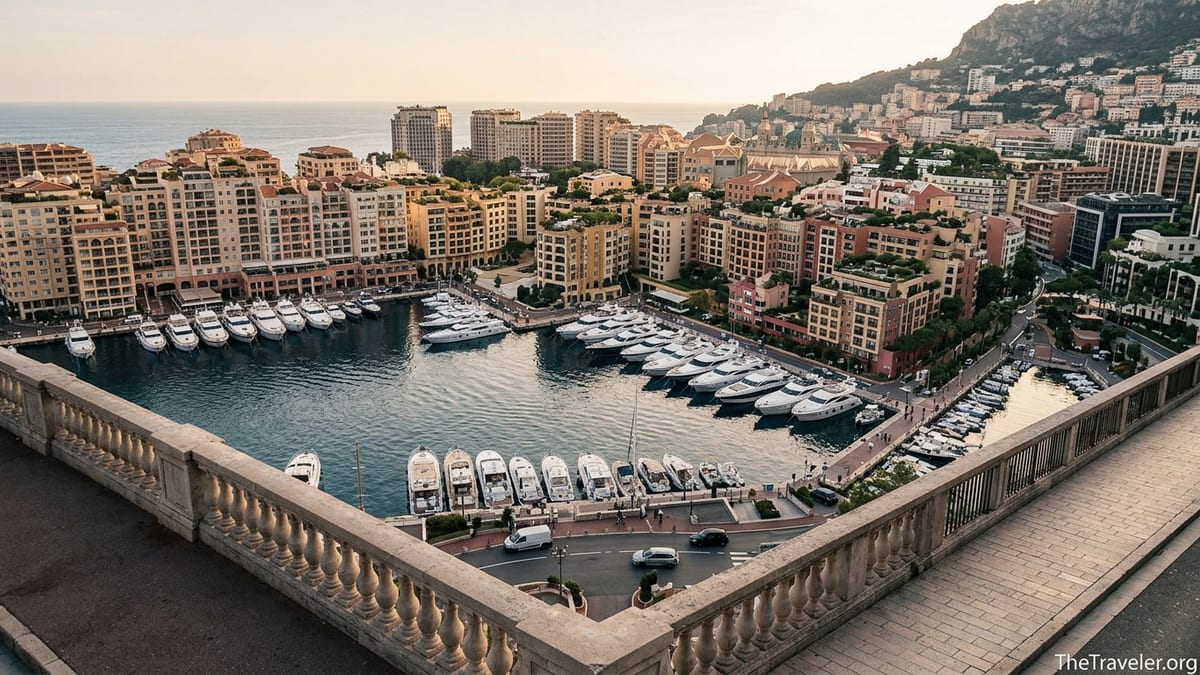
That model shapes what you see on the ground. The waterfront is dominated by Port Hercule and the smaller Port de Fontvieille, both filled with vessels that cost more than most travelers will earn in a lifetime. The central Casino Square is surrounded by the ornate Monte Carlo Casino, the Belle Epoque Hotel de Paris and the Café de Paris terrace where a single coffee can cost as much as lunch elsewhere on the Riviera. High end watchmakers, fashion houses and jewelry brands line the surrounding streets. It looks like a movie set because, for a lot of visitors, it effectively is.
At the same time, Monaco is physically tiny. You can walk from one side of the country to the other in under an hour, even with the steep hills. There is no sprawling historic center the size of Nice or Genoa. Instead, there are a few key areas: the old town on the Rock with the Prince’s Palace and cathedral, the Monte Carlo casino district, the Larvotto beach front and the newer reclaimed neighborhood of Fontvieille. That compactness is important when deciding whether a visit is worth it. Many highlights can be seen in a day, which makes Monaco easier to justify as a splurge if you base yourself in nearby France.
What Things Actually Cost: From Coffee to Casino Chips
Monaco’s reputation for high prices is not invented, but the cost profile is uneven. Some items are eye watering, while others are merely similar to a major Western European city. In 2025 price guides compiled by regional travel sites, a mid range hotel inside Monaco often starts around 250 to 350 euro per night for a standard room in shoulder season, rising far higher during major events. Luxury properties like the Hotel de Paris or the Hotel Hermitage typically command nightly rates in the high hundreds or thousands of euros, especially around the Grand Prix or peak summer.
Food and drink follow a similar pattern. Sit down at a polished terrace on Casino Square and a cappuccino can easily run 7 to 9 euro, with cocktails in the 20 euro range. A casual lunch at a brasserie near the harbor might cost about 20 to 30 euro for a main course such as moules frites or a burger, plus 7 to 10 euro for a beer. On the other hand, grab and go options are not dramatically different from neighboring France. A takeaway sandwich or slice of pizza from a bakery or small snack bar typically falls somewhere near 6 to 10 euro, and supermarket prepared meals at chains like Casino or Carrefour in Fontvieille can be around the same.
Entertainment is where Monaco can become expensive quickly. The main gaming floor of the Monte Carlo Casino charges an entry fee of roughly 17 to 20 euro per person, according to recent visitor reports, on top of whatever you gamble inside. A simple spin of the roulette wheel requires a minimum bet that is higher than in most European casinos. Drinks inside are priced accordingly. Nightclubs attached to the larger hotels often have cover charges and drink prices that exceed those in Nice or Cannes. Tickets to the Formula 1 Monaco Grand Prix, held in late May, usually start in the low hundreds of euros for a basic grandstand seat and rise into the thousands for premium hospitality or terrace access.
Strategic Base: Staying in France, Visiting Monaco on a Day Trip
For most travelers who are not specifically seeking a luxury resort stay, the smartest compromise is to sleep in nearby France and treat Monaco as a day trip. This is what a large share of visitors already do. Nice, Villefranche sur Mer, Beaulieu sur Mer and Menton all have far more varied and affordable hotel stock than Monaco. In Nice, for example, it is still possible to find simple but decent two or three star hotels or guesthouses in the 100 to 180 euro range per night outside the very busiest weeks, which is significantly less than accommodation of similar standard inside the principality.
Reaching Monaco from these bases is straightforward. Regional TER trains on the coastal line between Nice and Ventimiglia typically take about 20 to 25 minutes between Nice Ville and Monaco Monte Carlo, and advance fare examples show one way prices often around 4 to 6 euro per adult in 2024 and 2025. The coastal bus line, currently numbered 600 on timetables after the old 100 designation was merged, connects Nice’s port area with Monaco and Menton. Reports from recent riders indicate that a one way ticket purchased on board is usually in the low single digit euro range, sometimes with slight variations depending on the exact ticket type and direction.
Once you arrive, Monaco’s internal bus network, operated by the Compagnie des Autobus de Monaco, helps you move between the main districts without resorting to taxis. Official fare tables show that a single ride purchased on board costs only a few euros, with capped daily charges when using contactless payment. In practice, that means a visitor hopping several times between the train station, the harbor and Monte Carlo might spend under 10 euro on local buses in a full day. Combined with public elevators and escalators, this makes navigating the steep cityscape manageable even on a modest budget.
Who Will Find Monaco Worth the Money
Monaco offers excellent value for a certain type of traveler. If you are fascinated by Formula 1, luxury cars, superyachts or high end architecture, even a few hours can feel like stepping into a live documentary. On any sunny afternoon along Avenue d’Ostende or Boulevard Albert I, you can watch a steady parade of Ferraris, Bentleys and rare sports cars idling past the harbor. Enthusiasts who grew up seeing Monaco’s streets on television during the Grand Prix often describe the thrill of finally walking the circuit, standing at the famous Fairmont hairpin or the tunnel exit, and realizing that the racetrack is quite literally the everyday road network.
Travelers interested in sovereign microstates and political curiosities are another group who tend to find Monaco worth it. The old town on the Rock, with the Prince’s Palace, the changing of the guard and the Oceanographic Museum perched on a cliff, showcases the country’s particular blend of royal tradition and scientific ambition. Families often combine a palace visit with a few hours in the museum’s aquarium, which has a reputation along the Riviera for its shark lagoon and Mediterranean exhibits. While entry tickets are not cheap compared to small town museums, prices are generally in line with major European attractions rather than wildly higher.
Short stay luxury seekers, including honeymooners and milestone birthday travelers, may also feel that Monaco delivers a lot of impact in a compact package. A single night at a five star hotel with sea views, a tasting menu at a Michelin starred restaurant and an evening in the casino can easily cost more than a week’s vacation elsewhere. Yet for some, that intensive 24 hour fantasy of “living like a high roller” is precisely the point, especially when combined with more budget friendly days based in Nice, Antibes or the Italian Riviera.
When Monaco Feels Overpriced or Underwhelming
On the other side of the equation, many budget and mid range travelers come away feeling that Monaco is visually striking but emotionally distant. Unlike cities such as Lisbon or Naples, there is little gritty street life or neighborhood culture on display. The polished facades, carefully maintained planters and discreet security can leave visitors feeling like they have wandered into a shopping mall for the ultra rich rather than a lived in city. If you are motivated by food markets, local music scenes or bohemian districts, Monaco can seem bland compared with neighboring French towns.
Costs can amplify that sense of detachment. A backpacker used to finding a cheap hostel bed and a lively bar for a few euros will not find those things inside the principality. There are almost no true budget accommodations. Even takeout meals, while not shocking by European capital standards, will feel steep compared to inland southern France or parts of Spain. Ordering a simple drink or snack on a waterfront terrace can lead to an unpleasant surprise when the bill includes double digit prices for basic items.
Timing also matters. During the Monaco Grand Prix, the Historic Grand Prix or major yacht shows, the city is extraordinarily crowded and prices spike even higher. Trains pour in race day visitors from all along the coast, and road closures make moving around more complicated. Unless you are attending those events, they are arguably the worst times to visit if you are cost conscious. On a random weekday in spring or autumn, by contrast, Monaco feels calmer, and you can walk the harbor at sunset without jostling shoulder to shoulder with thousands of other tourists.
How to Experience Monaco on a Reasonable Budget
Despite its luxury aura, it is possible to see a surprising amount of Monaco without spending a fortune, provided you plan carefully and accept that many activities will be free sightseeing rather than high end experiences. One common strategy is to arrive midmorning on a regional train from Nice, grab a bakery lunch to go from a shop near the station, and then use a day of walking and bus rides to create a loop through the main districts. A typical low cost route might start at the old town on the Rock, continue down to the harbor, cross to Monte Carlo and the casino area, detour to Larvotto beach, then return via Fontvieille before catching an evening train back to France.
Along the way, there are numerous viewpoints and public spaces that cost nothing. The terraces near the Prince’s Palace offer sweeping views over Port Hercule and the densely stacked apartment blocks below. The walk down the Rampe Major and around the harbor provides endless opportunities to inspect superyachts up close, often with their home ports painted in glossy letters on the stern. In Monte Carlo, you can enter the casino atrium to admire the Belle Epoque architecture without paying the full gaming floor fee, though security policies change so it is wise to check current rules. Many visitors simply sit on the steps of the casino gardens or by the fountain in Casino Square and people watch, soaking up the atmosphere without ordering an expensive drink.
Practical tactics can also keep costs down. Buying water and snacks from supermarkets instead of kiosks near tourist hotspots, using Monaco’s public elevators instead of taxis to conquer steep hills, and sticking to buses rather than private transfers all help. Public transport guides for Monaco and the surrounding Alpes Maritimes region emphasize that contactless payment caps on the local buses mean frequent riders do not pay more than a small daily maximum. For a couple or family, that can be far cheaper than multiple short taxi rides, which often come with minimum fares even for journeys of just a few minutes.
The Takeaway
So is Monaco worth visiting, or simply too expensive for most travelers? The answer depends less on your bank balance and more on your expectations and planning. If you imagine spending several days here on a tight budget, eating out for every meal and booking centrally located accommodation, you are likely to feel squeezed and underwhelmed. The country is designed primarily for short, high value stays and for residents and visitors who can afford premium prices as a matter of course.
However, as a day trip or single night splurge from a more affordable base in France or Italy, Monaco can offer a concentrated dose of glamor and unique scenery without destroying your travel budget. Trains and coastal buses keep access costs low, local public transport is relatively inexpensive, and many of the most memorable experiences such as walking the F1 circuit, wandering the palace ramparts or watching yachts at sunset are free. Travelers who are clear about what Monaco is and is not, and who treat it as a special side excursion rather than a main budget destination, often come away satisfied.
Ultimately, Monaco is worth visiting if you are curious about its singular atmosphere and are willing to pay a premium for even everyday experiences, or if you are disciplined about keeping your visit short and focused. It is less appealing if you seek deep local culture at low cost or if high end consumerism leaves you cold. Understanding that trade off in advance will help you decide whether this tiny principality deserves a place on your itinerary.
FAQ
Q1. Is Monaco possible to visit on a backpacker budget?
It is challenging but not impossible. There are almost no hostels or ultra cheap hotels in Monaco itself, so most budget travelers stay in nearby French towns like Nice or Menton and visit on a day trip. By using regional trains, walking, local buses and supermarket food, you can see the main sights in a single day without overspending.
Q2. How much should I budget for a day trip to Monaco from Nice?
As a rough guide, many visitors manage on about 50 to 80 euro per person for a comfortable day trip from Nice, including return train or bus tickets, local buses in Monaco, a casual lunch and coffee or a drink. Add more if you plan to enter paid attractions such as the Monte Carlo Casino gaming floor or the Oceanographic Museum.
Q3. Are food and drinks really that much more expensive than in France?
Prices are noticeably higher in prime locations, especially around Casino Square and the main harbor. A coffee or beer on a glossy terrace can cost almost double what you would pay in Nice. However, bakery takeaway, supermarket prepared meals and less central cafes may only be slightly more expensive than across the border, so it depends heavily on where you choose to sit down.
Q4. Is the Monte Carlo Casino worth the entry fee?
For many visitors, paying the entry fee to see the historic gaming rooms, ornate ceilings and old world atmosphere feels worthwhile, especially if they grew up seeing the casino in films and on television. Travelers who are not interested in gambling or architecture may prefer to admire the building from outside, wander the gardens and spend their money elsewhere.
Q5. When is the most expensive time to visit Monaco?
The most expensive and crowded period is typically late May during the Formula 1 Monaco Grand Prix, when hotel rates and restaurant prices soar and availability drops. Other busy moments include the Historic Grand Prix, major yacht shows and peak summer weekends. If you are cost conscious, aim for spring or autumn weekdays when rates and crowds are both more moderate.
Q6. Is Monaco safe for solo travelers at night?
Monaco has a reputation for being very safe, with a heavy security and camera presence throughout the principality. Solo travelers generally report feeling comfortable walking around the main areas at night. As everywhere, it is still wise to take normal precautions, avoid overly intoxicated crowds and stick to well lit routes between the casino area, the harbor and the train station.
Q7. Do I need a car to visit Monaco?
No. In fact, a car can be a liability due to tight streets and high parking costs. Regional trains and buses from France are frequent, and Monaco’s own network of buses, elevators and escalators makes it easy to move between districts on foot. Unless you are on a road trip with your own vehicle, public transport is usually faster, cheaper and less stressful.
Q8. How dressy do I need to be in Monaco?
For general sightseeing during the day, normal smart casual vacation wear is fine, though beachwear is best kept to the seafront. In the evening, some casino areas, upscale bars and restaurants expect men to wear long trousers and closed shoes, and for everyone to avoid sportswear. If in doubt, pack at least one neat outfit so you are not turned away from venues you want to experience.
Q9. Is Monaco suitable for families with children?
Families can enjoy Monaco’s aquarium, the small playgrounds on the Rock, the harbor and the beach at Larvotto. However, many of the country’s flagship experiences, such as fine dining, nightlife and luxury shopping, are adult oriented and expensive. For a family trip, Monaco typically works best as a half day or day excursion from a child friendly base like Nice.
Q10. How long should I stay in Monaco if I decide to sleep there?
Most travelers who stay in Monaco itself find that one or two nights is enough to experience the key sights, enjoy a special dinner and perhaps an evening at the casino. Longer stays can be enjoyable for those using Monaco as a base for exploring the wider Riviera by train or boat, but at that point many people choose a more affordable town and return to Monaco only for specific outings.