


If you have ever spent the night on an airport floor in Frankfurt or watched a Paris to Rome connection disappear from the departures board, you have probably wondered whether you were entitled to compensation. Services like Refund.me promise to turn those frustrating hours into cash by handling complex flight compensation claims on your behalf. But with mixed online reviews and strong competitors such as AirHelp and flightright, many travelers are asking a simple question: is Refund.me still worth using in 2026?
Get the latest updates straight to your inbox!
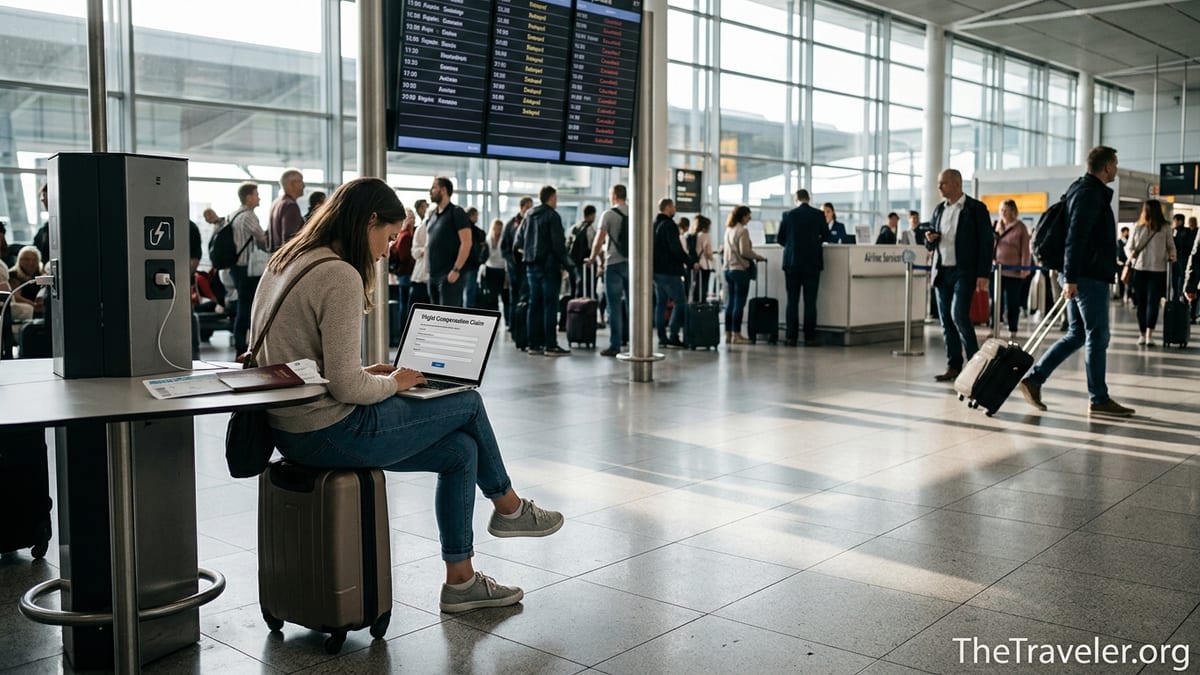
What Refund.me Actually Does
Refund.me is a claims management service focused on getting monetary compensation for air passengers when flights are delayed, cancelled, overbooked or when connections are missed under regulations like EU Regulation 261/2004. Rather than you emailing Lufthansa or Air France repeatedly, Refund.me acts as an intermediary, preparing and pursuing the claim in exchange for a cut of whatever they recover.
The company typically focuses on routes that fall under EU261 and similar rules in places such as Canada, Turkey and Ukraine. That means, for example, they might help an American traveler flying New York to London on British Airways or a Canadian flying from Toronto to Frankfurt on Lufthansa, as long as the route and operating carrier meet the legal criteria. The service is positioned for travelers who either do not know their rights or simply do not want to deal with airline bureaucracy and legal language.
In practice, a typical Refund.me case might involve a family of four traveling from Barcelona to Berlin whose flight arrived more than four hours late for a reason within the airline’s control, such as a technical fault discovered during turnaround. Under EU261, they could each be entitled to up to approximately 400 euros in compensation depending on distance and delay. Refund.me would collect basic details like flight number, booking reference and delay length, then pursue the case and, if successful, pay the family their share after deducting fees.
The service is available through an online claim form and has historically offered mobile apps, although recent feedback suggests the web route is now the main entry point. From a traveler’s perspective, the promise is straightforward: no win, no fee, and minimal hassle dealing directly with the airline.
How Refund.me Works Step by Step
The basic user journey with Refund.me follows a pattern that will feel familiar if you have seen competitors. First, you enter your flight details: departure and arrival airports, dates, airline, booking reference and the nature of the disruption. For example, a traveler from Chicago who had a missed connection in London on the way to Milan would provide both legs of the journey and explain how the delay caused them to reach their final destination more than three hours late.
Second, Refund.me runs your case through its eligibility checks. While the company does not publish a granular decision tree, it broadly follows the same contours as EU261 and similar regulations: where you were flying from and to, which airline operated the flight, how long the delay was at final destination and why the disruption happened. A weather-related cancellation from Amsterdam to Copenhagen on a winter storm day is less likely to qualify than a crew shortage or last minute operational issue on a clear day.
If the claim looks viable, you are asked to upload supporting documents. In real terms that means your boarding pass or e-ticket, booking confirmation, and sometimes evidence like a screenshot of a delay notification or photos of departure boards. Travelers who did not keep all paperwork can often still proceed with just a booking confirmation email and a clear recollection of dates and times. In more complex cases, Refund.me may ask for additional details if the airline disputes the timeline.
From there, Refund.me takes over communication with the airline and, where needed, local enforcement authorities or courts. Timelines vary widely. Some simple cases reportedly settle in a few weeks, while disputes can stretch for many months. A passenger on a Lisbon to Frankfurt flight, for instance, might see an airline initially refuse compensation citing “extraordinary circumstances.” Refund.me would then review internal flight data and argue the delay was in fact due to a technical issue, potentially escalating to legal action if the airline persists in its refusal.
Fees, Payouts and the Real Cost of Convenience
Refund.me operates on a contingency basis, meaning there is usually no upfront fee. Instead, they keep a percentage of any compensation won. Various comparison sites and user reports describe a fee that tends to fall in the same broad band as rivals, often around the 20 to 30 percent range of the awarded amount, sometimes plus VAT depending on jurisdiction. Exact fees can change and are generally confirmed when you submit a claim, so travelers should check the current terms carefully before proceeding.
To put that into a concrete example, imagine a solo traveler who is entitled to 400 euros in compensation for a delayed London to Athens flight. If Refund.me’s fee for that case is close to 25 percent, they might keep about 100 euros and transfer the remaining 300 euros to the traveler once the airline pays out. For a family of four on the same booking, the total compensation could reach 1,600 euros, of which roughly 400 euros would go to Refund.me and 1,200 euros to the family, depending on exact terms.
The trade-off is time and effort. Many travelers can, in theory, secure the full 400 euros per passenger themselves by writing to the airline, citing EU261 and persisting through initial rejections. In reality, a lot of people give up after one or two unanswered emails. Services like Refund.me monetise that gap between rights on paper and money in your account. For someone who spends most of their time juggling work and family, outsourcing the process for the price of a dinner might feel worthwhile. For others comfortable quoting legal articles and pushing back on airline responses, the percentage fee can feel steep.
It is worth noting that similar services like AirHelp publicly state a standard fee of about 35 percent for successful EU261 claims, and flightright and AirAdvisor operate on comparable contingency models. Against that backdrop, Refund.me tends not to be either the cheapest or the most expensive option but sits in the same general cost bracket as other established players.
Reputation: Mixed Reviews and Legitimacy Concerns
When deciding whether Refund.me is worth using, reputation matters just as much as fees. Online reviews for Refund.me are mixed. Some passengers describe smooth experiences where they received several hundred euros after a few months of waiting, saying they would have abandoned the claim without help. Others complain about slow communication, long processing times and difficulty reaching support once a dispute with the airline drags on.
On Trustpilot and other review aggregators, you can find contrasting stories. For instance, one traveler reported that Refund.me eventually delivered compensation for a delayed European flight but took longer than expected and provided limited updates, which left the customer anxious for several months. Another reviewer accused the company of poor transparency around timelines, saying they had to follow up repeatedly to find out whether their case had even been submitted to the airline.
Some third-party scam detection and website analysis platforms give Refund.me a moderate or low trust score, citing factors such as limited traffic levels, hidden ownership and technical concerns like missing security certificates at times. These automated tools are cautious by design and often flag older, low-traffic domains, so their verdicts should be seen as risk signals rather than definitive judgments about fraud. At the same time, it is clear that Refund.me does not enjoy the same broad recognition and public profile that industry leader AirHelp has built through media coverage and partnerships.
There are also occasional online forum threads where travelers confuse Refund.me with other similarly named services, such as refundable.me, which has gathered a very different and often more negative reputation in contexts like event ticket or bus fare refunds. When assessing Refund.me specifically, it is important to focus on verified flight compensation cases and not mix in feedback about unrelated companies with similar names.
Refund.me vs Competitors and the DIY Route
To weigh whether Refund.me is worth using, it helps to compare it with concrete alternatives. At one end of the spectrum are larger brands like AirHelp and flightright. AirHelp, for example, has publicly highlighted millions of passengers helped and markets itself as the largest air passenger rights organization worldwide, with a clear fee structure and support in many languages. flightright is well known in markets such as Germany and has taken numerous airlines to court to establish passenger-friendly precedents under EU261.
Against those heavyweights, Refund.me tends to be smaller and less visible. It does not enjoy the same media presence or broad user base, but that does not necessarily mean it is ineffective. Some travelers prefer dealing with a leaner operation that may take fewer but more focused cases. Others feel reassured by the scale, multilingual support and extensive track record of the big-name providers.
Then there is the do-it-yourself option. Many European travelers now successfully claim EU261 compensation directly from airlines without any third-party service at all. A common example: a passenger flying from Madrid to Paris with a three-and-a-half-hour arrival delay writes a short, factual email to the airline’s customer relations department, clearly referencing EU Regulation 261/2004, including their booking reference and bank details, and receives 250 euros in compensation within a few weeks. Travelers on Reddit and other forums regularly report such outcomes, especially when the case is straightforward and the airline has a standardized process.
However, DIY is not always smooth. Consider someone flying from Warsaw to Dublin whose flight is cancelled 24 hours before departure. The airline might initially offer only a voucher and hotel night, ignoring the separate right to compensation. The passenger sends multiple messages, receives vague replies or partial reimbursements, and ultimately gives up. In these less clear-cut or more contested cases, a specialist like Refund.me or a rival can tip the balance by knowing the exact case law, delay codes and national enforcement practices that many passengers do not have the time or interest to master.
Who Refund.me Is Best (and Worst) For
In real-world terms, Refund.me tends to be most useful for travelers who tick at least one of these boxes: they have a claim that looks legally viable, they lack the time or confidence to pursue it themselves, and they are comfortable giving up a portion of the compensation in exchange for convenience. A family from the United States on a complex multi-leg itinerary through Europe, for example, might benefit significantly from handing a messy missed-connection saga to a specialist, especially if language barriers or local legal systems feel intimidating.
It can also be a practical choice for people who travel only occasionally. A Canadian couple who encounter a one-off cancellation on a vacation to Portugal might not want to become experts in EU261 just to chase a single 600 euro payment. In that scenario, outsourcing the process to Refund.me, even at a 20 to 30 percent fee, can feel like a good use of money compared with spending evenings drafting complaints and reading legal blogs.
By contrast, Refund.me may be a poor fit for frequent flyers who are comfortable advocating for themselves. Many seasoned travelers now maintain a simple template letter on their laptop or phone citing EU261 and know roughly which flights qualify and how much they are owed. They often prefer to keep the full amount by dealing directly with airlines, and some even enjoy the process of holding carriers to their legal obligations. For these passengers, using any third-party service, Refund.me included, can seem unnecessary.
Refund.me is also less compelling when a disruption clearly falls outside compensation rules. For example, a winter storm shutting down most flights from Munich or a volcanic ash event grounding traffic across a region would usually be treated as “extraordinary circumstances” beyond the airline’s control, leaving little room for EU261 compensation. In those cases, passengers might still receive meals, hotels or rerouting, but a service focused on cash compensation is unlikely to deliver results, and reputable firms typically filter out such claims at the start.
Practical Tips if You Decide to Use Refund.me
If you are leaning toward trying Refund.me, a few practical steps can improve your chances of a smooth experience. First, gather documentation early. That means saving boarding passes, e-ticket emails, screenshots of delay notifications, and any receipts for meals or hotels the airline did or did not cover. Even a photo of the airport departure board showing a five-hour delay on your Amsterdam to Rome flight can become useful supporting evidence later.
Second, check the company’s current terms and fee structure carefully before you submit. Because service conditions can evolve, do not rely solely on old blog posts or reviews. Look for clear information on what percentage of compensation Refund.me takes, whether any court or administrative costs are deducted separately, and how they handle unsuccessful claims. A transparent, up-to-date fee table is a positive sign.
Third, set realistic expectations around timing. Even with a specialist, EU261-related payouts often take months rather than weeks, especially if airlines push back. A reasonable mindset might be to treat any money as a bonus rather than something you depend on immediately. For example, a traveler on a delayed Vienna to London flight who files through Refund.me in July might not see funds until late autumn if the airline drags its heels and national authorities are slow to respond.
Finally, monitor communication quality. Once your claim is underway, pay attention to whether Refund.me confirms key steps, such as submission to the airline or escalation to enforcement bodies. If you feel left in the dark, follow up politely and document interactions. If at any point you become uncomfortable, you can often request clarification on whether it is still possible to withdraw the case and pursue it yourself or with another provider, though this may not be feasible at later stages of legal action.
The Takeaway
Refund.me occupies a middle ground in the flight compensation world. It is a legitimate player focused on helping passengers unlock rights they often do not realize they have, yet it lacks the brand recognition and extensive track record of giants like AirHelp and flightright. Its contingency-fee model can be worthwhile for travelers who value time and convenience more than maximizing every euro, especially in complicated or contested cases under EU261 and similar laws.
On the other hand, mixed reviews, modest online visibility and the existence of strong alternatives mean that Refund.me is not the default choice for every traveler. Confident flyers with simple, clear-cut claims can often achieve full compensation on their own by writing directly to the airline, while those seeking the most polished experience may gravitate toward larger providers.
Ultimately, whether Refund.me is worth using comes down to your personal tolerance for paperwork, your confidence dealing with airlines, and how urgent and substantial your potential payout is. For some, handing a frustrating delay to a specialist and receiving a reduced but real compensation months later will feel like money well spent. For others, especially repeat travelers willing to learn the basics of EU261, keeping the full amount by going DIY may be the smarter move.
FAQ
Q1. Is Refund.me a legitimate company for flight compensation claims?
Refund.me is a real claims management service that has operated for several years in the EU261 compensation space. It is not a newly created website, and there are documented cases of travelers receiving money through the service. However, its online reputation is mixed, with a combination of positive and negative reviews, so travelers should approach it as a cautious but legitimate option rather than a universally trusted market leader.
Q2. How much does Refund.me charge if my claim is successful?
Refund.me typically works on a contingency basis, taking a percentage of any compensation they recover rather than charging an upfront fee. Exact percentages can vary over time and by case type, but they generally fall in a similar range to competitors, often somewhere around a quarter to a third of the payout. Always check the latest fee schedule on their platform before submitting your claim.
Q3. How long does it take to get paid through Refund.me?
Timelines vary widely and depend heavily on how cooperative the airline is. Some straightforward EU261 cases may resolve in a few weeks, but many travelers report waiting several months, especially when airlines dispute liability or when national enforcement bodies and courts become involved. It is best to assume that any payout through Refund.me will be a medium to long-term process, not immediate relief.
Q4. Can I submit a claim to Refund.me if I have already contacted the airline?
In many situations, you can still use Refund.me even if you have previously written to the airline and been ignored or refused. The company will typically ask for copies of your correspondence and the airline’s responses so they can evaluate whether there is still a viable claim. However, if you have already accepted a voucher, partial settlement or signed a waiver, this may limit what Refund.me or any other service can do, so disclose everything you have agreed to.
Q5. Does Refund.me handle non-European flights and regulations outside EU261?
Refund.me’s core focus is on EU261 and comparable rules, but it has at times indicated coverage in markets such as Canada, Ukraine and Turkey where passenger rights frameworks exist. That said, coverage outside classic EU261 routes can be more limited and complex. Travelers on routes like New York to São Paulo, for example, should not assume automatic eligibility and should check directly with Refund.me about whether their itinerary and airline are covered.
Q6. What is the difference between Refund.me and services like AirHelp or flightright?
All three are claims management companies that help passengers seek flight compensation in exchange for a share of the payout. The biggest differences lie in scale, visibility and user experience. AirHelp and flightright operate on a larger scale, have broader language support and are widely covered in mainstream media, while Refund.me is smaller and less prominent. Fee levels are broadly similar, so the choice often comes down to brand trust, communication quality and personal preference.
Q7. Could I get more money by claiming directly with the airline instead of using Refund.me?
In principle, yes. If your claim is clearly valid under EU261 or similar regulations and you are comfortable dealing with the airline, claiming directly means you keep 100 percent of whatever compensation is paid. The trade-off is effort and persistence. Many passengers do not know the rules or give up after an initial rejection, which is where services like Refund.me add value. The financial question is whether saving the fee is worth the time and potential frustration for you personally.
Q8. What kinds of flight problems does Refund.me not usually cover?
Refund.me, like other reputable compensation services, generally avoids cases where regulations do not provide for compensation. Examples include delays and cancellations caused by severe weather, air traffic control strikes unrelated to the airline, security incidents or other widely recognized extraordinary circumstances. In those situations, passengers may still have rights to care and rebooking but are unlikely to receive the fixed cash compensation that Refund.me seeks.
Q9. What documents should I prepare before submitting a claim to Refund.me?
At a minimum, you should have your booking confirmation and, if possible, boarding passes for the affected flights. Additional helpful documents include screenshots or emails from the airline announcing delays or cancellations, photos of departure boards showing updated times, and receipts for any out-of-pocket expenses such as meals or hotels. Having these ready when you start with Refund.me can speed up eligibility checks and strengthen your claim.
Q10. Is Refund.me worth using for small compensation amounts?
Whether Refund.me is worth it for smaller payouts is a personal decision. For example, if you are entitled to around 250 euros for a short-haul delay and Refund.me takes a quarter of that, you might receive roughly 190 euros after fees. Some travelers feel that any money recovered without effort is worthwhile. Others prefer to pursue small claims themselves or let them go entirely. Consider your tolerance for paperwork, the size of the potential payout and how much you value convenience before deciding.