


More news on this day
Travelers using Madison’s Dane County Regional Airport are facing a spike in disruptions as shifting regional airline schedules and aircraft redeployments sever or thin out critical connections to major US hubs.
Get the latest news straight to your inbox!
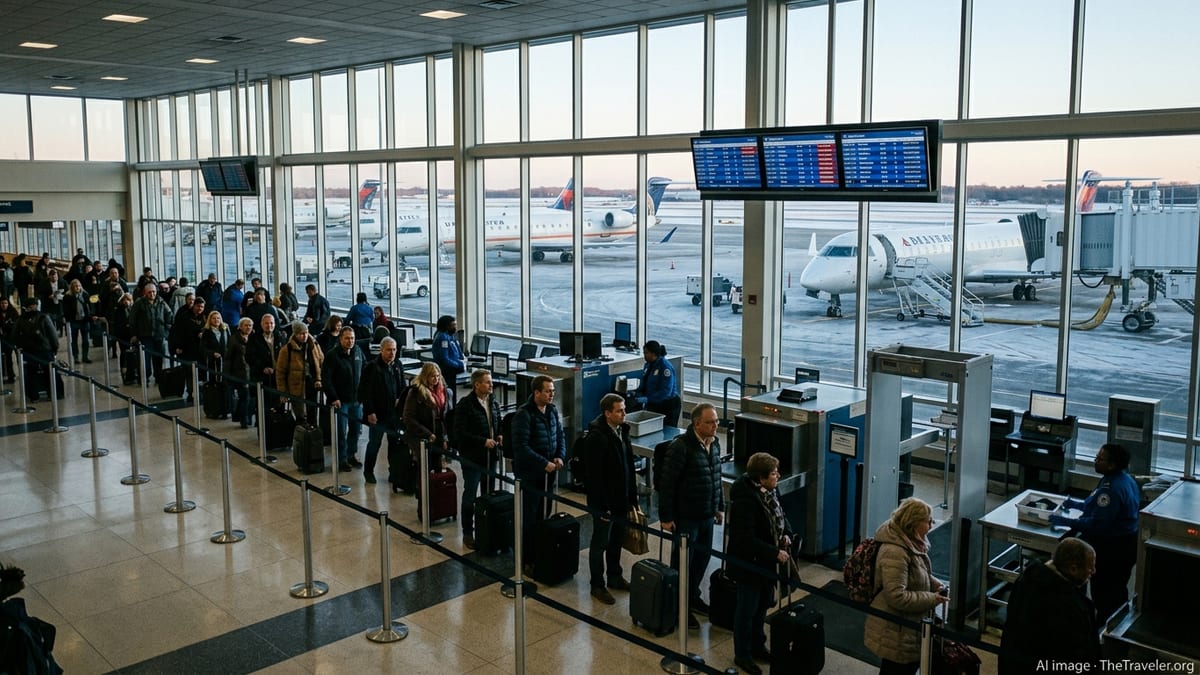
Shifting Regional Networks Hit a Growing Midwestern Airport
Dane County Regional Airport, the primary commercial gateway for Madison, has been on a steady growth trajectory, recording its busiest summer travel season on record in 2025 and expanding to 17 nonstop destinations. Publicly available airport planning documents and traffic data show more than 2.4 million passengers used the airport in the 12 months ending in early 2026, underlining its role as a key node in the Upper Midwest air network.
That growth, however, has been built largely on the back of regional jets feeding larger hubs such as Chicago, Washington and Minneapolis. Industry databases list hundreds of weekly departures from Madison operated by regional affiliates on behalf of the major carriers, using 50 to 76 seat aircraft that are particularly vulnerable when parent airlines reshuffle capacity.
As major airlines trim or reconfigure domestic schedules for the late summer and fall of 2026, publicly available schedules indicate a disproportionate share of the cuts are falling on smaller city links. Operational reports and timetable changes suggest that several Madison routes seeing regional jet reductions are losing frequency at peak times, while others are moving to more seasonal service patterns.
The result for Madison-area passengers is a more fragile network in which delays or cancellations on a handful of regional flights can quickly break connections to cross-country and international itineraries that rely on on-time arrivals into big hubs.
Route Cancellations and Frequency Cuts Erode Key US Connections
Across the United States, airlines have been paring back underperforming or operationally complex routes in 2026, with industry coverage highlighting a mix of permanent cancellations and seasonal suspensions on domestic networks. Although many headlines have focused on cuts at larger airports, schedule data show that medium-sized markets linked primarily by regional jets, including Madison, are feeling the ripple effects.
Publicly available tracking and routing tools indicate that some Madison services into major hubs now operate with fewer daily frequencies or are concentrated into certain days of the week. In practice, that means fewer options for early morning departures that feed the first wave of transcontinental flights, and reduced flexibility for evening returns that connect homebound travelers from the coasts or the South.
When a carrier trims a route by even one daily round trip, the loss of connection opportunities can be substantial. Madison travelers who previously relied on a short regional hop to Chicago O’Hare, Washington National or another hub may now find that meeting times, conference schedules or family commitments are harder to match with remaining flights.
Industry analyses of recent disruption events emphasize that cancellations and extended delays have been especially acute on shorter-haul regional services linking mid-sized cities. When those flights to and from Madison are pulled or heavily delayed, onward itineraries across the continental United States can unravel, forcing last-minute rebooks or overnight stays in hub cities.
Regional Carrier Realignments Add Instability
Compounding the pressure at Madison is a wave of corporate and strategic change among regional airlines themselves. Several of the largest US regional operators have restructured contracts, merged, or shifted their business toward charter work and federally subsidized routes, reducing the pool of aircraft and crews available for traditional hub feeder flying.
One long-established regional carrier with deep roots in Wisconsin has spent the past year unwinding a major capacity agreement with a legacy airline and pivoting into charter and Essential Air Service flying. Public records and investigative coverage indicate that the transition has involved layoffs at Wisconsin facilities and a significant reorientation of the airline’s network away from the traditional Midwest commuter model that supplied aircraft and crews into hubs used by Madison travelers.
Elsewhere in the regional sector, consolidation is reshaping the competitive landscape. Recent merger activity among regional operators that fly on behalf of multiple legacy carriers signals a push for scale efficiencies, but it also brings fleet rationalization and schedule consolidation that can leave thinner spokes like Madison with fewer operating partners.
These changes do not always show up as high-profile route cancellations. Instead, they manifest as quieter reductions in available seats, less redundancy in schedules, and tighter aircraft rotations. When weather, maintenance or air traffic constraints intervene, Madison’s dependence on a smaller set of regional fleets can magnify the odds that a single disruption cascades across multiple departures in a single day.
Passenger Impact: Longer Journeys, Higher Costs and Crowded Hubs
For travelers, the immediate impact of these regional network adjustments is felt in disrupted plans and shifting travel patterns. Data from recent nationwide disruption days show that while major coastal gateways draw much of the attention, a significant share of cancellations and long delays have involved regional jets operating into and out of smaller markets similar to Madison.
When direct connections are thinned out, passengers often must route through more distant hubs, adding extra flight segments and longer layovers. Madison-area travelers heading to the West Coast or Southeast increasingly report itineraries that require backtracking through congested hubs, rather than using the most direct path that might once have been available via a single regional hop and a mainline connection.
Fares can also creep higher as options shrink. With fewer daily departures and a more limited roster of carriers on some routes, discounted inventory tends to sell out earlier, leaving many travelers to choose between inconvenient departure times or higher-priced remaining seats. Publicly available booking engine searches in recent weeks have highlighted pronounced price differences on dates where Madison’s regional schedules are most constrained.
At the airport level, a concentrated schedule with fewer but fuller flights can create bottlenecks at check-in and boarding even when security queues remain relatively short. On days when weather or operational issues affect the regional fleets serving Madison, the limited number of alternate flights can extend disruptions well beyond the original delay window.
Madison’s Strategic Dilemma in the US Air Network
The turbulence in regional airline operations underscores a strategic dilemma for Madison. The city’s growing population, strong university presence and expanding business community support demand for more nonstop options, yet the airport remains structurally tied to hub-feeding regional jets that are increasingly squeezed within carrier networks.
Dane County Regional Airport’s planning documents emphasize ongoing efforts to attract and retain new service, including incentive programs and terminal improvements aimed at making the market more appealing to airlines. At the same time, broader industry trends point to constrained regional jet fleets, pilot shortages and competitive pressure to deploy available aircraft on the densest, most profitable routes.
In the near term, publicly available industry forecasts suggest that Madison’s connectivity will remain vulnerable to how regional carriers and their major airline partners choose to allocate capacity. As long as the bulk of flights rely on smaller jets shuttling to a limited number of hubs, any realignment in those hub strategies will be felt quickly in south-central Wisconsin.
For now, travel advisors and frequent fliers alike are urging Madison passengers to build in buffer time, favor itineraries with multiple daily options where possible, and pay close attention to schedule updates as regional carriers continue to recalibrate their networks ahead of the peak holiday and 2027 planning cycles.