


More news on this day
Detroit Metropolitan Wayne County Airport is facing a fresh wave of disruption after a concentrated burst of delays and cancellations among regional carriers cascaded through the hub, snarling connections and creating knock-on disruption for travelers across North America and on select long-haul routes to Europe and beyond.
Get the latest news straight to your inbox!
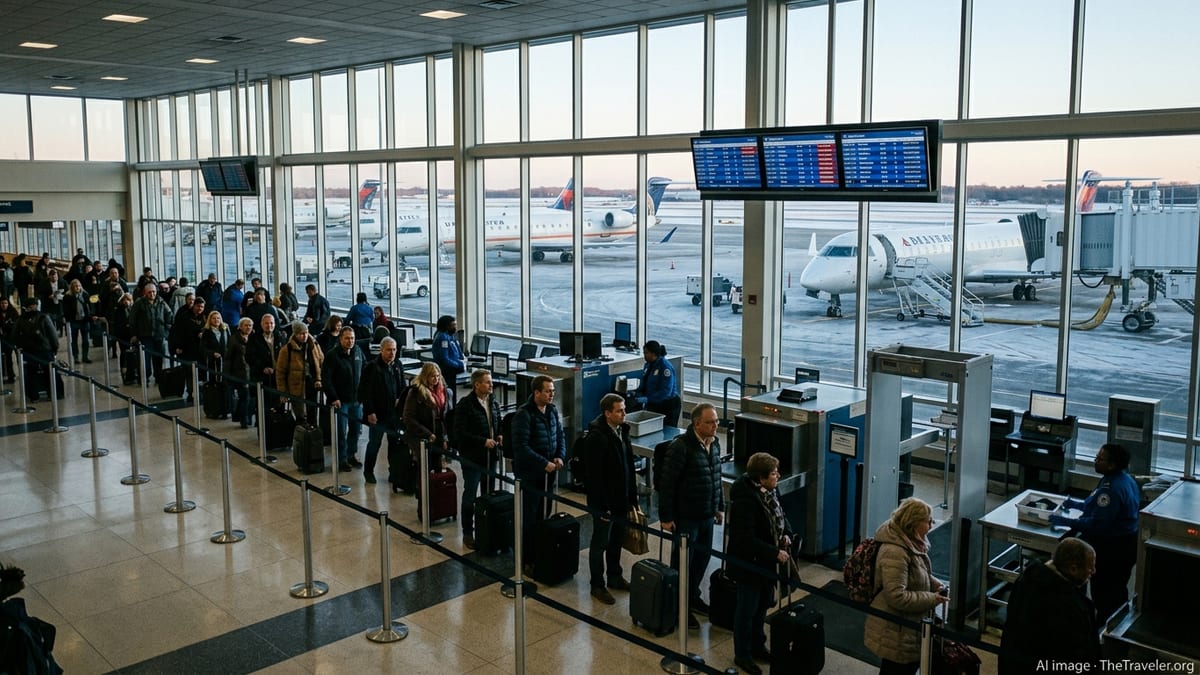
Detroit Hub Strains Under Regional Carrier Disruptions
Operational data from June 10 and 11 indicates that Detroit Metro saw a sharp spike in delayed and canceled departures, heavily concentrated among regional airlines operating flights under the banners of major network carriers. Publicly available tracking information highlights SkyWest Airlines, PSA Airlines, Envoy Air, Republic Airways and other regional operators as the most affected, with their short-haul services forming the backbone of Detroit’s domestic connectivity.
Reports compiled from aviation analytics platforms show that these regional flights experienced rolling delays throughout the day, often departing late or being canceled outright as crews and aircraft fell out of position. Because many of these segments feed Detroit-bound passengers into longer-haul Delta Air Lines and partner services, even modest schedule disruptions quickly escalated into significant misconnects.
Detroit Metro’s role as a key Delta hub magnified the impact. The airport sits at the center of a dense network linking Midwestern cities to major coastal gateways and transatlantic destinations, so interruptions to regional arrivals and departures created an immediate shortage of inbound connection traffic, as well as outbound passengers and crews for onward flights.
By late in the disruption window, departure boards at Detroit were dominated by late-running regional flights and a cluster of cancellations, while mainline operations attempted to recover around the gaps. Passengers arriving from smaller markets found that missed connections forced unexpected overnight stays or complex rebookings through alternative hubs.
From Local Breakdown to Global Network Gridlock
The disruption at Detroit did not occur in isolation. On the same day, nationwide data showed more than seven hundred cancellations and several thousand delays across the United States, with hubs such as New York, Chicago, Philadelphia, Washington, Boston and Charlotte also struggling to maintain orderly operations. Weather systems and air-traffic management constraints added to the strain, reducing the margin for recovery when regional operations at Detroit began to wobble.
Once a critical mass of Detroit’s feeder flights went off schedule, the effects rippled outward through airline networks. European departures waiting on connecting passengers from smaller Midwestern cities faced boarding delays and, in some cases, weight-and-balance adjustments when anticipated travelers failed to arrive. Inbound long-haul flights also encountered bottlenecks as ground resources were stretched by late-arriving aircraft and rolling gate changes.
According to published coverage that draws on national tracking platforms, the resulting gridlock was not limited to Detroit. Missed connections there contributed to pressure at secondary hubs where displaced passengers were re-routed, forcing carriers to juggle limited spare seats and adjust flight plans late in the day. Some travelers reported multi-leg itineraries being rebooked through entirely different cities as airlines sought to thread them through remaining available capacity.
The combination of regional airline constraints, convective weather patterns and airspace flow programs created an environment where even small operational issues could propagate quickly. Detroit’s concentrated burst of regional disruptions therefore acted as a catalyst within a broader, already fragile summer travel landscape.
Structural Vulnerabilities in the Regional Feed System
Industry assessments over recent years have repeatedly highlighted the growing fragility of regional airline operations in the United States. Public financial disclosures and airport planning documents note that shortages of qualified pilots, tight crew scheduling, and aging regional fleets have made it harder for smaller carriers to operate reliably, especially when confronted with weather or air-traffic control initiatives that compress schedules.
The latest disruption at Detroit underlined how dependent major hubs have become on this regional feed system. Many flights branded under large network airlines are in fact operated by separate regional companies that must coordinate aircraft, maintenance and staffing with thinner operational buffers. If a single early-morning rotation is delayed or canceled, later flights often inherit the disruption as aircraft and crews cycle through the day.
Detroit’s status as a central connection point for smaller Midwestern communities means that a large share of its departures involve 50 to 76-seat regional jets. When those aircraft are delayed, there are fewer alternative options for passengers, since larger narrowbody or widebody aircraft cannot easily be substituted on short notice without significant schedule reshuffling.
Publicly available airport studies and state transportation plans have warned that this structure can amplify the impact of any disturbance. The events at Detroit illustrated that vulnerability: once regional operations began to slip, the lack of spare pilots and airframes made it difficult to restore a normal pattern before the disruption had already radiated across associated hubs and partner networks.
Passengers Face Long Lines and Limited Options
For travelers on the ground at Detroit Metro, the day’s disruptions translated into crowded gate areas, long customer-service queues and limited same-day alternatives. Reports from the terminal described passengers confronting a patchwork of delay notifications, rolling departure times and sudden cancellations, especially on shorter regional routes connecting to nearby states.
With weather and air-traffic factors playing a role, many affected passengers found that standard compensation options were restricted. Airlines typically draw a distinction between controllable and uncontrollable events, and widespread storms or government-imposed flow restrictions are often categorized as outside carrier control. As a result, rebooking assistance was frequently limited to finding the next available seat, with hotel and meal support varying by airline and specific circumstances.
Travelers whose regional flights to Detroit were canceled outright sometimes faced the prospect of waiting until the following day for another departure, particularly from smaller airports with only a few daily frequencies. Others were rebooked via alternate hubs, but those reroutes added hours and additional connections to itineraries that had originally featured a single stop through Detroit.
Social media and traveler reports suggested that some passengers chose to abandon air travel altogether on shorter routes, opting instead to drive several hours to reach their destination rather than wait for an available seat. The combination of fatigue, uncertainty and limited real-time information channels contributed to a tense atmosphere on concourses throughout the afternoon and evening.
What the Detroit Disruption Signals for Peak Travel Season
The chain reaction at Detroit Metro arrives just as the peak summer travel period accelerates, raising questions about how resilient airline networks will be across the coming weeks. With demand at or above pre-pandemic levels and many carriers operating close to capacity, any local disruption has greater potential to escalate into multi-day, multi-hub complications.
Analysts tracking U.S. aviation performance note that the convergence of pilot shortages, aging infrastructure, tight aircraft utilization and more frequent severe-weather events has reduced the margin of error for hubs like Detroit. In such an environment, regional carriers function as both critical connective tissue and a prominent point of vulnerability.
Publicly available operational data suggests that Detroit’s latest episode fits into a broader pattern of regional affiliates shouldering disproportionate disruption across several major networks. While large mainline jets often maintain relatively stable schedules, the smaller aircraft feeding those flights continue to experience higher rates of delay and cancellation.
For travelers planning trips through Detroit and other hubs this summer, the events underscore the importance of building extra time into connections, monitoring flight status closely through airline apps, and considering alternative routings when itineraries depend heavily on multiple regional segments. As airlines and airports work to refine schedules and strengthen staffing, Detroit’s recent turbulence serves as a reminder of how quickly localized issues in the regional system can cascade into global gridlock.