


Stepping out into the humid air of Rio de Janeiro after a long flight, most travelers just want one thing: a smooth, stress free ride into the city. At Rio de Janeiro–Galeão International Airport (GIG), often branded as RIOgaleão or Galeão, Uber and other app based cars are widely used, but the pickup system can be confusing if you are not prepared. This guide walks you through how Uber works at Galeão today, where to meet your driver, the difference between the terminals, typical pricing patterns, and when an official taxi may actually be the better option.
Get the latest updates straight to your inbox!
Know Your Airport: Terminals, Layout and Ground Transport Basics
Galeão is Rio’s main international gateway, located on Ilha do Governador, roughly 20 to 25 kilometers from popular neighborhoods such as Copacabana, Ipanema and Lapa. The airport has two passenger terminals, Terminal 1 and Terminal 2, but commercial passenger operations are today concentrated in Terminal 2. Terminal 1 is largely deactivated for regular flights and used mainly for support functions, offices and occasional operations, so most arriving travelers will exit through Terminal 2’s arrivals level.
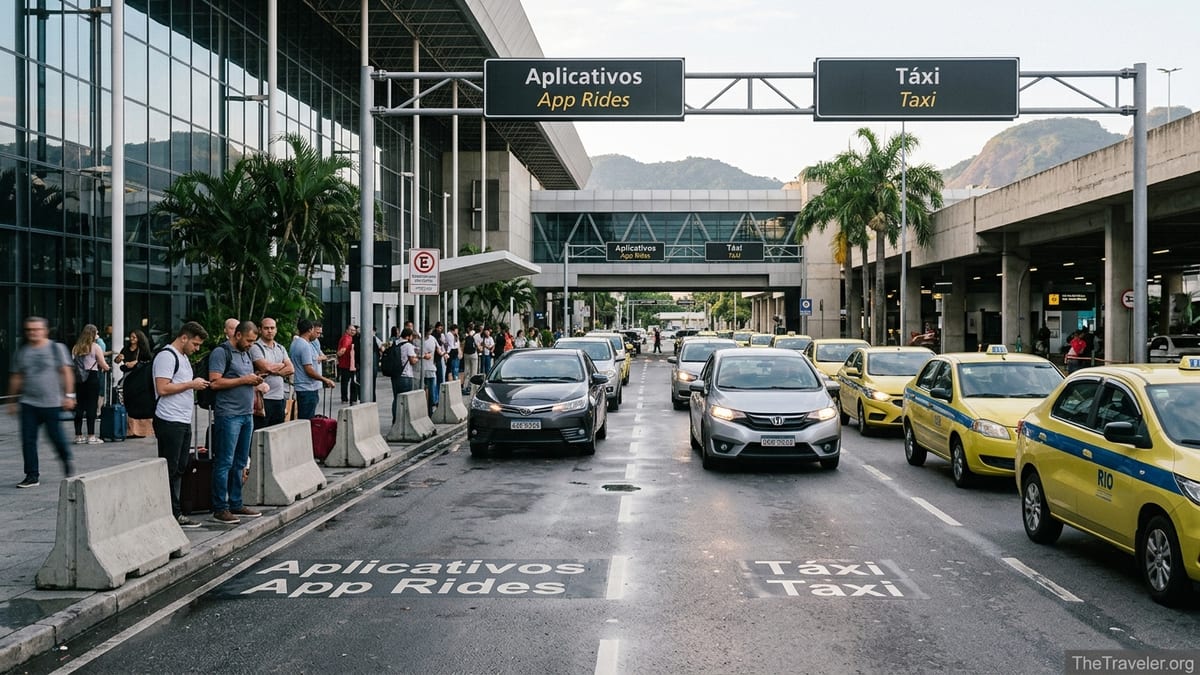
The layout matters because your Uber pickup options and walking distances change depending on where you arrive. Terminal 2 has a wide arrivals curb at “Piso 0” (ground floor) where taxis, private cars and shuttles operate, plus direct access to the BRT stations Galeão / Tom Jobim 1 and 2 just outside. The official airport guidance currently directs most passengers to meet app based rides between Terminals 1 and 2, in a dedicated area often referred to locally as the Uber Lounge or app pickup zone, rather than simply jumping into cars at the closest curb.
In practice, many arriving international passengers follow a similar route: exit customs in Terminal 2, pass the line of yellow taxis and private transfer desks, and then either turn left along the sidewalk or follow overhead “Aplicativos” or “Aplicativos de Transporte” signs toward the shared ride pickup area between the terminals. The walk is usually under five minutes with luggage trolleys available, though in heavy rain you may prefer to move quickly under the canopies because the curbside area can get crowded.
Understanding this layout before you land helps you avoid one of the most common mistakes first timers make at GIG: requesting an Uber while still in the baggage hall or at the terminal door, only to realize the driver is waiting in the designated app zone a few hundred meters away while you are stuck in the taxi queue area.
How Uber Pickup Works at Galeão Today
Uber operates continuously at Galeão, and the company maintains dedicated guidance pages for the airport along with a local airport fee that is included in your fare. When you land, connect to wifi or mobile data, open the app, and enter your destination as usual. The key step is to select the correct terminal and pickup point. The app allows you to choose Galeão International Airport Terminal 2 as your departure point, and then offers specific meeting locations that correspond to the airport’s designated app pickup zones.
For most recent travelers, the standard experience is to walk from the arrivals exit in Terminal 2 to the Uber Lounge style area between Terminals 1 and 2. This is typically a signed zone where multiple passengers wait and drivers pull in, similar to app pickup areas at many large airports. In daytime, you will likely see several people standing with luggage, checking phones, and a rotation of cars labeled with Uber stickers or 99 (another popular Brazilian app) arriving and leaving. The important thing is to match the letter or zone number shown in your Uber app with the signage around you so your driver can find you quickly.
Drivers wait in an airport queue controlled within the Uber driver app. Because of this, once you request a ride, a nearby driver who has already cleared airport entry checks will usually be assigned within a few minutes. However, during peak waves of international arrivals early in the morning or evening, or during major events such as New Year’s Eve on Copacabana or Carnival, you may see longer wait times and higher surge pricing. If the Uber app is quoting a long estimated arrival time and a significantly inflated fare, it can be sensible to compare against an official taxi before committing.
One practical tip many frequent visitors share is to only request your Uber once you are physically near the pickup area, not while you are still in the immigration queue or waiting for bags. Drivers enter a time limited queue; if you are delayed inside the building, they may cancel or you may incur a no show fee. A realistic sequence is: use the airport wifi to send a quick message to your hotel, withdraw some cash or buy a SIM if you need one, follow the “Taxis e aplicativos” or “Aplicativos” signage outside, and once you arrive at the correct curb section, then request the car.
Terminal Differences and Following the Signs
Because Terminal 1 is largely inactive for normal passenger operations, most arriving travelers who read about Uber pickup at “Terminal 1” online become confused when they never physically see a busy arrivals hall there. The current reality is that international flights land at Terminal 2, and the shared ride pickup area sits essentially between Terminal 1 and Terminal 2. When you step out of customs in Terminal 2, look above the crowds for wayfinding signs mentioning taxis, buses and app based transport, and follow the arrows toward the exterior sidewalk.
In some languages, the airport signage and airline communication still mention “Terminal 1 / Terminal 2” in ways that do not reflect the fact that only Terminal 2 handles almost all departures and arrivals. Do not worry about this when booking your Uber; within the Uber app, you can simply choose “Rio de Janeiro Galeão International Airport” and let the GPS locate you. Once outside, pay attention to color coded poles or markings indicating specific pickup sectors. Drivers often message via the in app chat with a note such as “Estou no ponto azul” or “I am at sector B”; if you feel unsure, reply promptly and confirm what you are wearing or holding so they can identify you in the crowd.
If you happen to arrive on a domestic connection that uses a remote position or an auxiliary area, airport buses will still bring you to Terminal 2’s arrivals level. From there, the process is the same: exit, ignore unofficial touts offering rides, keep your valuables close, and walk to the app pickup area instead of stopping at the first curb you see. The walk is short but you will avoid awkward conversations with drivers who try to negotiate cash rides outside the official apps.
Travelers connecting to public transport should note that the BRT TransCarioca stations named Galeão / Tom Jobim 1 and 2 are directly in front of the terminals on the arrivals side, with an express line linking the airport to the Gentileza intermodal terminal near the city’s main bus station. Even if you plan to continue your trip by bus from Gentileza or Novo Rio, taking Uber for the airport leg can be attractive late at night, especially if you are unfamiliar with the RioCard payment system used on BRT.
Prices, Surge Periods and Realistic Budgeting
Uber fares from Galeão to central Rio fluctuate significantly with traffic and demand, but some recent traveler reports give useful ballpark figures. In normal daytime conditions without major traffic, many visitors have recently paid around 70 to 90 Brazilian reais for UberX or similar categories from Galeão to areas like Copacabana or Ipanema, and somewhat less, sometimes in the 50 to 70 reais range, for closer neighborhoods like Centro or Lapa. Premium options such as Uber Black to or from the South Zone are often in the 80 to 150 reais range depending on time of day and traffic.
However, prices climb quickly during surge periods. During a weekend evening when rain is falling and multiple long haul flights land simultaneously, it is not unusual to open the app and see Galeão to Copacabana quoted at well over 120 reais for UberX. On New Year’s Eve or Carnival parade nights, travelers have reported even higher spikes or difficulty getting matches at all. In those situations, it is worth checking the official taxi desk just inside the terminal. Sometimes the prepaid rate cards or metered taxis end up only moderately more expensive than a heavily surged Uber, with the added benefit of having a car ready immediately.
Keep in mind that Galeão imposes a small airport pickup fee on ridesharing trips, which is automatically added into your fare and displayed in the breakdown. You do not need to tip drivers in Brazil, though rounding up small amounts in cash or leaving a few reais extra on longer trips is appreciated. If you are arriving with multiple people or large luggage, factor in that smaller car categories might feel tight; upgrading to a slightly larger option like Uber Comfort can be worth the small price difference given the 30 to 60 minute drive times into town.
For budget planning, consider an example: a mid morning arrival on a weekday, with moderate traffic, from Galeão to a hotel near Posto 5 on Copacabana. In many recent cases, travelers requesting UberX at the official pickup area have seen quotes around 80 to 95 reais, arriving in 5 to 10 minutes. The same route in a yellow metered taxi might cost a bit more depending on traffic and tolls, often reaching into the 100 to 130 reais range by the time you arrive. During heavy rain at night, both figures can easily increase.
Safety, Scams and When Official Taxis Are Simpler
Rio is a vibrant but complex city, and conversations about safety at Galeão can sound more alarming online than the reality many travelers experience. The arrivals area and the walk to the official Uber pickup zone are busy, well lit and patrolled, and thousands of passengers move through them daily without incident. That said, basic precautions make a difference. Keep your phone in a firm grip when using the app, avoid displaying large amounts of cash, and stay close to the terminal entrance while you wait for your car.
One of the main reasons many locals still prefer official taxis at the airport is to avoid the hassle of driver cancellations and negotiation attempts that sometimes occur with app rides. For example, on shorter routes from Galeão to nearby neighborhoods, some UberX drivers have been known to cancel if they feel the fare is too low compared with waiting for a longer city center trip. Official taxis operating under the airport cooperatives or standard city rules cannot refuse short rides so easily, and you can usually see their identification clearly displayed inside the car.
If you land very late at night, are traveling alone with significant luggage, or are not comfortable yet speaking Portuguese, you may find it simpler to walk to one of the official taxi or radio taxi booths just outside customs in Terminal 2. There you can request a prepaid ride directly to your hotel, paying either by card or cash at a fixed approximate rate before leaving the terminal. The attendant writes down your destination and hands you a slip for a specific driver. While these services are typically more expensive than Uber, many visitors consider the extra cost worthwhile for the added clarity and reduced stress in the early hours of the morning.
For travelers who still want to use an app but prefer the perceived safety of licensed taxis, Rio also has official taxi apps that work similarly to Uber, and traditional yellow cabs can be ordered digitally rather than hailed in the street. From Galeão, though, the choice generally comes down to three realistic options: Uber or other rideshare from the designated pickup zone, an official yellow taxi from the curb or cooperative booth, or a prebooked private transfer arranged through your hotel or a reputable company.
Practical Step by Step: From Plane Door to Uber Door
To make your first arrival at Galeão feel smoother, it helps to visualize the full sequence. After landing, you disembark, pass through immigration, and collect your luggage. Once you clear customs, you step into the arrivals hall on the ground floor of Terminal 2, where you will see currency exchange booths, ATMs, car rental desks, hotel shuttles, snack bars and a visible line of taxis outside the glass doors. If you already know you want Uber, ignore informal drivers who may approach you inside the hall offering “taxi” or “Uber” rides outside the app; politely decline and keep moving.
Walk toward the exit doors and look for signage mentioning taxis and apps, often grouped together. As you pass through the automatic doors to the sidewalk, you will see the official taxi stand directly ahead or slightly to one side, with yellow cabs queued. For Uber, instead of stopping there, turn in the direction indicated for apps, which usually leads along the front of the terminal toward the area between Terminals 1 and 2. As you walk, open the Uber app, enter your hotel address, confirm Rio de Janeiro Galeão as your pickup location, and only hit “Confirm” once you are clearly inside the designated pickup zone.
After you request, the app will display the driver’s name, car model and color, and license plate, as well as a short estimate of arrival time. Many drivers at Galeão will call or send a quick text via the app to confirm exactly where you are standing. Responding politely, even with simple phrases like “Estou na placa azul” or sending “At the Uber sign, wearing a red backpack” in English, helps avoid confusion. When the car arrives, double check the license plate and driver name before getting in, and only start the trip once you see the route appear in the app.
On the way into the city, it is common for drivers to ask whether you prefer the faster toll highway route or a slower but slightly cheaper alternative. If you are tired and carrying bags, choosing the faster, safer highway route is generally worth the modest toll cost added to your fare. Once you approach your neighborhood, keep your valuables core items like passport, phone and wallet secure and within reach, and step out on the sidewalk side when you arrive at your destination.
Alternatives to Uber: BRT, Buses and Prebooked Transfers
Although Uber is popular and convenient, it is not the only way to leave Galeão. Budget conscious travelers, or those heading to the bus station to continue to destinations like Búzios, Paraty or Arraial do Cabo, often use the BRT express line from the stations in front of the terminals to the Gentileza terminal. From there it is a short walk to the main bus station, where long distance coaches depart. This option can be significantly cheaper than a full Uber ride from the airport, but involves handling your luggage on public transport and navigating ticket machines or RioCard payment, which may feel stressful after a long flight.
For visitors arriving late at night or with heavy luggage, many hotels and hostels in tourist districts offer prebooked private transfers from Galeão. These services are usually priced above typical Uber fares but below some luxury car services, and the driver meets you in the arrivals hall holding a sign with your name. This can be a good compromise for families, older travelers or anyone with mobility issues, as the driver helps manage luggage and navigates the terminal and parking areas on your behalf.
Some conference organizers and universities in Rio also provide clear advice to their guests: either take a reputable prearranged transfer or use Uber from the official pickup area, and avoid accepting unsolicited offers of rides from strangers in the terminal. This same logic applies to independent travelers. If at any point you feel uncomfortable with the situation around the pickup area, there is no harm in walking back inside the terminal and reassessing your options, whether that is requesting another Uber, choosing an official taxi, or waiting for conditions to calm down.
Ultimately, the best option from Galeão depends on your priorities. Solo backpackers may value the cost savings of BRT plus metro or bus, digital nomads might favor the flexibility of Uber where they can work from the back seat while watching the route, and families with children may simply want the most straightforward, door to door option, even if it costs a bit more.
The Takeaway
Uber has become an ordinary, everyday way to leave Rio’s Galeão Airport, and thousands of locals and visitors use it without incident. The key to a smooth experience is preparation: know that almost all flights use Terminal 2, that the official app pickup area is between the terminals rather than directly outside the customs doors, and that signage inside the arrivals hall will guide you toward “Aplicativos” if you pay attention.
Have your hotel address ready in the app, request your ride only once you are near the correct curb, and confirm the driver and car details before you get in. Keep a realistic sense of pricing so you can recognize when surge makes Uber disproportionately expensive and an official taxi or prebooked transfer might be simpler and not dramatically more costly. Remain alert to your surroundings without becoming paranoid, and use common sense about valuables while moving between the terminal and the car.
With that groundwork in place, arriving at Galeão can feel like a straightforward start to your Rio visit rather than a stressful obstacle. Whether you roll out of the airport in an UberX headed for a Copacabana apartment, a yellow taxi bound for a business hotel downtown, or a shuttle van taking you on to the Costa Verde, you will step into the city already one step ahead of the confusion that catches many first timers by surprise.
FAQ
Q1. Where exactly do I meet my Uber at Galeão Airport?
The main Uber pickup point is in the designated app based transport area between Terminal 1 and Terminal 2. From Terminal 2 arrivals, follow the signs for “Aplicativos” or “Taxis e aplicativos,” walk outside along the front of the building, and wait in the sector indicated in your app.
Q2. Can I request an Uber directly from outside the customs doors in Terminal 2?
You can request it there in the app, but the driver will normally be directed to the official pickup area a short walk away rather than the closest curb. To avoid confusion and cancellation, it is better to walk to the designated app zone and then request the ride.
Q3. How long does it usually take for an Uber to arrive at Galeão?
In normal daytime conditions, cars often arrive within 5 to 10 minutes after you request. During busy arrival peaks, heavy rain or major events in Rio, wait times can extend, so check the estimated arrival in the app before confirming your request.
Q4. How much should I expect to pay for an Uber from Galeão to Copacabana?
Prices vary with traffic and demand, but many recent travelers report typical daytime fares in roughly the 70 to 100 reais range for UberX between Galeão and Copacabana. During surge pricing or heavy traffic, the fare can be higher.
Q5. Is it safe to use Uber from Galeão late at night?
The official Uber pickup area and terminal surroundings are busy and monitored, and many travelers safely use Uber at all hours. As anywhere, keep your phone and bags close, verify the driver and license plate, and if something feels off, cancel and request another car or choose an official taxi.
Q6. When is it better to take an official taxi instead of Uber?
Official taxis are often simpler if you arrive very late, are tired or anxious, prefer speaking with a person at a booth, or see extremely high surge pricing in the Uber app. In those cases, a prepaid taxi from the airport desk or a metered yellow taxi can be worth the extra cost.
Q7. Do Uber drivers at Galeão ever refuse short trips?
Some travelers have reported that drivers sometimes cancel shorter or lower value trips, especially during busy times. If this happens repeatedly, it can be quicker to switch to an official taxi, which should not refuse a reasonable ride from the airport.
Q8. Can I pay my Uber ride from Galeão in cash?
Uber in Brazil allows both card and cash payments, depending on your account settings. Before you land, open the app and check whether “cash” is listed as an available payment method for Rio, and carry enough reais if you plan to use it.
Q9. What if I do not have mobile data when I arrive?
Galeão offers airport wifi in the terminal, which you can use to request your Uber. Alternatively, you can buy a local SIM card or eSIM, or choose an official taxi from the booth inside the arrivals hall if connecting to the app proves difficult.
Q10. Are there other ride apps besides Uber that work at Galeão?
Yes, other services like 99 and taxi apps supported by the city also operate at Galeão and usually use the same general pickup area. If you have multiple apps installed, you can compare prices and wait times before choosing the option that works best for you.