


More news on this day
New Zealand and Singapore are confronting a new wave of aviation cost pressures as jet fuel prices, airport charges and infrastructure investment plans converge, forcing airlines such as Air New Zealand to juggle fare restraint with fleet renewal ahead of 2027.
Get the latest news straight to your inbox!
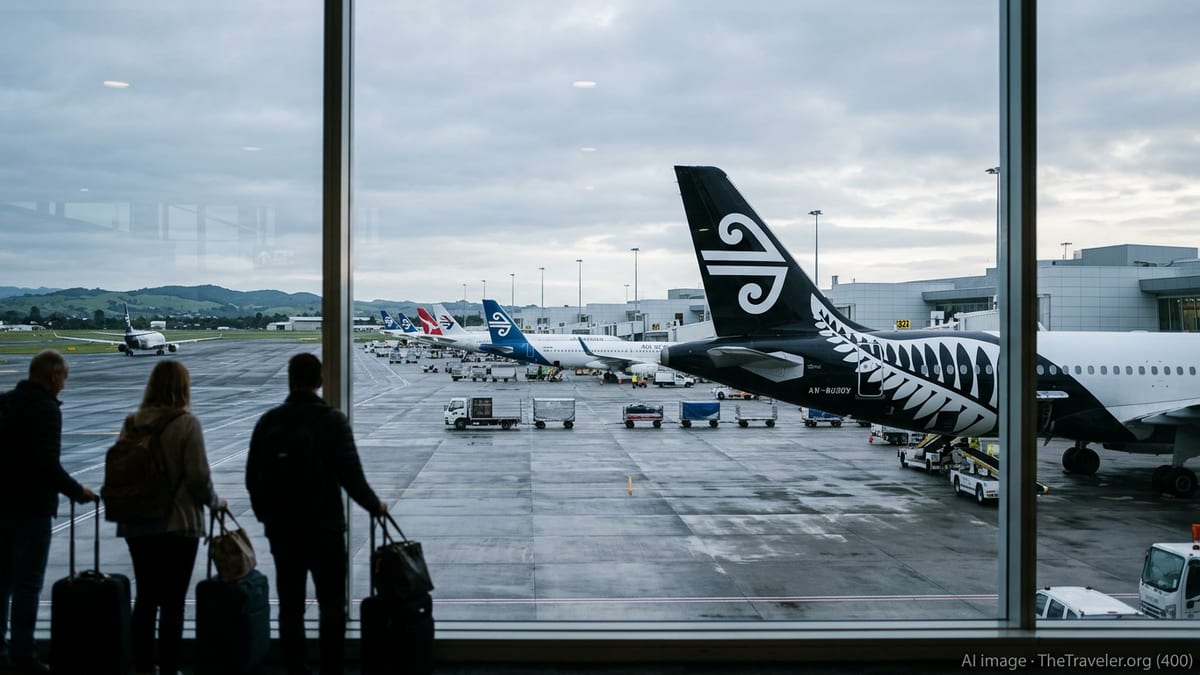
Fuel Shock Hits Air New Zealand’s Bottom Line
Air New Zealand is facing one of the sharpest fuel shocks in its recent history, with publicly available information indicating that jet fuel prices have more than doubled over the past year on the back of heightened tensions in the Middle East. Market updates from the carrier show that fuel, already one of aviation’s largest cost items, has surged to the point where the airline now expects a substantial full-year loss as it absorbs hundreds of millions of dollars in additional fuel expense.
Recent disclosures indicate jet fuel has at times traded in a band reportedly reaching above 200 dollars a barrel, compared with levels closer to 90 dollars before the latest geopolitical flare-up. Air New Zealand has responded by hedging a portion of its exposure, but reports suggest that only around a third of the cost increase has been offset through these measures and selective fare adjustments.
During the International Air Transport Association’s annual meeting in Rio de Janeiro in early June, coverage of Air New Zealand’s strategy highlighted that the airline is now planning around a notional 150 dollars per barrel benchmark for jet fuel right through to its 2027 financial year. That planning assumption underscores how the carrier no longer views the current spike as a short-lived disruption, but as a structural cost pressure that must be built into long-term schedules, pricing and fleet decisions.
The rapid rise in fuel costs has already translated into higher ticket prices and schedule changes. Domestic travelers have been hit by reduced frequencies on some regional routes, while long-haul fares have climbed by mid-single to low double digits on key markets such as Singapore, London and the United States, according to industry fare tracking. Air New Zealand has signaled that it sees limited headroom for further broad-based fare hikes without dampening demand.
Limits to Fare Increases as Cost Pressures Multiply
Air New Zealand’s challenge is not confined to fuel. New Zealand’s aviation system is grappling with a broader escalation in operating charges, from air traffic management fees to airport pricing resets, at a time when travelers are already highly sensitive to higher airfares. Consultation papers and regulatory reviews show that key airports, including Auckland and Wellington, have either implemented or proposed material increases in aeronautical charges to fund major infrastructure programs and recover pandemic-era revenue losses.
Regulatory assessments of Auckland Airport’s pricing decisions have warned that higher charges flow directly into airline cost bases and, ultimately, into ticket prices paid by passengers. Submissions from airlines have raised concerns that compounding increases in government charges, navigation fees and airport tariffs risk undermining the competitiveness of New Zealand’s international connectivity, particularly for price-sensitive leisure and visiting-friends-and-relatives traffic.
At the same time, Airways New Zealand, which provides air traffic management services, has confirmed new price paths for the 2025 to 2028 period. Consultation documents indicate that while the per-passenger impact of these changes may appear modest when broken down by route, they arrive on top of already elevated fuel and airport costs, creating an aggregate burden that is difficult for airlines to fully pass through to consumers without suppressing demand.
Publicly available commentary from Air New Zealand suggests the carrier is being cautious about further across-the-board fare rises, aware that households are under inflationary pressure and that New Zealand’s remote geography leaves few alternatives to air travel. This tension is forcing the airline to look more aggressively at internal efficiencies and capacity management rather than relying solely on ticket price increases to balance its books.
Accelerating Fleet Recovery and Renewal Ahead of 2027
Against this cost backdrop, Air New Zealand is accelerating efforts to restore and renew its fleet by 2027, seeking fuel savings and reliability gains that could partially offset external price shocks. The airline has been contending with engine issues and delivery delays that, at one point, left up to a fifth of its aircraft unavailable. Industry coverage indicates that resolving these bottlenecks has become a strategic priority, both to rebuild capacity and to deploy more efficient new-generation jets.
New aircraft typically offer double-digit improvements in fuel burn per seat compared with older models, a crucial lever when fuel prices are exceptionally high. By bringing parked aircraft back into service and progressing deliveries of more efficient types, Air New Zealand aims to spread rising fixed and variable costs across more available seat kilometers, improving unit economics even in a hostile fuel environment.
The carrier’s planning horizon to its 2027 financial year is also shaped by expectations around demand recovery and network mix. Long-haul routes to Asia, North America and Europe, many of which rely on fuel-intensive widebody operations, are being paired with efforts to strengthen high-yielding corporate and premium leisure traffic. At the same time, maintaining viable regional connectivity within New Zealand, where aircraft are smaller and costs per seat are higher, remains a politically and socially sensitive task.
Industry analysts note that fleet decisions taken in the next 12 to 18 months will likely lock in Air New Zealand’s cost base for much of the next decade. The combination of engine performance issues, supply chain constraints and tight delivery slots across major manufacturers is adding urgency to the airline’s fleet strategy as it balances immediate cost pressures with long-term resilience.
Singapore Confronts Its Own Cost Squeeze
Across the Tasman, Singapore’s aviation hub is wrestling with parallel cost challenges of its own. Changi Airport Group and the Civil Aviation Authority of Singapore have outlined a multiyear plan to raise passenger and airline fees from 2025 to 2030, designed to fund around 3 billion Singapore dollars in service and infrastructure upgrades, including baggage systems and airside transport improvements.
Publicly available information on the fee changes shows that passenger service and security charges for departing travelers will step up gradually over several years, while landing, parking and aerobridge fees for airlines will also rise. By 2030, indicative schedules suggest that a narrow-body aircraft such as an Airbus A320 could face significantly higher per-landing costs compared with today, and total charges for passengers on some itineraries are projected to climb by more than 20 percent.
In parallel, Singapore has announced plans to introduce a sustainable aviation fuel levy, with the goal of accelerating the decarbonisation of airline operations at the hub. While this move aligns with global climate objectives, it adds yet another layer of cost at a time when airlines are already facing higher outlays on staff, maintenance and financing as traffic rebounds to, and in some cases exceeds, pre-pandemic levels.
Major carriers based in Singapore, including Singapore Airlines, have reported higher operating expenses in recent financial disclosures, reflecting a combination of fuel, staff and airport-related costs. Even with some relief from lower average fuel prices at certain points over the past year, overall expenditure has remained elevated, underlining how structural cost additions from infrastructure investment and environmental policies are reshaping the economics of operating to and from the city-state.
Regional Implications for Travelers and Tourism Flows
The combined effect of rising costs in New Zealand and Singapore is beginning to reverberate across wider Asia Pacific travel patterns. Both markets serve as important gateways, with Air New Zealand linking Australasia to North America and Asia, and Singapore functioning as a powerful hub for Southeast Asia and beyond. Higher fares and fees at these nodes can influence routing choices, airline capacity decisions and ultimately the affordability of long-haul leisure travel.
For New Zealand’s tourism sector, already challenged by distance and seasonality, persistent fuel and infrastructure costs risk keeping airfares structurally higher than in competing destinations. Tourism industry groups have warned in previous submissions that elevated travel costs may deter some visitors, especially from cost-sensitive markets in Europe and Asia, and could encourage domestic travelers to cut back on discretionary trips.
In Singapore, gradual fee increases and environmental levies are being implemented with a view to safeguarding the quality and sustainability of the country’s flagship hub. While the additional charges per ticket may appear modest in the early years, their cumulative impact, alongside global fuel volatility, may push airlines to fine-tune capacity and pricing on marginal routes.
For travelers, the emerging picture is one of continued upward pressure on ticket prices across key corridors linking New Zealand and Singapore with the rest of the world, even as airlines work to modernize fleets and improve efficiency. With Air New Zealand planning for elevated fuel costs through at least 2027 and Singapore’s aviation charges on a rising trajectory into the next decade, the region’s skies are likely to remain an expensive place to fly, testing the balance between sustainable aviation and accessible travel.