


Ask a dozen travelers whether riverboat cruises or ocean cruises are better and you will hear a dozen different answers, all shaped by budget, travel style, and what "vacation" means to them. Both types of cruising have changed significantly in the last few years, with new ships, shifting prices and more exotic itineraries. Understanding how river and ocean cruises actually feel in real life, and what they cost in practice, is the key to deciding which one is right for your next trip.
The Core Difference: Scale, Setting and Style
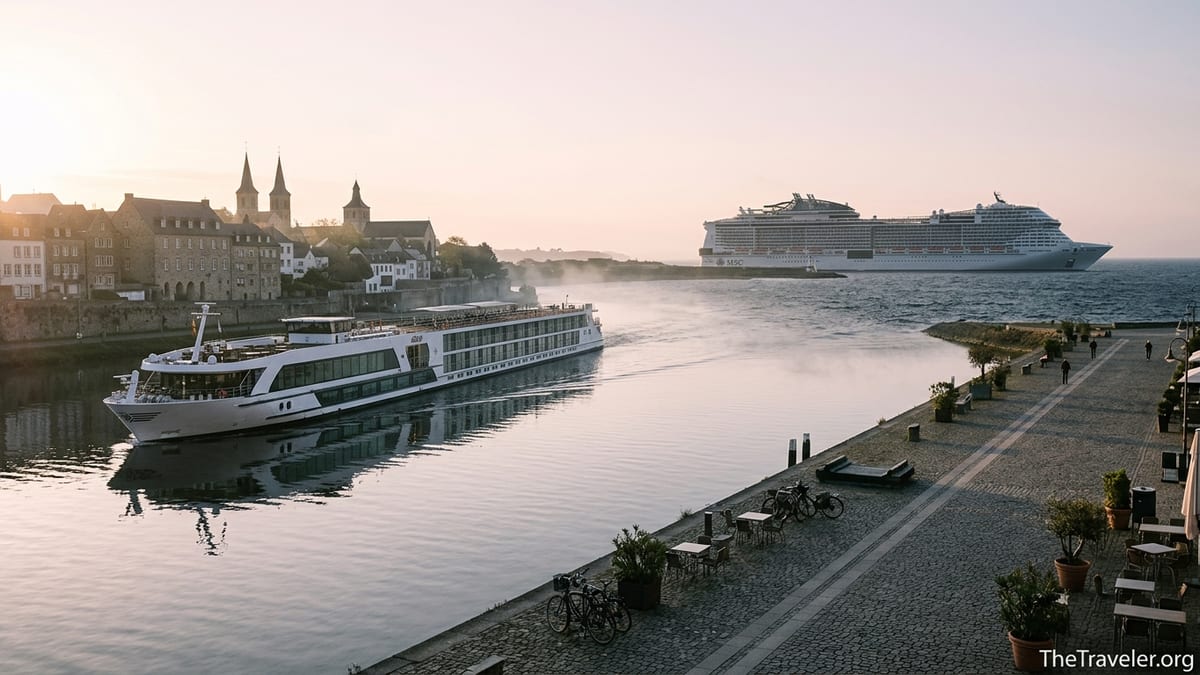
At the most basic level, river cruises and ocean cruises differ in size and setting. Ocean ships can feel like floating resorts, carrying anywhere from 1,500 to more than 6,000 guests. Think of a 7-night Eastern Caribbean sailing on a large ship from Miami, with multiple pools, water slides, Broadway-style shows, and whole neighborhoods at sea. River cruise vessels, by contrast, are intentionally small. A typical European river ship from lines such as Viking, AmaWaterways or Avalon carries around 150 to 190 passengers, more like a boutique hotel gliding along the Rhine, Danube or Douro.
That scale shapes the experience every day. On a mainstream Caribbean ocean cruise, you might spend sea days exploring the spa, surfing on a FlowRider, trying a zip line or watching an ice-skating show. The atmosphere is lively and resort-like, with announcements, trivia contests, casinos and late-night comedy. On a river cruise, the entertainment is quieter: a local string quartet after dinner, a lecture on Portuguese port wine as you sail up the Douro, or a small folkloric performance brought on board in a French riverside town.
The setting is different too. Ocean cruises spend a lot of time in open water, sometimes with one or two sea days in a row. River cruises are almost always in sight of land, winding past castle-topped hills on the Rhine, vineyards in Portugal’s Douro Valley, or riverside villages in the American South along the Mississippi. You wake up to church spires and vineyards rather than endless blue horizon. If watching the landscape slide by is a big part of the vacation dream, that leans strongly toward river cruising.
Style is where personal preference matters most. Travelers who enjoy all-inclusive feel, slower pace and culturally rich excursions with smaller groups tend to gravitate to riverboats. Those who want big-ship energy, lots of choices and family-friendly attractions usually prefer ocean cruising. Neither is objectively "better"; each is designed around a different idea of the perfect week away.
Itineraries and Destinations: Where You Can Actually Go
One of the most compelling reasons to choose a river cruise is access to the heart of historic cities. A classic example is a weeklong Rhine itinerary between Amsterdam and Basel. River ships often dock within walking distance of old-town centers, so you can step off the gangway in Cologne, Strasbourg or Koblenz and be in the middle of town in minutes. In Portugal, Douro itineraries commonly start and end in Porto, then call at Régua, Pinhão and Barca d’Alva, with excursions to hilltop wine estates and even a coach trip to Salamanca in Spain. On the Seine, ships might overnight in Paris, then call at Giverny for Monet’s gardens and Rouen for its Gothic cathedral.
American river cruising has grown too. On the Mississippi, weeklong cruises between New Orleans and Memphis combine plantation visits, Civil War sites and small river towns like Vicksburg and Natchez. These itineraries appeal to travelers who want to unpack once yet still feel like they are traveling deeply through a region, not just skimming its coasts.
Ocean cruises excel at covering distance and offering climate-focused vacations. Caribbean sailings from Florida and Texas visit island ports like Cozumel, St. Thomas, or Royal Caribbean’s private Bahamian island with waterparks and beaches. In Alaska, one-way cruises between Vancouver and Seward put glaciers, whales and fjords front and center, with scenic cruising days in places like Glacier Bay or Hubbard Glacier. Mediterranean itineraries might hop between Barcelona, Rome (via Civitavecchia), Naples, Mykonos and Santorini in a single week.
If your goal is to see a cluster of major coastal cities or spend as much time as possible snorkeling, beach-hopping or enjoying warm weather, an ocean cruise provides more options. If you want to focus on inland regions like Germany’s wine country, central France, the Douro Valley, or the interior of the United States without constant hotel changes, a river Cruise is uniquely suited to that kind of trip.
Costs and Value: What You Really Pay
Comparing prices between river and ocean cruises can be tricky because what is included differs so much. Ocean cruises often advertise starting fares that look very low, but those usually cover just the cabin, basic dining and some entertainment. A 7-night Caribbean cruise on a mainstream line might start at roughly the low to mid four figures total for a couple in a standard balcony cabin, depending on season, ship and demand. However, drinks packages, Wi-Fi, specialty restaurants, shore excursions, gratuities and onboard activities can add several hundred dollars or more per person.
River cruises appear significantly more expensive on paper. Per-day rates commonly run several hundred dollars per person for European itineraries with well-known brands such as Viking, AmaWaterways, Avalon, Uniworld or Tauck, especially in peak months like May, June and September. However, that higher price usually includes daily guided excursions, wine and beer with meals, Wi-Fi, and sometimes gratuities and airport transfers. Some premium lines include unlimited drinks and multiple tours per day in the fare.
Real-world examples help illustrate the difference. A couple booking a weeklong Rhine cruise with a mid-tier river line in high season might pay in the mid to upper four figures for a standard French balcony cabin, with walking tours, bus excursions to nearby castles or vineyards, and daily wine included. By contrast, a couple on a similar-length ocean cruise in the Caribbean might pay less for the base fare but find themselves adding drink packages, Wi-Fi, shore excursions in each port, and service charges, bringing the final bill closer than they expected.
Payment timelines also differ. Many river cruise companies ask for final payment several months to a year before departure, particularly for popular itineraries. Ocean lines more commonly require final payment closer to the sailing date, though this varies by promotion and cabin type. If you prefer to hold onto your cash longer or want the option to wait and see before paying in full, that subtle difference can matter.
Onboard Experience: Ships, Cabins and Atmosphere
Life on board feels very different between these two styles of cruising. Ocean ships, particularly the newest ones, are filled with features. On a large contemporary ship, you might find multiple waterslides, rock-climbing walls, escape rooms, laser tag arenas, mini-golf, ice rinks and multiple pools. Dining can range from complimentary main dining rooms and buffets to extra-cost steakhouses, sushi bars and celebrity-chef restaurants. Entertainment includes full-scale musicals, acrobatic shows, live bands in several lounges and bustling casinos.
River ships, by contrast, have a far more intimate layout. Most have a single main restaurant, a lounge with a bar, a small fitness room and a sundeck with loungers and maybe a plunge pool or hot tub. Cabins tend to be similar in size across most categories, with the main upgrade being from a fixed window to a French balcony or full step-out balcony. There are no water slides or climbing walls. Instead, the focus is on watching the scenery and socializing with fellow guests over aperitifs and local wines.
Cabin sizes also differ. Interior cabins on some big ocean ships can be compact, while suites can be lavish, with separate living rooms, wraparound balconies and private lounges. On river ships, cabins are more uniform: many hover in the roughly 150 to 200 square foot range for standard categories, with a few larger suites. Travelers who value large, resort-like cabins with bathtubs, walk-in closets and big balconies may find ocean cruising better suited to their tastes, especially at the premium and luxury levels.
Atmosphere is perhaps the most important intangible. On a 150-passenger river ship sailing the Douro, you are likely to see the same faces over breakfast, on excursions and at the bar every day, and staff often learn guest names quickly. The tone is relaxed but social, with a dress code that is generally smart-casual rather than formal. On large ocean ships, there is more anonymity; you can meet new people every night if you wish, or keep to yourself. Families with children, multigenerational groups and party-oriented travelers typically feel more at home on big ocean ships, while couples, friends and solo travelers looking for quieter evenings lean toward riverboats.
Shore Excursions and Time in Port
One of the biggest strengths of river cruising is how much time you get in port and how close you are to the action. River ships usually dock within a short walk of historic centers. In cities like Budapest or Vienna on the Danube, you can walk off the ship and be at major landmarks, cafes and museums in minutes. Many itineraries include overnight stays in marquee cities, giving you the chance to wander after dinner when day-tripper crowds have gone.
Excursions on river cruises are typically included and come in small groups. On a Douro river itinerary from Porto, for instance, you might join a morning coach tour up into the vineyards to visit a quinta for tastings, followed by a village walk with a local guide. The next day, you might opt for a relaxed walking tour of a riverside town while others choose a more active hike along the hills. Because the ships are small, it is easier to offer several variations that still feel intimate.
Ocean cruise ports can be more variable. In some destinations, ships dock right in town, such as in Juneau or Ketchikan in Alaska, where you can walk ashore and be on a whale-watching tour or in a rainforest within minutes. In other places, particularly in Europe, large ships dock in commercial ports some distance from city centers. For example, a stop marketed as "Rome" often uses the port of Civitavecchia, about a 60- to 90-minute train or coach ride from the city. That means more transit time and less flexibility if you want to explore independently.
Ocean cruise excursions are usually sold a la carte, from simple beach transfers and snorkeling trips to helicopter glacier landings or cooking classes in local homes. Prices vary widely and can add up quickly over a week, especially for families. The trade-off is choice: you might have dozens of tour options in a single port, from adrenaline-heavy adventures to accessible, coach-based sightseeing. River cruises trade that sheer variety for depth and inclusion, with more of your onshore experience wrapped into the fare.
Seasonality, Weather and Water Levels
Both river and ocean cruises are shaped heavily by seasons, but in different ways. European river cruises on the Rhine, Danube, Seine and Douro tend to run from spring through late fall, with a special winter season for Christmas market cruises in November and December on rivers like the Danube and Rhine. Spring and fall often bring milder temperatures and fewer crowds in the cities you visit, while summer offers long daylight hours but more tourists and, increasingly, heat waves.
Weather affects rivers directly. Periods of drought can cause water levels to drop, particularly on rivers like the Rhine and Danube. When this happens, river lines sometimes adjust itineraries, bus passengers around shallow stretches, or in rare cases shift guests to another ship on the opposite side of a problem area. Similarly, periods of heavy rain can lead to high water, preventing ships from passing under low bridges and forcing itinerary changes. Travelers booking river cruises in Europe should be aware that, while such disruptions are not guaranteed in any given year, they do occasionally occur and are more common on some routes than others.
Ocean cruises have different weather considerations. Caribbean and Bahamas sailings are subject to hurricane season, officially June through November, with the peak typically in late summer and early fall. Ships are extremely mobile and can reroute around storms, but that can mean last-minute itinerary changes, skipped ports or extra sea days. Alaska cruises are intensely seasonal, running mainly from late spring to early fall, with shoulder-season trips in May and September often cooler and potentially wetter but sometimes less crowded and priced more softly.
Choosing between the two often comes down to what kind of climate and scenery you prefer. If Christmas markets along the Danube, vineyards glowing in autumn light on the Douro, or tulip fields in the Netherlands are part of your dream trip, river cruising is hard to beat. If you picture yourself basking on a beach in January, watching calving glaciers in July, or crossing the Atlantic in spring on a repositioning voyage, ocean cruising offers more seasonal variety.
Food, Culture and Enrichment
Dining has improved notably on both river and ocean cruises in recent years, but the emphasis still differs. River lines often build menus around regional cuisine. On a Douro itinerary, you might sit down to caldo verde soup, grilled fish with olive oil and garlic, or slow-cooked pork with local wines. On a Rhine sailing, dinner could feature German and French influences, with regional cheeses, sausages and wines from the very vineyards you sail past. Many river cruises include at least one special dinner ashore at a winery, historic estate or local restaurant.
Ocean ships, particularly the big mainstream fleets, lean toward variety. A single ship might offer an Italian trattoria, a steakhouse, a sushi bar, a casual burger spot and a large main dining room serving a rotating international menu. Room service and poolside grills are common. Some newer premium and luxury ocean lines have moved toward destination-driven culinary programs, with menus that change significantly based on the ports visited, but you still generally see a broader, more global range of food than on a typical river cruise.
Cultural enrichment tends to be deeper on river cruises because the destinations are closer and the groups smaller. Lectures on European history, wine tastings led by local producers, language mini-lessons and storytelling sessions about regional traditions are common. On the Mekong, for example, river cruises might include visits to riverside villages, floating markets and Buddhist temples with local guides who live in the region. Ocean cruises offer enrichment too, especially on longer routes; you might hear a naturalist explain whale behavior on an Alaska voyage or attend a port lecture before a stop in Athens. However, on large ships these activities are one choice among many, not the core of the program.
For travelers who see travel as a way to learn, river cruises often feel like rolling seminars with comfortable cabins and good food. For those who want some culture but also want waterslides, nightlife and multiple dining scenes, an ocean cruise balances both, with the understanding that you may need to seek out enrichment amid many other diversions.
Accessibility, Motion Sickness and Comfort
Practical comfort issues can tip the scales in favor of one type of cruise. Seasickness is far less of a concern on river cruises, as rivers are generally calm and ships are very stable. If you know you are highly sensitive to motion or have had bad experiences on ferries or in rough seas, a European river cruise between cities like Budapest and Passau or a Douro sailing from Porto can offer the pleasure of being on the water without the same risk of stomach-churning swells.
Ocean ships have stabilizers and modern design to reduce motion, but they still encounter waves, especially on open ocean segments or during winter crossings. Even relatively sheltered routes, like Western Mediterranean itineraries or Caribbean sailings, can experience choppy days. Many guests manage with over-the-counter remedies or prescription patches, yet some still find the movement distracting. If you are undecided, a short 3- or 4-night ocean cruise might be a good test before committing to a transatlantic or long repositioning voyage.
Accessibility on board is generally good on newer ocean ships, with multiple elevators, accessible cabins, ramps and step-free routes to major venues. River ships, constrained by bridge heights and river regulations, can be more challenging for those with significant mobility limitations. Many have only one small elevator serving limited decks, and gangways can be steep or require crossing another ship when two vessels are moored side by side. Walking tours in historic European towns also frequently involve cobblestones, uneven surfaces and limited seating.
Comfort off the ship matters too. River cruise excursions often involve slow-paced walking tours designed for a typical healthy adult, with some lines offering “gentle” groups for those who prefer fewer stairs and shorter distances. Ocean cruise lines increasingly offer accessible excursions in major ports, including lift-equipped vehicles and step-free routes, but options may be more limited in less-developed destinations. If accessibility is a central concern, detailed pre-trip research and conversations with the cruise line or a knowledgeable travel advisor are essential, whichever type of cruise you choose.
The Takeaway
Riverboat cruises and ocean cruises are not competitors in a simple sense; they are two distinct ways to travel by water, each optimized for different priorities. River cruises excel at immersion: you stay close to the landscape, dock in the heart of historic towns, and share your trip with a small community of fellow travelers. Ocean cruises excel at scale and variety: vast ships with dozens of venues, activities for every age, and the ability to cover long distances between islands and continents.
If you picture yourself sipping wine on deck as terraced vineyards slide by, walking straight into medieval town squares, and chatting with fellow passengers you recognize from yesterday’s tour, a river cruise on the Rhine, Danube, Seine, Douro or Mississippi may match your style. Expect higher upfront pricing but fewer out-of-pocket surprises and a quieter onboard atmosphere.
If, instead, you imagine waterslides, live music in multiple venues, kids racing between activities, and waking up each day to another island or coastal city, then an ocean cruise to the Caribbean, Alaska, the Mediterranean or beyond will likely feel like a better fit. Pricing can start lower, but extras from drinks to excursions tend to accumulate, and the environment is more like a bustling resort than a boutique hotel.
In the end, the question is less "Which is better?" and more "Which is better for you, for this trip, at this moment in your travel life?" Many travelers eventually try both, perhaps starting with a value-friendly Caribbean ocean cruise, then, years later, celebrating a milestone birthday on a Danube Christmas market sailing or a sun-drenched Douro voyage from Porto. Understanding how each type of cruise works in the real world makes it far easier to choose confidently, budget realistically and enjoy the journey, whichever river or ocean you sail.
FAQ
Q1. Are river cruises more expensive than ocean cruises?
They usually cost more per day upfront, but include many extras like excursions and drinks with meals that ocean lines often charge separately.
Q2. Which is better for families with children?
Ocean cruises are generally better for families, with kids’ clubs, water parks, casual dining and flexible cabin options that river ships typically do not offer.
Q3. Will I get seasick on a river cruise?
It is unlikely. Rivers are calm and river ships are very stable, so motion is minimal compared with ocean cruising, even on smooth Caribbean routes.
Q4. How far in advance should I book a riverboat or ocean cruise?
For popular river itineraries, many travelers book 9 to 18 months ahead. Ocean cruises often have more last-minute deals, but peak dates still fill early.
Q5. Which type of cruise is better for solo travelers?
River cruises can feel welcoming for solo travelers due to smaller groups, but solo fares may be higher. Some ocean lines offer solo cabins and social activities.
Q6. Do river cruises have Wi-Fi and modern amenities?
Most modern river ships offer Wi-Fi, climate control, contemporary cabins and small fitness rooms, though facilities are less extensive than on big ocean ships.
Q7. What is the best time of year for a European river cruise?
Spring and fall often balance pleasant weather with manageable crowds, while summer offers long days and Christmas market cruises focus on November and December.
Q8. Can I explore ports on my own instead of taking excursions?
Yes. On both river and ocean cruises you can usually walk or take local transport and explore independently, as long as you return before the all-aboard time.
Q9. Which is better for seeing wildlife and nature?
Ocean and coastal cruises, especially to Alaska, Norway or the Galapagos, generally offer more dramatic wildlife and open-sea scenery than most river itineraries.
Q10. Is tipping included on river and ocean cruises?
Policies vary. Some river lines include gratuities in the fare, while many ocean lines add a daily service charge. Always check your specific cruise line’s rules.