


More news on this day
Riyadh’s King Khalid International Airport (RUH) has returned to normal operations after a major disruption that triggered widespread delays, some cancellations, and heavy congestion across terminal areas, with tracking data and airport updates indicating a steady recovery.
Get the latest news straight to your inbox!
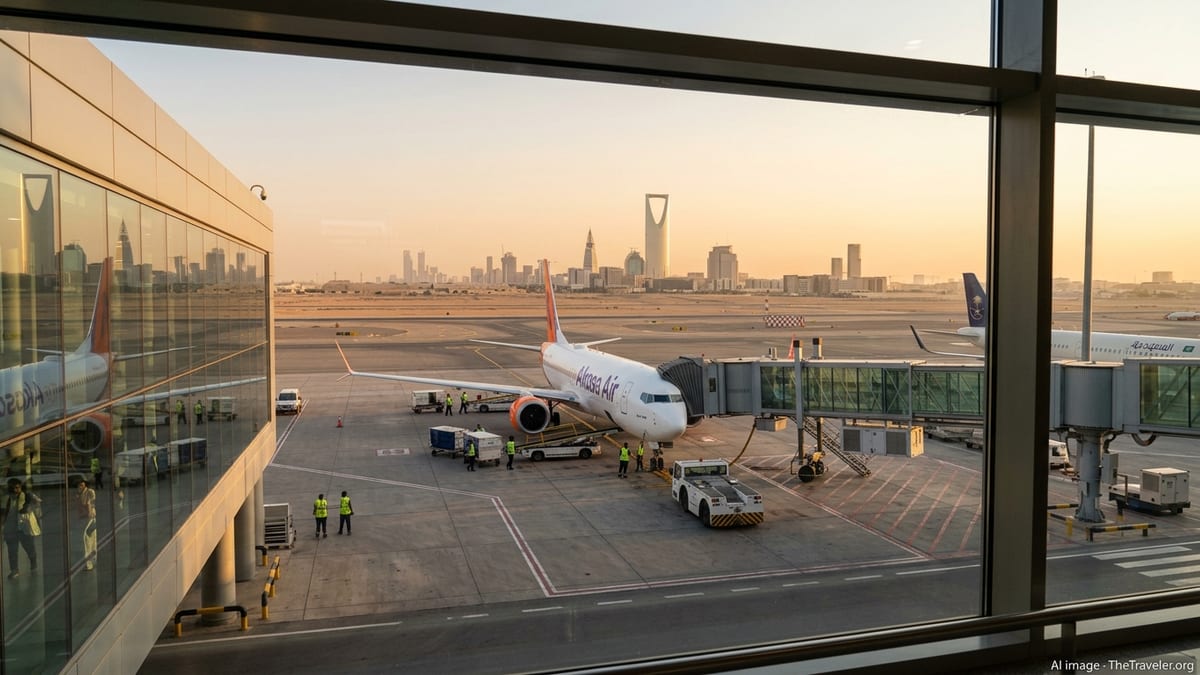
What happened at King Khalid International Airport
Over the weekend, travelers moving through Saudi Arabia’s busiest hub reported long waits and shifting departure times as flight schedules became compressed. Flight-tracking data flagged RUH as experiencing “major problems” during the disruption window, a label typically associated with simultaneous spikes in delays and cancellations.
Published coverage tied the disruption to a security-related incident near the airport area, with reports describing smoke and flames seen in the vicinity. The same coverage indicated that the disruption coincided with an overnight air-raid alert, adding to uncertainty for travelers and complicating airline recovery planning.
The operational impact was visible on airport-style departure and arrival boards as carriers worked through late aircraft, displaced crews, and outbound slots that no longer matched the original schedule. In practical terms, that meant some passengers faced rolling delays rather than a single revised departure time.
Recovery: schedules normalize as the disruption index eases
By Monday, September 21, 2026, indications of recovery were clearer in live tracking metrics: Flightradar24’s airport page for RUH showed a “low” disruption index and average delays that were closer to routine levels than crisis conditions, suggesting the backlog had been reduced significantly.
Airports and airlines typically restore stability in stages: first reopening the flow of departures and arrivals, then repositioning aircraft and crews, and finally rebuilding on-time performance across a full day of schedules. That staged recovery can look “normal” to some travelers while others still encounter knock-on delays for specific routes and aircraft rotations.
Even after an airport resumes baseline operations, ripple effects can persist across connecting itineraries, especially for passengers relying on tight transfers. Travelers with onward connections out of Riyadh often feel the disruption longer than those beginning their journeys in the city.
Why disruptions at RUH can escalate quickly
King Khalid International Airport functions as a major domestic and international node for Saudi Arabia, with heavy waves of departures concentrated at certain times of day. When traffic is interrupted, aircraft queues and gate availability can become constrained quickly, raising the likelihood that delays compound.
In addition to the hub’s volume, Riyadh’s airport operations have been undergoing a significant terminal transition designed to redistribute carriers across terminals and improve passenger flow. Earlier in 2026, Riyadh Airports Company outlined phased terminal allocations and advised passengers to verify their airline and terminal before arriving, reflecting the operational complexity of moving large numbers of flights between facilities.
That transition is intended to make operations more efficient over time, but during periods of irregular operations it can add extra friction for travelers if terminal assignments, check-in areas, and ground transport expectations change at short notice.
What passengers should do now: check status, terminal, and rebooking options
For travelers flying through RUH in the coming days, the most reliable step is to re-check flight status shortly before leaving for the airport and again upon arrival. Saudi Arabia’s national portal highlights a General Authority of Civil Aviation (GACA) flight schedule service for King Khalid International Airport that is designed to provide continuously updated arrivals and departures information.
Passengers should also confirm their terminal assignment, particularly while terminal reallocation work continues. Riyadh Airports Company has previously emphasized using airline channels and airport tools to verify flight details and assigned terminals, which can reduce missed check-ins caused by arriving at the wrong building.
Those affected by cancellations or significant delays typically need to address two separate issues: rebooking and baggage handling. In past disruption events at RUH, publicly available airport updates have highlighted ongoing coordination on rescheduled flights and baggage collection processes, which can be especially important when a passenger’s original itinerary changes after check-in.
With operations now stabilizing, travelers may still see crowded check-in halls on certain banks of departures as airlines consolidate loads and restore missed rotations. Building extra time for airport processes remains a prudent buffer while the final pockets of disruption clear.