


More news on this day
Rome’s Leonardo da Vinci–Fiumicino Airport entered peak season under severe strain in early June 2026, with public tracking data indicating 266 delayed flights and four cancellations affecting airlines including KLM, ITA Airways, easyJet and Wizz Air.
Get the latest news straight to your inbox!
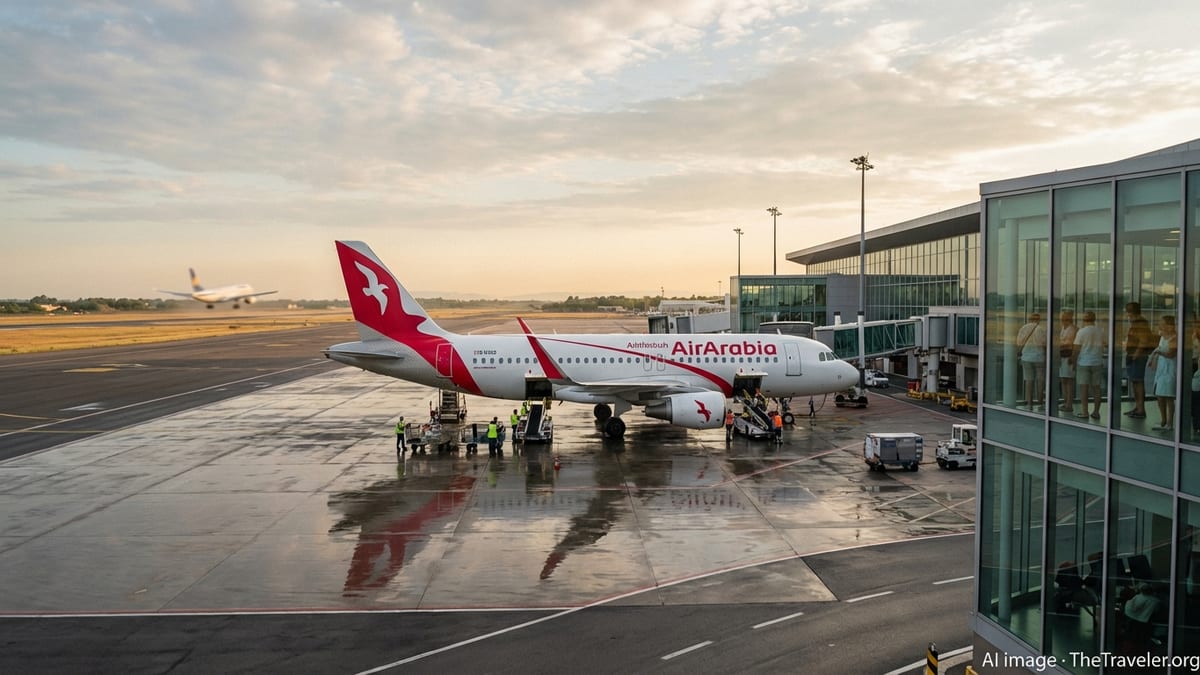
Heavy Disruptions at Italy’s Busiest Hub
The disruption unfolded around the first full weekend of June, traditionally one of the busiest travel periods as Italy’s summer season ramps up. Publicly available data for Rome Fiumicino, Italy’s largest airport and primary hub for ITA Airways, showed an unusually high concentration of delays within a single operating day, pushing the airport close to saturation.
Arrivals and departures tracking for 6 to 8 June 2026 pointed to dense schedules from the early morning waves onward, with a mix of long haul, intra‑EU and domestic services operating within tight turnaround windows. Even minor operational slowdowns can quickly cascade in such conditions, and by late afternoon many flights were running significantly behind schedule.
The 266 delayed flights and four cancellations represented only a fraction of total daily movements at Fiumicino, but they were sufficient to overwhelm the airport’s buffer capacity. Reports from live flight boards and analytics platforms highlighted extended taxi and gate times, suggesting that reactionary delays played a significant role as late‑arriving aircraft struggled to recover their schedules.
While the precise combination of causes has not been fully detailed, Europe‑wide statistics from Eurocontrol for early 2026 show reactionary delays and ground processes accounting for a growing share of overall disruption. This broader pattern frames Rome’s difficult June weekend as part of a continental congestion issue rather than an isolated local failure.
Impact on KLM, ITA Airways, easyJet and Wizz Air
The knock‑on effects were most visible across major network and low‑cost carriers operating dense schedules through Fiumicino. ITA Airways, which uses the airport as its main hub, saw delays ripple through both domestic and international routes, as aircraft arriving late from European cities struggled to make their next departure slots on time.
Low‑cost operators easyJet and Wizz Air, both of which schedule multiple short‑haul rotations per aircraft each day, were particularly exposed. When an early‑morning departure incurs a delay, that disruption can carry through several subsequent flights. Tracking data on routes from Rome to cities such as Zurich, Madrid and Oslo showed significant schedule compression, leaving crews and ground handlers with limited time to reset between services.
KLM’s Rome–Amsterdam operations were also affected, feeding disruption into one of Europe’s key hub‑and‑spoke networks. Even relatively short delays out of Rome can cause passengers to miss onward connections in Amsterdam, multiplying the number of travelers impacted beyond those physically present at Fiumicino.
For passengers, the experience varied widely depending on departure time, destination and airline contingency plans. Some travelers faced only modest delays and were able to complete their journeys the same day, while others confronted missed connections, rebookings and overnight stays as the system absorbed the shock.
Travelers Face Long Queues and Reduced Certainty
For many passengers transiting Rome in early June, the operational strain manifested in crowded departure halls, long check‑in and security lines, and heavily used customer service desks. Previous traveler accounts from the spring, including reports of lengthy border‑control waits at Fiumicino, suggest that ground infrastructure was already under pressure before the latest spike in delays.
When large numbers of flights are delayed in quick succession, congestion tends to intensify at bottlenecks such as security checkpoints, boarding gates and baggage claim. As aircraft arrive off‑schedule, ground handlers must juggle limited stands and resources, often prioritizing flights with tight connection banks. This can leave point‑to‑point travelers waiting longer than expected for bags or boarding.
Uncertainty becomes a dominant factor. Departure boards may show shifting estimated times, while airlines adjust rotations and crew duty limits behind the scenes. Even where final delays are limited to under an hour, the lack of clear, early information can complicate passenger planning for transfers, ground transportation and accommodation.
Consumer‑rights platforms note that such disruption weekends are becoming more common at Europe’s major hubs, particularly during the summer build‑up. They emphasize that the interplay between staffing, air traffic control restrictions and weather can create sudden spikes in delay statistics, leaving passengers with little advance warning.
Part of a Wider Pattern of European Summer Strain
Rome Fiumicino’s difficult June day did not occur in isolation. Eurocontrol’s recent analyses for early 2026 point to rising average delays across the European network, driven in part by reactionary effects and capacity constraints at key airports. Separate reports on Athens International Airport in early June, for example, documented more than 260 disrupted flights in a single day, illustrating how quickly congestion can escalate at major hubs.
Data for spring 2026 show that average arrival and departure delays in Europe have been creeping upward compared with some previous years, even outside of extreme weather or industrial action. The recovery of passenger volumes, combined with tight staffing margins and complex airspace management, has made the system more sensitive to local disturbances that once might have been absorbed.
In Rome’s case, previous operational reviews have highlighted efforts to improve collaborative decision‑making and turnaround monitoring at Fiumicino, including closer coordination between the airport, ITA Airways and low‑cost carriers. However, early‑summer traffic peaks still appear capable of overwhelming those mitigations when compounded by heavy schedules and external constraints.
Travel analysts suggest that passengers should expect sporadic high‑impact disruption days across Europe during the 2026 summer season, particularly at large hubs that combine long‑haul operations with dense short‑haul networks. Rome’s June episode reinforces that expectation and underscores the importance of contingency planning for travelers.
What June Disruptions Mean for Upcoming Summer Trips
The early‑June paralysis at Leonardo da Vinci Airport offers a preview of what travelers might encounter as the main holiday period approaches. For those planning trips through Rome in late June, July and August, the latest disruption underscores the value of building extra buffer time into itineraries, especially when connecting to long‑haul flights.
Publicly available guidance from passenger‑rights organizations advises travelers to keep close track of their booking details, monitor flight status through airline and third‑party tools, and retain documentation of any delays or cancellations. In the case of significant disruption, such records can be important for pursuing compensation or reimbursement under applicable regulations.
For Rome specifically, recent experiences at Fiumicino indicate that arrival procedures, customs and ground transport can also be affected when flight schedules slip. Travelers are encouraged to factor potential congestion into plans for onward rail connections, cruise departures or time‑sensitive events in the city.
While it remains unclear whether Fiumicino will see repeat disruption on the scale of the 266 delays and four cancellations recorded in early June, the episode highlights the fragility of tightly packed summer schedules. For now, Rome’s main gateway remains fully operational, but passengers can expect a busy and occasionally unpredictable season as Italy’s tourism peak gathers pace.