


Rome rewards curious, unhurried travelers, yet many first-time visitors arrive with a checklist and leave with blisters, fines, and stories of bad meals or near-missed pickpockets. With millions of people passing through the Eternal City each year, certain mistakes repeat so often that locals can almost spot them from across Piazza Navona. Understanding what actually trips people up on the ground, from public transport rules to dress codes and restaurant tactics, can be the difference between a frustrating visit and a trip you remember for all the right reasons.
Get the latest updates straight to your inbox!
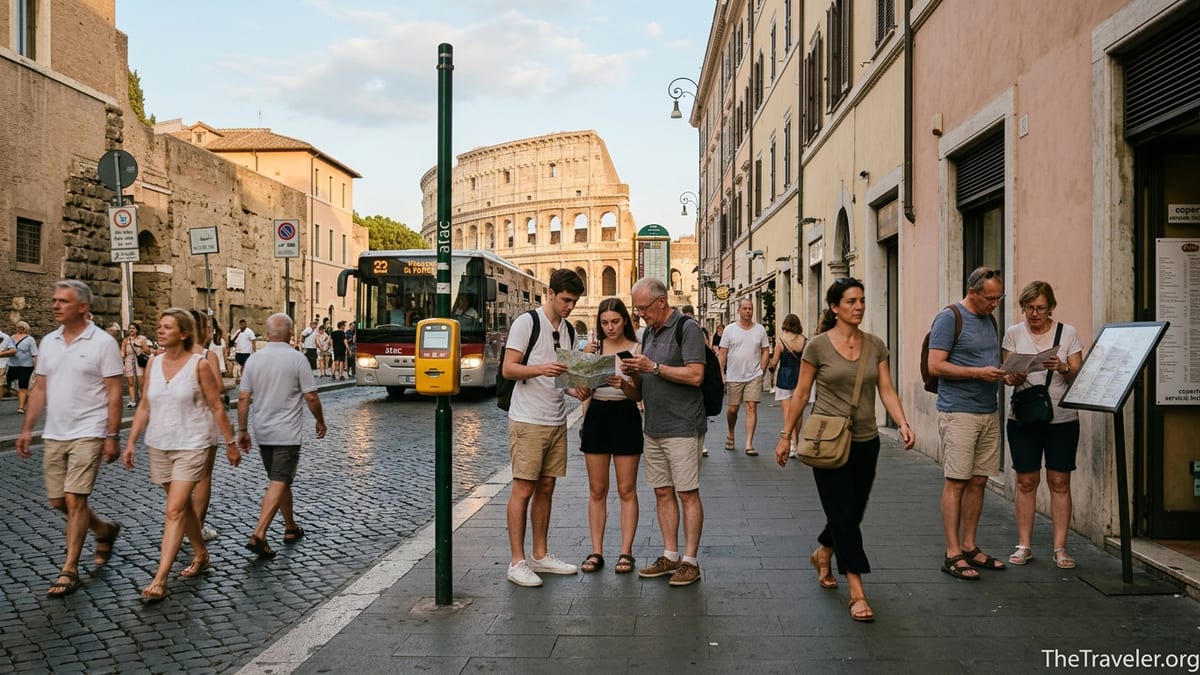
Trying to See “All of Rome” in Two or Three Days
The single biggest mistake first-time visitors make in Rome is trying to do too much in too little time. On paper, it looks possible to fit the Colosseum, Roman Forum, Palatine Hill, Vatican Museums, St. Peter’s Basilica, Trevi Fountain, Spanish Steps, Pantheon, and Trastevere into a 48-hour sprint. In reality, you are dealing with security lines, cobblestones, heat, and the simple fact that Rome’s beauty is best taken in slowly. Local guides note that people underestimate how much walking, queuing, and simply absorbing the city actually takes, especially in peak months when crowds swell around every major monument.
Consider what a typical overpacked day looks like in practice. A traveler staying near Termini might book a 9:00 a.m. Colosseum tour, a 1:30 p.m. Vatican Museum entry, dinner in Trastevere at 7:30 p.m., and plan to “swing by” the Trevi Fountain and Spanish Steps in between. That schedule leaves little margin for delayed metro trains, long security lines at the Colosseum, or the 20 to 30 minutes it can easily take just to thread your way through crowds around the Trevi Fountain for a photo. By mid-afternoon, many visitors are exhausted, irritable, and barely remember what they saw.
A more realistic approach is to cluster sights by neighborhood and build in generous breaks. For example, devote one day to ancient Rome and the Monti area: Colosseum, Forum, Palatine Hill, then a relaxed lunch on Via dei Serpenti and a slow wander up to the Capitoline Hill overlook. The next day could focus on the Vatican area in the morning, followed by crossing the Tiber to Trastevere for late afternoon and dinner. Travelers who shift from a checklist mentality to a neighborhood-based plan typically come home with fewer photos but richer memories of small piazzas, side streets, and conversations that never show up on a tour brochure.
Misunderstanding Tickets, Validation and Fines on Transport
Rome’s buses, trams, and metro are efficient when you know the rules, but those rules are not always obvious to visitors. One of the most expensive mistakes is failing to validate your ticket. The city transport company, ATAC, states that tickets and passes must be validated at the start of every journey and kept for inspection; an unstamped ticket on a bus or tram is treated as if you never bought one at all, and inspectors can issue on-the-spot penalty fares that start around 50 euros and rise past 100 euros if unpaid within a few days. This surprises many tourists who buy tickets at Termini, board a crowded bus 64 toward the Vatican, and never manage to reach the small yellow machine hidden behind a knot of passengers before inspectors step on at the next stop.
Recent accounts from visitors describe entire vacation days soured by such fines. A group who purchased rechargeable tickets at Termini reported being fined after boarding a packed bus where the only validator was deep in the crowd and half the passengers looked like they never tapped or stamped anything at all. Another traveler on the Leonardo Express train from Fiumicino Airport to Termini recounted being charged an additional 50 euros for forgetting to validate their paper ticket before boarding, even though they had already paid the 14-euro fare. These stories underline a simple rule: in Rome, payment and validation are two separate steps, and inspectors are strict about the second.
There are practical ways to avoid problems. Before you step onto a bus or tram, locate the validation machines from outside so you know where to head once aboard. If it is very crowded, locals will often help pass your ticket hand-to-hand to the machine and back. For metro rides, physical tickets must go through the turnstiles, which automatically validate them, while contactless bank cards used with ATAC’s Tap & Go system must be tapped every time you pass a barrier or switch transport modes. If a ticket inspector asks to see proof, you will need either the stamped paper ticket or the card or device you used to tap. Keeping a small backup of single-ride tickets and allowing extra time for public transport can make the system work in your favor instead of turning into an expensive lesson in local rules.
Falling for Common Tourist Scams and Taxis that “Forget” the Meter
Rome is generally safe, with violent crime against tourists relatively rare, but petty scams and overcharging are common enough that they account for a large share of complaints. First-time visitors are often caught off guard by seemingly small interactions that turn into awkward confrontations. A classic example is the bracelet scam near the Colosseum, Vatican, and around Piazza Navona: a friendly stranger approaches, ties a bracelet or string around your wrist while insisting it is a gift, and then demands 10 to 20 euros, sometimes backed by a group of friends crowding in. The same tactic appears with roses handed to couples or “free” Polaroid photos framed with a gladiator or street performer. The simplest response is to avoid physical contact, say a firm “no” without breaking stride, and hand back any object pressed on you.
Taxi overcharging is another recurring issue, especially around airports and major train stations. Official white city taxis from Fiumicino Airport to central Rome operate on a fixed fare, which in recent years has been set at around 50 euros to central areas. Yet reports continue of people accepting rides from men with lanyards and clipboards inside the arrivals hall, only to be dropped at their hotel and handed a bill of 80 euros or more with no meter in sight. Even within the city, some drivers try to run a meter set to a higher tariff or “forget” to turn it on entirely, then name an inflated price at the end of the ride.
To avoid these problems, insist on using only official white taxis marked with the city crest and a license number on the doors and interior. At Fiumicino, walk past the crowd of touts in the arrivals area and follow the official signs to the taxi rank outside. Before you get in, calmly confirm the approximate fare to your destination and check that the meter is on if it should be. Within the center, consider using licensed ride-hailing services or apps popular with locals, which provide a fixed fare quote upfront that you can later dispute with the platform if the route was unnecessarily long. In case of gross overcharging, Italian consumer protection bodies and the municipal authorities can investigate complaints when you have the taxi license number and a receipt, so it is worth asking for one at the end of any suspicious ride.
Eating in the Wrong Places and Misreading Menus
Few disappointments sting as much as a bad meal in a city famous for its food. First-timers often make the mistake of choosing restaurants directly on the main tourist arteries around Trevi Fountain, the Colosseum, or Piazza Venezia, lured in by aggressive hosts and laminated menus translated into six languages. These venues typically feature high prices for forgettable dishes like dry carbonara with cream or frozen seafood platters, plus extras that only appear on the bill. Complaints about inflated “coperto” cover charges, unrequested bread baskets, and surprise service fees are common in these zones, where a simple dinner for two can quietly climb from 30 to more than 50 euros.
Cover charges themselves are not inherently a scam in Italy, but the way they are used in tourist districts can be. In many authentic Roman trattorie, a modest coperto of a couple of euros per person covers bread and place settings, and the amount is clearly printed on the menu. In contrast, some restaurants near the Vatican or in central Trastevere may add 5 to 8 euros per person as coperto, then tack on separate charges for bread and a 15 to 20 percent “servizio” service fee, effectively inflating your bill by a third or more. Visitors who do not check the small print before ordering are often shocked when the total arrives.
To eat well and avoid surprises, walk a few streets away from the busiest piazzas before you sit down. In Trevi’s orbit, that could mean heading along Via del Lavatore and taking side streets toward Quirinale; near the Vatican, venturing deeper into the residential Prati neighborhood rather than stopping at the first place you see on Via della Conciliazione. Look for shorter menus centered on local dishes like cacio e pepe, amatriciana, and saltimbocca, handwritten daily specials, and a mix of Italian and foreign diners. Before ordering, scan the menu for coperto and service charges and gently ask if bread and table water are included or billed separately. At the end of the meal, request an itemized bill (conto dettagliato) so you understand each line; reputable establishments will have no problem providing one, while a refusal is a sign you may be in a tourist trap and should pay, note the name, and avoid returning.
Ignoring Dress Codes and Practical Etiquette at Major Sights
Many first-time visitors arrive in Rome during hot months and dress for the temperature, not for the city’s churches and sacred sites. The Vatican Museums, St. Peter’s Basilica, and most major churches enforce a modest dress code: shoulders and knees should be covered for both men and women. On a scorching June day, it is common to see people in sleeveless tops and short shorts being stopped at the entrance to St. Peter’s and asked to cover up, sometimes forced to buy a scarf or disposable cover from opportunistic vendors at marked-up prices. That can mean an unnecessary extra expense and delays for your group while you improvise solutions.
Security rules and crowd management can also trip up visitors at the Colosseum and other archaeological sites. Online ticket sellers frequently advertise “skip-the-line” access, leading people to believe they will stroll straight in at their chosen time. In reality, all visitors must pass through security checks, and during busy periods these queues can be substantial even for pre-booked ticket holders. Recent regulations at the Colosseum complex emphasize that skip-the-line marketing does not exempt anyone from these controls, and late arrivals beyond the allowed grace period may find their entry slot forfeited with no refund.
You can avoid most of these frustrations with a small amount of preparation. Pack a light scarf or large cotton bandana in your day bag to cover bare shoulders, and favor loose linen trousers, longer skirts, or knee-length shorts when your itinerary includes churches. For high-demand sights, book entry slots early in the morning or late in the afternoon when queues and temperatures are more manageable. Arrive at least 30 minutes before your time slot at the Colosseum or Vatican Museums to account for security lines and bag checks. By treating these sites as functioning religious and cultural institutions as much as tourist attractions, you will move more smoothly and respectfully through them.
Underestimating Pickpockets and Crowds in Key Areas
Another common mistake is assuming that “being careful” in a general sense is enough to avoid pickpockets. Rome’s most skilled thieves work in very specific environments: jammed metro cars on Line A between Termini and Spagna, crowded buses like the 40 and 64 that serve the Vatican and major attractions, the crush around the Trevi Fountain at dusk, and the slow-moving queues outside the Vatican Museums. Travelers on forums frequently report only noticing a problem when they reach into a back pocket for a wallet that is no longer there or discover a phone missing from an open tote bag after exiting a packed tram.
Recent anecdotal reports describe attempted thefts at the Spanish Steps metro station, where groups create a distraction as passengers board, while another hand slips into a pocket or unzips a bag. On buses leaving Trastevere Station for the historic center, visitors have recounted instances where a crowd suddenly pressed in at the doors, and someone felt fingers probing the front pocket of their jeans. While many trips pass without incident, those who do run into trouble often realize afterward that their bag was hanging behind them, their phone was visible in a rear pocket, or they were distracted by a heated argument staged nearby.
Practical precautions make a significant difference. Use a small cross-body bag with a zipper and wear it in front of you, not at your side or back. If you carry a backpack, loop cheap carabiners through the zippers to slow down quick hands, and consider shifting it to your chest in very crowded spaces. Keep wallets in front pockets, not back pockets, and avoid placing phones on cafe tables at the edge of outdoor seating areas where someone can grab them and run. When boarding busy metro trains or buses, pause and brace your belongings with one hand over your bag or pocket as the crowd surges. These small habits take little effort but go a long way toward ensuring you remember Rome for its art and food rather than a visit to the police station for a theft report.
Staying Too Far from the Center to “Save Money”
Rome’s accommodation prices can be high, especially in the historic center, so many first-time visitors try to save by booking cheaper rooms far from the main sights. On a map, a budget hotel near an outer-ring metro station or far along Via Appia Nuova can look like a smart compromise, with a colored metro line promising fast access to everything. In practice, long daily commutes into and out of the center can add fatigue, uncertainty, and unexpected taxi costs when public transport runs less frequently late at night or early in the morning.
Travelers who stay in peripheral districts often find themselves spending more time than expected navigating transfers at Termini, dealing with packed buses, or waiting for trams that bunch and arrive in waves. If you are returning to a distant neighborhood after dinner in Trastevere or near Campo de’ Fiori, it can easily take 40 minutes to an hour to get back, and if you just miss the last convenient bus or tram, a taxi ride may wipe out the savings from the cheaper room. Guests with early morning tours at the Vatican or Colosseum sometimes end up paying extra for private transfers because they are nervous about relying on multiple connections at dawn.
For a first visit, it is usually better to prioritize a central or near-central neighborhood even if the nightly rate is higher. Areas like the historic center, Monti, Trastevere, and parts of Prati place you within walking distance of major sights and lively streets in the evening. That proximity not only saves time and transport costs but also makes it easier to pop back to your room for a rest in the heat of the day or to drop off shopping before heading out again. Over the course of a few days, that convenience often matters more than the exact size of your hotel room or the presence of a pool you rarely use.
The Takeaway
Rome is not a city that rewards rushing or treating it as a checklist of monuments. The most common mistakes first-time visitors make are less about dramatic dangers and more about misunderstandings: assuming a paid ticket is enough without validation, trusting any car that looks like a taxi, choosing restaurants by proximity to a famous fountain, or planning days so dense that there is no room for a slow gelato or an unplanned detour down a side street. When you know where the friction points are, it becomes much easier to sidestep them.
A little preparation goes a long way. Learn the basics of public transport rules, understand how cover charges and service fees work in restaurants, pack clothing that fits both the weather and church dress codes, and choose a base that lets you walk rather than commute. Stay aware of your belongings in a few well-known hot spots, and say a firm but polite “no” to anyone pressing gifts or unwanted help on you. Do that, and your first trip to Rome is far more likely to be defined by evening light on ancient stone, good plates of pasta in small trattorie, and the feeling of stepping into living history rather than by fines, scams, or regrets.
FAQ
Q1. Is Rome safe for first-time visitors?
Rome is generally safe for first-time visitors, with petty theft like pickpocketing the main concern. Staying alert in crowded areas and transport hubs greatly reduces your risk.
Q2. Do I really need to validate my bus or tram ticket?
Yes. In Rome, buying a ticket is not enough; you must also validate it in the onboard machine at the start of your journey or risk a substantial fine if inspectors board.
Q3. How can I avoid taxi scams from the airport?
Use only official white city taxis from the signed rank outside the terminal, confirm the flat fare to central Rome before getting in, and avoid anyone approaching you inside arrivals offering rides.
Q4. What should I wear to visit the Vatican and major churches?
Wear clothing that covers shoulders and knees for both men and women, and carry a light scarf or shawl so you can adapt quickly if staff consider your outfit borderline.
Q5. Are restaurant cover charges in Rome a scam?
A small cover charge can be normal, but very high coperto plus extra bread and service fees near tourist sites are warning signs. Always check the menu for these charges before ordering.
Q6. Is it worth buying “skip-the-line” tickets for the Colosseum and Vatican?
Timed-entry or guided-tour tickets usually save time at the ticket office, but you will still go through security queues. Book early morning slots and arrive ahead of time to minimize waiting.
Q7. Which areas are best to stay in on a first visit to Rome?
For convenience and atmosphere, look at the historic center, Monti, Trastevere, and parts of Prati, where you can walk to many major sights instead of relying on long daily commutes.
Q8. How can I avoid pickpockets on Rome’s public transport?
Use a zipped cross-body bag worn in front, keep wallets in front pockets, move backpacks to your chest in crowded vehicles, and be extra alert on busy metro lines and buses serving major attractions.
Q9. Are hop-on hop-off buses a good way to get around?
They can be useful for a first-day overview if you tire easily or have mobility issues, but for regular transport, Rome’s metro, buses, trams, and walking are usually faster and better value.
Q10. How many days should I plan for my first trip to Rome?
Allow at least three full days to see the main highlights at a comfortable pace, and four to five days if you want time for neighborhood wandering and more relaxed meals without rushing.