


More news on this day
Rail travel across the Netherlands was severely disrupted on 29 June 2026 after a cable duct fire near Rotterdam Stadion disabled key control systems, halted southbound services from the city and forced last-minute changes to Eurostar’s cross-border operations.
Get the latest news straight to your inbox!
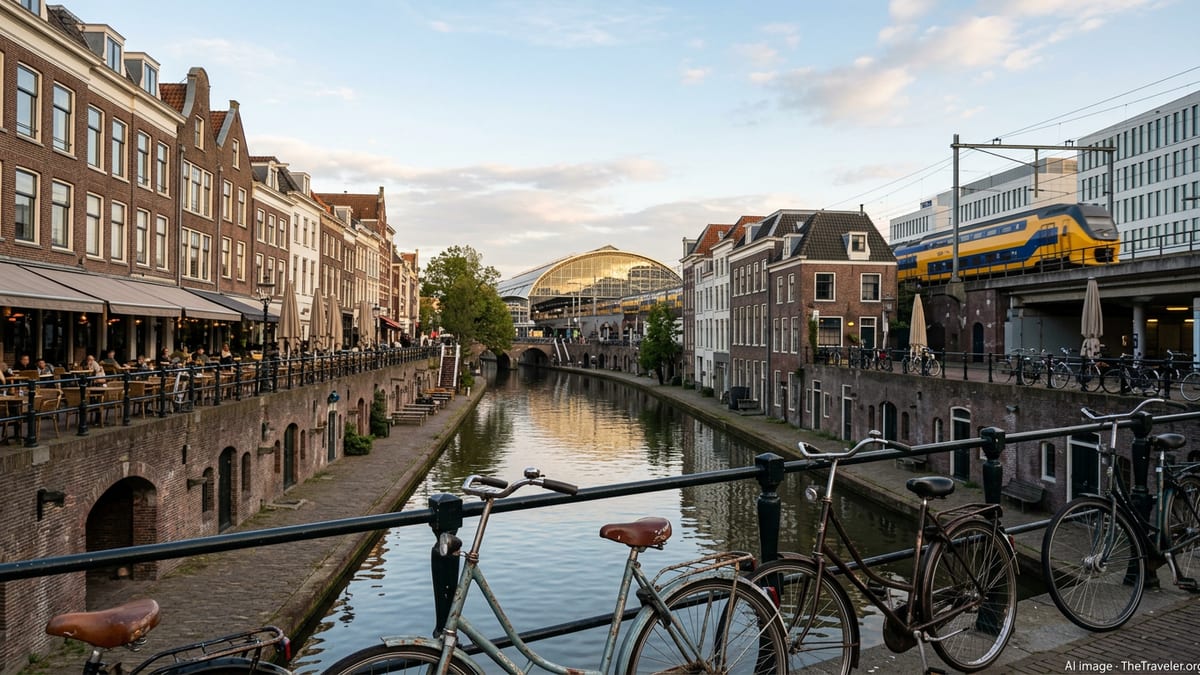
Fire Near Rotterdam Stadion Knocks Out Power and Signals
Reports from Dutch media and rail operators indicate that the disruption began early Monday after a fire broke out in a cable duct close to Rotterdam Stadion, a key point on routes heading south from the city. The incident triggered a power failure affecting rail controls and overhead systems, immediately stopping traffic on several mainline tracks.
According to publicly available information, no injuries were reported, but the technical damage was significant enough to suspend all train movements between Rotterdam and key southern nodes including Barendrecht, Breda and the freight hub at Kijfhoek. Local outlets described stranded trains in the wider Rotterdam area as staff worked to evacuate passengers and reposition rolling stock.
The outage added pressure to an already fragile network, with infrastructure manager ProRail and operator NS racing to assess the extent of cable and equipment damage. Early estimates suggested repairs would take much of the day, with knock-on effects expected to linger into the evening peak and potentially into Tuesday.
Images from the scene shared in Dutch coverage showed emergency vehicles positioned close to the affected tracks and maintenance teams inspecting the cable duct area. The precise cause of the fire had not been detailed in initial reports, but investigators were said to be focusing on heat stress and localized infrastructure faults as possible triggers.
Southbound Services From Rotterdam Brought to a Standstill
The immediate impact of the fire was felt on all southbound routes from Rotterdam, where services towards Dordrecht, Breda and the Belgian border were either halted or heavily curtailed. Timetables for intercity and regional trains were quickly withdrawn on digital boards, with operators advising passengers to avoid travel in the affected corridor where possible.
Publicly available disruption maps showed a complete suspension of traffic between Rotterdam and Barendrecht, effectively blocking one of the Netherlands’ busiest north south arteries. Rail traffic towards Dordrecht and further to Brabant provinces was also interrupted, isolating several commuter and freight flows that normally use the corridor as a gateway to the Randstad.
Replacement buses were ordered but struggled to keep pace with demand as morning peak-hour travelers sought alternative routes. Long queues formed at Rotterdam Centraal and at smaller suburban stations, while motorway traffic around the city thickened as commuters abandoned train plans and shifted to cars and long-distance coaches.
Freight operators using the Kijfhoek classification yard and Betuweroute access lines also faced significant disruption. Public information suggested that some cargo movements were rerouted via alternative corridors where capacity allowed, but logistics specialists warned of further delays for shipments connecting Rotterdam’s port with inland terminals in Germany and beyond.
Eurostar Adjusts Cross-Border Services and Skips Dutch Stops
The Rotterdam-area power failure quickly rippled into international schedules, particularly on the high-speed corridor linking the Netherlands, Belgium, France and the United Kingdom. Eurostar, which normally serves Amsterdam Centraal and Rotterdam Centraal on its London route, issued updates stating that several trains would not call at Dutch stations on Monday because of the disruption.
According to service alerts, multiple southbound and northbound Eurostar services were diverted or truncated, with some trains starting and terminating in Brussels rather than Amsterdam. Passengers booked to board or alight in Rotterdam and Amsterdam were advised to travel on domestic services where available, or to rebook for later dates once the situation in the Rotterdam area stabilizes.
The changes added to a challenging period for high-speed rail along the North Sea corridor, which has already been affected this month by heat-related slow orders and infrastructure checks. Travel forums and social media posts on Monday reflected growing frustration from passengers facing a combination of weather-related timetable reductions and the sudden outage near Rotterdam.
Rail analysts noted that the Rotterdam incident underlined the vulnerability of international services to local infrastructure failures. With the Dutch high-speed line threaded through dense urban and freight zones, a single failure point such as a cable duct can quickly disrupt both domestic and cross-border traffic.
Broader Network Strains After Heat and Storm Damage
The cable duct fire struck just as the Dutch rail network was grappling with the aftermath of days of extreme weather. Published coverage over the weekend described storm and lightning damage in multiple regions, including power and signal failures on lines around Utrecht, Gouda and in parts of the north.
NS had already preemptively reduced intercity frequencies on several major corridors, citing concerns about heat-related stress on tracks, overhead wires and rolling stock. Routes linking The Hague, Utrecht, Amsterdam, Rotterdam and Schiphol were among those operating with thinner schedules prior to Monday’s incident, leaving less flexibility to absorb additional shocks.
The combination of weather-related restrictions and the Rotterdam power failure produced what observers described as a patchwork of partial services, bus replacements and last-minute diversions. Passengers attempting multi-leg journeys found that alternative routes filled quickly, while some smaller stations saw only sporadic service through the day.
Transport specialists suggested that the episode could intensify debate in the Netherlands about climate resilience and redundancy in the rail system. Recent policy papers have already highlighted the need for more robust power supply chains, enhanced fire protection in tunnels and ducts, and better contingency planning for long-distance international routes reliant on a handful of critical junctions.
Advice for Travellers and Ongoing Uncertainty
As of late Monday afternoon, Dutch and international travel planners continued to advise passengers to check the latest digital timetables before setting out, build in extra journey time and consider postponing nonessential trips through the Rotterdam area. With repair work ongoing on damaged cable infrastructure, the timing for full restoration of service remained uncertain.
Travellers booked on Eurostar services involving Amsterdam or Rotterdam were urged via public notices to monitor operator updates and, where possible, switch to departures that start or end in Brussels. Some rail passengers reported choosing to reroute via alternative cross-border services from Belgium and Germany, though these options were also experiencing heavy demand.
For domestic trips, journey planners suggested detouring via The Hague, Utrecht or alternative regional lines where capacity permitted, but acknowledged that many itineraries would involve multiple changes and potentially long waits between trains. Long-distance buses and car-sharing platforms were also reporting increased interest for connections into and out of the Randstad.
While the full impact assessment of the Rotterdam cable duct fire is still developing, early indications point to a challenging week for rail across the Netherlands and its international gateways. Travellers planning near-term trips through the country are being encouraged to remain flexible, keep documentation of delays for potential compensation claims and closely watch operator advisories as repair crews work to stabilize the network.