


More news on this day
A Royal Caribbean cruise ship has been forced to remain at sea after a powerful typhoon swept across its planned route, disrupting port calls and leaving thousands of passengers riding out rough conditions while the vessel waits for safer waters.
Get the latest news straight to your inbox!
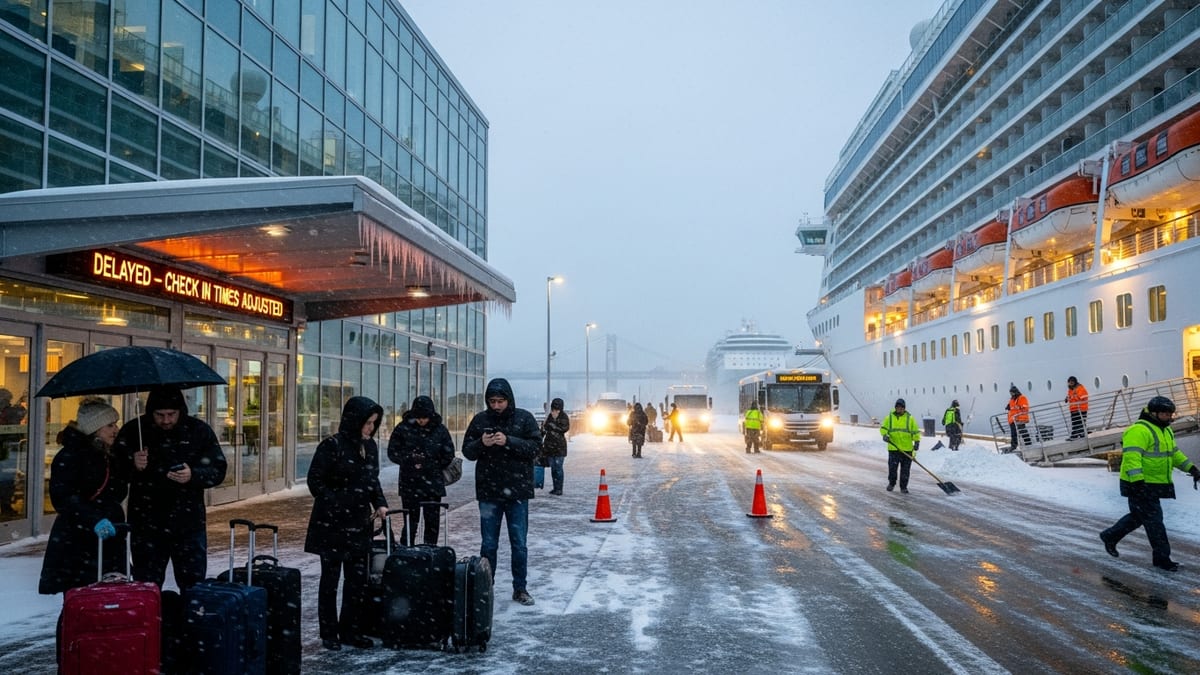
Ship Holds Position While Typhoon Disrupts Itinerary
According to published coverage from regional and maritime news outlets, the Royal Caribbean vessel altered course and reduced speed as the typhoon intensified, effectively leaving the ship in a prolonged holding pattern at sea. Tracking data cited in those reports shows the cruise ship slowing considerably and remaining offshore instead of continuing along its scheduled route.
The ship had been due to visit several ports in the typhoon’s projected path, but publicly available information indicates that those stops have been cancelled or postponed. Cruise tracking platforms show revised waypoints that keep the vessel well clear of the core of the storm, with its route adjusted to skirt the outer bands while remaining in deep water.
Reports indicate that the captain has adopted a conservative navigation strategy, steering away from the strongest winds and highest seas. While conditions on board are described as choppy, the vessel is operating under its own power and maintaining a safe distance from the center of the typhoon.
Royal Caribbean’s broader policies for severe weather, described in publicly accessible booking and safety materials, emphasize flexibility in itineraries when storms develop. The current situation appears to follow that framework, with the ship effectively trading port days for additional time at sea in order to avoid direct impact.
Safety Protocols and Onboard Adjustments
Publicly available guidance from Royal Caribbean and other major cruise operators outlines a standard set of precautions when tropical systems threaten a route, and reports from this voyage suggest many of those steps are in effect. Outdoor decks are partially closed when wind gusts increase, pools and water attractions may be temporarily shut, and outdoor entertainment is rescheduled or moved indoors.
Passengers posting on social platforms referenced in news coverage describe increased motion, with some areas of the ship quieter than usual as guests choose to remain in their cabins or central interior spaces. Crew members, according to those accounts, have focused on keeping public areas tidy and ensuring that loose items are secured to prevent accidents in higher-than-normal swells.
Publicly available medical advice for cruise travelers during storms typically recommends that guests prone to motion sickness make use of stabilizing medications early and stay hydrated. Reports related to this voyage suggest onboard medical and guest services teams have seen a rise in requests for seasickness remedies, a common pattern whenever a ship encounters prolonged rough seas.
While some onboard activities are curtailed, entertainment programs, dining services, and core amenities continue to operate, albeit on adjusted schedules. Coverage from cruise-focused outlets notes that modern large cruise ships are designed to maintain essential hotel functions even in challenging sea conditions, relying on stabilized hull designs and advanced propulsion systems to reduce motion where possible.
Communication, Compensation and Passenger Expectations
Published coverage of the incident indicates that Royal Caribbean has issued updates through onboard announcements and its mobile applications, explaining the route changes and emphasizing that the priority is to keep the vessel clear of the typhoon’s most dangerous zones. Messaging shared in cruise forums and social media posts cited by news organizations reflects a mix of disappointment over missed ports and understanding of the safety rationale.
Industry practice in similar situations has typically involved offering some level of goodwill gesture for itinerary disruptions, which can include partial refunds, future cruise credits, or onboard credits. At this stage, reports suggest that the focus remains on navigating safely around the storm, and any detailed information about compensation or revised schedules is expected to follow once the full impact on the voyage is clear.
Travel experts quoted in broader coverage on storm-affected cruises note that itineraries are never guaranteed, particularly during peak typhoon and hurricane seasons. Ticket contracts and booking terms, which are publicly available, generally specify that routes may be changed for safety, weather, or operational reasons without financial liability beyond limited adjustments or credits.
For passengers, the experience of being effectively stuck at sea while a typhoon passes nearby can be unsettling, but industry observers emphasize that remaining at sea, far from shallow coastal waters and ports directly in the storm’s path, is often the safest choice. Reports from this voyage indicate that the ship is expected to resume a more typical speed and course once forecasters confirm that the typhoon has weakened or moved a safe distance away.
Powerful Typhoon Highlights Climate and Seasonal Risks
The typhoon impacting this Royal Caribbean itinerary is among the stronger systems of the current season in its basin, according to publicly available data from meteorological agencies. Satellite imagery and forecast models referenced in international coverage show a compact but intense storm, with hurricane-force winds near the center and extensive rain bands stretching across busy shipping lanes.
Climatological research and historical records consistently show that typhoon activity tends to peak during late summer and early autumn in the western Pacific and related regions, a period when cruise itineraries are often at their busiest. Analysts who track the cruise industry have pointed out that as ocean temperatures rise, storms can intensify more rapidly, leaving operators with narrower windows to adjust itineraries before conditions deteriorate.
Maritime experts quoted in previous reporting on storm-affected cruises note that large vessels are generally not at risk of capsizing in open ocean when operated within recommended parameters, but they can encounter uncomfortable conditions, including strong rolling and pitching motions. That reality has led cruise lines to invest heavily in improved forecasting tools and routing software to give bridge teams more time and more options when systems like this typhoon develop along planned paths.
The current disruption underscores how quickly a leisure voyage can become a test of resilience for passengers and crew alike. While the ship remains safe at sea, the powerful typhoon continues to dictate the pace and direction of travel, illustrating the degree to which modern cruising is still subject to the forces of weather and climate.