


More news on this day
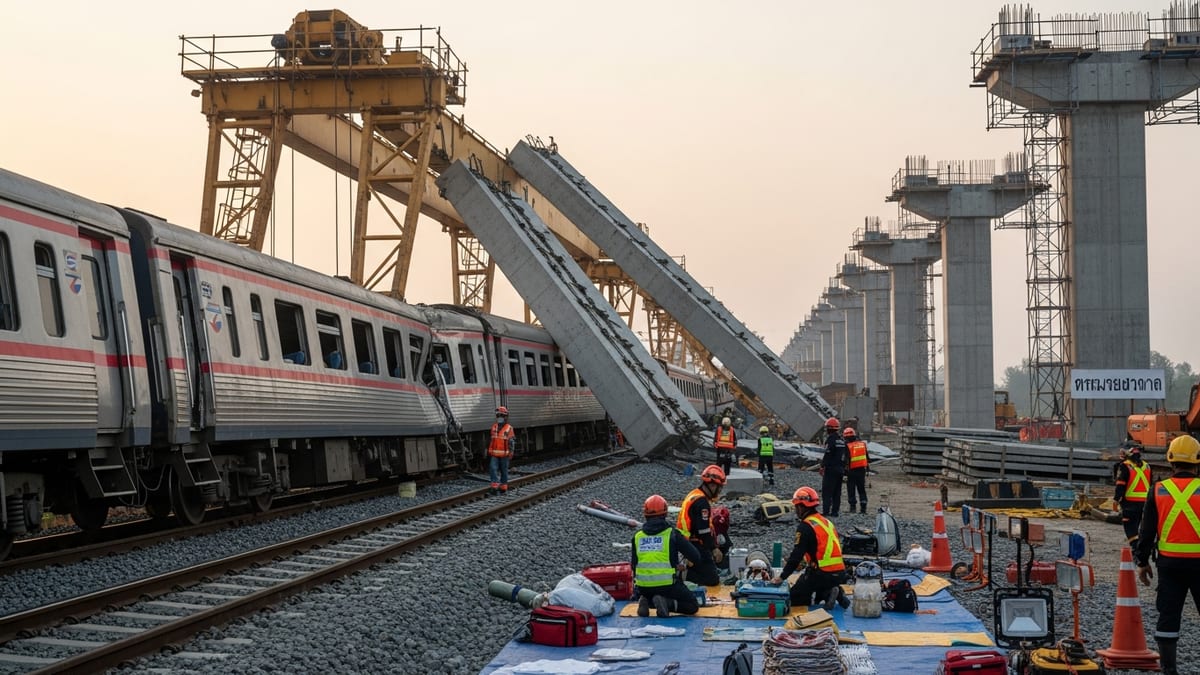
Highway 126 has fully reopened near Crooks following a train derailment that disrupted traffic and prompted a complex cleanup and track repair operation along the busy corridor.
Get the latest news straight to your inbox!
Key Route Restored After Days of Disruption
The reopening of Highway 126 near Crooks marks the end of a disruptive period for travelers who rely on the corridor for daily commuting and freight movement. Traffic had been rerouted onto smaller local roads while crews worked to clear derailed railcars and repair both the rail line and adjacent highway infrastructure.
Traffic cameras and local reports indicate that vehicles are once again moving in both directions, with normal speed limits restored. Motorists had previously faced delays, detours, and longer travel times as the closure forced drivers to seek alternative routes between nearby communities and regional hubs.
The stretch of Highway 126 affected by the derailment serves as an important connector for residents, regional employers, and commercial carriers. Its reopening reduces pressure on secondary roads that experienced heavier volumes during the shutdown.
Publicly available information shows that the rail line itself has also returned to service, allowing freight operations to resume on a scaled basis while final inspections continue. The combined reopening of rail and road links is expected to normalize travel patterns in the area in the coming days.
Derailment Impact on Travelers and Local Access
The train derailment near Crooks initially brought traffic to a standstill on Highway 126, with the highway closed while emergency and recovery crews assessed the scene. Reports indicate that several railcars left the tracks close enough to the roadway to raise safety concerns and necessitate a full closure rather than partial lane restrictions.
For drivers, the immediate effect was a sudden need to divert onto alternate routes, some of which added significant time to regular commutes. Local coverage described increased congestion and slower travel on parallel county and secondary roads, as motorists and commercial vehicles filtered through communities that are not typically used to sustained highway-level traffic.
Businesses depending on just-in-time deliveries and regional trucking links also felt the impact, as detours altered schedules and routing. Travel times for freight moving between inland locations and coastal areas were extended while Highway 126 remained blocked.
Although the closure period has now ended, travel experts note that residual congestion can persist for several days after a major highway corridor reopens, as drivers adjust and deferred trips are completed. Motorists passing through the Crooks area are being advised to allow a little extra time as conditions continue to normalize.
Cleanup, Track Repairs, and Safety Checks
According to published coverage, the reopening followed an intensive cleanup and repair phase at the derailment site. Heavy equipment was used to remove damaged railcars and debris, while specialized crews worked to stabilize the rail bed and verify the condition of nearby structures.
Roadway inspections were carried out to confirm that the highway surface, shoulders, and underlying support had not been compromised by the derailment or recovery work. Any damaged guardrails, signage, and pavement markings in the work zone were repaired or replaced before the highway was cleared for full public use.
Rail operators and transportation agencies typically subject a line to multiple safety checks before resuming traffic after a derailment, and reports from the Crooks area indicate a similar process here. Test runs, track geometry evaluations, and visual inspections are standard steps designed to ensure that both freight movements and nearby road traffic can proceed safely.
Environmental assessments are also routine when a freight train derails near a roadway. Public information available at this stage does not indicate major long-term environmental concerns at the site, although monitoring can continue after normal traffic resumes.
Detours Lifted and Travel Advice for Drivers
With Highway 126 open again near Crooks, previously posted detour routes are being withdrawn, and navigation systems that had been flagging the closure are beginning to update. Drivers who had become accustomed to back-road alternatives can once more use the primary highway, reducing travel times compared with circuitous workarounds.
Transportation agencies typically recommend that motorists remain cautious when traveling through a recently reopened corridor, particularly where heavy machinery and crews were active in the days prior. Even after formal construction or recovery zones are cleared, brief lane shifts, temporary markings, or shoulder closures can remain in place.
Travelers planning trips through the region are encouraged to check current traffic maps and local advisories for any lingering slowdowns or short-term maintenance tied to the derailment site. Commercial carriers, in particular, may wish to verify route status as dispatchers phase out special detour plans put in place during the closure.
For many residents and regular commuters, the return of through traffic on Highway 126 brings a sense of normalcy after an unexpected interruption. With both the highway and rail line near Crooks back in operation, regional mobility has largely returned to its pre-derailment pattern.
Broader Context of Rail Incidents and Road Closures
The incident near Crooks highlights how closely intertwined highway and rail networks can be, particularly in areas where tracks run parallel to major roads. When a freight train derails near a highway, even minor damage to rail infrastructure can quickly translate into significant disruption for road users if cars or debris encroach on the right of way.
Recent derailments in other regions have produced similar temporary closures and detours as transportation agencies prioritized safety while assessing damage and coordinating cleanup. In many cases, roads reopen once structural checks and hazard assessments are complete, but the knock-on effects for commuters, emergency services, and freight operators can linger.
Transportation planners point to such events as reminders of the importance of resilient infrastructure, clear communication with the public, and well-prepared detour plans that can be activated quickly. For travelers, the Highway 126 closure near Crooks serves as another example of how rail incidents can ripple across the broader transportation network, even when they occur outside urban centers.
As investigations into the derailment progress and long-term mitigation steps are considered, the restored flow of traffic along Highway 126 will be closely watched by local communities and regular travelers who depend on the route for work, commerce, and daily life.