


The Royal Caribbean Visa Signature credit card has long tempted cruise fans with visions of “free cruises” and easy onboard credit just for putting everyday spending on plastic. But as co-branded cruise cards evolve into the new Royal ONE lineup, it is more important than ever to understand what those MyCruise-style points are really worth in dollars and days at sea. For most travelers, the card’s value hinges on how often you sail Royal Caribbean Group brands and whether you are willing to optimize redemptions instead of simply charging everything and hoping for a free vacation.
Get the latest updates straight to your inbox!
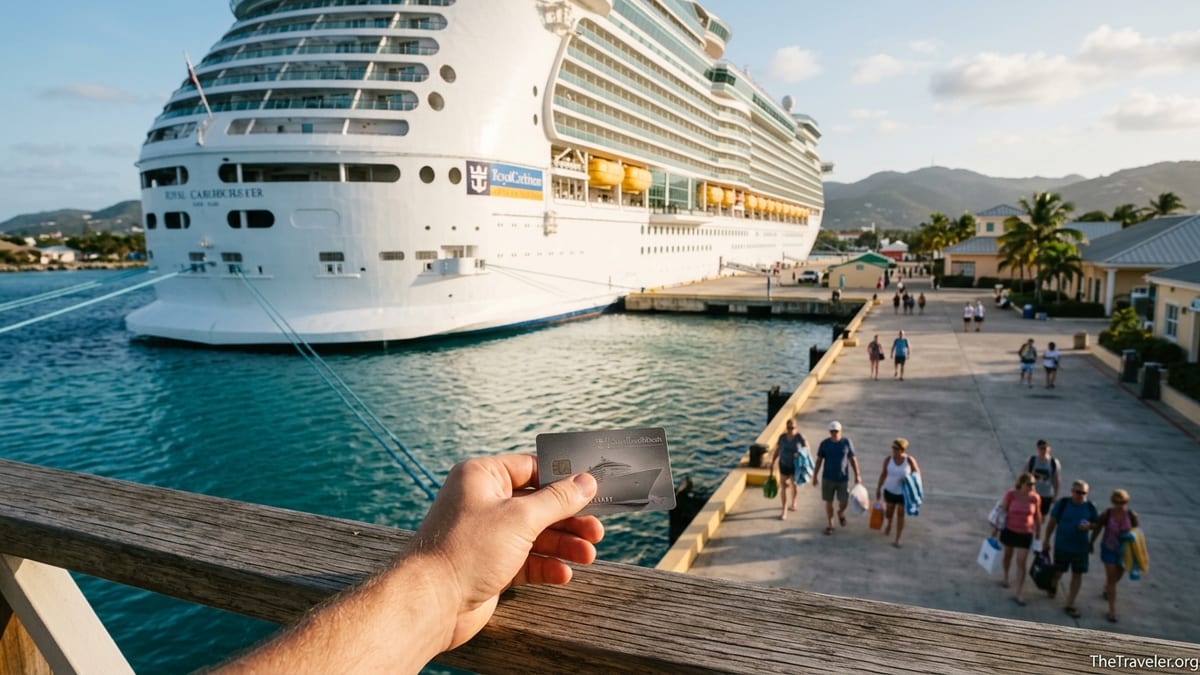
The Card Landscape in 2026: From Royal Caribbean Visa to Royal ONE
Until recently, the main co-branded option for Royal loyalists in the United States was the no-annual-fee Royal Caribbean Visa Signature credit card issued by Bank of America. It earned proprietary cruise points on Royal Caribbean, Celebrity Cruises and, more recently, Silversea purchases, plus a smaller trickle of points on everyday spending. Those points could only be redeemed back into the Royal Caribbean Group ecosystem: cruise discounts, stateroom upgrades, onboard credit and a limited menu of merchandise and certificates.
In early 2026 Royal Caribbean Group and Bank of America announced a new tri-branded credit card family called Royal ONE, including a no-fee Royal ONE Visa Signature and a $99-per-year Royal ONE Plus version. Existing Royal Caribbean Visa Signature and Celebrity Visa Signature cardholders are being migrated to the new products, and the underlying rewards currency and redemption portal are being refreshed under Royal ONE Rewards. While the branding is new, the core promise remains familiar: spend on land, earn points, then redeem for value at sea.
This transition matters if you are evaluating the old Royal Caribbean Visa Signature today. The legacy card’s structure and point chart still inform how redemptions work under Royal ONE, and many cruisers still carry the older plastic while their accounts convert. Understanding the historical earning and redemption patterns will help you decide whether to keep, upgrade, or simply move your everyday spend to a more flexible travel card while using Royal’s card only surgically for bonuses and targeted redemptions.
For the purposes of this article, references to “Royal Caribbean Visa Signature” focus on its long-standing earn rates and redemption patterns that continue to underpin the newer Royal ONE ecosystem, especially for cruisers in the United States who mainly sail Royal Caribbean ships.
How Earning Really Works: Points on Cruises vs Everyday Spend
The classic Royal Caribbean Visa Signature card has offered a simple earning structure: 2 MyCruise-style points per dollar on qualifying Royal Caribbean, Celebrity and often Silversea purchases, and 1 point per dollar on virtually all other eligible purchases. There is no annual fee and no foreign transaction fees, which makes the card relatively painless to keep in a drawer even if you do not use it as your primary everyday card.
In practical terms, that earning structure means a $2,000 cruise fare booked directly with Royal Caribbean typically earns around 4,000 points, while a $500 airfare booked with an airline or an online travel agency might earn about 500 points. A week of everyday living in the United States charged to the card, say $800 of groceries, gas, and utilities, would generate roughly 800 more points. Over several months, a typical family can accumulate around 10,000 to 20,000 points just from one or two cruises and normal household charges.
Sign-up bonuses are where many cruisers see their points balance jump quickly. Historically, Royal Caribbean Visa Signature offers have hovered in the 25,000 to 30,000 point range after a modest minimum spend in the first 90 days. In real life, a cruiser might book a seven-night Caribbean sailing on Wonder of the Seas for June, put a $1,000 deposit and airfare on the card to trigger a 30,000-point welcome bonus, and end up with around 32,000 to 35,000 points before they even board the ship.
Compared with general travel cards that can earn 3 to 5 transferable points per dollar on travel or dining, Royal’s earning rates are modest. The card’s main appeal is not raw earning power but the ability to turn those niche points into good value on specific cruise redemptions, provided you avoid the weaker options in the catalog.
What Your Points Are Actually Worth in Cruise Terms
Independent valuations of Royal Caribbean’s cruise points consistently land around 1 cent per point on average, with the potential to reach roughly 2 cents per point in a few narrow, high-value scenarios such as specific seven-night Caribbean cruises or companion fare certificates. In practice, most standard cruise discounts and onboard credits are priced so that 10,000 points equate to about $100 in value, 15,000 points to about $150, and so on.
Where the card can shine is in carefully chosen redemptions. For example, cruisers frequently report that 15,000 points can be redeemed for either $150 in onboard credit or a cabin upgrade worth up to around $300 on a four- to eight-night itinerary, effectively doubling the per-point value if you were going to pay cash for that upgrade anyway. Similarly, at the higher end of the chart, 50,000 points may cover a three- or four-night Royal Caribbean cruise in an oceanview cabin, with the fare capped around $1,000. In that case, your 50,000 points are offsetting up to $1,000 of cruise cost, a value of about 2 cents per point.
To illustrate the math, imagine you have 75,000 points after a couple of years of loyal use. If you simply redeem them as onboard credit at 1 cent per point, you get around $750 to spend on drinks packages, spa treatments and shore excursions. If, instead, you redeem them for a companion fare certificate that discounts your partner’s cruise ticket by up to $1,500 on a seven-night Caribbean itinerary, your effective value could be closer to 2 cents per point, or about $1,500 in savings. The catch is that you must be booking a qualifying cruise and be flexible with the certificate’s terms and blackout dates.
On the flip side, non-cruise redemptions such as merchandise, generic travel vouchers or some gift cards typically yield weaker value, sometimes below 1 cent per point. For instance, a beach bag or branded robe may cost 5,000 points but retail for only around $40 to $45, while the same 5,000 points could buy $50 in onboard credit. Over years, consistently choosing low-value redemptions can dilute the real-world benefits of holding the card.
Real-World Example: One Week Caribbean Cruise With and Without the Card
Consider a family of four from Texas planning a seven-night Eastern Caribbean sailing on a midrange Royal Caribbean ship in February. Cabins in a standard balcony category might price around $3,200 total including taxes and port fees. Flights to Florida for four from Dallas could easily run another $1,200, and onboard spending on drinks, specialty dining and shore excursions might add $1,000. The total trip cost is roughly $5,400.
If the family pays for everything with a general travel card that earns 2 percent cash back, they collect around $108 in value. If they use a premium travel card that earns 3 points per dollar on travel at a rough value of 1.5 cents per point, they would generate about 10,800 points, worth around $160 toward future trips or statement credits. Those rewards are flexible and can be used on any airline, hotel or cruise.
Now imagine the same family uses a Royal Caribbean Visa Signature card instead. The $3,200 cruise fare charged directly with Royal earns 6,400 cruise points, the $1,200 in airfare booked through an airline’s website generates 1,200 points, and roughly $1,000 in onboard purchases billed to the card add another 2,000 points. Combined with a 30,000-point welcome bonus triggered by the initial cruise deposit, the family ends the trip with about 39,000 to 40,000 points.
Redeemed at the typical 1 cent-per-point rate, those 40,000 points cover around $400 in future onboard credit or cruise discount, beating the 2 percent cash back card on this single trip. But the rewards are locked into Royal Caribbean Group and must be used under the Royal ONE Rewards rules. If the family cruises Royal every year or two, that restricted but higher cruise-specific value may be acceptable. If they often switch to other lines like Carnival or Norwegian, the lack of flexibility starts to feel like a tax on their points.
When the Card Makes Sense for Frequent Cruisers
For travelers who sail Royal Caribbean, Celebrity or Silversea year after year, the Visa Signature / Royal ONE ecosystem can still deliver compelling value, especially when layered on top of existing Crown & Anchor Society or Captain’s Club loyalty benefits. The card works best when it plays a supporting role alongside a strong general travel card, not as a stand-alone solution for all spending.
A frequent cruiser might, for instance, use a flexible travel card such as a well-known Sapphire-branded card for flights, hotels and non-cruise purchases while reserving the Royal card for cruise fares, onboard purchases and limited-time promotions where earning rates or bonuses are temporarily elevated. If a targeted offer doubles points on Royal Caribbean purchases for a spring season, that traveler could pay a $4,000 balcony cabin fare with the Royal card, earn 8,000 or more cruise points, and then funnel daily grocery and gas spending back to a higher-earning general rewards card.
The card also makes strategic sense if you like to plan a specific high-value redemption. One real-world strategy many cruisers mention is to open the card six to nine months before a major seven-night cruise, earn the sign-up bonus and ongoing points on deposits and final payments, and then redeem the combined balance for a companion fare discount close to 2 cents per point. After that, they either downgrade to the no-fee version, keep the card solely for no-foreign-transaction-fee use at Caribbean ports, or reduce spending on it until the next big cruise.
Because Royal’s rewards currency is detached from hotel and airline ecosystems, it is less attractive as a primary card for travelers who frequently hop between cruise lines or prioritize business-class flights or luxury hotel stays. In those cases, it works best as a specialty tool that you employ only when its narrow cruise redemption sweet spots clearly beat what you would earn elsewhere.
Common Pitfalls: Low-Value Redemptions and Redemption Friction
Where many cardholders go wrong is treating the Royal Caribbean Visa Signature like a generic cash-back or travel card and redeeming points for whatever is easiest. A classic example is a cruiser who racks up 20,000 points over several years, then impulsively redeems them for a mix of $200 onboard credit and small merchandise items before a short Bahamas sailing. While that is not terrible compared with 1 percent cash back, it leaves substantial value on the table compared with saving longer for a high-value upgrade or companion fare.
Another frustration some cardholders report is redemption friction. Because the card is issued by Bank of America but rewards are administered through Royal Caribbean Group, the process to redeem points often requires jumping between the bank’s website or app and Royal’s rewards portal. In the middle of 2026, some long-time Visa Signature users described confusion as their accounts transitioned to Royal ONE, with links from the bank’s “redeem” button landing on generic marketing pages instead of the specific redemption catalog and requiring additional steps to locate their point balance and eligible rewards.
In concrete terms, imagine you have 30,000 points and want to apply them toward shore excursions on an upcoming Alaska cruise. With a flexible bank points program, you might simply check out in the cruise planner using a travel portal or pay cash and use “pay with points” to erase the charge on your credit card statement. With Royal’s ecosystem, you often must first redeem points for a specific onboard credit or certificate, wait for it to post to your cruise reservation, and then use that onboard credit when paying for excursions. If you wait too close to your sailing date, some redemptions may not process in time or may be restricted, leading to disappointment.
Finally, some older point balances are subject to expiration rules, particularly if there is long inactivity on the account or if you close your Royal co-branded card without redeeming points first. That is a sharp contrast with leading bank programs where points typically remain available as long as at least one card in the family is open. If you are a casual cruiser who might go three or four years between Royal sailings, this expiration risk further reduces the effective long-term value of the Royal Caribbean Visa Signature.
How It Compares to General Travel Cards for Cruise Travelers
To judge the Royal Caribbean Visa Signature card honestly, you have to compare it against real-world alternatives that travelers actually use. A popular baseline is a simple 2 percent cash-back card. For every $10,000 charged in a year, that card yields $200 in flexible cash you can apply to any trip, cruise or otherwise. The Royal card, earning 1 point per dollar on that same $10,000 in everyday spending, would generate 10,000 points worth roughly $100 in typical cruise redemptions. Even if you manage occasional 2-cent redemptions, it would be hard to consistently beat a no-hassle 2 percent cash-back card on non-cruise expenses.
Premium travel cards that earn 3 to 5 points per dollar on travel, dining or groceries and allow redemptions at 1.25 to 1.5 cents each through their travel portals often offer effective rebate rates of 4 percent to 7.5 percent on those categories. For example, charging a $4,000 Mediterranean cruise to a card that earns 3 points per dollar on travel at 1.5 cents per point yields around $180 of flexible value, which can be used to discount flights, pre-cruise hotels or future trips on completely different travel brands.
Compared side-by-side, the Royal Caribbean Visa Signature usually cannot match the raw earning potential or flexibility of a strong travel card. Its advantage exists almost exclusively in niche use cases where specific cruise redemptions double the per-point value. If you do not plan around those, the card’s no-annual-fee simplicity and occasional sign-up bonus may still justify holding it, but it should not be your main vehicle for building travel wealth.
For cruisers who rarely sail Royal Caribbean Group and prefer to shop for whatever cruise line has the best itinerary or deal in a given season, a general travel card is nearly always a smarter choice. The ability to book a Norwegian fjords cruise on a different line, pay with bank points, and still earn new cruise loyalty status there is often more valuable than squeezing slightly extra value out of a narrowly usable cruise-only point currency.
Practical Strategies to Maximize (or Replace) the Card
If you already have the Royal Caribbean Visa Signature or are being migrated to Royal ONE, the most practical strategy is to treat the card as a targeted cruise savings tool. Use it to capture the sign-up bonus, pay for Royal Caribbean Group cruise fares during promotional earning periods, and redeem points only for medium- or high-value cruise discounts, onboard credits and upgrades. Avoid merchandise, low-value certificates and any redemption that yields noticeably less than 1 cent per point.
One concrete approach could be to set a personal threshold: you will not redeem points until you hit at least 50,000, enough for a meaningful cruise discount, upgrade or companion fare. If you typically book one Royal cruise every 18 to 24 months, you may reach that level after two vacations and a moderate amount of strategic spending on the card. At that point, you can apply the entire balance toward a specific sailing, effectively shaving $500 to $1,000 off the cost of your next trip.
For travelers who are new to cruising or uncertain about their long-term loyalty to Royal Caribbean Group, it may make more sense to start with a flexible travel card and only consider Royal’s co-branded option later, once you know you enjoy the line and plan to sail it repeatedly. That way, your early travel spending builds a bank of broadly useful points that can fund flights, pre-cruise hotels or even land vacations, while you keep open the option to pivot away from cruises entirely if your interests change.
Finally, if you currently hold the Royal Caribbean Visa Signature and are underwhelmed by its value, you can gradually transition most of your non-cruise spending to a better rewards card without necessarily closing the Royal account immediately. Keeping it open with zero balance can help your overall credit utilization and average account age, while you slowly redeem your remaining cruise points over one or two future Royal sailings before deciding whether to keep or cancel the migrated Royal ONE card.
The Takeaway
The truth about the Royal Caribbean Visa Signature credit card is that it is neither a scam nor a secret gold mine. It is a specialized tool built for a narrow audience: travelers who cruise Royal Caribbean, Celebrity or Silversea regularly and are willing to think strategically about how they earn and redeem proprietary cruise points.
In real-world terms, you can usually expect around 1 cent per point in value, with the possibility of reaching about 2 cents per point through carefully chosen cruise, upgrade or companion fare redemptions. Without that planning, the rewards often trail what you could earn with a straightforward 2 percent cash-back card or a modern travel rewards card that offers generous multipliers and flexible, transferable points.
If you sail Royal Caribbean Group lines every year, enjoy poring over rewards charts and like the idea of turning your onboard bar tab or spa bill into a cheaper balcony cabin on your next sailing, the card can be a reasonable part of your travel wallet, especially in its no-annual-fee form. If you prefer maximum flexibility, frequently change cruise brands or simply want the most value from everyday spending with the least effort, you are usually better off relying on a strong general travel card and treating any cruise-specific card as optional, not essential.
FAQ
Q1: Is the Royal Caribbean Visa Signature credit card worth getting for a first-time cruiser?
For a first-time cruiser who is not yet sure they will stick with Royal Caribbean, the card is usually not the best starting point. A flexible travel card that earns strong rewards on flights, hotels and general spending will give you more options, whether you fall in love with cruising or decide to travel differently next year.
Q2: How many points do I need for a “free” Royal Caribbean cruise with the card?
Typically you need at least 50,000 points for a three- or four-night cruise in an oceanview cabin with fare caps, while more generous companion-fare or longer-cruise awards can require 75,000 points or more. Exact requirements change over time, and taxes, fees and gratuities are usually not fully covered.
Q3: What is the average value per point when redeeming for Royal Caribbean cruises?
On average, most cruise discounts and onboard credits work out to about 1 cent per point. In certain high-value redemptions such as specific seven-night Caribbean cruises or companion fares, you may reach roughly 2 cents per point if you use the full allowed value.
Q4: Do Royal Caribbean credit card points expire?
Some legacy point balances and certificates are subject to expiration if there is long inactivity or if you close your co-branded card without redeeming points. It is safer to plan redemptions regularly, especially if you cruise infrequently, and to check your current program terms for updated expiration rules.
Q5: Can I redeem points to pay for shore excursions and drink packages?
Yes, but usually indirectly. You generally redeem points for onboard credit or specific certificates first, which then appear on your cruise reservation and can be applied to excursions, drink packages, spa services and other onboard purchases, subject to the program’s terms.
Q6: How does the Royal Caribbean card compare with a 2 percent cash-back card for cruises?
On non-cruise spending, a 2 percent cash-back card almost always wins, because Royal’s card typically returns about 1 percent in cruise value outside of promotional bonuses. On Royal Caribbean cruise fares and onboard purchases, the dedicated card can pull ahead if you redeem points at 1.5 to 2 cents per point for high-value cruise awards.
Q7: Is there an annual fee for the Royal Caribbean Visa Signature card?
The long-running Royal Caribbean Visa Signature has not charged an annual fee, which makes it relatively low-risk to keep even if you use it sparingly. As accounts migrate to the newer Royal ONE lineup, one version remains no-fee while a separate premium version introduces an annual fee in exchange for richer perks.
Q8: Are there foreign transaction fees when I use the card in Caribbean ports?
No, one of the enduring benefits of the Royal Caribbean co-branded card has been the absence of foreign transaction fees. That makes it a convenient option for purchases in Caribbean ports, European embarkation cities and other international destinations.
Q9: Can I combine points from multiple Royal Caribbean credit cards in the same household?
Point combining policies can be restrictive. In general, each credit card account earns its own balance, and many redemptions must be made by the primary cardholder. Some families work around this by having each adult hold their own card and apply their own rewards to the same cruise booking through separate onboard credits or certificates, but it is important to review current rules before assuming balances can be merged.
Q10: Should frequent cruisers use only the Royal Caribbean card for all expenses?
Even for loyal cruisers, it often makes sense to pair the Royal Caribbean card with a strong general travel or cash-back card. Use the Royal card strategically for cruise fares, onboard spending and promotional offers, but lean on a higher-earning, more flexible card for groceries, gas, dining and non-cruise travel so you are not locking all your rewards into a single cruise brand.