


More news on this day
Passengers traveling through Tweed New Haven Airport in southern Connecticut are reporting flight disruptions tied to a runway issue, adding to a growing list of operational pinch points at the region’s fast-growing, space-constrained airport.
Get the latest news straight to your inbox!
What travelers say happened and what records show
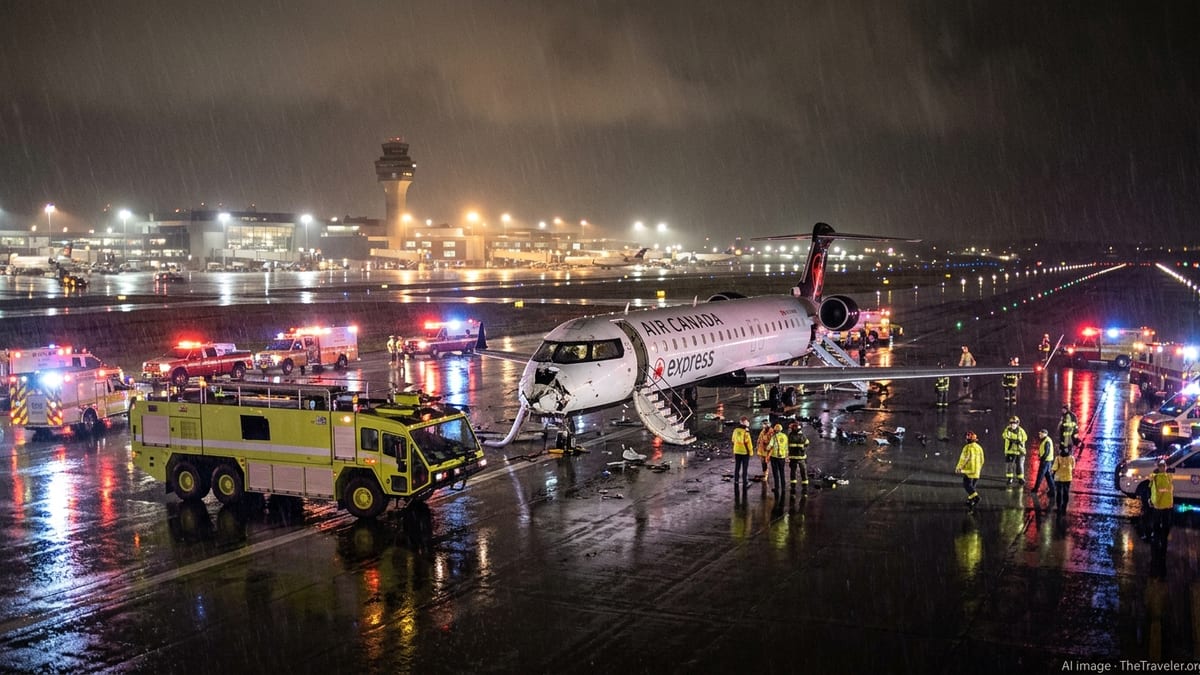
Published coverage and publicly available airfield notices indicate that portions of Tweed’s primary runway, Runway 02/20, were temporarily closed early Tuesday, September 15, 2026, with short closure windows listed for the airfield. Even brief restrictions can cascade at an airport with a single main runway and limited ramp space, especially when flights are tightly scheduled.
The timing of the reported runway closure windows coincides with a broader period of travel disruptions in coastal Connecticut, where heavy rain and flash flooding affected transportation corridors and airport access. Over the weekend of September 13, 2026, coverage described portions of Tweed’s passenger facilities being shut for a period due to flooding conditions, complicating departures and airport access even when aircraft operations can resume.
For passengers, the experience can look like sudden delays, gate holds, or diversions that are difficult to interpret from the terminal side. At small airports, disruptions are often felt more acutely because there are fewer spare gates, fewer alternative flights on the same day, and less flexibility to reposition aircraft and crews without knock-on effects.
Why a runway issue can ripple more at Tweed than at bigger airports
Tweed is a compact airport located close to residential neighborhoods and coastal weather patterns, and it relies heavily on a single dominant commercial operator. That combination can magnify the impact of any runway or airfield limitation, even when the restriction is temporary or limited to a specific piece of equipment or operating condition.
Publicly available airport data describes Tweed’s airfield as having one primary commercial runway (02/20) and lighting and approach aids that support instrument operations, but NOTAMs can still restrict specific aids or procedures for defined periods. Recent notices and airport information also reflect that certain visual approach slope indicators can be listed as out of service for set timeframes, which can influence how arrivals and departures are managed, particularly in poor visibility or when operational margins tighten.
Separately from runway availability, Tweed’s limited gate and ramp footprint has been a frequent theme in passenger-facing disruptions. When an arriving aircraft cannot park immediately, or when departures are held for airfield access, delays can compound quickly and become difficult to recover within the day’s schedule.
Weather, flooding, and access problems add another layer
The runway discussion is unfolding against a backdrop of recent severe weather impacts in the region. Published reporting described flash flooding across parts of coastal Connecticut during the weekend of September 13, 2026, including impacts that temporarily closed parts of Tweed’s departures facilities.
That kind of disruption can create two separate passenger problems at once: aircraft operations may be limited by runway status, visibility, or air traffic flow controls, while the passenger process can be limited by terminal access, roadway flooding, or the ability to process travelers through check-in and security.
For travelers, it can be hard to tell which factor is driving a particular delay at any moment. In practice, disruptions often overlap, and an early-day interruption can push flights into later time windows, when crews reach duty limits or aircraft rotations no longer line up.
What to watch if you are flying Avelo out of HVN
Avelo Airlines operates the bulk of Tweed’s scheduled commercial service, and its point-to-point model means many routes do not have multiple daily alternatives from the same airport. When a flight is delayed or canceled, passengers may have fewer same-day options to rebook compared with larger airports where multiple airlines serve the same city pairs.
For near-term trips, travelers may want to monitor two things closely: real-time flight status updates from the carrier and airport, and airfield restrictions that can affect operations. Runway or airfield NOTAMs typically define exact time windows and the scope of restrictions, which can help explain why a specific departure or arrival is held even when conditions appear manageable from the ground.
Travelers with time-sensitive itineraries may also consider the practical impact of diversions. When flights cannot land at Tweed, nearby airports such as Bradley International can serve as alternates, but diversions can lead to long waits for ground transportation and baggage handling depending on staffing and ramp constraints.
Longer-term context: expansion plans and airspace updates
Tweed has been pursuing major capital projects intended to address capacity and operational constraints, including a runway extension and a new terminal on the east side of the airfield. Public airport documents describe the runway and terminal work as part of a broader package of projects, with construction timing discussed in recent financial and planning materials.
In parallel, federal airspace updates have been moving through the regulatory process. A notice published in early September 2026 proposed changes to the Class D and Class E airspace dimensions over New Haven to better contain instrument flight rules operations at Tweed, reflecting the airport’s evolving role and the need to align airspace boundaries with operational realities.
For passengers, the immediate concern is whether today’s disruptions ease quickly. The longer-term question is whether planned airfield and terminal investments can reduce the frequency and severity of ripple effects when runway issues, weather, or congestion hit at the same time.