


More news on this day
Passengers traveling through Tweed New Haven Airport in recent days have described flight disruptions tied to runway-related constraints, an issue that has periodically surfaced at the coastal Connecticut airport as commercial service has expanded and schedules have grown denser.
Get the latest news straight to your inbox!
What travelers say happened and how disruptions show up
Published coverage and passenger accounts indicate the most visible impacts have included delays, diversions to alternate airports, and extended waits to deplane or rebook. When Tweed’s single primary runway is temporarily unavailable or operating with tighter margins, there are limited alternatives on-site, which can magnify knock-on effects for arriving and departing flights.
At smaller airports like Tweed, where commercial service is concentrated among a limited number of carriers and gates, disruptions can cascade quickly. If an inbound aircraft arrives late or is forced to divert, the outbound rotation may be delayed or canceled, and passengers can have fewer same-day options to switch flights compared with larger hubs.
Separately, recent years have also shown how operational challenges can compound in the terminal itself during irregular operations. Published reporting has described times when congestion, security throughput, and gate-area space constraints became significant pain points during extended delays.
Why Tweed is uniquely sensitive to runway constraints
Tweed New Haven Airport’s physical footprint and operating environment differ from larger regional airports. Publicly available information describes a single main runway and a compact terminal area serving a growing schedule. In this setup, a runway issue can have an outsized effect because there is little built-in redundancy for commercial operations.
Regional reporting and airport planning discussions have long framed the runway length and related operational limits as central to Tweed’s reliability challenges, particularly when weather and aircraft-performance requirements narrow the margin for safe operations. Diversions and missed approaches have been widely associated with low-visibility conditions in the New Haven shoreline area.
Those constraints are also part of the broader debate around Tweed’s proposed expansion. Supporters argue that infrastructure improvements would reduce disruptions and make operations more resilient, while critics focus on neighborhood impacts such as noise, traffic, and environmental concerns.
Recent incidents highlight broader operational pressure points
Published coverage over the past two years has documented several disruption scenarios at Tweed beyond routine delays. These have included weather-driven diversions that stranded passengers at other Connecticut airports, along with localized airfield incidents that temporarily affected operations.
In one example of how quickly conditions can deteriorate, dense fog and staffing-related constraints were described in published reporting as contributing to significant crowding at the terminal in March 2026, with overflow holding areas used when the building reached capacity.
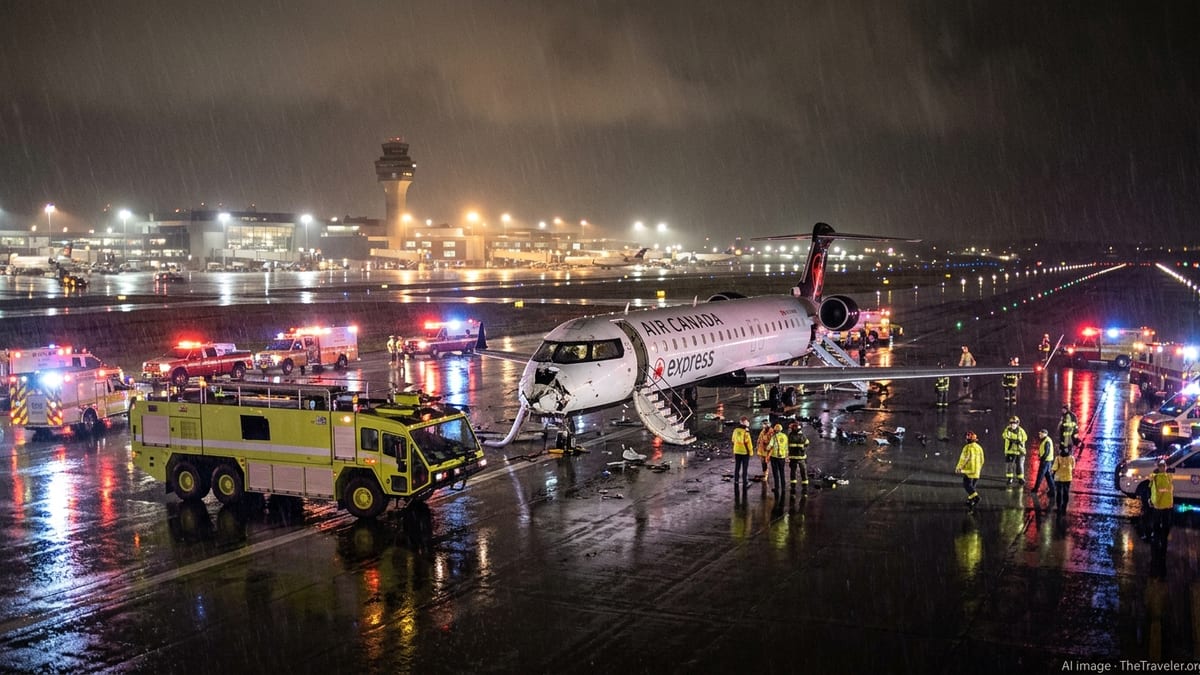
Airfield-specific events have also drawn attention. In 2025, coverage described a taxiway excursion involving an outbound flight that prompted a response on the airfield while passengers and crew were reported safe and the airport continued operating.
Expansion plans and legal developments form the backdrop
The runway disruptions arrive as Tweed’s long-planned expansion continues moving through public processes. A federal appeals court decision in July 2026 upheld an earlier environmental approval tied to the project, a development that supporters view as a significant step toward construction of a new terminal and a runway extension.
Publicly available project descriptions have centered on extending the main runway by roughly 1,000 feet and building a new terminal in East Haven, alongside parking and roadway changes intended to handle higher passenger volumes. Planning documents and coverage have framed the runway extension as a key enabling factor for more consistent operations and fuller aircraft loads.
At the same time, neighborhood concerns remain a prominent part of the airport’s story, including noise, traffic congestion, and quality-of-life impacts. Tweed has published information about voluntary operating-hour restrictions associated with its commercial carriers, alongside community-facing noise and flight-tracking tools.
What passengers can do when Tweed disruptions occur
When a runway-related disruption or diversion affects a flight, travelers generally face a narrower set of immediate alternatives at Tweed than they would at a major airport, making proactive planning more important. Published reporting and airport guidance have consistently emphasized checking flight status close to departure and staying alert for airline notifications when weather or airfield conditions are changing.
For passengers whose itineraries are time-sensitive, it can also be useful to understand nearby fallback airports in Connecticut and Rhode Island that may be used for diversions or rebooking, depending on the airline and route. In prior disruption events, diversions to larger airports have created additional ground-transportation needs, especially late at night.
Ground access has been evolving as Tweed’s passenger counts grow. Tweed’s published updates indicate authorized rideshare options expanded in 2026, a change that may help some travelers manage irregular operations when flights arrive late or are diverted and later repositioned back to New Haven.