


More news on this day
Passengers flying in and out of Tweed New Haven Airport in southern Connecticut reported delays they attributed to a “runway issue,” a reminder that operations at the small coastal airport can be especially sensitive to airfield constraints, weather, and tight turnarounds.
Get the latest news straight to your inbox!
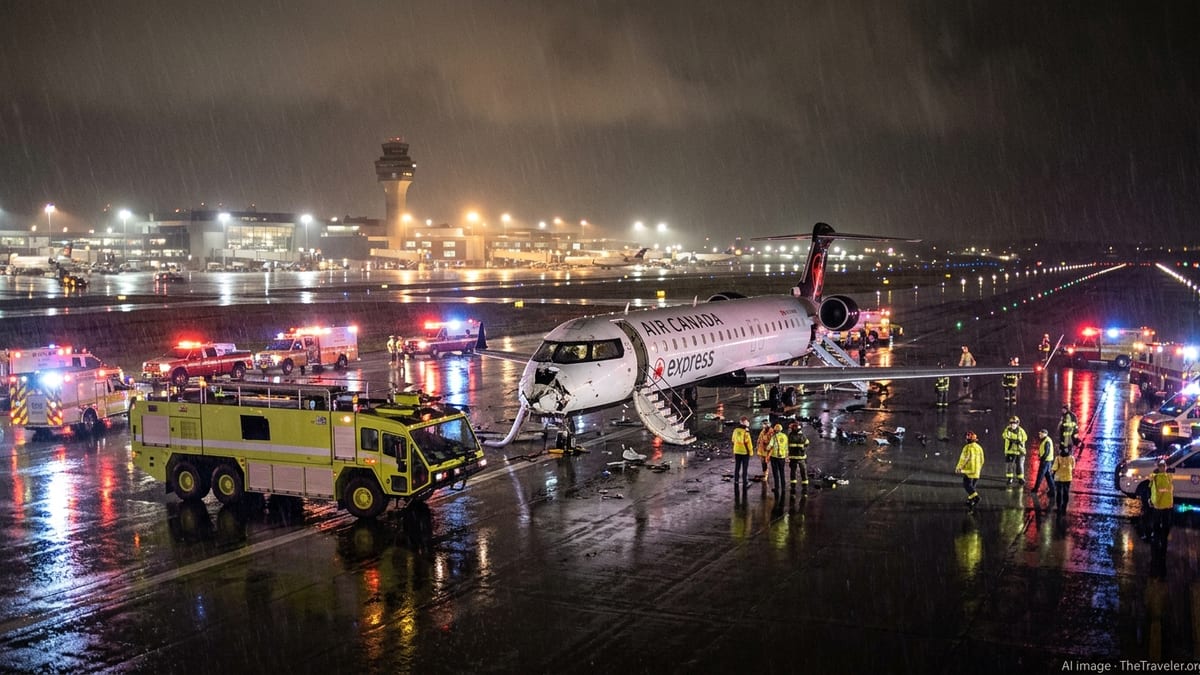
What travelers reported, and why the runway matters at Tweed
Published coverage and real-time flight tracking show that even routine disruptions at Tweed can cascade quickly because the airport operates with limited runway and apron space, a small terminal footprint, and tightly scheduled peaks dominated by a couple of carriers. When something affects the runway environment, the operational options for arriving and departing aircraft narrow fast, and the downstream impacts often include late departures, diversions, and longer aircraft turnaround times.
Tweed’s primary runway is widely documented as 5,600 feet long, a figure that has been central to years of public debate about the airport’s growth and reliability. That runway length can translate into payload or performance constraints in certain conditions, and it also limits flexibility when weather, equipment, or traffic flow issues compress the arrival and departure window.
While passengers may describe the problem simply as a “runway issue,” the underlying trigger can range from a temporary closure, a disabled aircraft, pavement or lighting concerns, or constraints tied to instrument procedures and surrounding obstacles. Any of those can reduce arrival rates, slow departures, or require airlines to wait for a workable slot.
Delays at HVN often intersect with weather and coastal flooding risk
The airport’s operating environment is shaped by its location near Long Island Sound, where fog, low ceilings, and heavy rain events can quickly affect visibility and surface conditions. Recent regional weather coverage has also highlighted how flash flooding can directly disrupt airport operations in New Haven, including terminal impacts and knock-on delays for flights.
Even when the runway itself remains usable, localized flooding, standing water, or access problems can disrupt departures indirectly by slowing passenger processing, limiting ground handling activity, or creating operational holds. In a small terminal, when several flights overlap or get pushed later into the same hour, congestion can compound the original delay.
Separately, published local reporting over the past few years has described periods when passengers experienced extended waits tied to congestion and irregular operations. Those episodes have reinforced a recurring theme for Tweed: disruptions that might be absorbed at a larger hub can feel sharper at an airport with fewer gates, fewer alternate taxi routes, and less slack in the schedule.
Airfield disruptions can cascade into diversions and late-night arrivals
When conditions deteriorate at Tweed, diversions to larger nearby airports become more likely, particularly to Connecticut’s Bradley International Airport. Published coverage in prior years has described diversion scenarios that left passengers arriving hours late, sometimes after aircraft attempted approaches and then repositioned to alternate airports.
Those diversions create a second wave of disruption: aircraft and crews must be repositioned, and the original schedule can be difficult to recover within the same day. For a point-to-point leisure-heavy network, that can mean delayed departures, changed inbound aircraft assignments, and late-night operations that push congestion into the next morning.
Data from flight-tracking summaries also suggests a meaningful share of departures at HVN experience delays beyond the standard 15-minute threshold over a typical month. While such figures fluctuate with seasonality and weather, they underscore that passengers should expect a higher sensitivity to operational hiccups than at airports with multiple runways and deeper airline staffing reserves.
Runway constraints are also tied to the airport’s long-term expansion debate
The runway’s length and the airport’s physical footprint are central to a long-running policy and legal fight over whether Tweed should expand. Publicly available information and recent Connecticut reporting show a federal appeals court decision in summer 2026 upheld a previous environmental approval connected to the airport’s long-planned expansion, including a longer runway and a new terminal concept.
Proponents of expansion have argued that additional runway length and modernized facilities could improve reliability, reduce certain operational restrictions, and allow airlines to operate with fewer constraints. Opponents have emphasized neighborhood impacts such as noise, traffic, and environmental concerns, with the debate remaining active in local and state politics.
For travelers, the immediate relevance is practical: until major infrastructure changes occur, Tweed remains a small airport where the operating margin can be thin. When passengers hear “runway issue” as the explanation for a delay, it often reflects that the airfield and the broader operating envelope leave less room to reroute around problems in real time.
What passengers can do when HVN delays hit
Travelers impacted by runway-related delays typically have the same immediate decisions as at any airport: monitor airline alerts, recheck flight status before leaving home, and plan for the possibility that an aircraft may arrive late from another city. Because Tweed’s schedule can cluster departures and arrivals, a single late inbound can affect multiple flights behind it.
For passengers who are time-sensitive, it can also be worth understanding the regional backup options. In Connecticut, Bradley International Airport is the most common alternative for flights that cannot land at HVN, and diversions there can affect pickup plans, ground transportation costs, and connection timing.
As Tweed continues to serve as a convenient option for the New Haven area, recent passenger reports and published coverage point to an ongoing trade-off: shorter drives and a smaller terminal experience on good days, but greater exposure to delays when runway, weather, or capacity constraints collide.