


More news on this day
Travelers flying through New York City on May 21 are facing significant disruptions, with a runway sinkhole at LaGuardia Airport forcing widespread delays and cancellations, while nearby Newark Liberty International is experiencing weather and volume-related slowdowns but generally continuing operations.
Get the latest news straight to your inbox!
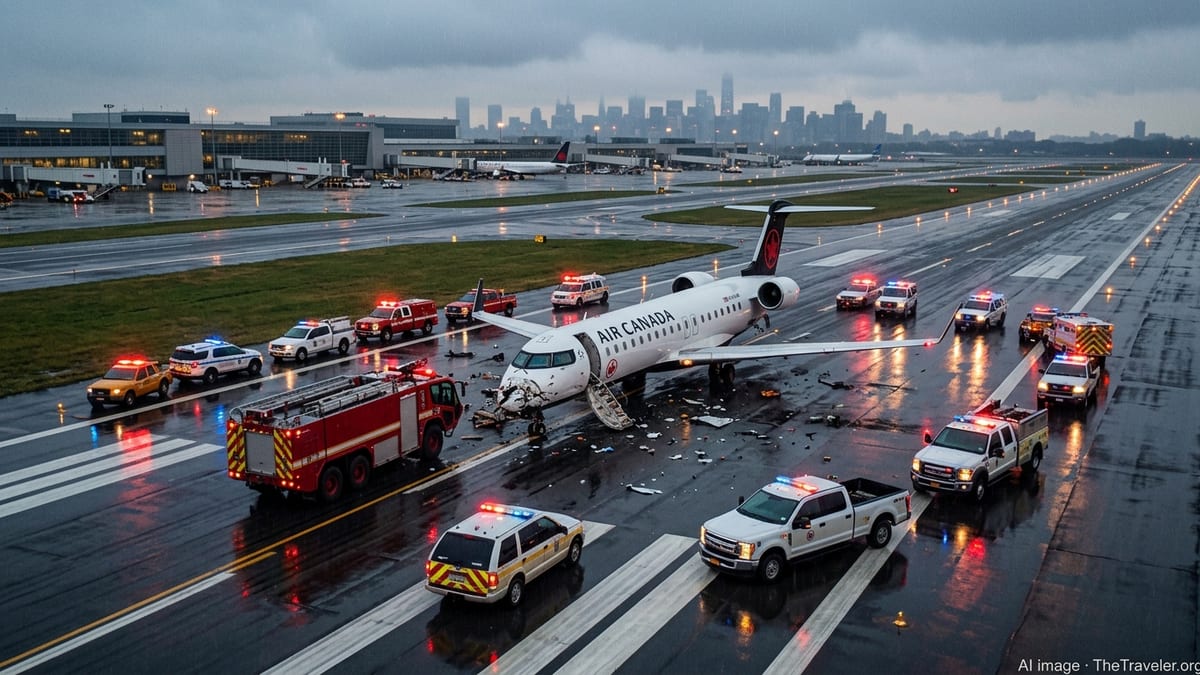
Runway sinkhole keeps LaGuardia on reduced capacity
Publicly available information indicates that one of LaGuardia Airport’s two main runways remains out of service after a sinkhole was discovered near the pavement on May 20. Coverage of the incident describes emergency repairs under way and continuing closure of the affected runway, which has sharply reduced the number of flights the airport can handle in peak periods.
Reports from airline trackers and local media on May 21 show that many carriers have preemptively canceled a portion of their LaGuardia schedules, especially at the busiest morning and late afternoon banks. Remaining flights are often departing or arriving well behind schedule, with some aircraft diverted to John F. Kennedy International or other regional airports to ease congestion.
Flight-status boards sampled early Thursday show clusters of cancellations on short-haul routes in the Northeast and Mid-Atlantic, where airlines have the most flexibility to consolidate passengers onto remaining departures. Longer-haul and transcontinental flights from LaGuardia are, in many cases, still operating, but with extended ground holds and arrival spacing as air traffic controllers sequence traffic onto the single available runway.
Although the Federal Aviation Administration’s national status dashboard has not issued a nationwide ground stop for LaGuardia, it shows that the airport is operating under flow-control measures that effectively cap the number of arrival and departure slots. Those constraints are likely to persist until repair crews stabilize the runway area and inspections confirm it is safe to reopen.
Cancellations ripple across domestic networks from LGA
Because LaGuardia is a major domestic hub for several large airlines, the runway outage is sending disruptions across their networks. According to published coverage and airline operational updates, carriers have been canceling shuttle-style business routes first, such as frequencies to Boston, Washington and other high-frequency markets, in order to protect a smaller number of longer-haul flights.
Travelers connecting through LaGuardia report being rebooked via alternate hubs or routed into New York through Newark and John F. Kennedy instead. Social media posts from passengers on May 21 describe last-minute reroutes, longer connection times and occasional overnight stays after missed connections when delays at LaGuardia cascaded through the day.
Historical FAA construction impact documents already listed LaGuardia as an airport operating under extended overnight work in 2026, leaving little slack when an unexpected infrastructure issue arises. With overnight maintenance windows already in use, operators face a narrower band of time to carry out emergency runway repairs without further upending the daytime schedule.
Industry analysts cited in recent reports note that LaGuardia has long been one of the most slot-constrained fields in the country, and that losing a runway, even temporarily, magnifies delays well beyond what similar damage might cause at a larger, more spread-out airport. Passengers are being advised in public-facing guidance to treat scheduled departure times as provisional and to build in extra time for rebooking or alternate routing.
Newark delays tied to weather, volume and ongoing constraints
Across the Hudson River at Newark Liberty International, operations on May 21 appear more typical for a busy spring travel day, but not without problems. FAA traffic management notices and airline communications highlight weather systems moving through the broader Northeast corridor, which can lead to ground delay programs and airborne holding for Newark-bound flights during peak periods.
Travel forums and passenger reports point to scattered long delays and isolated cancellations at Newark, particularly on evening departures when earlier disruptions stack up. Some travelers describe overnight delays of many hours on certain routes, although there is no single infrastructure event at Newark comparable to the LaGuardia sinkhole.
Newark continues to operate under longstanding volume and staffing constraints noted in federal scheduling orders and previous airline statements, which limit the number of peak-hour movements that can be scheduled. When thunderstorms or low clouds reduce usable airspace or runway configurations, these structural limits can quickly translate into departure queues and missed connections.
Recent coverage of service at Newark also notes that replacement work on the AirTrain system has pushed more ground traffic onto shuttle buses and roadway access, potentially lengthening the time it takes for connecting passengers to move between terminals and rail links. While this does not directly cause flight delays, it can increase the risk that travelers arriving late from congested roads will miss tightly timed departures.
Knock-on impacts for New York–area travelers
The combination of a compromised runway at LaGuardia and weather and volume constraints at Newark is making it a challenging day for travelers using any of the New York region’s major airports. Public dispatches from the FAA and airline operations centers suggest that traffic is being actively balanced between LaGuardia, Newark and Kennedy to keep the overall system stable, with some LaGuardia-bound flights shifted to the other two airports where possible.
Passengers booked through LaGuardia on May 21 are finding that even flights still listed as operating may be subject to rolling departure times as ground crews juggle gate availability and runway access. Those departing from Newark may see more modest pushback or arrival delays, but could still encounter long lines at security and check-in during compressed banks of flights.
For travelers with flexibility, published guidance from airlines and airport operators in similar past events suggests considering early-morning or late-evening departures, when storms are less likely and schedules can be more forgiving. Others may opt to switch itineraries to or from airports in nearby cities if their carrier allows changes, although the sudden surge in demand can quickly exhaust alternative options.
Observers of the disruption note that the events at LaGuardia underscore how sensitive the New York air travel system remains to infrastructure issues and how little margin exists for error during the busy spring and summer seasons. With emergency repairs still in progress, the pace at which the damaged runway can be safely restored will largely determine how long New York area travelers will continue to face elevated risks of delay and cancellation.
What flyers should watch for over the next 24 to 48 hours
As crews continue work around the LaGuardia sinkhole, operations are likely to evolve through the day and into the weekend. Airlines often recalibrate schedules overnight, which means that additional proactive cancellations for LaGuardia may appear later on May 21 and into May 22 as carriers adjust for reduced capacity.
Newark passengers should watch for weather-related traffic management initiatives, particularly in the afternoon and evening hours when convective storms are more common. These programs can add substantial departure and arrival delays with relatively little advance notice, even on days without major infrastructure issues.
Travelers across both airports are being encouraged in public-facing advisories and media coverage to monitor their airline’s mobile apps and flight status tools, arrive with extra time and consider carry-on baggage when possible to facilitate quick rebooking. Those connecting internationally through Newark may face longer queues at customs and security if earlier disruptions compress multiple arrival banks into shorter windows.
While neither LaGuardia nor Newark is fully shut to traffic on May 21, the combination of runway damage, constrained airspace and high seasonal demand is producing an environment where schedules remain fluid. Flyers planning to pass through the New York region in the coming days are likely to benefit from contingency plans, flexible itineraries and close attention to rapidly changing airport conditions.