


More news on this day
A sinkhole discovered beside a primary runway at New York’s LaGuardia Airport has triggered the closure of critical airfield infrastructure, canceling more than 400 flights and intensifying delays across the already congested Northeast air corridor.
Get the latest news straight to your inbox!
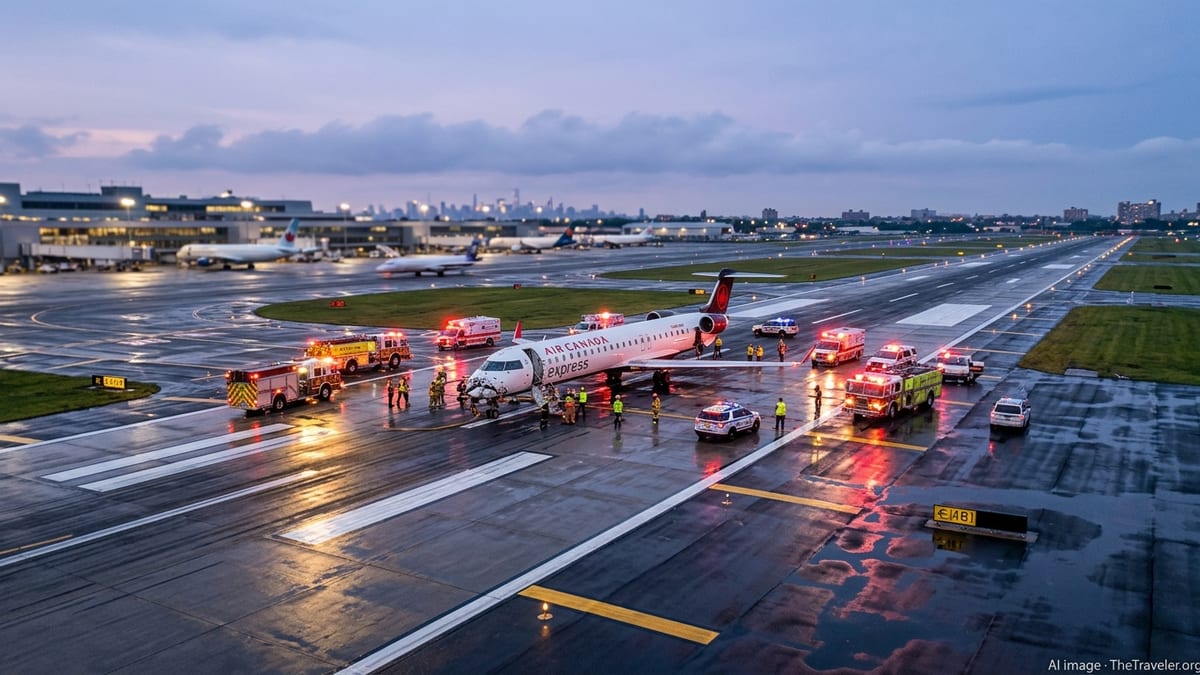
Runway 4/22 Closed After Inspection Uncovers Damage
Publicly available information indicates that airfield crews at LaGuardia identified the sinkhole late Wednesday morning during a routine inspection of Runway 4/22, one of the airport’s two main runways. The depression, located adjacent to the paved surface, was deemed serious enough that operations on the runway were halted while engineering teams assessed the underlying ground stability.
According to published coverage, the closure went into effect shortly after the sinkhole was discovered, effectively cutting LaGuardia’s runway capacity in half just as midweek traffic was ramping up. Runway 4/22 typically handles a significant share of departures and arrivals, so its sudden loss immediately constrained the number of aircraft that could safely land and take off.
Engineering and construction crews have been working around the clock to determine the size of the void beneath the airfield and to design a repair plan that will both stabilize the area and prevent further subsidence. Initial reports describe a localized sinkhole rather than a widespread collapse, but aviation analysts note that any compromise of runway-adjacent ground raises serious concerns about long term resilience at an airport built on reclaimed shoreline.
While officials have not yet provided a detailed timetable for full restoration of service on Runway 4/22, publicly accessible advisories emphasize that safety assessments and subsurface repairs will dictate the pace of reopening, not pressure to restore schedules.
More Than 400 Flights Canceled As Delays Cascade
Data from flight tracking services show that the runway shutdown quickly rippled through LaGuardia’s schedule. On Wednesday and into Thursday morning, combined cancellations and delays climbed into the hundreds, with more than 400 flights scrubbed outright as airlines recalibrated operations around the single remaining runway.
Published figures from services such as FlightAware indicate that average departure and arrival delays spiked from under an hour early in the day to well over 90 minutes at peak disruption. Airlines began preemptively canceling rotations they could no longer accommodate, seeking to avoid having aircraft and crews stranded out of position for subsequent flights.
The timing compounded the impact. The sinkhole emerged just as forecast thunderstorms and low clouds moved across the New York region, prompting the Federal Aviation Administration to slow arrivals into LaGuardia due to a combination of weather and reduced runway capacity. The result was a ground stop and flow restrictions that stretched well beyond New York, affecting flights to and from major connection points such as Chicago, Atlanta, Dallas and Orlando.
Travelers reported crowded terminals, long rebooking lines and limited same day alternatives, especially on heavily trafficked business routes. With LaGuardia already known for tight scheduling and minimal slack, the loss of one runway created a bottleneck that the system struggled to absorb.
Travelers Face Difficult Choices And Packed Alternatives
For passengers, the sinkhole translated into a cascade of difficult decisions. Same day rebooking options from LaGuardia shrank quickly as airlines consolidated operations, and many travelers turned to John F. Kennedy International Airport or Newark Liberty International Airport in search of open seats. According to publicly available booking data, remaining seats on regional trains and intercity buses between New York, Boston, Washington and Philadelphia also saw a sharp uptick in demand.
Some carriers introduced flexible waiver policies that allowed customers headed to or from LaGuardia to switch to nearby airports or travel on different days without change fees, although fare differences still applied on many routes. Public advisories urged passengers to check flight status repeatedly before heading to the airport and to consider alternate airports within the New York metro area.
Travel industry analysts note that the sinkhole incident underscores how little buffer exists in the system at peak times. LaGuardia operates on tight turnaround windows, and even small disruptions can tip the schedule into widespread delays. With a major runway offline, that fragility became impossible to ignore for travelers suddenly facing overnight stays, missed connections and last minute hotel searches.
Reports from passenger forums and social media describe scenes of departure boards filling with red cancellation notices, while taxi and rideshare queues lengthened as people abandoned their flights and opted to drive to nearby cities instead. For many, the disruption turned a short regional hop into an all day or even multiday odyssey.
Spotlight On Aging Infrastructure And Ground Stability
The sinkhole has renewed scrutiny of LaGuardia’s underlying infrastructure and geography. The airport sits on a mix of former marshland and landfill in Queens, a foundation that has long posed engineering challenges for heavy aviation infrastructure. Experts cited in recent coverage note that over time, settlement, erosion and water movement can weaken subsurface materials, increasing the risk of depressions and voids forming beneath paved surfaces.
The incident comes in the wake of an expensive multiyear terminal redevelopment project that modernized much of LaGuardia’s passenger facilities but left the basic airfield geometry largely unchanged. Aviation planners have warned that while new concourses and gates improve the traveler experience, chronic issues related to runway length, configuration and underlying soil conditions remain.
Infrastructure specialists point out that sinkholes at airports are relatively rare but not unheard of, and that they often serve as a warning sign of deeper maintenance needs. In LaGuardia’s case, the discovery adjacent to Runway 4/22 is likely to prompt further geotechnical surveying across the airfield as operators look for other potential weak points before they manifest as surface failures.
Broader conversations are also emerging around climate resilience, with researchers noting that rising groundwater levels and more intense rainfall events can accelerate subsurface instability in low lying coastal areas. LaGuardia’s location on the edge of Flushing Bay makes it particularly exposed to these long term trends, adding urgency to calls for more proactive inspection and reinforcement programs.
What Passengers Should Do As Repairs Continue
With repairs underway and no firm reopening date yet for Runway 4/22, travel specialists recommend that anyone booked to fly into or out of LaGuardia over the coming days take a more hands on approach to their plans. That includes monitoring flight status frequently, opting into airline text or app alerts, and considering earlier departures in case later flights face higher risk of cancellation.
Passengers with time sensitive travel, such as international connections or major events, may want to look at itineraries using JFK or Newark, even if it means a longer ground trip to or from the airport. Publicly available information from airlines shows that some carriers are adjusting capacity at those airports to absorb displaced LaGuardia traffic.
Travel advisers also encourage building extra buffer time into connections and avoiding tight layovers through LaGuardia until the runway situation stabilizes. For those whose flights are already canceled, the most effective strategy tends to be combining digital tools with direct outreach, using airline apps to search alternates while also contacting customer service channels as early as possible.
For now, the sinkhole has turned LaGuardia’s already challenging operating environment into a high profile test of how quickly a major coastal airport can diagnose an unexpected structural issue and restore capacity. Until that happens, passengers across the network are likely to continue feeling the aftershocks in the form of longer travel days and constrained options.