


More news on this day
Ryanair’s latest move to close its winter base in Thessaloniki has intensified a high-stakes dispute with Greece and German airport operator Fraport, spotlighting monopoly concerns and the future cost of flying to popular Greek destinations.
Get the latest news straight to your inbox!
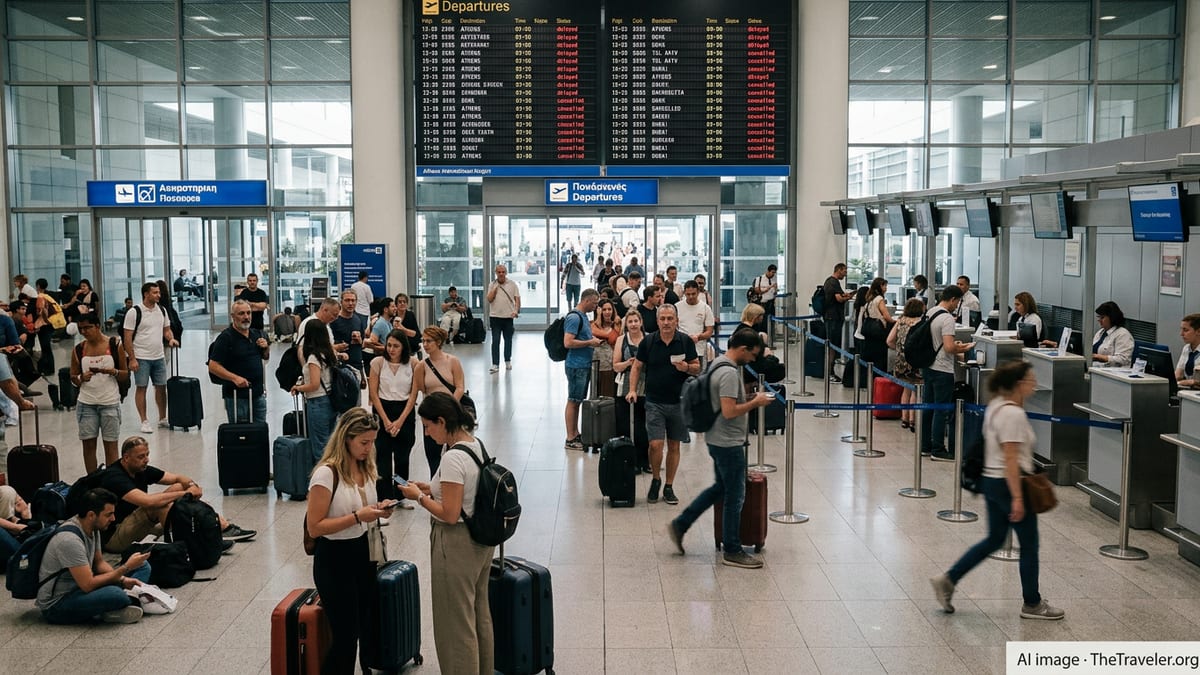
How a Thessaloniki base closure ignited a regional row
The current dispute burst into the open on 8 May 2026, when Ryanair announced it would close its three-aircraft base at Thessaloniki’s “Makedonia” airport for the Winter 2026 season and sharply cut capacity from Athens. According to publicly available information from the airline, the move will remove around 700,000 seats from Greece this winter and lead to the suspension of 12 routes across the country.
In the days that followed, Greek and international coverage reported that routes from Thessaloniki would be particularly affected, with Ryanair also pausing winter operations at Chania and Heraklion. The Irish low-cost carrier continues to serve Greece, but the loss of a based fleet in northern Greece is seen as a significant setback for regional connectivity during the low tourism season.
Ryanair linked its decision directly to what it describes as steep airport fee hikes imposed by Fraport Greece, which operates Thessaloniki and 13 other regional airports under a long-term concession. The airline argues that the post-pandemic increase in charges has made its winter business model in parts of Greece commercially unviable.
For travellers planning winter getaways or visiting family in northern Greece, the announcement raises the prospect of fewer direct low-cost options, more connections via other hubs, and potentially higher average fares as capacity is withdrawn.
Ryanair’s accusations: monopoly power and tax cuts kept from airlines
Ryanair has followed the route reductions with a sharply worded public campaign aimed at what it calls the “German-run Fraport Greece monopoly.” In a corporate statement dated 13 May 2026, the airline alleges that Fraport is acting as a monopolistic airport operator at 14 regional Greek gateways and has “choked” the competitiveness of Greek aviation by raising fees by around 66 percent after the pandemic.
The airline also contends that Fraport has not fully passed on a Greek government cut in aviation taxes that took effect from November 2024, which was designed to support air connectivity and extend the tourism season. Publicly available comments from Ryanair argue that if this tax reduction were transmitted in full into airport pricing, carriers could boost year-round traffic and help reduce Greece’s heavy reliance on peak-summer tourism.
Ryanair’s broader message is aimed as much at policymakers in Athens and Berlin as at Fraport. The company is urging the Greek government to “break up” what it describes as a single dominant operator at many of the country’s regional airports and open the door to competing management structures or concessions. The airline frames this as essential for lowering airport costs, attracting more low-fare capacity and protecting tourism jobs.
At the same time, Ryanair is drawing attention to the role of Germany, noting that Fraport AG is majority-owned by public-sector shareholders in the German state of Hesse and the city of Frankfurt. The airline’s public communications cast the dispute not only as a commercial argument over fees, but as a political test of how two European Union member states balance state-backed infrastructure ownership with free-market competition.
Fraport and Greek responses: defending a unified airport system
Fraport Greece, which runs 14 regional airports including Thessaloniki, Rhodes, Corfu, Santorini and Mykonos, has pushed back against the accusations in statements reported by Greek media. The operator maintains that it applies a single transparent price list to all airlines and does not negotiate individual discounts, presenting this approach as compliant with its concession obligations and with competition principles.
Publicly available remarks from senior Fraport Greece executives indicate that the company does not see Ryanair as exiting the country but rather as adjusting its schedule, mainly in the winter off-season. Fraport has underlined ongoing investments in terminal expansions, runway upgrades and passenger facilities at several of the regional airports it manages, suggesting that higher charges support long-term infrastructure improvements that benefit both airlines and passengers.
Greek government representatives have so far taken a cautious public stance. According to domestic coverage, officials highlight the importance of both tourism and stable airport operations, while avoiding detailed comment on contractual matters between Fraport and its airline customers. The 40-year concession for the regional airports was signed in the mid-2010s as part of Greece’s privatisation programme and has been considered a cornerstone of its transport infrastructure policy.
Within Greece, the clash has reignited debate about the merits of handing large clusters of airports to a single long-term operator versus splitting concessions between several players. Supporters of the existing model point to rising passenger numbers and upgraded terminals in recent years, while critics argue that limited competition at the airport-operator level reduces pressure to keep fees low and responsive to market conditions.
What it means for travellers and the wider European market
For leisure travellers, Greek diaspora communities and tourism businesses, the most immediate impact is the loss of direct low-cost links from Thessaloniki and other affected airports during the upcoming winter. Travel industry observers expect some passengers to be diverted through Athens or foreign hubs such as Sofia and Istanbul, while others may postpone or cancel off-season trips if prices rise.
Ryanair’s strategy suggests it is willing to redeploy aircraft to markets where airport charges and incentive schemes are more favourable. The airline has repeatedly used base closures and capacity cuts as leverage in negotiations with airports and governments elsewhere in Europe, and analysts see the Greek episode as part of a broader push to keep its cost base among the lowest in the industry.
The dispute also resonates with wider European debates over airport ownership and competition. A number of large groups, including Fraport, manage networks of regional airports across several countries. Supporters say such groups bring capital and operational expertise, while critics argue that concentrated ownership can leave airlines and passengers with few alternatives if pricing disputes arise.
How the Greece–Germany–Ryanair triangle evolves over the coming months will be closely watched by other tourism-dependent nations. A compromise that combines predictable fees, transparent use of tax cuts to stimulate demand and continued infrastructure investment could serve as a template for other markets. A prolonged stand-off, by contrast, could harden positions on both sides and make airlines more cautious about committing year-round capacity to airports operated under similar long-term monopoly-style concessions.