


More news on this day
Ryanair is warning passengers to expect lengthy queues and potential disruption at 15 European airports this summer, pointing to ongoing bottlenecks linked to the European Union’s new biometric Entry/Exit System at passport control.
Get the latest news straight to your inbox!
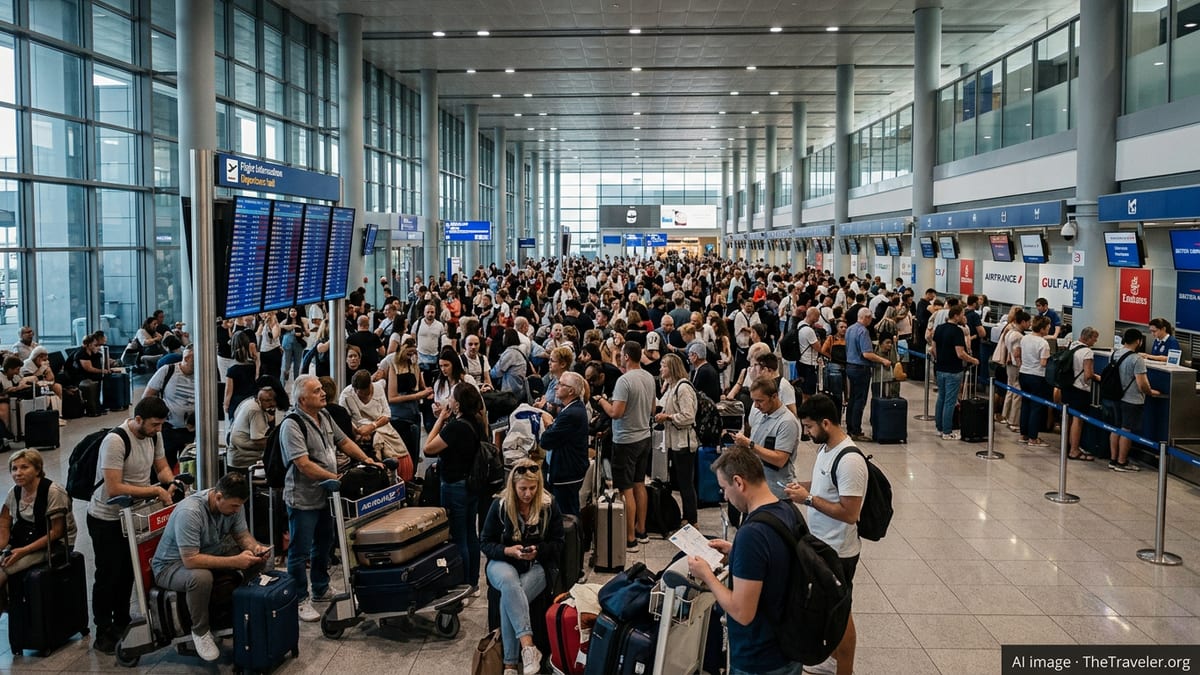
Fifteen airports identified as delay hot spots
According to recent coverage of the airline’s latest travel advisory, Ryanair has highlighted 15 airports across Europe where passengers are reportedly facing significant delays at border control. The list spans major leisure and city destinations, reflecting the carrier’s dense summer schedule across the continent.
The airports singled out are Lisbon, Tenerife South, Madrid, Lanzarote, Alicante, Malaga, Milan Bergamo, Milan Malpensa, Verona, Paris Beauvais, Berlin, Cologne, Frankfurt Hahn, Krakow and Budapest. Reports indicate these locations have seen persistent congestion at passport checkpoints, particularly during peak departure and arrival waves.
Ryanair’s network is heavily concentrated on popular holiday routes, and many of the flagged airports serve as gateways to classic summer destinations in Spain, Italy, France, Germany, Poland and Hungary. Travel industry commentary suggests that any sustained disruption at these hubs could ripple across wider schedules, compounding delays throughout the day.
While the advisory focuses on Ryanair’s own operations, the conditions it describes affect all non EU and non Schengen arrivals passing through the same border facilities, meaning the impact may be felt by passengers on other airlines as well.
EES rollout strains passport control capacity
The warnings are closely linked to the European Union’s new Entry/Exit System, known as EES, which has been progressively rolled out and became fully operational earlier this year. The system records biometric data and detailed entry and exit information for non EU nationals entering the Schengen area, aiming to strengthen border security and automate parts of the control process.
Publicly available information from the airline and European aviation coverage indicates that, in practice, the added biometric checks and data capture requirements have lengthened processing times at many border posts. Where staffing, infrastructure or equipment have not been scaled up accordingly, travellers are encountering long, slow moving queues.
Travel analysts note that the challenges are particularly acute at airports with high volumes of UK and other non Schengen passengers, who must pass through EES on every trip. The combination of more complex checks and a surge in peak season demand is placing sustained pressure on passport control areas that were already busy in pre EES summers.
Aviation observers point out that EES was designed to improve efficiency in the long term by replacing manual passport stamping with automated records. However, the current transition period is exposing gaps between policy ambitions and on the ground capacity, especially where terminal layouts leave limited space to expand queuing and processing zones.
Summer peak collides with operational constraints
The latest alert comes at the height of the school holiday season, when airports across Europe typically record their highest passenger volumes of the year. Reports from airline and airport monitoring services show that many of the 15 named locations are already operating close to capacity on busy weekends, leaving little margin when border control slows.
Ryanair has been one of several carriers drawing attention to congestion risks as holiday demand returns in full. Industry commentary suggests that a mix of factors, including staffing limitations, infrastructure constraints and air traffic control issues, has created a fragile operating environment in which minor disruptions can escalate into widespread delays.
At airports where EES checks are concentrated in relatively small passport halls, queues can build quickly as morning and evening waves of international flights arrive and depart. Once departures are affected, delays may cascade through the day as aircraft and crews struggle to return to scheduled rotations.
European aviation data published in recent months has already highlighted increased bottlenecks at certain hubs due to a combination of weather, industrial action and capacity limits. The additional friction introduced by the new border regime is adding another layer of complexity just as airlines attempt to operate near pre pandemic frequencies.
What passengers can expect at affected airports
Based on current reports from airline advisories, airport statements and traveller accounts, passengers using the 15 highlighted airports should be prepared for extended waits at passport control, particularly at peak times in the early morning and late afternoon. In some cases, travellers report queuing for more than an hour before reaching border officers or EES kiosks.
Airport and airline guidance commonly recommends allowing extra time before departure to clear security and border checks, especially for passengers who need to check in luggage or complete manual document verification. At some locations, check in and bag drop desks are opening earlier than in previous seasons to help spread passenger flows over a longer period.
Passengers connecting from non Schengen to Schengen flights, or vice versa, may be especially exposed to delays if they have short transfer windows, as they often need to clear EES and standard security screening between flights. Travel specialists advise that, where possible, travellers build in generous connection times when planning itineraries through busy hubs this summer.
Despite the operational challenges, airlines and airports are continuing to operate full schedules at most of the affected locations. Industry analysts expect that, as staff gain experience with EES procedures and infrastructure is gradually upgraded, processing times should improve, but they caution that the coming weeks are likely to remain testing for passengers at the busiest holiday gateways.
Ryanair’s broader push on European travel disruptions
The warning about the 15 airports forms part of a wider campaign by Ryanair drawing attention to systemic causes of disruption across European air travel. In recent months, the carrier has publicly criticised air traffic control performance, French strike activity and regulatory handling of capacity constraints, arguing that passengers are bearing the brunt of avoidable delays.
Published statements and financial disclosures from the airline have repeatedly highlighted the operational and cost impact of congestion and control issues on its high frequency point to point network. Analysts note that delays not only inconvenience passengers but also undermine tight turnaround times that low cost carriers rely on to keep fares down.
Industry observers say the carrier’s latest focus on EES reflects concern that structural bottlenecks at border control could become a recurring feature of peak travel periods if investments and staffing do not keep pace with demand. For travellers, the immediate effect is likely to be longer airport dwell times and greater uncertainty around departure and arrival punctuality at the 15 named airports and potentially beyond.
For now, travel planners suggest that passengers build extra time into their journeys, pay close attention to pre departure guidance from airlines and airports, and expect that queues at key European gateways may remain a defining feature of the 2026 summer season.