


More news on this day
Summer holidaymakers flying with Ryanair are being urged to prepare for significant delays and long queues at nine major European airports, as new border-control procedures and staffing pressures combine to stretch terminal capacity during the peak travel season.
Get the latest news straight to your inbox!
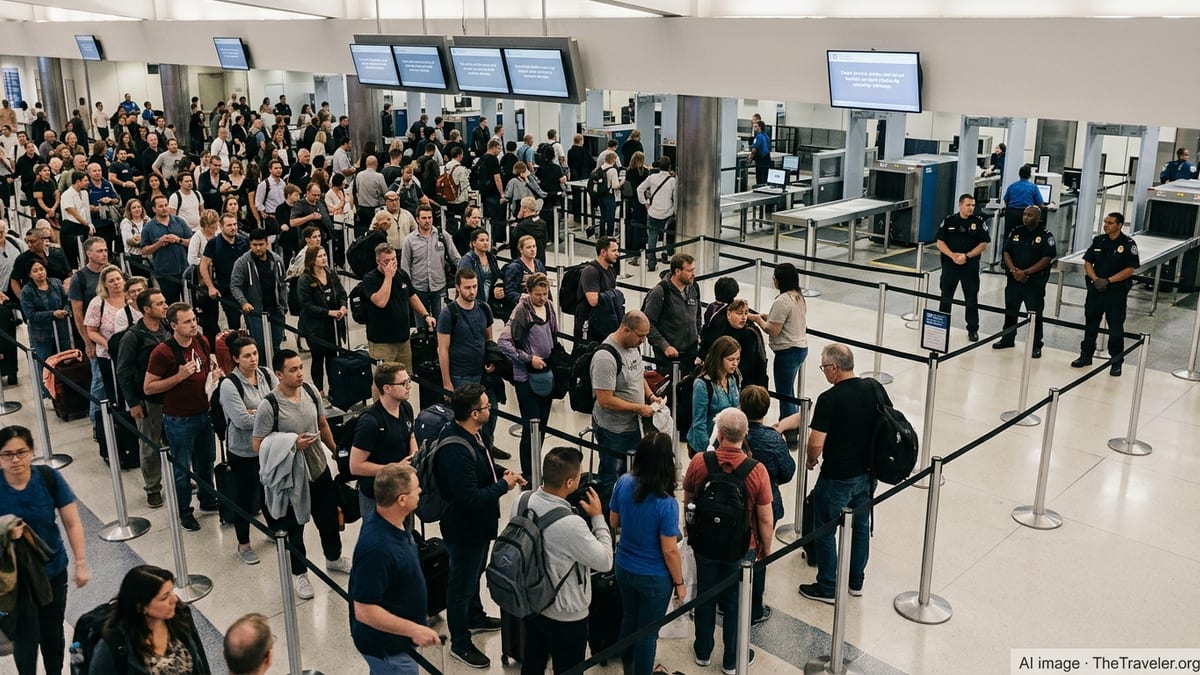
Nine airports flagged as delay hotspots
According to recent public statements and media coverage, Ryanair has identified a group of airports where passengers are already experiencing particularly heavy congestion at passport control and security. These locations include busy leisure gateways such as Tenerife South, Palma de Mallorca, Alicante and Malaga, as well as Milan Bergamo, Krakow and Paris Beauvais, among others highlighted in summer travel warnings.
The airline indicates that the problem is most acute at peak times, when large numbers of short-haul flights arrive and depart in tightly packed waves. The combination of high passenger volumes and additional checks is reported to be creating bottlenecks that can spill out of border-control areas and into wider terminal spaces.
Ryanair’s latest warning comes as schools across several European countries begin their summer holidays, traditionally the busiest period for low-cost carriers serving sun destinations. The carrier suggests that without additional measures from national authorities and airport operators, delays at the affected airports are likely to worsen as July and August traffic builds.
Travel reports show that these queues are affecting both arriving and departing passengers, with some families facing lengthy waits even after arriving at the airport well in advance of departure time. In a number of cases, congestion at border checkpoints is being cited as a major factor in missed flights.
EU Entry/Exit System adds new layer of checks
The disruption is unfolding against the backdrop of the European Union’s new Entry/Exit System, a digital border scheme designed to register non-EU nationals entering and leaving the Schengen area. While the system is intended to strengthen security and streamline processes over the long term, its early rollout has been linked to slower processing times and operational challenges at several airports.
Ryanair has repeatedly argued in public campaigns that the system is not yet fully ready for peak-season volumes. Travel coverage from Spain, Portugal, Italy and France points to repeated warnings from the airline that hardware installation, software integration and staffing have not kept pace with the demands of busy holiday hubs.
In recent weeks, industry bodies representing airlines and airports have also raised concerns, describing delays associated with the new regime as having reached a critical level in some locations. They have urged national governments and EU institutions to adjust timelines and procedures so that border checks can be carried out without causing hours-long queues for families and other leisure travelers.
Publicly available information indicates that, in some cases, self-service kiosks and pre-registration tools intended to ease congestion are not yet fully deployed or approved, pushing more passengers into manually staffed passport lines. This has further heightened pressure at airports already operating near capacity.
Calls for governments to pause or soften rollout
Ryanair’s latest warnings form part of a broader campaign aimed at persuading national governments to delay or temporarily soften implementation of the Entry/Exit System at the busiest times of the year. The airline has previously called on authorities in countries including Portugal, Italy and France to suspend elements of the scheme until after the summer season.
According to public statements and regional news reports, the carrier argues that a short-term pause would allow additional training, recruitment and technology upgrades to be completed without exposing passengers to prolonged disruption. It has framed the issue as one of basic customer service, noting that many of those most affected are families traveling with young children during limited holiday windows.
In several markets, this position has been echoed by tourism operators and airport-based businesses that rely heavily on summer traffic. They warn that persistent scenes of crowded terminals and missed flights risk damaging the reputation of key destinations at a time when competition for visitors remains intense.
At the same time, border and security agencies maintain that the new system is a central pillar of the EU’s long-term border-management strategy. Public explanations from national authorities emphasize that the changes are designed to enhance security and track overstays, while acknowledging that the initial phases of implementation are presenting operational challenges.
Staffing and infrastructure strain deepen summer pressure
The Entry/Exit System is only one element in a wider picture of strain at Europe’s major airports. Industry reporting over the past year highlights ongoing staff shortages at border-control desks, as well as pressure on airport infrastructure that was not originally designed for the current mix of high-frequency, point-to-point services and intensive peak-season surges.
Ryanair and other carriers have frequently cited shortages of border officers, security staff and ground handlers as key contributors to delays. In some airports, there are also constraints on terminal space, meaning that long queues can more easily disrupt flows between check-in, security, passport control and boarding gates.
Separate from border processing issues, air traffic control capacity has periodically added to disruption across Europe, particularly where staffing or system constraints limit the number of flights that can operate at busy times. When combined with terminal-level bottlenecks, even relatively small schedule disruptions can quickly cascade into longer delays.
Airport operators and national agencies have responded with a mix of temporary measures, from opening additional lanes at peak times to deploying extra signage and staff to direct passengers. However, travel reporting suggests that these steps are not always sufficient to keep queues within what many travelers would consider reasonable limits, especially during weekend and school-holiday peaks.
What passengers can expect this summer
With warnings now in place for nine airports and concerns being raised about several others, travelers are being advised through public information campaigns and media coverage to arrive well ahead of departure times, especially when crossing external Schengen borders. Ryanair’s own operational updates indicate that check-in and bag-drop cut-offs will tighten later in the year, partly in response to the time passengers are spending in security and passport queues.
Consumer travel reports emphasize that passengers should pay close attention to the latest guidance from their airline and departure airport, which may include recommended arrival times greater than the traditional two hours for short-haul flights. Travelers connecting through airports identified as hotspots are also being urged to allow additional buffer time between flights to account for potential passport-control delays.
Airlines and airports continue to encourage passengers to complete as many steps as possible before arriving at the terminal, such as online check-in and pre-printing or downloading boarding passes, to reduce pressure on staffed desks. For non-EU nationals, understanding any new data-collection or biometric requirements in advance may also help to shorten processing times at automated or staffed border-control points.
Despite the challenges, industry data indicates that the vast majority of flights are still operating, and many passengers pass through border-control areas with manageable waiting times. However, Ryanair’s warning about significant delays and long queues at nine major airports underscores how fragile the system can be during peak summer weeks, and how quickly localized pressures can spill over into wider disruption for travelers across the network.