


Safety for families evaluating a move to Spain is shaped by comparatively low national crime and road-fatality levels by global standards, alongside specific urban, youth and digital risk patterns that require active management. This briefing synthesizes current quantitative indicators and structural risk factors to support relocation decisions focused on family security rather than tourism or lifestyle considerations.
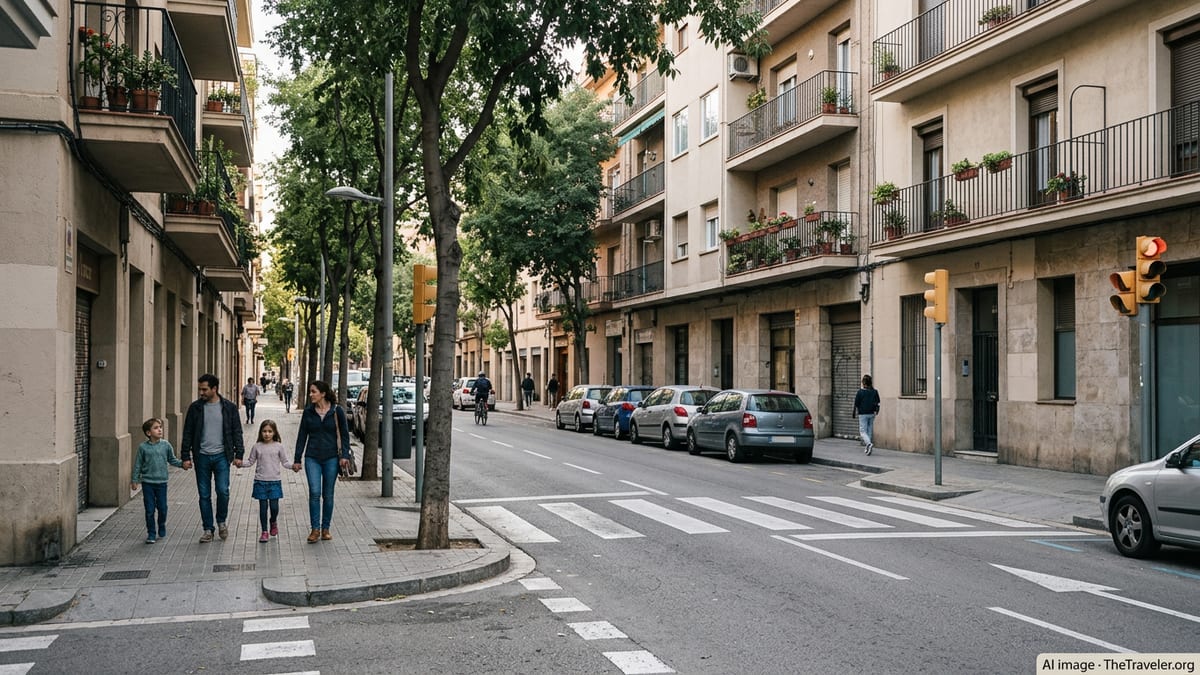
Overall Safety Profile for Families in Spain
Spain is generally assessed as a relatively safe destination within Europe, with independent crowd-sourced and institutional indices placing it in the lower-to-medium crime band among EU states. Recent composite safety indices that aggregate resident feedback on street safety, fear of crime and reported incidents give Spain a national crime score in the mid‑30s on a 0–100 scale where higher values indicate more crime, positioning it below France, Italy and the United Kingdom and broadly similar to or slightly less safe than Germany and Portugal. While such indices are not official statistics, they reflect perceived day-to-day safety by residents, including families.
Eurostat and national sources indicate that Spain’s intentional homicide rate remains low and broadly aligned with Western European norms. Intentional homicides in the EU have edged up slightly in aggregate, but Spain’s per-capita level remains far below global averages and significantly below many non-European relocation destinations. For relocating families, this places extreme violent crime in the low-probability category, though it is not absent and is somewhat more concentrated in specific metropolitan areas and particular socioeconomic environments.
At the same time, Spain exhibits moderately elevated rates of certain non-lethal property crimes, especially robberies and theft, compared with some EU peers. Eurostat metropolitan data highlight that robbery incidence relative to national baselines is high in major Spanish urban regions, reflecting pickpocketing and opportunistic theft around transport hubs and crowded districts. For families, this means routine exposure to petty crime risks in large cities, especially for teenagers using public transport or moving independently.
From a relocation-risk standpoint, the composite picture is that Spain offers comparatively low exposure to severe violent crime and road-death risks, offset by a need for disciplined management of property crime, cyber risks and youth-specific vulnerabilities in dense urban environments.
Urban and Regional Crime Patterns Relevant to Families
Safety conditions for families vary meaningfully by region and city size. Major metropolitan areas such as Madrid, Barcelona, Valencia and certain coastal urban corridors experience higher overall reported crime rates than smaller cities and rural provinces. Within metros, central entertainment districts, intercity train stations and dense tourist-adjacent zones tend to concentrate robbery and pickpocketing incidents. Suburban residential neighborhoods and dormitory towns around large cities typically present lower exposure to street crime, though vehicle break-ins and residential burglary remain relevant planning concerns.
Eurostat comparative data indicate that Spain scores well below the EU average for lethal violence, but in the upper range for robberies per 100 000 inhabitants. This divergence is important for families: everyday risk is more likely to involve non-violent theft of phones, bags, or bikes than direct physical assault. Parents of secondary-school-age children should factor in security of personal devices and awareness of crowded spaces when assessing commuting routes and after-school activities.
Certain autonomous communities show distinct patterns. For example, Catalonia and some Mediterranean coastal areas periodically report upticks in specific violent or sexual offences, reflecting complex dynamics including nightlife economies and transient populations. These shifts do not generally alter the baseline that random violence against families is rare, but they may affect perceived safety for older teenagers out in the evening or young adults in student districts.
For relocation planning, the practical implication is that micro-location choice within a city can be as important as the country-level profile. Families typically achieve a stronger safety profile by prioritizing residential neighborhoods with lower late-night activity, good street lighting, active resident associations and reliable policing presence, even when this increases commute times.
Child Safety, School Environments and Public Spaces
Core indicators of child safety in Spain, including child homicide and serious assault rates, are low by global standards and broadly comparable to other Western European states. Road-traffic injuries remain a leading risk for children and adolescents, but national initiatives to improve pedestrian crossings, enforce seat-belt and child-seat use, and calm traffic in school zones have reduced child fatalities over the past two decades. Recent annual road-safety reporting indicates that children 0–14 account for a very small share of total road deaths, though year-to-year fluctuations can be significant due to low absolute numbers.
School environments are governed by national and regional regulations on building safety, emergency planning and child protection. Public and charter schools are required to maintain evacuation plans, fire safety measures and basic access control, although specific practices differ between regions and individual institutions. Bullying, including digital bullying, is recognised as a policy concern, with education authorities deploying prevention protocols and reporting mechanisms. International comparisons of student well-being suggest Spain sits around the OECD average for bullying prevalence: neither among the lowest nor highest. Families should anticipate that bullying risk exists but is generally managed within established frameworks.
Public spaces used by children, such as playgrounds, local parks and sports facilities, are largely municipal responsibilities. In most medium and large cities, playgrounds conform to modern equipment and surface standards, and are regularly inspected. However, there can be disparities between well-funded municipalities and smaller towns, particularly regarding maintenance and lighting. For young children, the primary safety consideration in many urban neighborhoods is proximity to busy roadways and the design of pedestrian crossings, rather than high levels of interpersonal crime.
Child protection frameworks in Spain criminalise abuse and neglect and allow for intervention by social services where necessary. While under-reporting is a recognised issue, as in many countries, the existence of formal legal and social-service structures provides a backstop for severe risks. For relocating families, this translates into a context where institutional mechanisms exist, but proactive engagement with schools, pediatric services and local networks remains important to identify and address concerns early.
Road Safety and Everyday Mobility Risks
Road safety is a central element of family risk in Spain, given the high reliance on private vehicles and the exposure of children as pedestrians, cyclists and public-transport users. European Commission data for 2024 place Spain’s road-fatality rate at approximately 35 deaths per million inhabitants, compared with an EU average around the mid‑40s. This positions Spain broadly mid-pack among the safest EU countries and ahead of several large peers, including France and Italy. It also represents a substantial improvement compared with Spain’s own historical figures, where per-capita road deaths have fallen by more than half since the 1990s.
National records combining interurban and urban areas report around 1 700 to 1 800 road deaths annually in recent years, with vulnerable road users accounting for a growing proportion of fatalities. In 2024, preliminary national statistics indicated that roughly one quarter to one third of road deaths occurred in urban settings, where pedestrians, cyclists, motorcyclists and riders of e-scooters and other personal mobility devices are overrepresented among victims. This is particularly relevant for families living in dense cities where children may walk or cycle to school.
Spain’s traffic regulations mandate the use of child restraint systems suited to weight or height, rear-seat seat belts, and helmets for cyclists under a specified age and for all motorcyclists. Enforcement levels are generally robust on interurban roads, with routine speed and alcohol checks. Urban enforcement can be more variable, but major cities have increased camera-based speed enforcement and low-speed zones in recent years. Families who comply consistently with safety regulations, avoid late-night driving on high-speed roads and educate children on urban traffic norms can materially reduce risk exposure.
Public transport safety is generally high, with low rates of serious incidents on metro, commuter rail and intercity trains. Buses and trams are subject to national and municipal safety regulations, and high-profile accidents are rare. For families, residual concerns focus more on pickpocketing risk and occasional harassment on crowded services than on collision risk, making routine situational awareness important, particularly for teenagers travelling without adults.
Violence, Gender-Based Risks and Domestic Safety
Spain has invested heavily in legal frameworks and policing structures to address gender-based violence and domestic abuse. Dedicated courts, hotlines and protection-order mechanisms exist to support victims, and national statistics track gender-based killings of women separately. Despite a relatively strong institutional framework, gender-based violence remains a significant societal concern, and the number of women killed by current or former partners each year remains in the several dozen range. For relocating families, this highlights that while external stranger violence risks are comparatively low, domestic environments are critical to overall safety, as in most countries.
Sexual offences, including assaults and exploitation of minors, are actively prosecuted, and legal reforms in recent years have tightened definitions and penalties. National data show fluctuations rather than a clear downward trend, partly due to increased reporting and changes in legal definitions. High-profile cases periodically trigger public debate and policy refinements. From a family perspective, structured sex-education curricula and safeguarding policies in schools provide a baseline of awareness, but parents should still expect to play the primary role in educating children about boundaries and reporting mechanisms.
Youth violence in public spaces, including group fights and occasional knife incidents, is a limited but visible component of the security landscape in some metropolitan areas. Available statistics indicate that juvenile involvement in serious violent crime remains relatively low compared with many large non-European cities, though social-media-driven gatherings and conflicts have emerged as a management challenge for police. Families with teenagers should monitor local trends, especially in nightlife-adjacent districts and around major events, but such incidents remain statistically rare in the context of overall youth populations.
Fire safety and building regulations for residential properties influence domestic risk. Spain’s building codes require basic fire-protection measures in multi-unit structures, though implementation and retrofitting standards can vary in older buildings. For families with children, practical measures such as verifying the presence of smoke detectors, secure window guards at height, and safe gas or electrical installations are more consequential than macro-level crime trends when assessing in-home dangers.
Digital Safety, Cybercrime and Teen Risk Exposure
As in other advanced economies, a growing share of safety risk for families in Spain is mediated through digital channels. Cybercrime reports include online fraud, identity theft, unauthorised access, and exploitation targeting minors. Law-enforcement agencies have specialised cyber units, and Spain participates in EU-wide cooperative mechanisms, but reporting continues to rise as more activities move online. For relocating families, financial and reputational risks associated with phishing, fraudulent e-commerce and social-media compromise are at least as salient as many traditional property crimes.
Adolescents and pre-teens face particular exposure to online bullying, grooming, explicit content and peer pressure amplified by social media. Spain’s education system incorporates digital-literacy and safe-internet modules, and non-governmental organisations operate hotlines and support services. Nonetheless, surveys of Spanish youth suggest that a significant minority experience cyberbullying or unwanted sexualised contact online. These risks are not unique to Spain, but they are a core component of the family-safety environment and require structured household rules, device supervision and open communication.
Regulatory frameworks such as EU-wide data-protection rules provide a baseline for privacy and data security, but enforcement against smaller platforms and cross-border services can be challenging. Relocating families should therefore treat Spain as an environment with broadly strong formal protections yet persistent practical digital risks, similar to most Western European states.
For decision-making, this means that the apparent benefits of living in a relatively low-violent-crime country do not remove the need for robust digital safety practices. Families that implement multi-factor authentication, careful password management, and age-appropriate controls on devices and apps can markedly reduce their exposure to the fastest-growing categories of crime and abuse.
Practical Risk Mitigation Strategies for Relocating Families
Given Spain’s safety profile, the most effective family risk-mitigation strategies focus on managing property-crime exposure, road safety, and digital and youth-related vulnerabilities rather than extreme violent crime. From a location-selection perspective, families tend to achieve stronger outcomes by favouring residential districts with a high proportion of year-round residents, clear separation between nightlife zones and housing, adequate street lighting and visible community policing. Local consultation with relocation providers or residents can identify micro-areas within each city with better safety records and family-oriented infrastructure.
On a household level, common measures include secure door and window locks, use of building entry systems, and avoidance of leaving valuables visible in vehicles. In cities with known pickpocketing challenges, families often adjust behaviours such as carrying bags cross-body, avoiding back pockets for phones and wallets, and teaching children to be cautious around sudden distractions in crowded spaces.
For mobility, adherence to child-restraint laws, consistent use of helmets for cycling, and selection of school routes with controlled crossings and pavements are practical levers. Where possible, families may choose schools accessible by safe walking or supervised transport rather than requiring unsupervised cycling along high-speed routes. Older children should be trained on public-transport etiquette, awareness of surroundings and procedures if they feel unsafe.
Finally, structured digital-safety protocols are increasingly integral to family safety in Spain. These include agreed device curfews, parental controls appropriate to age, education on phishing and social-engineering tactics, and clear rules on sharing personal information and images. Combining these practices with engagement in local parent networks and school communities allows relocating families to align with local norms and learn about emerging issues early.
The Takeaway
Spain offers a comparatively favourable safety environment for families considering relocation, characterised by low levels of lethal violence, improving but still significant road-safety challenges, and notable property-crime and digital-risk exposure in major urban areas. In international context, Spain’s national indicators place it among the safer destinations in Europe and well ahead of many global relocation alternatives, particularly on metrics such as homicide and per-capita road deaths.
For decision-grade planning, the decisive variables for family safety are less about national averages and more about specific city and neighbourhood choices, everyday mobility patterns, and household-level practices. Families that prioritise residential areas with stable communities, enforce strong road and digital-safety habits, and engage proactively with schools and local networks can typically achieve a risk profile that compares favourably with most other large European destinations.
Relocation decisions should therefore treat Spain as a country where structural conditions are broadly supportive of family safety, while recognising that urban property crime, online threats and youth-specific vulnerabilities require continuous attention. With informed planning and routine precautions, most relocating families can expect an environment where serious victimisation is statistically unlikely and day-to-day concerns are manageable within standard risk-management frameworks.
FAQ
Q1. Is Spain generally safe for families compared with other European countries?
Spain is broadly considered relatively safe for families, with low homicide rates and road-fatality levels that are better than the EU average, though some property crimes are more common in major cities.
Q2. Which types of crime are families in Spain most likely to encounter?
Families are more likely to encounter non-violent property crimes such as pickpocketing, bag theft and vehicle break-ins, particularly in crowded urban and tourist-adjacent areas.
Q3. Are children safe walking to school in Spanish cities?
In many residential areas children routinely walk to school, but safety depends on local traffic conditions, quality of crossings and lighting, so route selection and supervision for younger children are important.
Q4. How safe is public transport for teenagers in Spain?
Public transport systems are generally safe, with low rates of serious incidents; the main concerns are pickpocketing and occasional harassment in crowded services, making awareness and guidance essential.
Q5. Are road accidents a major risk for families in Spain?
Road accidents are a key everyday risk, especially for pedestrians, cyclists and motorcyclists, but Spain’s per-capita road-fatality rate is relatively low by international standards and continues to improve.
Q6. How significant is the risk of violent crime against children?
The risk of random violent crime against children is low and serious incidents are rare; most concerns relate to domestic situations and online exploitation rather than street assaults.
Q7. Are Spanish schools safe environments from a security perspective?
Schools follow regulatory standards on building safety and child protection and are generally safe, although issues such as bullying and occasional violence require ongoing monitoring and cooperation with staff.
Q8. What digital safety risks should families anticipate in Spain?
Families should anticipate risks from online fraud, identity theft, cyberbullying and grooming, similar to other Western countries, and implement strong household digital-safety practices.
Q9. Do certain Spanish regions present higher safety risks for families?
Large metropolitan and coastal tourist regions have higher levels of property crime and some specific offences, while many smaller cities and towns show lower overall crime exposure for families.
Q10. Can good neighbourhood choice significantly improve family safety in Spain?
Yes. Selecting residential areas with stable year-round populations, good lighting, strong community structures and distance from nightlife zones can measurably improve day-to-day safety for families.