


Sakarun Beach on Dugi Otok has become one of Croatia’s most talked about sandy bays, famous for its white bottom and long, shallow turquoise water. It is stunning, but it is also harder to reach than the photos suggest, with limited parking, summer shuttles, busy boat tours and a very specific crowd pattern during the day. This guide walks you through exactly how to get there, what the sand and water are really like, where to park, how the local shuttle works, what to expect from beach bars and boats, and when families or quieter travelers will enjoy it most.
Get the latest updates straight to your inbox!
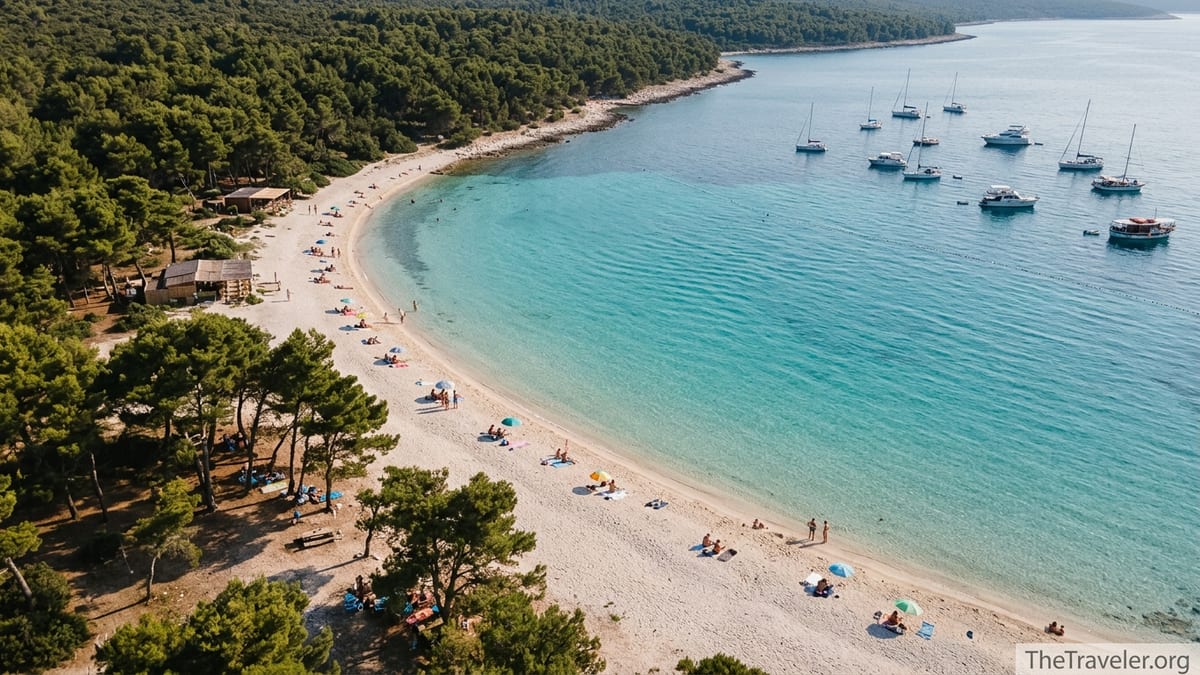
Where Sakarun Beach Is and Why It Feels Different
Sakarun Beach, often spelled Saharun locally, sits on the northwestern side of Dugi Otok, one of the larger islands in the Zadar archipelago. The beach itself is a gently curving bay about 300 to 800 meters long depending on which definition you use, backed by a fringe of pine trees rather than hotels or apartment blocks. Nearby villages include Veli Rat, Verunić, Soline and Božava, all of which are small and low key. You are not coming here to walk off the sand straight into nightlife. You are coming for the bay.
Compared with most of the Dalmatian coast, which is dominated by steep, pebbly coves that drop quickly into deep water, Sakarun feels almost out of place. The seabed is a mix of very light pebbles and sand that turns the water a milky turquoise, and the shallow shelf extends unusually far from shore. On a calm summer day you can wade out for tens of meters with the water at your thighs, which is why many people compare the color to a lagoon rather than the deep blue you see around nearby cliffs.
That combination of soft, pale bottom and shallowness is why Sakarun appears in so many “best beaches in Croatia” roundups. It can also be the reason some travelers come away underwhelmed if they arrive at the wrong time: crowds, boat tours and loud music change the mood significantly between 11 a.m. and 4 p.m. Using the beach well means understanding how and when it fills.
Before you go, it is worth remembering that Sakarun is protected as a sensitive bay with seagrass meadows offshore and is not simply an urban beach. Services are present but limited, and both local authorities and environmental projects have been trying to reduce waste and anchor damage. You will still find sunbeds and cocktails in season, but the underlying idea is a natural bay rather than a resort complex.
How to Get to Sakarun from Zadar and Around Dugi Otok
Most visitors start in Zadar, on the mainland. From here, one common route is to take the car ferry from the port of Gaženica to Brbinj on Dugi Otok. The crossing typically takes around 1 hour and 40 minutes. In high season, there are usually several departures per day, but schedules change year to year, so you should confirm times ahead of travel and buy tickets in advance if you are traveling with a car in July or August.
From Brbinj, Sakarun is roughly a 40-minute drive across the island’s single main road, heading northwest towards Božava, then on to Verunić and the Sakarun parking area. The road is paved but narrow in places, with occasional pull-outs. It is fully manageable in a standard rental car, but you should factor in that you are driving on a rural island road, not a motorway. Travelers without a car can sometimes use local buses linking Brbinj with Božava and Veli Rat, but departures are limited and timetables may not sync neatly with your ferry, especially outside peak season.
If you do not want to deal with ferries and driving at all, another very common option is a full day boat trip from Zadar. Several local operators sell excursions marketed specifically as “Sakarun Beach by Boat,” usually leaving Zadar in the morning around 8 or 9 a.m. and returning in the late afternoon or early evening. Prices are often in the range of 60 to 80 euros per adult in high season, including boat transport and sometimes lunch or drinks. These tours tend to anchor off Sakarun and either transfer guests to the beach by small tender or let them swim from the boat. It can be a comfortable choice if you accept sharing the day with a group and fixed timing.
For more flexibility, some visitors charter a small motorboat or join smaller group speedboat tours that combine Sakarun with other stops like Veli Rat lighthouse, neighboring coves, or Telascica Nature Park. This usually costs more per person but can give you earlier or later access to the bay, when crowds onshore are thinnest. Whatever route you choose, plan your timings carefully. It is hard to “just pop over” to Sakarun; from central Zadar to your towel on the sand often takes the better part of a morning.
Sand, Shallow Water and Where to Swim
The biggest draw of Sakarun is the feel of the seabed and the depth profile. The upper part of the shore is a mix of coarse sand and small white pebbles that can feel a little uneven under bare feet. Closer to the waterline and out into the bay, the bottom becomes sandier and softer, with light-colored grains and fine gravel that give the trademark turquoise glow when the sun is high. Families with children will find that the first 50 to 100 meters offshore are predominantly shallow, with a gentle entry, no sudden drop and usually warmer water than on the open coast.
If you want the warmest, shallowest water, the central part of the bay is generally best. Here the sandy bottom is widest, and you can walk out a long way with the water below your waist. Nervous swimmers or older travelers often appreciate being able to stand almost everywhere. On days with little wind, the surface can be glassy calm, making it easy to supervise small children and for less confident swimmers to relax. Water shoes are not strictly necessary, but a thin pair can help if you are sensitive to small stones or occasional shells near the shoreline.
On either side of the main sandy sweep the shoreline grows more pebbly and then rocky, and the depth changes more quickly. Stronger swimmers and snorkelers often head to these edges, where you can find slightly clearer water away from the sandclouds kicked up in the shallows. Visibility is still good by Adriatic standards, though the very fine sand can stir easily under heavy foot traffic in peak hours. If you plan to snorkel, you will likely enjoy early morning or late afternoon most, when there are fewer people stirring up the seabed.
Because the water stays shallow for so long, Sakarun can feel almost bath-like in August after several weeks of sun. This is ideal for toddlers and for long, lazy floating sessions, but it is worth knowing that strong swimmers wanting a brisk, cool open-water session may be a little disappointed if they stay within the sandy part of the bay. You can simply keep walking out or angle to one of the deeper corners if you want cooler water and more depth to swim laps.
Parking, Shuttle Trains and Practical Logistics on the Beach
One of the consistent surprises at Sakarun is how separated cars are kept from the water. There is no legal parking directly on the beachfront. Instead, you park in designated areas set back several minutes’ walk from the sand, among the pines and scrub. In peak season these car parks typically charge a flat day fee; reviews from recent summers mention prices in the ballpark of 10 euros equivalent for a car, payable in cash on arrival. Precise charges can change year to year, but you should expect to pay something rather than free roadside parking.
From the main parking areas, you either walk down to the beach on sandy tracks, or in high season you can often use the small tourist “train” shuttle that runs between nearby villages such as Božava and the Sakarun area. This open-sided road train is mainly used by guests staying in local accommodation who do not have a car on the island, but visitors who arrive by ferry and bus sometimes use it too. Timetables are usually posted locally at stops and tend to follow a simple loop several times per day, with a short ride from Božava to Sakarun taking under 15 minutes.
Once you reach the back of the beach, expect a relatively simple infrastructure. There are usually portable toilets or basic restroom blocks, a few freshwater showers or taps, and wooden walkways in parts of the dune area. Rubbish collection points are signposted and increasingly emphasized due to past problems with litter and marine debris arriving in the bay. Bring your own beach umbrella or small sunshade if you can, especially if you plan to arrive late morning when the natural shade line under the pines is already claimed.
ATM availability on this part of Dugi Otok is limited, and card terminals at small beach bars can be unreliable when mobile signal is under strain on busy days. You should plan to carry enough cash for parking, drinks, basic food and sunbed rental if you intend to use them. As a rule of thumb, a family of four staying all day will want enough kuna or euros to cover at least parking, several rounds of drinks and snacks, and possibly a simple lunch or ice cream if you do not bring a picnic.
Beach Bars, Food, Sunbeds and Shade
Sakarun has a small cluster of simple beach bars and seasonal kiosks behind the main sandy arc, rather than a single dominating complex. Expect wooden decks, open-air seating and menus focused on cold drinks, coffee, beer, simple cocktails and casual food such as burgers, sandwiches, fries or basic salads. Prices are higher than in inland village cafés but generally in line with other Croatian island beach spots. For example, a cold soft drink or small beer might cost a few euros, while a simple burger and fries can be closer to fast casual urban prices.
Most bars and kiosks operate primarily during the main tourist season, typically from June through September, and often open late morning before peaking in activity through the afternoon. In July and August, music and a livelier atmosphere are common in the middle of the day, especially when day-trip boats anchor offshore and guests come ashore for lunch. Outside high season, services may be very limited, with only one or two places open and shorter hours, so anyone visiting in May or October should not rely on a full food offering.
Sunbeds and umbrellas are usually available for rent on a section of the beach, placed in a few organized rows. Pricing can vary, but a pair of loungers with an umbrella for the day might run to several tens of euros in peak season. Many families choose to skip this cost by bringing their own beach mats and a compact umbrella and then retreating under the pines during the hottest hours. The pine trees behind the beach create a naturally shaded strip where people set up picnic blankets and low chairs; this area is valuable real estate on hot days, so early arrivals benefit.
If you have specific dietary needs or are traveling with very young children, it is wise to bring at least some of your own supplies. A typical family might bring a cooler bag with water, fruit, sandwiches and snacks, then use the bars for treats or a single hot meal rather than depending entirely on beach food. Remember that queues at the busiest bar can be long when several boat groups hit shore at once in mid-afternoon, so stocking some backup water and snacks prevents frustration.
Crowds, Families, Boats and How the Day Unfolds
Understanding how Sakarun fills and empties through the day is critical. In high season, early morning and late afternoon are usually the calmest times on the sand, with mainly overnight guests from Dugi Otok and a few determined early birds arriving on the first ferries. Families with young children and couples who value quiet often choose to arrive before 10 a.m., when parking is easier and the pine shade still has free spots. At this time, sound levels are low and the water is at its clearest before the sand is stirred up.
From late morning into early afternoon, the character changes. Day-trip boats from Zadar and smaller speedboat tours arrive, often between 11 a.m. and 2 p.m. Groups of 20 to 100 people may come ashore at a time, many heading straight for the central sand and the bars. This is when the beach feels busiest, and it can be hard to find a front-row towel spot near the waterline. The sea can grow cloudy in the shallows with so many people wading, and music from different sources may overlap. If your main image of Sakarun is peaceful lagoon, this window can be jarring.
By mid to late afternoon, usually after 4 p.m., the boats begin leaving and families with small children start to drift away as nap times and dinners call. The beach then gradually returns to a softer mood, with longer shadows, emptier water and a pleasant temperature both in and out of the sea. Many travelers staying on Dugi Otok consider this the best time of day to enjoy the bay, whether that means a relaxed swim, a quiet drink at a bar or simply watching the sun move over the pine line.
For families, Sakarun can be excellent. The long shallow entry, lack of fast road behind the beach and limited development make supervision easier than on some urban beaches. However, you still need the usual care with inflatables when the afternoon wind picks up and with children wandering near the docking spots of small boats at the ends of the bay. For those without children who dislike crowds, the simplest strategy is to avoid the peak hours entirely: arrive early and leave during the midday rush, or show up after 3 p.m. and stay through sunset.
Best Time of Year and Day to Visit Sakarun
In terms of season, late June, early July and September are often the sweet spots. Sea temperatures are already comfortable, services such as bars and shuttles are operating, but the absolute peak of day-trip tourism and school holidays has either not yet hit or is easing off. In these weeks you have a good chance of combining warm, shallow water with a bit more personal space on the sand, especially on weekdays.
August is the busiest month, particularly around public holidays and during school vacations across Europe. Ferries and parking can feel stretched, and organized tours sell out on popular dates. If August is your only option, careful timing within the day makes an even bigger difference. Plan your ferry or island drive so that you arrive early, pack patience for queues, and mentally prepare for a social, busy atmosphere rather than a secluded cove.
May and October can be beautiful if you are more interested in walks and coastal scenery than long swims. The water is cooler, fewer bars are open and there may be no shuttle train, but you are more likely to share the bay with locals and hikers than with big groups. A spring or autumn visit works well for travelers already staying on Dugi Otok for several days who can pick the sunniest, calmest day during their stay.
On a day-to-day level, the best light and mood usually happen early and late. If you are keen on photography, aim for the first few hours after sunrise or the last two before sunset. The low angle of the sun highlights the pale bottom and creates a richer range of greens and blues in the water. Midday light can feel harsh and flatten the colors, even though it is when the water looks brightest to the naked eye. Whichever slot you choose, always watch the ferry schedule or your tour boat’s departure time in reverse, so you are not rushed off the sand at the most relaxing moment.
Boats, Moorings and Environmental Considerations
Sakarun’s popularity with boaters is obvious as soon as you look offshore. In peak season, a line of yachts, sailing boats and excursion vessels often sits anchored or moored in the outer part of the bay. The local authorities have installed organized moorings to reduce the damage from random anchoring on the seabed, which includes valuable seagrass meadows. If you arrive by private boat, you are expected to use these facilities where available and respect any marked no-anchoring zones closer to shore.
For swimmers, the main point is to stay aware of designated swimming areas, usually marked by floating buoys that create a safe shallow zone along most of the sandy arc. Motorized craft are supposed to stay outside these lines, but you should still be cautious at the edges of the bay where tenders ferry people between larger boats and the shore. Parents in particular should set clear boundaries for children who like to explore further along the curve of the beach.
As an increasingly monitored bay, Sakarun has seen various environmental campaigns focused on beach cleanups and waste reduction. One practical takeaway for visitors is to reduce what you bring in, pack out all non-biodegradable waste, and avoid leaving cigarette butts or plastic cups buried in the sand. Reusable water bottles and a small dry bag for your own trash make a real difference on a beach where wind and waves can redistribute litter quickly.
Noise is another consideration. Engines, generators and onboard sound systems from boats can change the character of the bay significantly. While there is no guarantee of silence in a popular place, choosing a spot on the sand a little away from the main boat landing points can soften the effect. Likewise, if you are arriving on a group tour, being mindful of speaker volume and respecting quiet pockets onshore helps everyone enjoy the space.
The Takeaway
Sakarun Beach is not a secret cove you stumble across by accident. It is a carefully managed, very photogenic sandy bay on a sparsely populated island that now draws family holidaymakers, day-trippers and boaters from across the region. Its appeal is straightforward: a pale, mostly sandy bottom, unusually shallow warm water, and a backdrop of pines instead of hotels. Used well, it delivers exactly what people hope for: safe swimming, relaxed sunbathing and lagoon-like colors that do not require a long-haul flight.
At the same time, getting the best from Sakarun means respecting its limits. Parking is not infinite, the shuttle train is seasonal, the bars are simple rather than luxurious, and the busiest hours can feel crowded. The difference between a magical day and a frustrating one often comes down to planning: check ferry times, arrive early or late, bring cash and shade, and match your expectations to the season. If you do that, Sakarun can be the highlight of a Dugi Otok stay, or an ambitious but rewarding day trip from Zadar for travelers who prioritize gentle water and sand underfoot over urban comforts.
FAQ
Q1. Is Sakarun Beach really sandy or mainly pebbles?
The upper shore is a mix of coarse sand and small white pebbles, but once you step into the water the seabed becomes predominantly sandy and soft, which is what most people remember.
Q2. How shallow is the water at Sakarun for children?
The bay has a very gentle slope, so in the central section many adults can walk out tens of meters with the water still below their waist, making it well suited to supervised children.
Q3. Can I reach Sakarun Beach without a car from Zadar?
Yes, but it takes planning. You can join an organized boat tour from Zadar, or combine the car ferry to Dugi Otok with limited local buses and the seasonal tourist train between Božava and Sakarun.
Q4. How much does parking at Sakarun usually cost?
Parking is in set-back lots rather than on the beach and typically carries a flat daily fee that is often around the 10 euro equivalent in high season, paid in cash.
Q5. Are there sunbeds and umbrellas for rent on the beach?
Yes, sections of the beach have organized rows of loungers and umbrellas for rent, with prices in line with other Croatian island beaches, while many visitors still bring their own mats and shade.
Q6. What is the best time of day to avoid crowds at Sakarun?
Early morning before 10 a.m. and late afternoon after about 4 p.m. are usually calmer, with fewer day-trip boats and more available space on the sand and under the pines.
Q7. When is the best month to visit Sakarun Beach?
Late June, early July and September often balance warm water and operating services with more manageable crowds, whereas August is typically the busiest and most intense.
Q8. Are there restaurants and shops right at Sakarun?
There are simple beach bars and kiosks serving drinks and casual food, but no full resort promenade or large supermarkets, so it is wise to bring snacks and basics with you.
Q9. Is Sakarun suitable for snorkeling?
The very shallow sandy center is better for paddling than for marine life, but the rockier edges of the bay can offer clearer water and more to see for snorkelers, especially outside peak hours.
Q10. Can private boats anchor close to the shore at Sakarun?
Private boats are expected to use organized moorings and stay outside marked swimming zones, so you will see boats offshore but the immediate shallow area in front of the sand is reserved for swimmers.