


Dugi Otok, Croatia’s aptly named “Long Island” in the Zadar archipelago, hides some of the Adriatic’s most memorable beaches. Families come for shallow turquoise bays, snorkelers chase caves and rocky reefs, and crowd-avoiders head for pine-fringed coves that still feel wonderfully wild. This guide walks the island from north to south, focusing on concrete, real-world options: where to take young children, where to pack a mask and fins, what a boat trip to Lojena-style sands can look like, and how to sidestep the summer crowds without sacrificing those clear, light-blue waters Dugi Otok is known for.
Get the latest updates straight to your inbox!
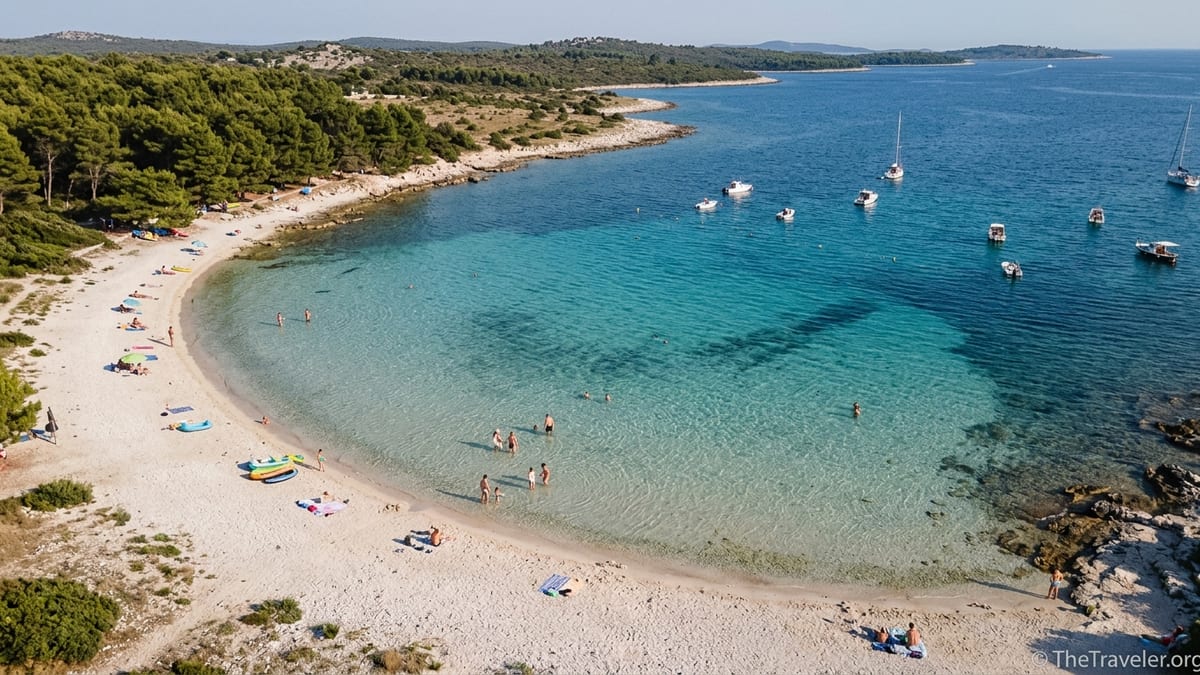
Sakarun: Shallow Turquoise and a Natural Playground for Kids
Sakarun is Dugi Otok’s celebrity beach and, for many families, the reason to come to the island in the first place. Set on the northwest coast near the villages of Božava, Soline and Veli Rat, this 800-metre crescent of pale sand and pebbly grit shelves very gently into a lagoon of bright turquoise water. Even in the height of summer, you will see toddlers splashing close to shore while older children wade out 30 or 40 metres and are still only waist-deep. That long, shallow gradient is what makes Sakarun such a strong choice for families who want peace of mind while the kids play.
Reaching Sakarun is straightforward with a car. Most visitors come by ferry from Zadar Gaženica to Brbinj, then follow the island’s single main road north for around 35 minutes. In peak season, parking by the pines just behind the beach can fill by late morning, and attendants may charge a daily fee that typically sits in the range of a modest restaurant lunch per car. If you are staying in Božava, local tourist trains and minibuses often shuttle people to Sakarun during July and August, which can be simpler than driving and dealing with limited spaces under the trees.
On the beach itself, amenities are basic but family-friendly. Several seasonal beach bars serve cold drinks, simple grilled dishes and ice cream, and you can usually rent sun loungers and umbrellas right on the sand. Prices fluctuate from year to year, but two loungers plus an umbrella for a full day commonly cost somewhere around what you might pay for a mid-range dinner for two in nearby Zadar, so families watching their budget often bring their own shade tents. Although Sakarun has a reputation for soft sand, much of the shoreline is a mix of sand and fine pebbles, so water shoes make sense for younger kids with sensitive feet.
Crowd-wise, Sakarun is no longer a secret. In July and August, especially when tour boats from Zadar arrive mid-morning, the central part of the bay can feel busy. To avoid the worst of it, aim to arrive before 9:30 a.m. or visit in June or early September, when the water is still warm but there is more room for sandcastles. Another strategy is to walk a few minutes along the edges of the bay, where the pine trees thin out and there is more space between towels. Those side sections are just as shallow and inviting, yet many day-trippers never bother to leave the central cluster of bars.
Veli Žal: Clear Water, Space to Breathe and Easy Snorkeling
On the exposed western coast of Dugi Otok, Veli Žal offers a different experience to Sakarun. Instead of a lagoon-like bay, this is a long ribbon of smooth white pebbles facing open sea, with a wide horizon and a constant sense of fresh air. Families who find Sakarun too busy often end up here, trading the pure sand and beach bars for more space, clearer water and a quieter atmosphere. The sea deepens more quickly than at Sakarun, but the entry is gradual enough that confident young swimmers can still enjoy themselves close to shore.
Veli Žal is reached by turning off the main island road a little south of the settlement of Dragove. The final approach is on a narrow lane through low, scrubby Mediterranean vegetation, leading to an informal parking area behind the beach. There is usually no formal parking infrastructure here, just cars tucked under bushes and trees, so arriving early is wise in high season. Once you step out, a short path brings you directly onto the rounded white stones and a sea that almost immediately looks snorkeling-ready.
For snorkelers, Veli Žal is attractive because the seabed transitions from pebbles to rock and seagrass within a short swim from the shore. Simple, inexpensive gear such as a basic mask and snorkel purchased from a sports shop in Zadar is enough to explore small fish weaving between rocks, shy crabs, and the subtle color gradients of the underwater grass beds. There are no big-ticket coral formations here, but the water is usually very clear, especially in the morning before the wind lifts. Because there are fewer facilities than at Sakarun, families should pack their own snacks, plenty of water and sun protection. A compact beach tent or umbrella bought in Zadar or brought from home is almost essential, as natural shade is limited to shrubs at the back of the shore.
Veli Žal rarely feels deserted in summer, but it also rarely reaches the tightly packed-towel density of Sakarun during a busy August afternoon. This makes it an appealing compromise for families with older children who are happy to swim in slightly deeper water and for couples who want enough energy around them to feel safe, but not so much noise that they are constantly stepping around beach toys. Late afternoons are particularly pleasant, when the sun softens, the water remains warm from the day, and people start drifting back toward the villages, leaving long stretches of pebbles for an unhurried final swim.
Brbinjšćica and Golubinka: Coves, Cliffs and Cave Snorkeling
If Sakarun and Veli Žal are about classic beach days, Brbinjšćica bay is where Dugi Otok shows its wilder side. Located on the western coast roughly midway down the island, this inlet is framed by low cliffs and limestone formations, with the blue-green sea pushing right up against rocks rather than stretching into a broad shore. The area around Brbinjšćica has been recognized for its geomorphological significance, with features such as the Dragon’s Eye depression and the nearby sea cave Golubinka drawing adventurous visitors in kayaks and small boats.
A small car park sits at the end of the access road, and in recent seasons kayak rental operators have appeared at the water’s edge, typically charging by the hour with rates that are comparable to a simple half-day bike rental in many European cities. From here, it is a relatively short paddle along the coast to Golubinka, a cave with an opening in the ceiling that lets sunlight pour onto the clear water below. When conditions are calm, guided groups enter through a sea-level opening, often arriving in the morning before the afternoon wind creates choppier water. Inside the cave, the mix of shadow and shafts of light creates an intense palette of blues that experienced snorkelers and divers find memorable.
Brbinjšćica and Golubinka are not ideal for very young children or non-swimmers. Access to the water is largely from rocks, sometimes involving short scrambles or jumps, and the cave environment demands comfort in open water and a good sense of safety. Tour operators and local authorities strongly advise against visiting Golubinka when there is any noticeable swell or wind, particularly the common afternoon mistral in summer, which can send waves surging into the cave entrance. For confident swimmers in small groups, however, the bay and its surroundings are excellent for snorkeling. The rocky seabed drops away quickly, attracting schools of fish and revealing crevices and overhangs that feel a world apart from the sandy shallows of Sakarun.
Because this part of the island has minimal infrastructure, visitors should treat a trip to Brbinjšćica like a small outdoor excursion rather than a casual beach stop. Water, snacks, proper reef-friendly sunscreen, and sturdy water shoes for climbing in and out over rocks all make a real difference to comfort and safety. There are no lifeguards, and shade is scarce, so timing your visit for the first half of the day is sensible. The reward is a stretch of coastline that still feels raw, with enough adventure to occupy a half or full day for travelers who do not mind swapping loungers for limestone.
Lojena-style Boat Trips: Day Cruises to Kornati and Beyond
Many visitors staying on Dugi Otok hear about Lojena, the celebrated sandy beach on the island of Levrnaka in Kornati National Park. While Lojena itself lies outside Dugi Otok, boat trips that combine a cruise through the Kornati islands with a swimming stop at or near Lojena have become a popular add-on for island holidays. Most organized excursions depart either from Zadar on the mainland or from Sali on the southern tip of Dugi Otok, crossing a landscape of low, stony islets and clear channels that feel very different from the steep cliffs of the island’s western coast.
A typical full-day tour from Zadar or Sali runs from around 8:00 in the morning until the later afternoon, with a route that may include slow cruising through Kornati’s inner passages, a stop for a simple on-board lunch, time ashore at a swimming bay such as Lojena, and often a call at Telašćica Nature Park on Dugi Otok’s southern end. Prices vary depending on the size and comfort level of the boat, but as a rule of thumb, a family of four can expect to pay the equivalent of a modest hotel night in Zadar for a day at sea, sometimes including lunch and park entrance fees. For some, that is a major holiday splurge; for others, it is the main reason to base themselves in this part of Croatia.
The appeal of these Lojena-style trips is the combination of shallow, clear water and a remote-feeling setting. Lojena’s small pocket of white sand stands out in the rocky landscape of Kornati, and in calm conditions it is a fine place for children to paddle and for adults to float or snorkel over patches of seagrass and stone. However, in peak summer it is not uncommon for several excursion boats to be anchored there at once, turning what looks like an empty bay in photos into a lively meeting point. To preserve some sense of seclusion, consider travelling in June or September, or ask operators specifically which bays they visit and whether they have alternatives to Lojena on particularly crowded days.
For families with very young children or travelers who are prone to seasickness, it is worth thinking about how much time you actually want to spend on the boat itself. The crossings between Dugi Otok and Kornati can be breezy and occasionally choppy, especially in the afternoon when winds pick up. Smaller, slower boats can feel more personal but may accentuate the motion. If you prefer something flexible, you can also negotiate shorter private transfers with local skippers from Sali or Zaglav, arranging a half-day loop that includes one or two quiet coves with good swimming instead of the full marquee Kornati package.
Telašćica and the Southern Coves: Nature Park Swimming Spots
The southern end of Dugi Otok is dominated by Telašćica Nature Park, a protected bay system known for its dramatic cliffs, sheltered anchorages and the inland salt lake Mir. From a beach perspective, Telašćica does not offer a single headline sandy bay like Sakarun. Instead, it rewards those who are happy with rocky shores, ladders down to deep water and occasional small pebble pockets framed by pine woods. Families base themselves around Sali, Zaglav or smaller villages nearby and use the park as an all-day playground, combining short hikes with swims in calm coves.
Visitors typically enter Telašćica by road, paying a park entrance fee that depends on the season and vehicle type, or by organized boat trip. Once inside, narrow roads weave through pine forest and low stone walls to several informal swimming spots around the large, sheltered bay. The water here is usually very calm compared with the western open coast, making it appealing for children who are already comfortable swimming but prefer to avoid waves. However, many access points are rocky or via small concrete jetties rather than beaches, so inflatable water shoes and floating toys can help younger kids feel secure while clambering in and out.
One of Telašćica’s signature experiences is swimming in or near the salt lake Mir. The lake’s higher salinity often makes the water feel slightly warmer and more buoyant than the open sea, which some children find fascinating. There are flat rocks and a few narrow strips of shore where you can spread a towel, though shade is limited in the middle of the day. Because this is a protected area, there are rules governing where you can enter the water and how close boats may anchor, and facilities are intentionally sparse. A simple picnic brought from Sali or a nearby village, plus plenty of drinking water, is usually the most practical way to turn a visit into a full outing.
Compared with the northern beaches, Telašćica sees fewer casual day-trippers but more walkers, sailors and tour groups. To maximize the park’s quieter side, aim for early morning or late afternoon swims, pairing them with a walk to the panoramic viewpoints above the cliffs. For travelers interested in both beaches and landscapes, this combination of high limestone walls, tranquil bays and minimal development often becomes a highlight of their time on Dugi Otok, even without a single classic sandy shore.
Hidden Coves and Crowd-avoiding Strategies
One of the biggest appeals of Dugi Otok is that, despite the fame of Sakarun and the increasing popularity of day trips, the island still has many small coves where you can swim in near solitude. Between the main villages along the eastern coast and the wilder western side, unsigned tracks and cart paths lead down to pebbly inlets that rarely appear in guidebooks. Some locals simply refer to these by descriptive names or the nearest hamlet. Finding them often involves asking at your guesthouse or apartment, scanning satellite views before your trip, and being willing to walk the last few hundred metres from where you leave the car.
The trade-off for escaping the crowds is a lack of infrastructure. Hidden coves typically offer no toilets, no cafés and no lifeguards. Water access may be over sharp rocks or narrow pebble fans, and there may be no shade apart from low bushes. For couples or solo travelers with good mobility, this is part of the charm. For families with small children, it requires planning. Packing a soft cooler bag with drinks, simple sandwiches and fruit from markets in Sali or Božava, as well as a basic first-aid kit and a sun shelter, turns a rough cove into a comfortable day spot. Many Croatian families carry foldable foam mats for rocky beaches; picking up something similar at a supermarket in Zadar or on the island itself can make a noticeable difference.
To avoid crowds without going fully off-grid, timing is your friend. On Sakarun and other known beaches, the busiest hours usually run from late morning to mid-afternoon, driven by ferry schedules and excursion timetables. Arriving before 9:00 a.m. often means having a quarter of the beach almost to yourself for a couple of hours, even in high season. Likewise, staying on the island rather than visiting as a day trip gives you access to early evening swims after the last boats have left. In July sunsets stretch late, and the hour before dusk at Veli Žal or on a small eastern cove can feel like a different world from midday.
Another way to thin the crowds is to choose your month carefully. June and September on Dugi Otok generally combine warm water with quieter beaches and easier parking, while July and August bring more boats, more families and fuller accommodation. For travelers with flexible school calendars or those coming from the Southern Hemisphere, planning for shoulder season can mean the difference between queueing for kayak rentals and simply walking up and paddling away from Brbinjšćica in peace. Even in peak months, the overall feel of Dugi Otok remains gentler than that of some larger Croatian islands, but a little strategy goes a long way.
Snorkeling Tips and Safety on Dugi Otok
While Dugi Otok is not a classic tropical snorkeling destination, its rocky coastline and clear water make simple underwater exploration rewarding. Spots such as Veli Žal, the fringes of Sakarun, Brbinjšćica bay and various unnamed coves offer enough life and structure to justify packing a mask and fins. For most visitors, an affordable set bought before arrival is sufficient; local shops in Zadar and occasionally on the island sell basic gear, though selection may be limited in smaller villages. A lightweight rash guard or swim shirt helps protect from sun while floating face-down for long stretches.
Conditions vary significantly between the sheltered eastern side, the open western coast and the islands and caves reached by boat. On calm summer mornings, visibility can be excellent, with sunlight reaching several metres down and fish moving in and out of seagrass meadows. By contrast, windy afternoons or boat traffic near popular bays can stir up the water and reduce clarity. Planning snorkel sessions for earlier in the day and away from main boat channels makes for a more pleasant and safer experience. In places like Brbinjšćica and particularly around Golubinka cave, only confident swimmers should consider entering, ideally with a local guide or in an organized group that monitors sea conditions.
Safety-wise, it is important to remember that many of Dugi Otok’s beaches are unsupervised. There are no lifeguards at most coves, and depth changes quickly around rocky headlands. Families should set clear boundaries for children, keep an eye on sudden drops from pebbles into deeper water, and use simple flotation aids for younger kids who want to follow older siblings out with masks. On the more adventurous western coast, a basic understanding of currents and wave action helps avoid surprises. Local advice from guesthouse owners, café staff or rental operators about where to swim on a given wind direction is often more valuable than any map.
Marine life in this part of the Adriatic is generally benign, though sea urchins are common on rocky stretches and can deliver painful stings if stepped on. Wearing water shoes when entering over rocks and watching where you place your feet is usually enough to prevent problems. In keeping with the region’s increasing focus on sustainability, many local tourism bodies encourage visitors to use reef-safe sunscreen and avoid touching or taking anything from the seabed. Treating Dugi Otok’s underwater world as a shared resource rather than a personal playground ensures that its clear waters remain enjoyable for the next wave of travelers.
The Takeaway
Dugi Otok rewards travelers who match their beach choices to the kind of holiday they actually want. For young families, Sakarun’s shallow, light-blue lagoon delivers the classic postcard scene, while Veli Žal offers more space and cleaner water for older kids and adults who enjoy snorkeling. Those chasing a little adventure will find it in the rock-cut coves and caves around Brbinjšćica and in the small bays of Telašćica Nature Park, where cliffs, pine forests and saltwater lakes sit within easy reach of the sea.
Boat trips to Kornati and Lojena-style sandy pockets extend the range of experiences, turning a week on Dugi Otok into a blend of island drives, day cruises and quiet swims in hidden inlets. The island is not about large resorts or long lists of beach clubs. Instead, it offers a slower rhythm, a single main road, and an ever-changing mix of sand, pebbles, rock and open water. With a bit of planning around wind, crowds and the needs of your group, Dugi Otok can still feel like a place where you discover your own piece of the Adriatic, whether that is under a pine at Sakarun or in the shadow of a sea cave on the western cliffs.
FAQ
Q1. Is Sakarun Beach suitable for very young children?
Sakarun is one of the best options on Dugi Otok for toddlers and small children because the water stays shallow for a long distance and the seabed is mostly sand and fine pebbles. Parents should still supervise closely, but the gentle gradient and relatively calm conditions on most summer days make it easier for families than steeper, rockier beaches.
Q2. Where can I find the best snorkeling on Dugi Otok?
For accessible snorkeling from shore, Veli Žal and the rocky edges of Sakarun offer clear water and a mix of rocks and seagrass. More adventurous snorkelers often head to Brbinjšćica bay and the surrounding coastline, where the seabed drops away quickly and caves like Golubinka create dramatic light underwater. Always check local advice about sea conditions before exploring the more exposed western coves.
Q3. How crowded does Sakarun get in summer, and how can I avoid the crowds?
In July and August Sakarun can feel busy, especially from late morning when day-trip boats and visitors from the mainland arrive. To avoid the worst crowds, plan to reach the beach before 9:00 a.m., visit in June or September if possible, or walk a little along the edges of the bay where there is usually more room between towels. Staying on Dugi Otok rather than visiting just for a day also lets you enjoy quieter early evening swims after the crowds thin.
Q4. Are there any sandy beaches besides Sakarun on Dugi Otok?
Dugi Otok is mostly a pebble and rock coastline, with Sakarun as the main sandy-style beach. Smaller pockets of sand or fine shingle appear in a few coves, but most other spots like Veli Žal, the southern bays near Telašćica and many hidden inlets are made up of smooth pebbles or flat rocks. Bringing water shoes and beach mats makes these places much more comfortable.
Q5. Can I visit Lojena Beach in Kornati from Dugi Otok?
Yes. Several boat excursions from Sali and from Zadar on the mainland include a stop at or near Lojena on Levrnaka island as part of a full-day Kornati and Telašćica itinerary. These trips typically combine scenic cruising, a simple on-board meal and time for swimming or snorkeling in a shallow, sandy bay. Availability and exact routes change by season, so check current schedules and details with local operators once you arrive.
Q6. Is Brbinjšćica bay safe for families with children?
Brbinjšćica bay and the nearby Golubinka cave are better suited to confident swimmers and older children who are comfortable with rocky entries and deeper water. There are no lifeguards, and access often involves climbing over rocks or paddling a kayak. Families with toddlers or inexperienced swimmers will likely feel more relaxed at Sakarun, Veli Žal or the sheltered coves of Telašćica Nature Park.
Q7. Do I need a car to reach the best beaches on Dugi Otok?
A car makes exploring Dugi Otok much easier, especially for reaching beaches like Veli Žal, Brbinjšćica and small hidden coves along the main road. Sakarun can be reached by seasonal shuttles from nearby villages, and boat trips cover Kornati and Telašćica, but relying solely on public transport limits your options. Many visitors bring a car on the ferry from Zadar or rent one in Zadar and take it over.
Q8. When is the best time of year to visit Dugi Otok for beaches and snorkeling?
Late June, July, August and early September offer the warmest sea temperatures, with snorkeling most pleasant in the mornings when the water is calm and clear. July and August bring the most crowds, so if you prefer quieter beaches consider June or September, when the water is still comfortable for swimming but parking is easier and there are fewer day-trip groups.
Q9. Are there lifeguards or facilities on most beaches?
Facilities vary by location. Sakarun has seasonal beach bars, sunbed rentals and more infrastructure, while places like Veli Žal, Brbinjšćica and smaller coves may have no services at all. Lifeguards are not common outside of the busiest and most developed spots. Travelers should be prepared to look after their own safety, bring food and water, and carry out any rubbish they bring in.
Q10. What should I pack for a Dugi Otok beach holiday?
Essential items include strong sun protection, water shoes for rocky entries, a mask and snorkel, lightweight beach mats, and a compact shade solution for less developed coves. A small dry bag is useful for kayak or boat trips, and a reusable water bottle helps manage longer days in places without cafés or shops. With this basic kit, you can comfortably enjoy both the family-friendly bays and the more rugged hidden coves that make Dugi Otok special.