


Salzburg is one of Europe’s most flexible bases for a ski holiday. Within 60 to 90 minutes of the city you can reach big-name ski areas like Snow Space Salzburg, Obertauern, Hochkönig, Schladming-Dachstein, and the Gastein valley, along with smaller family hills. The choice is excellent, but the way prices work for lift passes, packages, and lodging can feel confusing on a first visit. This guide breaks down current trends and real-world cost examples so you can build a Salzburg ski trip that fits your budget without nasty surprises on arrival.
Get the latest updates straight to your inbox!
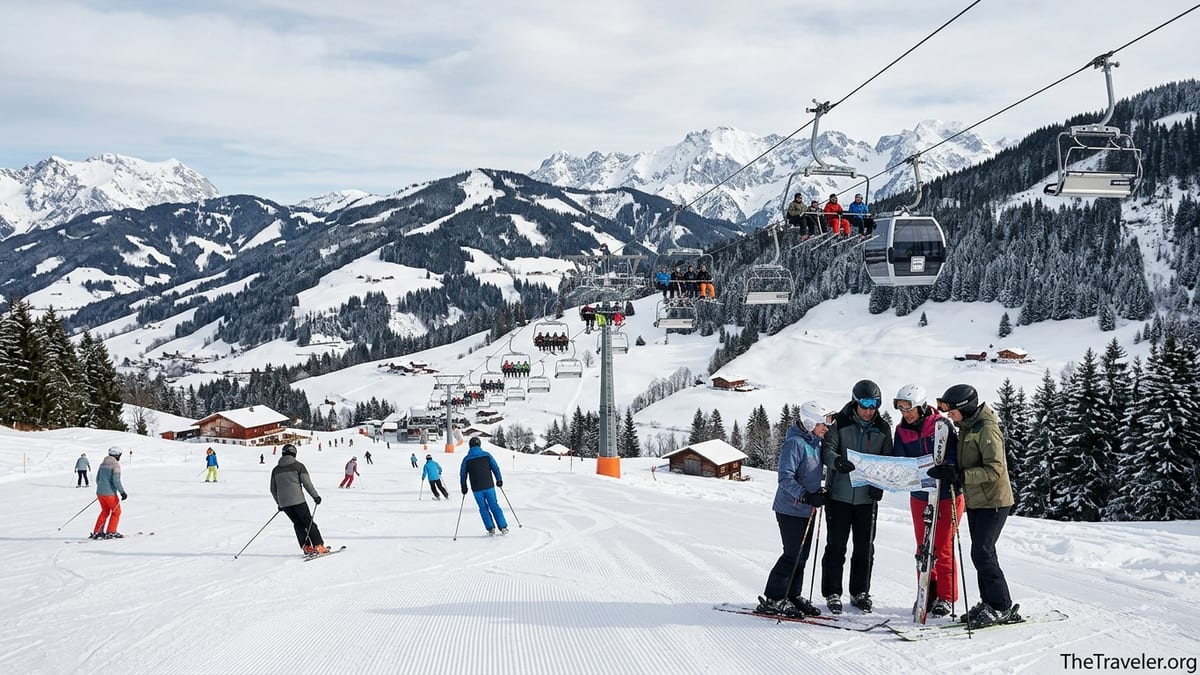
How Salzburg Fits Into the Austrian Ski Landscape
Salzburg city is not a ski resort, but it sits at the hub of one of Europe’s densest networks of ski areas. Many of the mountains most visitors think of as “Salzburg skiing” are part of the large Ski amadé alliance, which connects five regions and around 25 resorts on one lift pass, including Snow Space Salzburg (Flachau, Wagrain, St. Johann Alpendorf), Hochkönig, Gastein, and Schladming-Dachstein. From the city, these major resorts are typically 45 to 90 minutes by car or ski bus in normal winter conditions.
Because of that central position, you do not book a “Salzburg ski pass” as such. Instead, you generally stay either in the city and day-trip to different ski areas, or base yourself in a resort town like Alpendorf, Flachau, Wagrain, Obertauern, or Zell am See and treat Salzburg as a cultural side-trip. The right choice depends heavily on how many days you plan to ski and whether nightlife or sightseeing in the city is a priority.
In practice, most dedicated ski trips use either a regional pass such as the Ski amadé lift pass, or a local area pass like the Obertauern skipass. These tickets work much like the big American multi-resort passes, but at generally lower day rates and with clearer distinctions between low season, high season, and online vs walk-up pricing.
Accommodation follows a similar pattern. Prices are usually lower in Salzburg city than right on the slopes on peak dates, but you trade that saving for daily transfers to the mountains. In smaller valley towns a short ski bus ride from the lifts, such as St. Johann im Pongau (for Alpendorf) or Bischofshofen, you often find a middle ground: cheaper than slopeside, but far more convenient than commuting from the city.
Understanding Salzburg-Area Lift Passes and What They Include
The first major decision is whether to buy a local area lift pass for one resort, or a multi-area pass such as the Ski amadé ticket. If you stay in Snow Space Salzburg, for example, a multi-day Ski amadé pass covers all of that area plus the other linked regions in the alliance, which together offer several hundred kilometres of pistes and more than two hundred lifts. For many visitors doing a full week in one place, the Ski amadé pass is the default, because it gives flexibility to ski neighbouring valleys if the weather, crowds, or snow cover vary.
As a benchmark, in Snow Space Salzburg high season for winter 2025/2026, a one-day adult ticket at the ticket office is around 79 euros, with children paying about 39.50 euros and teens roughly 59.50 euros. A four-day pass at the window is about 312 euros for adults, 156 euros for children, and 234 euros for teens, while a six-day pass in the broader Ski amadé system is typically a bit over 380 euros at the counter in high season, with cheaper “from” prices available if you book early online. These examples are useful reference points: the exact figure will depend on your specific dates and whether your trip overlaps Christmas, February holidays, or Easter.
By comparison, a dedicated Obertauern lift pass for high season 2025/2026 is slightly cheaper at the window for a given number of days. Public price lists show a four-day adult ticket for Obertauern and the linked Grosseck-Speiereck area in the region of the mid-260-euro range, with children paying roughly half. A six-day pass there tends to sit in the mid-300-euro bracket for adults in high season, reflecting that Obertauern is a single compact area rather than a multi-valley alliance like Ski amadé.
Most Salzburg-area passes also include ski bus access in the local region. In the Gastein valley and much of Ski amadé, for example, resort buses shuttling between village centres and base lifts are free or heavily discounted if you show a valid lift pass. That can save a family of four 20 to 40 euros per day compared with paying separate fares, and it is worth confirming on your resort’s website or at the ticket office when you buy your pass.
Day Tickets vs Multi-Day Passes: Which Offers Better Value?
For visitors based in Salzburg city who only plan to ski one or two days while focusing mainly on sightseeing, single-day tickets make sense. Paying around 70 to 80 euros for an adult day pass at a large area like Snow Space Salzburg or Schladming-Dachstein might sound steep, but if you ski bell to bell and factor in that you are not paying for slopeside lodging, it remains competitive with many North American resorts where walk-up day tickets often exceed 150 US dollars.
However, the equation changes quickly on longer stays. The per-day cost of a multi-day pass drops substantially once you commit to three or more consecutive days of skiing. Using the Snow Space Salzburg high-season example, an adult four-day ticket at around 312 euros works out to roughly 78 euros per day, similar to the day rate. By six days in the broader Ski amadé alliance, the per-day cost often falls toward the mid-60-euro range, depending on early-booking discounts and exact dates. Families in particular benefit, because children’s and teens’ pricing scales down even faster in multi-day categories.
In Obertauern, multi-day value is even clearer for those who plan to ski every day. A four-day pass in the mid-260-euro range for adults brings the daily cost to around 66 to 68 euros, noticeably lower than the window day rate at some larger Ski amadé hubs. A six-day pass in the mid-300-euro bracket often works out close to 55 to 60 euros per day. For a group of adult friends on a budget trip, that difference can easily pay for a few extra dinners out or better equipment rental.
There are also niche ticket products to consider. Many Salzburg-area resorts offer half-day or 2–4 hour lift tickets for those arriving late on changeover days, as well as points-based or pay-per-ride products at smaller local hills. These can make sense if you land in Salzburg midday and want to stretch your legs on snow without paying the full day rate. For a week-long ski holiday, though, most travellers find that a standard three- to six-day consecutive pass remains the simplest and best-value choice.
Early Booking, Dynamic Pricing, and Special Lift Pass Offers
In recent seasons, Salzburg-area lift companies have increasingly adopted dynamic pricing and online early-booking systems. Snow Space Salzburg, for instance, promotes an “Online Early Booking Bonus” for day and multi-day tickets purchased in advance. The idea is similar to airline pricing: you choose your date range, see a grid of prices, and often save anywhere from a few euros to more than ten euros per day compared with walking up to the ticket window on a busy February Saturday.
In practical terms, this means that an adult six-day Ski amadé pass that might cost just over 380 euros at the counter in high season could be secured for a noticeably lower “from” price if you book several weeks or months ahead for non-holiday dates in January or March. Families staying in peak school holiday weeks may see less of a discount because demand is strong, but even then, freezing your price early protects you from later increases if a particular week books out.
There are also targeted family products that can dramatically lower costs. In some Ski amadé regions, for example, special “Young Family” cards allow two adults with a very young child to share one ticket, taking turns skiing while the other handles childcare, instead of buying two full passes. On designated family promotion weeks, children sometimes ski for free when a parent purchases a multi-day pass, particularly in March when the days are longer and many domestic school holidays have passed.
Obertauern follows a more traditional price grid but still offers discounts at season edges. Its published rate tables show slightly lower prices for late-season and off-peak periods compared with the busiest Christmas to late-March window. Add in occasional package deals from local hotels that bundle in discounted lift passes, and flexible travellers willing to ski in mid-December or late March can trim 10 to 20 percent from their overall lift budget.
What Ski Packages Around Salzburg Really Include
Many visitors search for “Salzburg ski packages” expecting a single price that covers flights, transfers, hotel, lift pass, and equipment. In reality, packages that originate outside Europe are often sold by specialist tour operators and focus on particular resorts like Alpendorf, Flachau, or Obertauern rather than Salzburg city itself. Within Austria and neighbouring countries, you are more likely to see hotel-based offers that combine lodging with a lift pass and perhaps rental gear or ski school vouchers.
A typical mid-range package in a Ski amadé resort might look like this: seven nights in a three-star hotel or guesthouse in Wagrain, daily breakfast and sometimes a simple dinner, plus a six-day Ski amadé lift pass. For high season dates, sample prices for such bundles often fall around 900 to 1,200 euros per adult sharing a double room, with children paying significantly less or receiving free lodging when staying on a sofa bed in the parents’ room. The exact cost will vary by operator, exchange rate, and airline prices if flights are included, but this gives a realistic starting point for budgeting.
At the more budget-friendly end, self-catered apartments in resorts like Flachau or Alpendorf occasionally run “ski plus” weeks in low season. In these offers, a family of four might pay in the region of 1,000 to 1,400 euros for a week in a basic but comfortable apartment plus discounted local lift passes, particularly in January or late March. Because you cook your own meals, you can keep food costs close to what you would spend at home, making these packages attractive for longer stays.
Obertauern, being snow-sure and popular with younger crowds, tends to package itself less as a city-plus-ski side trip and more as a dedicated ski holiday. Some hotels there advertise “Ski & Fun” weeks including half-board lodging steps from the slopes, a multi-day lift pass, and access to on-site wellness facilities. Headline prices in high season can run from around 1,200 to 1,600 euros per person for a week in a four-star property, again depending on room type and dates. While this is more expensive than a simple guesthouse, you effectively prepay most of your trip and have few extra costs beyond lunches on the mountain and drinks.
Accommodation Costs: Salzburg City vs Resort Towns
Lodging is the second major cost driver after lift passes, and where you choose to sleep has as much impact on your budget as which ticket you buy. In Salzburg city in winter, a reasonable range for a central three-star hotel is often about 110 to 180 euros per night for a double room if you book a few months in advance outside of major festivals. Simple guesthouses and business hotels on the outskirts can dip under 100 euros on quiet weekdays, while high-end heritage properties in the old town can push 250 to 400 euros per night or more.
On peak ski weeks in popular resorts like Obertauern, Flachau, or Schladming, slopeside hotel prices are generally higher. A modern three-star hotel or pension within easy walking distance of the lifts can often cost around 160 to 220 euros per night for a double room with breakfast in January and March, rising to 200 to 260 euros or more during New Year or school holidays. Four-star spa hotels with half-board and wellness facilities in prime locations can easily command 280 to 400 euros per night in busy periods, though they may drop closer to 220 to 260 euros in low season.
Self-catered apartments are the main route to value for groups and families. In resort villages near Salzburg, a basic but functional two-bedroom apartment sleeping four can often be found in the 900 to 1,500 euro range for a week in January or March, and higher in February. That works out to about 130 to 215 euros per night for the whole party. Add another 400 to 600 euros per week for groceries and simple meals out, and you will still often beat the total cost of staying in two hotel rooms, especially if you are travelling with children.
For travellers determined to keep costs down, valley and gateway towns that sit 10 to 20 minutes from the lifts by ski bus are worth investigating. Places like St. Johann im Pongau, Bischofshofen, or villages along the Salzach valley often have smaller family-run guesthouses where winter prices can start around 70 to 110 euros per double room per night. You trade the convenience of walking to the lift for a short bus ride each morning, but if you are skiing six or seven days, the total saving can add up to the price of several lift passes.
Putting It Together: Example Budgets for Different Travelers
To understand how these numbers play out in reality, it helps to sketch a few sample Salzburg-area ski trips. Consider a long weekend for two adults staying in Salzburg city and skiing two days in Snow Space Salzburg. Suppose you find a mid-range hotel room for 150 euros per night and stay three nights, totalling 450 euros for lodging. Two adult day tickets at the ticket window, at around 79 euros each per day, come to roughly 316 euros. Add equipment rental at around 35 to 45 euros per person per day and 40 to 60 euros per day for meals and drinks in the mountains, and your total for the skiing portion of the weekend will often land in the 800 to 1,000 euro range, excluding flights.
Now compare that with a dedicated week in a Ski amadé resort for a family of four. If two adults and two children book a self-catered apartment in Wagrain for 1,200 euros in January and purchase six-day Ski amadé passes online in advance, they might spend roughly 380 euros per adult and somewhat under half that per child for lift passes, depending on promotions. That implies a total lift bill in the ballpark of 1,200 to 1,400 euros for the family. Add equipment rental at perhaps 25 to 35 euros per day per person for mid-level gear, which over six days could approach 600 to 800 euros for all four, plus another 600 to 800 euros for groceries and a few meals out. Their all-in land cost for a week could reasonably fall around 3,600 to 4,200 euros, or less with early-booking discounts.
At the higher end, imagine a group of four adult friends sharing two double rooms in a four-star hotel in Obertauern during high season. If the hotel charges 320 euros per room per night on a half-board basis, seven nights will cost 4,480 euros for the group. A six-day Obertauern lift pass, in the mid-300-euro range per adult, adds about 1,400 euros total. High-performance ski rental at 45 to 55 euros per day per person for six days will sit around 1,100 to 1,300 euros for the group. Add lunches and après-ski drinks at perhaps 40 to 60 euros per person per day, and the week’s on-the-ground expenses can easily approach 7,500 to 8,500 euros for four, before flights and transfers.
These examples are not hard rules, but they show how strongly your choices about accommodation type, resort, and length of stay shape the overall budget. Early booking, travelling outside peak school-holiday weeks, and committing to multi-day passes are powerful levers to bring down the per-day cost of skiing in the Salzburg region.
The Takeaway
Salzburg is a flexible, high-value base for an Alpine winter trip, whether you are a culture-focused traveller who wants a couple of ski days or a dedicated skier planning a week-long holiday. The key is to understand how regional lift passes like Ski amadé compare with individual-area tickets such as Obertauern’s, and to match those options to where you stay and how many days you will actually ski.
As a rule of thumb, city-based visitors doing one to three days on the slopes can rely on single-day tickets and focus their energy on choosing the right resort for each day’s conditions. Once you move to a full ski week in one area, multi-day passes and hotel or apartment packages in resort villages almost always produce better value, especially when you book early online and avoid the busiest holiday weeks.
Realistically priced, Salzburg-area lift passes for adults still compare favourably with many North American resorts, particularly when you use early-booking discounts and take advantage of generous family promotions. Combine that with a wide choice of accommodation, from city pensions to slopeside spa hotels and self-catered apartments, and you have a region where careful planning can deliver a first-class ski experience at a sensible price.
Before you commit, check current season prices for your target dates, keep your plans flexible enough to pivot between nearby valleys if conditions dictate, and factor in the full cost of transfers, rentals, and meals. Do that, and a Salzburg ski holiday should feel like a smart investment rather than an expensive gamble.
FAQ
Q1. How much should I budget for a Salzburg ski day including lift pass and extras?
An average adult skiing a big area like Snow Space Salzburg for a full day can expect to spend roughly 130 to 180 euros, including a walk-up lift ticket, mid-range equipment rental, and food on the mountain. Costs drop if you use your own gear, book tickets online in advance, or choose a smaller local hill.
Q2. Is it cheaper to stay in Salzburg city and day-trip to the ski areas?
Nightly room rates in Salzburg city can be lower than slopeside hotels, especially outside peak holidays, but you must add daily transport costs and travel time. For one or two ski days, this can be economical. For a full ski week, staying in a resort village usually works out better value and is far more convenient.
Q3. When are lift passes around Salzburg the cheapest?
Lift passes are generally cheaper in early December, mid-January after New Year, and late March into April. Prices also tend to be lower if you buy online well in advance instead of at the ticket office, although discounts vary by resort and do not apply equally during peak holiday weeks.
Q4. Do Salzburg-area ski packages usually include equipment rental?
Many packages sold by hotels and local agencies combine accommodation and lift passes only. Some higher-end or family-focused offers add rental or ski school discounts, but it is common to pay for equipment separately at a local shop. Always check exactly what is included before comparing package prices.
Q5. Can I use one lift pass for multiple resorts near Salzburg?
Yes, regional products like the Ski amadé pass cover multiple resorts across several valleys, including Snow Space Salzburg, Schladming-Dachstein, Hochkönig, and Gastein. With that one ticket, you can drive or bus between covered areas and ski where conditions are best on a given day, subject to weather and lift operations.
Q6. Is Obertauern more expensive than Ski amadé areas?
Obertauern’s lift pass prices are broadly comparable to large Ski amadé resorts and sometimes slightly lower on a per-day basis for longer passes. However, its slopeside accommodation can run higher on peak dates because the village is compact and snow-sure, with strong demand. Overall costs depend more on your choice of lodging than on the pass alone.
Q7. Do I need to book my Salzburg-area lift passes in advance?
For midweek skiing outside school holidays, you can usually buy passes on arrival without issues. Booking early online is still recommended because it often locks in better prices and avoids queues. During Christmas, New Year, and February holidays, advance purchase is strongly advised and sometimes the only way to secure the lowest available rate.
Q8. Are there good options for beginners and families near Salzburg?
Yes. Areas like Snow Space Salzburg, Hochkönig, and some smaller hills closer to the city offer wide beginner slopes, ski schools, and gentle progression terrain. Many run family promotions, such as free or heavily discounted child passes on certain weeks, making them well suited to first-timers and families with young children.
Q9. How far are the main ski resorts from Salzburg airport?
Driving from Salzburg airport to major resorts typically takes 45 to 60 minutes to Alpendorf and Wagrain in Snow Space Salzburg, about an hour to Flachau and Hochkönig, and roughly 70 to 90 minutes to Obertauern or Schladming in normal winter traffic. Shared shuttles and trains plus ski buses can add some time but reduce the need for a rental car.
Q10. Is it worth buying a season pass if I only ski in Salzburg for one week?
For a single one-week trip, a season pass is rarely economical. A six- or seven-day regional pass almost always costs far less than a full season product. Season passes only make sense if you plan multiple trips or extended stays in Austrian resorts over the winter and can ski enough days to offset the higher upfront cost.