


More news on this day
Passenger traffic at San Juan’s Luis Muñoz Marín International Airport fell just over five percent in August 2026 compared with a year earlier, underscoring a widening air travel slowdown in Puerto Rico even as much of the wider Caribbean continues to post growth.
Get the latest news straight to your inbox!
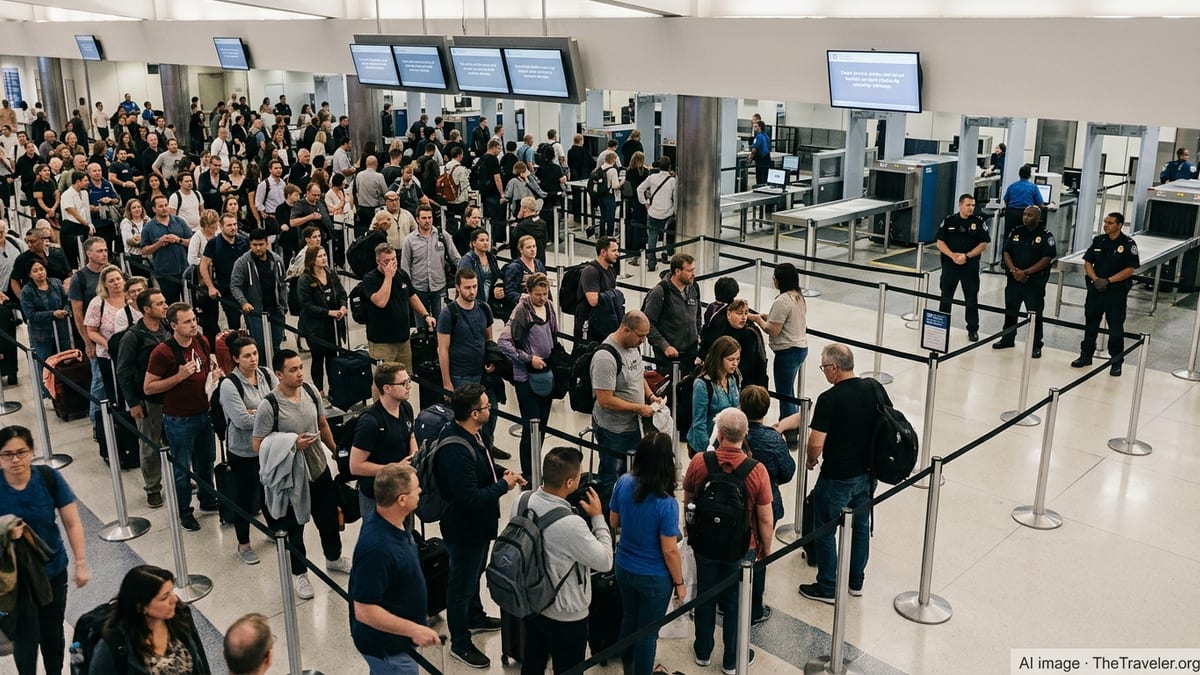
August Decline Extends a Months-Long Slowdown
Newly released airport data compiled by Aerostar Airport Holdings and summarized in regional coverage indicate that total passenger traffic at San Juan’s Luis Muñoz Marín International Airport (SJU) declined by about 5.1 percent in August 2026 compared with August 2025. That marked one of the sharpest monthly drops of the year to date and aligned with a broader pattern of softening demand that has been emerging since late spring.
Reports tracking passenger movements between Puerto Rico and the continental United States point to a similar trend, citing an August year over year decline of roughly 4.9 percent in air travelers on these routes. Domestic flows to and from the mainland make up the bulk of SJU’s traffic, so any pullback in this segment has an outsized impact on the island’s main hub.
The August setback follows earlier monthly reports showing that both domestic and international volumes at SJU have been edging lower in 2026 after strong rebounds in 2022 and 2023. Industry research from Discover Puerto Rico noted that through July, SJU arrivals were down around the mid single digits versus the same period in 2025, translating into well over one hundred thousand fewer incoming passengers.
While a single month can be influenced by weather patterns, schedule changes, or calendar shifts, the continued run of negative comparisons through much of 2026 suggests a more persistent softening in air demand for Puerto Rico’s primary gateway.
Pocket of Weakness in an Otherwise Growing Caribbean Market
San Juan’s latest figures stand in contrast with performance at several major Caribbean airports, where passenger counts have continued to edge higher this year. Recent traffic updates from airport groups across the region show modest gains in August 2026 compared with 2025, with some destinations benefitting from expanded airline capacity and resilient demand from North American travelers.
Coverage in Caribbean-focused industry outlets has increasingly highlighted Puerto Rico as an outlier within this landscape. Even as islands such as the Dominican Republic, Jamaica, and parts of the Mexican Caribbean report additional flights and rising arrivals, SJU’s declines point to an island facing more pronounced headwinds despite its strong air connectivity and well established tourism brand.
Analysts following airport statistics for San Juan have previously noted that the hub recovered more quickly than many of its peers in the immediate post pandemic period, supported by robust U.S. leisure demand and the island’s status as a U.S. territory with no passport requirements for mainland visitors. That head start may be one factor in the current slowdown, as year over year comparisons are now being made against a higher base of traffic in 2024 and 2025.
Even with the current pullback, SJU remains one of the busiest airports in the Caribbean by total passengers, handling more than 13.6 million travelers in 2025. The latest monthly declines, however, indicate that Puerto Rico is losing some momentum relative to neighboring competitors at a time when airlines are actively reallocating capacity across the region.
Price Sensitivity and Shifting Traveler Behavior
Industry research circulated by Discover Puerto Rico in mid 2026 points to cost pressures as a key factor shaping travel decisions for U.S. consumers. Survey data cited in those reports show that more than one third of travelers identified overall travel expenses as the main reason for cutting back on trips, with a significant share also pointing to high airfares in particular.
The same research notes that U.S. Transportation Security Administration checkpoint volumes turned negative in May and June compared with the prior year, suggesting that some travelers have begun trading flights for road trips and choosing destinations closer to home. For a destination like Puerto Rico, which depends almost entirely on air access from the mainland, that shift can translate directly into fewer passengers flowing through San Juan.
Puerto Rico’s tourism sector has continued to benefit from solid lodging performance and growing interest from visitors who do make the trip, but the air travel data indicate that potential visitors facing tighter budgets may be postponing or shortening stays. When combined with elevated airline costs and selective route adjustments, the environment has become more challenging for maintaining previous levels of traffic through SJU.
Market watchers note that Puerto Rico’s strengths in areas such as short haul access from the U.S. East Coast, strong brand recognition, and diversified source markets may help cushion the impact over time. In the near term, however, the August 2026 figures suggest that price sensitivity and shifting behavior are clearly visible in the airport’s monthly totals.
Air Connectivity Expands Even as Volumes Slip
One of the more striking aspects of the slowdown is that it is occurring against a backdrop of expanding air connectivity. Over the past year, the Puerto Rico Tourism Company and airline partners have announced additional routes linking San Juan with U.S. mainland cities and select international markets, as part of an ongoing effort to broaden the island’s reach.
Industry updates from Discover Puerto Rico in 2026 highlight new and seasonal services that have come online, as well as steady interest from carriers in serving the island’s visiting friends and relatives, leisure, and business segments. These announcements indicate that airlines still view Puerto Rico as an important market, even as near term demand softens.
The disconnect between more seats and fewer passengers suggests that load factors on some routes may be coming under pressure, particularly during off peak periods. If the pattern seen in August persists into the autumn and winter, airlines could respond by trimming frequencies, swapping to smaller aircraft, or redirecting capacity to competing Caribbean destinations posting stronger growth.
For Puerto Rico, preserving a robust route network is critical not only for tourism but also for residents who rely on frequent and affordable air links to the mainland. The data from August 2026 will likely be watched closely as an indicator of how sustainable the recent wave of new service will prove to be.
Outlook: Monitoring the Shoulder Season and Winter Schedules
With the summer travel period now largely complete, attention is turning to how San Juan’s airport will perform during the autumn shoulder season and into the crucial winter months. Historically, Puerto Rico sees a pickup in visitor arrivals as temperatures fall in North America and airlines ramp up capacity for peak Caribbean demand.
Published forecasts and planning documents emphasize that external factors such as broader U.S. economic conditions, fuel prices, and airline capacity decisions will play a significant role in shaping SJU’s trajectory over the next several quarters. Any sustained easing in airfare levels or improvement in consumer confidence could help stabilize passenger counts after the declines reported in mid 2026.
Local tourism data also show that overall visitation to Puerto Rico, including cruise and non air arrivals, has remained relatively resilient so far this year, even as the main airport’s numbers soften. That mixed picture suggests that the island’s tourism economy is not moving in lockstep with air passenger trends, but rather responding in more nuanced ways to changes in traveler behavior.
For now, the more than five percent drop in San Juan’s airport traffic in August 2026 serves as a clear signal that Puerto Rico is entering a more delicate phase in its air travel recovery cycle. How quickly the island can adapt through pricing, marketing, and route development strategies will help determine whether SJU’s slowdown proves to be a brief adjustment or the start of a longer period of moderated growth.
Caribbean Journal coverage on Puerto Rico air traffic trends
Tourism Analytics analysis of San Juan domestic passenger movements
Discover Puerto Rico research on 2026 travel trends
Discover Puerto Rico update on air connectivity and traveler confidence