


On a warm July night in Saratoga Springs, the sound of an orchestra tuning up drifts through the pines of a historic state park while, a few miles away, trainers walk sleek thoroughbreds back to their barns under a pink sunset. Couples stroll past Victorian porches downtown, kids chase bubbles on Broadway, and the soft mineral scent of the springs hangs in the air. Summer in Saratoga has always been special, but 2026 is shaping up to be one of its most dynamic seasons yet.
Why Saratoga feels different from other summer destinations
Saratoga Springs does not hinge its entire identity on a single attraction or festival. Instead, the city’s summer personality is built from overlapping experiences: classical music under the stars at Saratoga Performing Arts Center, the ritual of a day at Saratoga Race Course, morning walks to mineral springs, and long evenings lingering over cocktails on a busy downtown corner. Travelers arrive for one reason and usually end up staying for several more.
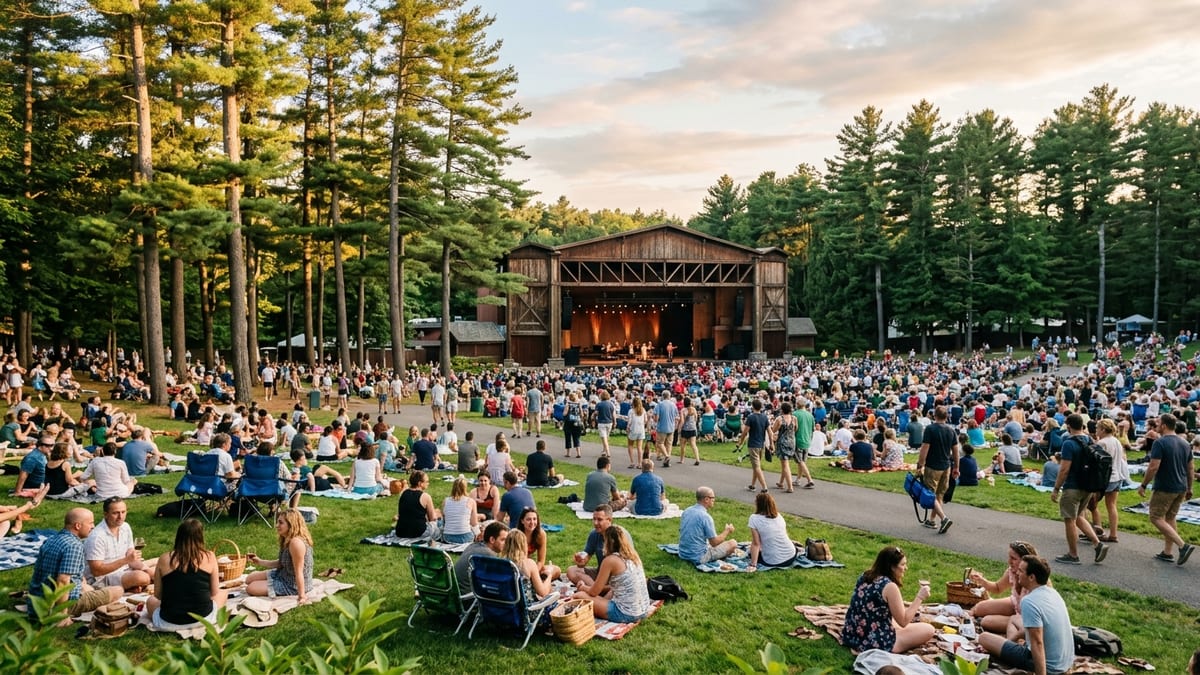
Part of what sets Saratoga apart from beach or lake resorts is its scale. The city is compact enough that many visitors park the car and forget about it, yet it holds a dense mix of venues that would feel at home in a much larger city. You can spend a morning hiking along Geyser Creek in Saratoga Spa State Park, take a mineral bath in the early afternoon, then be seated on the SPAC lawn with a glass of wine in time for a New York City Ballet performance.
The town’s heritage as a 19th century spa resort still shapes how summer here feels. Grand hotels once catered to visitors who came on doctor’s orders to “take the waters,” and that leisurely pace has never disappeared completely. Even when the racing crowd fills the sidewalks in August, there is a sense that Saratoga is meant to be savored slowly, whether that means a second cappuccino at a sidewalk table or an unhurried wander through a contemporary art gallery.
Summer 2026 highlights that balance more clearly than ever. SPAC celebrates its 60th anniversary season with big-name residencies and pop concerts, Saratoga Race Course hosts both the Belmont Stakes and the Travers, and the city’s restaurants, bookstores, parks and music venues are planning for what feels like a banner year. For travelers looking for more depth than a typical weekend getaway, Saratoga is positioning itself as a place where culture, wellness and play intersect in a very tangible way.
How SPAC shapes the city each summer
The Saratoga Performing Arts Center, or SPAC, is the cultural heartbeat of summer in Saratoga Springs. Opened in 1966 in a natural amphitheater in Saratoga Spa State Park, it was designed specifically for live orchestral music, and that acoustical care still shows when the first notes of a symphony roll across the lawn. For many locals, summer begins the night the first SPAC crowd pulls into the park, picnic baskets in hand.
In 2026, SPAC is leaning into its 60th anniversary season with an especially rich lineup. The New York City Ballet returns for its annual summer residency, bringing Balanchine classics and new works to the open-air stage, a rare chance for travelers to see one of the world’s great ballet companies without heading to Manhattan. Later in the season, the Philadelphia Orchestra settles in for a three-week residency, with Music and Artistic Director Yannick Nézet-Séguin leading programs that range from Beethoven’s Ninth to Vivaldi’s Four Seasons paired with Astor Piazzolla’s tango-infused take on the same theme.
Those classical pillars sit alongside the annual Freihofer’s Saratoga Jazz Festival, which typically turns SPAC into an all-day hangout, with serious jazz fans comparing set lists on the lawn next to families sprawled on blankets. On other nights, the venue flips to full-on summer amphitheater mode, with headliners like Dave Matthews Band, Tim McGraw, Public Enemy, Guns N’ Roses, Motley Crue, Luke Bryan and jam-band favorite Goose drawing thousands. It is entirely possible to spend a long weekend in Saratoga and experience ballet, a major rock show and a jazz legend, all on the same stage.
SPAC’s presence is felt well beyond its curved roofline. Restaurants on Broadway and Phila Street fill early on performance nights, with pre-show diners keeping an eye on the time so they can make the short drive or rideshare into the park before the overture. At Uncommon Grounds, a popular coffee spot, it is common to spot musicians and dancers grabbing an espresso before rehearsal, bags of pointe shoes and instrument cases resting against café tables. Even if you never set foot inside the amphitheater, the rhythm of SPAC’s calendar subtly choreographs the city’s summer evenings.
Why horse racing still defines Saratoga’s identity
Talk to locals and they will tell you that Saratoga is more than the track, but they will also admit that racing is woven into the city’s DNA. Saratoga Race Course is one of the oldest major sports venues in the United States, and its grandstand, shaded by towering trees and fronted by manicured lawns, feels far removed from newer, more clinical racetracks. The meet traditionally runs for about eight weeks in July and August, and during that time, first post might as well be a town-wide appointment.
Summer 2026 is especially significant. For the second consecutive year, the Belmont Stakes, the final leg of the Triple Crown, is being run at Saratoga Race Course while Belmont Park undergoes renovation. The 158th Belmont Stakes is scheduled for June 6, a date that effectively kicks off a supersized racing season and is expected to draw national attention along with tens of thousands of visitors. For racing fans who have always wanted to see a Triple Crown race in a more intimate, historic setting, this is a rare window.
Later in the season, the Travers Stakes, sometimes called the “Mid-Summer Derby,” remains the crown jewel of the regular Saratoga meet. The 2026 Travers Day falls on August 22, and reservations across town reflect that reality months in advance, from trackside hotels to downtown inns. Even travelers who are not regular racing bettors often plan at least one day at the course, sipping a bloody mary in the backyard picnic area or booking a clubhouse seat to watch some of the country’s best three-year-olds thunder down the stretch.
The economic ripple of racing is hard to miss. Early in the morning, you see stable workers picking up coffee and breakfast sandwiches at Walt & Whitman before heading to the backstretch, while late afternoon brings a different crowd: racegoers fresh from the track settling into bar stools at Hamlet & Ghost or ordering to-go hot dogs and cocktail pouches from Bibulous. For visitors, racing provides both spectacle and structure, anchoring days that might otherwise be spent drifting between parks, shops and performances.
The quieter side of Saratoga
Amid the music and racing, Saratoga holds onto a calming core that has attracted wellness seekers for more than a century. The city’s mineral springs bubble up from the earth with naturally carbonated, mineral-rich water that once drew patients on the advice of doctors, who believed the baths could ease ailments from arthritis to digestive issues. Today, the springs are more often a backdrop for relaxation than a prescription, but the ritual of “taking the waters” remains very much alive.
Roosevelt Bath & Spa, opened in the 1930s as part of a New Deal project and now carefully restored, is the city’s most iconic spa experience. Visitors check in at the historic complex inside Saratoga Spa State Park, then are led to deep porcelain tubs filled with warm, naturally effervescent mineral water. The water has a faint amber tint from its mineral content, and the experience is deliberately simple: a soak, perhaps followed by a massage, in a quiet space that feels a world away from the race calls and concert encores outside.
Across the park, self-guided walks connect a constellation of springs with distinct flavors and histories. On the Geyser Trail, hikers pause at the Geyser Island Spouter, where mineral-laden water erupts into the air and slowly builds a bright orange travertine mound beside Geyser Creek. A little farther along, the Hayes Spring and other wells invite curious sips from public fountains. Even travelers who are not usually drawn to geology find something meditative about following the paths between these natural features, with the scent of pine needles underfoot.
Wellness in Saratoga extends beyond the baths. Many visitors treat the whole city as a kind of open-air retreat, combining a morning yoga class with a gentle bike ride through the park’s multi-use trails, or walking from their hotel to a slow brunch on Broadway before an afternoon in one of the museums. For those who crave a slower counterpoint to the city’s marquee events, this softer side is often what lingers longest in memory.
What families and culture lovers discover here
Families often arrive in Saratoga wondering if racing and concerts will leave enough for younger travelers to enjoy. They generally leave having discovered that the city’s kid-friendly options are more numerous and more accessible than expected. The Children’s Museum at Saratoga, just off Broadway, is built around hands-on exhibits that encourage climbing, building and experimenting, making it a welcome morning stop before the day heats up.
A short stroll away, the historic Congress Park Carousel spins under a pavilion, its hand-carved horses gleaming after careful restoration. Rides are inexpensive, and grandparents often tell stories of their own childhood turns on the carousel as they watch a new generation go around. Outside town, a visit to Dakota Ridge Farm introduces children to the unexpected sight of llamas in upstate New York, with gentle animals and open pastureland that feels far removed from city sidewalks.
Saratoga also punches well above its weight in cultural institutions. On the campus of Skidmore College, the Frances Young Tang Teaching Museum presents contemporary art in exhibitions that are often playful and thought provoking, with programming designed to be approachable even for visitors who do not see themselves as “museum people.” In Saratoga Spa State Park, the Saratoga Automobile Museum uses classic cars and racing memorabilia to tell stories about technology, design and the social history of the automobile, which can be especially engaging for teens and adults who love engineering or motorsports.
For book lovers, Northshire Bookstore on Broadway functions as both an independent bookstore and a community hub, with deep shelves of fiction, travel writing and children’s books. Nearby, G. Willikers Toys & Games overflows with puzzles, craft kits and imaginative toys, while Saratoga Candy Co. draws families with its nostalgic jars and the locally beloved peppermint pig, a holiday tradition that many visitors are delighted to discover in person. Together, these small-scale attractions add texture to a Saratoga itinerary, filling in the hours between headline events with discoveries that feel personal and low-key.
How downtown Saratoga comes alive in summer
Downtown Saratoga Springs centers on Broadway, a wide main street lined with a mix of brick storefronts, restored Victorian facades and shaded sidewalks. On a July afternoon, the street hums with a steady but not overwhelming energy: patio tables clink with glassware, buskers play guitar on corners, and shoppers drift in and out of boutiques carrying paper shopping bags. That sense of bustle intensifies on big race or concert weekends, but Broadway rarely feels anonymous; shop owners greet regulars by name, and visitors are quickly folded into the flow.
Just off Broadway, Phila Street has become one of the city’s most talked-about dining corridors. Here, tucked inside historic buildings, travelers find places like Bocage Champagne Bar, where locals stop for oysters and a glass of sparkling wine before a performance, and Hattie’s Chicken Shack, a beloved spot for crispy fried chicken and sides that nod to Southern comfort cooking. Nearby, Familiar Creature offers coffee and baked goods with a creative twist, while Noah’s Italian serves modern Italian dishes that work as well for a leisurely dinner as they do for a pre-SPAC bite.
The food and drink options extend well beyond one street. Hamlet & Ghost, located in a former carriage house, has earned a following for its thoughtful cocktails and New American plates that feel refined without being fussy. A few blocks away, Standard Fare reimagines comfort food with seasonal ingredients, the kind of place where a burger might come with locally made pickles and creative sauces. Walt & Whitman, housed in a converted brick building, combines a coffee bar, brewery and casual kitchen, making it a flexible spot for everything from early-morning lattes to post-show beers and sandwiches.
Shopping in downtown Saratoga tends to favor the independent and the specific. First Fill focuses on whiskey and craft spirits, with staff happy to talk through regional distilleries and help visitors select a bottle that will remind them of their trip. Caroline & Main stocks women’s clothing and accessories with a breezy, only-in-Saratoga feel, the sort of place travelers remember when they are complimented on a dress back home. For those drawn to making rather than buying, The Joinery offers classes and workspace for new and experienced woodworkers, while James and Sons Tobacconists caters to cigar enthusiasts in a setting that feels very much like a local institution.
Outdoor experiences around Saratoga
Although Saratoga is best known for its cultural calendar, it also functions as a gateway to the outdoors. Saratoga Spa State Park, a National Historic Landmark, stretches over more than 2,000 acres of lawns, forest, mineral springs and classic bathhouses, and it is within a short drive or bike ride of downtown. In summer, visitors fan out along more than eight miles of hiking, biking and walking trails that range from paved multi-use paths to narrow dirt tracks through the woods.
The Geyser Trail, about 2.9 miles long, is one of the park’s most popular routes. Starting near SPAC’s parking areas, it winds past Geyser Creek and leads to the Geyser Island Spouter and Hayes Spring, where mineral-rich water has built up otherworldly orange and white formations around the vents. Families often treat it as a half-day outing, packing a simple picnic to eat at one of the park’s tables or grassy clearings after the walk.
Elsewhere in the park, the Peerless Pool complex draws swimmers and sunbathers, with a main pool, children’s area and slides that provide welcome relief on humid afternoons. Golfers gravitate to the park’s 18-hole course, which threads through mature trees and rolling terrain, while casual cyclists appreciate the relatively flat, paved loops that connect the Avenue of the Pines to the pool, golf course and Roosevelt Baths. In the cooler morning hours, you are likely to encounter residents walking dogs, runners training for fall races and visiting couples ambling hand-in-hand under the tall pines.
Because Saratoga sits at the edge of the southern Adirondacks, many travelers also tack on day trips to nearby lakes and trailheads. However, plenty of visitors find that the blend of gentle park trails, mineral springs, and leafy neighborhood streets offers enough outdoor time without ever leaving town. It is entirely possible to spend a weekend here and log several pleasant miles on foot or by bike without feeling as if you are on a strenuous hiking vacation.
FAQ
Q1. When is the best time to visit Saratoga Springs in summer 2026?
For most travelers, late June through late August is ideal, when SPAC’s main season and the Saratoga Race Course meet overlap. If you want the buzz of Belmont Stakes weekend or Travers week, plan for June 6 or August 22, keeping in mind that those dates will be the busiest and most expensive. Early June and early September can be slightly quieter while still offering warm weather and plenty to do.
Q2. How many days should I plan for a Saratoga Springs trip?
A long weekend of three nights is enough to sample the city’s highlights, such as a SPAC performance, a day at the races, a walk in Saratoga Spa State Park and some downtown dining. Travelers interested in both culture and relaxation often stretch to four or five nights, building in slower days for spa treatments, bookstore browsing and park time between marquee events. If you are combining Saratoga with Adirondack hiking or a visit to nearby Lake George, a full week gives you flexibility.
Q3. Is Saratoga Springs walkable for visitors without a car?
The core of Saratoga, including Broadway, Phila Street and many hotels, is very walkable, and you can easily spend entire days exploring downtown on foot. Saratoga Spa State Park and SPAC are a short drive or bike ride away, and many visitors use rideshare services or hotel shuttles to reach performances and the track. If you enjoy walking, staying near Broadway means you can go from coffee to shops to dinner without ever getting behind the wheel.
Q4. How crowded does Saratoga get during race season?
On peak summer Saturdays, particularly Belmont Stakes weekend and Travers Day, Saratoga feels like a small city running at full capacity. Restaurant reservations book out early, sidewalks around Broadway get noticeably busier, and traffic near the track can be slow around first post and after the last race. On weekdays or outside the biggest race days, the atmosphere is still lively but more manageable, with shorter lines and more spontaneous table availability.
Q5. Do SPAC events sell out, and how far ahead should I buy tickets?
Major pop and rock concerts, as well as certain high-profile orchestra and ballet programs, can sell out or leave only distant seats and limited lawn spots close to the date. If you have your heart set on a specific act or a weekend that lines up with a holiday, buying tickets a few months in advance is wise. For many classical programs, lawn tickets are often available closer to the performance, which gives flexible travelers the option to decide once they are in town.
Q6. What are some family-friendly things to do besides the racetrack?
Families can easily fill days without ever placing a bet. The Children’s Museum at Saratoga, Congress Park Carousel, Dakota Ridge Farm’s llamas, Northshire Bookstore, G. Willikers Toys & Games and Saratoga Candy Co. all appeal to younger visitors. In the park, the Peerless Pool and Geyser Trail provide space to burn off energy, and many SPAC events, especially daytime jazz sets and some orchestra programs, welcome kids on the lawn.
Q7. Is Saratoga Springs a good destination for wellness-focused travel?
Yes, particularly if you like your wellness with a side of culture and good food rather than strict retreat programming. A typical wellness-focused day might include a mineral bath at Roosevelt Bath & Spa, a slow walk connecting several springs, a yoga or fitness class, and a healthy brunch or dinner at one of downtown’s many restaurants. Travelers often comment that the combination of historic spa architecture, forested parkland and a relaxed dining scene makes it easy to unwind without feeling isolated.
Q8. What should I wear for a day at Saratoga Race Course and an evening at SPAC?
Daytime outfits at the track range from casual sundresses and polos to more traditional race-day attire, depending on where you are sitting, but comfortable shoes are important if you plan to explore the backyard and paddock. For SPAC, most visitors opt for smart casual clothing that can transition from a picnic on the lawn to a post-show drink downtown. Even in midsummer, evenings can get cool, so bringing a light layer is a good idea.
Q9. How expensive is Saratoga compared with other summer destinations?
Lodging and dining prices during peak race weeks and big event weekends can be comparable to other popular Northeast destinations, especially for centrally located hotels and high-demand dates. Travelers on a budget often look for midweek stays, book rooms farther in advance, or choose accommodations slightly outside the downtown core. Once you are in town, mixing splurge meals with casual spots, making use of SPAC’s picnic-friendly lawn and exploring the park’s free trails helps keep daily costs reasonable.
Q10. Do I need to be a hardcore racing or classical music fan to enjoy Saratoga Springs?
Not at all. Many visitors arrive with only a passing interest in horses or symphonies and are surprised by how much they enjoy a single afternoon at the track or an evening on the lawn listening to live music. Saratoga’s appeal lies in the way it layers these experiences with spas, shops, parks and memorable meals, so you can treat racing and SPAC as colorful highlights rather than the sole focus of your trip. That flexibility is part of what keeps people coming back summer after summer.