


Ask a first-time visitor where they plan to see Niagara Falls and most will answer without hesitation: the Canadian side. Guidebooks and social media feeds are filled with wide panoramas of Horseshoe Falls taken from hotel balconies in Ontario. Yet tucked entirely inside New York State, the American Falls offers an experience that is closer, more immersive, and far more underrated than many travelers realize. For visitors willing to cross the river in the opposite direction of the crowds, the American side of Niagara reveals a wilder, more intimate relationship with one of the world’s most famous waterfalls.
Why the American Falls Gets Overlooked
Part of the reason American Falls flies under the radar is geography and marketing. The classic postcard image of Niagara is the grand curve of Horseshoe Falls, viewed straight on from high-rise hotels and casinos in Niagara Falls, Ontario. That Canadian perspective naturally makes Horseshoe the star of the show and pushes American Falls into the background of many photos. Tour companies that sell package trips from Toronto or Niagara-on-the-Lake often frame the American side as an optional add-on rather than a destination in its own right.
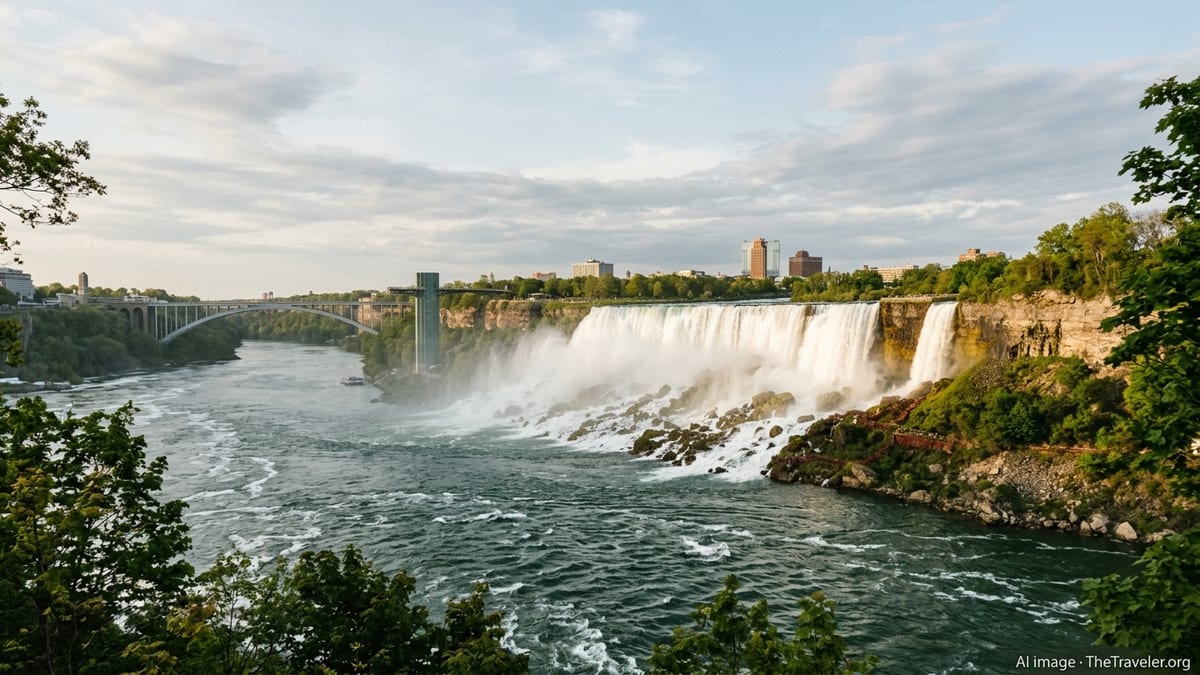
The numbers also work against American Falls. Roughly 90 percent of the Niagara River’s flow plunges over Horseshoe Falls, while only about 10 to 11 percent goes over American Falls. That smaller volume leads some visitors to assume the American side is a lesser version of the real thing. In practice, the reduced flow means a different character: a blockier curtain of water that slams directly into huge talus boulders at the base, sending up textured plumes of mist instead of one continuous white wall.
There is also a perception problem shaped by decades of comparison. For years, travelers have repeated the cliché that “Canada has the better view.” Standing on the American side, the falls are beside and below you rather than across from you, so you do not get the single panoramic postcard angle that fits easily in a smartphone frame. Instead you move along a series of viewpoints, boardwalks, and islands to piece together the experience. What feels less photogenic in a single snapshot can actually be more powerful in person, especially if you value closeness over distance.
Finally, the surrounding environments set a different tone. The New York side is centered on Niagara Falls State Park, founded in 1885 and widely recognized as the oldest state park in the United States. It was intentionally preserved as a “free public park” rather than a commercial strip. That means more trees, trails, and river views, but fewer neon signs and high-rise hotels pressed against the gorge. Many visitors who arrive expecting a mirror of the Canadian resort area do not realize they are stepping into a traditional park, which subtly encourages slower, more immersive exploration.
Understanding the Scale and Power of American Falls
From the railings at Prospect Point or the edge of Luna Island, American Falls feels surprisingly close. Measured on a map, the crest line of the waterfall stretches for roughly 800 to just over 1,000 feet, with a vertical drop in the range of 180 to 190 feet when you include the plunge to the talus rocks below. Those boulders are not just scenic clutter. They are the remnants of past rockfalls that have reshaped the profile of the cascade, creating a chaotic, broken base that constantly redirects the flow and mist.
Because only a portion of the Niagara River flows over American Falls, the water often appears as distinct ribbons and sheets separated by dark gaps instead of one unbroken curtain. In late summer or during low-flow periods, you can pick out individual streams pouring over the brink. In spring, when snowmelt and rain swell the river, those ribbons fuse into thicker white bands and the roar becomes a steady, physical vibration you can feel through the railings.
Unlike Horseshoe Falls, where much of the water plunges into a deep, relatively clean plunge pool, American Falls smashes directly onto the rock pile at its base. From viewpoints along the gorge wall, you can watch the water explode on impact, sending bursts of spray upwards that catch the sunlight in constantly shifting patterns. On a breezy October afternoon, for example, visitors standing on the lower observation decks may find themselves alternately dry and then suddenly drenched as gusts swing the mist in wide arcs.
The geological story adds another layer of interest. Over thousands of years, erosion has caused all three falls to slowly retreat up the river. The talus at the base of American Falls accumulated in the 19th and 20th centuries as large rockfalls altered the drop. In the late 1960s, engineers actually diverted the river around American Falls for several months to study whether the debris should be removed to restore a sheer vertical wall. Ultimately, authorities chose to leave the rocks in place, preserving the rugged, broken look that makes American Falls visually distinct today.
Best Vantage Points on the American Side
For most first-time visitors, the logical starting point is Prospect Point, just steps from the main entrance plaza of Niagara Falls State Park. Here, paved walkways lead to railings perched almost directly above the river as it accelerates toward the brink. In high water, the current looks like a churning sheet of green glass streaked with white foam. From this angle, you can sense the power building just before it drops, a perspective that is much harder to appreciate from across the gorge in Canada.
Extending out from this area is the Prospect Point Observation Tower, which projects over the gorge and offers a rare, almost floating side view of American Falls. Elevators descend from the tower base to the boarding area for Maid of the Mist, but even visitors who are not taking the boat can ride down to a lower observation deck near river level. Standing there, you are flanked by the boat basin on one side and the cascade on the other, watching tour boats nose into the mist as the falls thunder beside you.
A short walk along the river brings you toward Goat Island, a wooded plateau that divides American Falls from Horseshoe Falls. Before you cross the bridges out to Goat Island, take time on the paths that lead down toward the gorge rim. From these lower viewpoints, American Falls appears angled away, revealing the full length of its crest and the mass of talus at the base. Photos from here often capture Maid of the Mist boats dwarfed by the cliff face, a helpful visual reminder of the waterfall’s true height.
As you move farther upriver, the atmosphere changes from thunderous overlook to calmer river scenery. The water above the falls seems improbably flat only meters before it drops, separated from the abyss by smooth rock ledges and low railings. In early morning or late evening, you can sometimes stand here with just a few other visitors around, listening to the low rumble grow louder as the river approaches the brink. It is a moment of quiet that contrasts sharply with the constant buzz at many Canadian-side viewpoints.
Luna Island and Bridal Veil Falls: Intimacy at the Brink
One of the most uniquely American-side experiences is crossing onto tiny Luna Island, a slender strip of land that separates American Falls from its neighbor, Bridal Veil Falls. Accessible via a short pedestrian bridge from Goat Island, Luna Island places you literally between two waterfalls, with railings just a few feet from the edge of each drop. On a clear day, you can lean over and watch the water accelerate beneath you, turning from translucent green to white foam in a matter of meters.
From the northern edge of Luna Island, you are close enough to American Falls to see individual waves curling over invisible rocks at the brink. The sound is a layered roar rather than a single wall of noise. If you visit in shoulder seasons like late April or early November, there may be moments when only a handful of people are sharing the lookout, making it easy to find space right at the rail. Photographs taken here tend to emphasize texture: rippling surfaces, glistening spray on the boulders below, and rainbows forming in the mist when the sun breaks through.
On the opposite side of Luna Island, Bridal Veil Falls drops in a narrower, elegant curtain that feels almost delicate compared with its bigger siblings. The real magic, however, lies at its base, where the Cave of the Winds attraction gives visitors an extraordinarily close view. After riding an elevator down into the gorge and donning a yellow poncho and sandals provided on site, you step onto a wooden boardwalk that climbs a series of platforms beside the falls. Within minutes, the roar becomes overwhelming and the spray soaks everything around you.
The highlight of Cave of the Winds is the aptly named Hurricane Deck, a platform positioned adjacent to the rock wall where part of Bridal Veil Falls crashes down. On a summer afternoon, you can watch visitors brace themselves against the wind and water, laughing as jets of spray blast over the railings. It is an experience that does not really translate in photos or videos. You feel the temperature drop, the boards vibrating underfoot, and the water whipping sideways in gusts strong enough to knock back a grown adult. That level of intimacy with a waterfall simply does not exist on the more distant panoramas across the river.
Boat Tours and the American-side Perspective
Although both countries operate boats that nose into the mist, the classic Maid of the Mist tour departs from the American side and has been doing so in one form or another since the 19th century. Modern vessels leave from docks below the Observation Tower, carrying passengers in blue ponchos along the base of the gorge. The journey first passes the foot of American Falls, where you can look up at the jagged rock pile and see water slamming into boulders only a short distance away.
This segment of the cruise is where American Falls quietly steals the show. While many passengers are eager to reach Horseshoe Falls, the opening approach offers a more varied, detailed view. You can see the full span of American Falls angled against the cliff, with trees clinging to the rim above and stray streams of water arcing off the rocks. On late afternoon departures, especially in early summer, sunlight often hits the curtain from the side, revealing green undertones and casting deep shadows into the crevices between boulders.
Only after lingering briefly near American Falls does the boat swing toward Horseshoe Falls, where the world narrows into white mist and the skyline of Niagara Falls, Ontario, disappears behind a curtain of spray. From a storytelling perspective, that sequence matters. The tour effectively builds from detailed, textural views of the American cascade to an overwhelming, all-encompassing finale at Horseshoe Falls. Visitors stepping off the boat often talk about the drama of the horseshoe, but when they scroll through their photos later, many of the clearest, most memorable images are the ones taken as they passed American Falls.
For travelers who prefer to stay on land, lower-level viewing platforms near the Maid of the Mist landing area also provide unusual angles of American Falls. From here you look across the river at the Canadian hotels, but the waterfall itself is close enough that you can hear distinct patterns in the roar as water hits different rock surfaces. On quieter spring mornings, it is not uncommon to find a few serious photographers set up with tripods along these decks, taking advantage of the side-on perspective to capture long-exposure shots that blur the flow into silky bands.
Seasonality, Crowds, and the Quiet Charm of the U.S. Side
The American side offers a noticeably different crowd rhythm compared with Ontario. In summer, especially on holiday weekends, Niagara Falls State Park does get busy, and the main parking lots near the Visitor Center and Goat Island can fill by late morning. However, once you move beyond the central plaza, the experience quickly becomes calmer. Trails thread along the river and through wooded areas where you can still hear the falls but escape the thickest clusters of tour groups and day-trippers.
Spring and fall are particularly rewarding times to experience American Falls. In April and early May, the trees on Goat Island and along the gorge start to leaf out, framing the white water in fresh greens. Cooler temperatures mean less mist hanging in the air, so visibility from spots like Luna Island is often excellent. In October, fall foliage transforms the park into a mosaic of red and gold. On weekday mornings, you might walk between Prospect Point and Three Sisters Islands encountering more joggers and local dog walkers than out-of-town visitors.
Even in the peak of summer, the way viewpoints are distributed along the American shore makes it easier to find a quiet corner. You can watch the fireworks that are frequently launched over the falls on selected evenings from various grassy areas within the park, often without the tight shoulder-to-shoulder crowds common on the Canadian promenade. Families spreading out blankets near the brink at dusk enjoy a combination of picnic setting, skyline views, and illuminated waterfalls that feels more like a traditional park outing than a casino-front light show.
Winter, too, can turn American Falls into a surprisingly serene destination. While some attractions scale back or close in the coldest months, the park itself remains open, and snow softens the landscape of Goat Island and the gorge. Ice formations sometimes build up around the base of American Falls and along the railings, creating stark white contrasts against the dark water. With proper cold-weather clothing and footwear, a slow walk along the rim on a clear February morning can feel like having one of North America’s most famous natural wonders practically to yourself.
Practical Tips for Experiencing American Falls
For visitors arriving by car, Niagara Falls State Park operates several parking lots, including a main lot near the Visitor Center and others closer to Goat Island. Fees are typically charged during the prime season and on peak days, with rates adjusted periodically. Lots can fill early on summer weekends and popular holidays, so arriving before mid-morning often makes the difference between pulling in directly and circling city streets in search of a private lot. Travelers who do not mind a short walk may find more economical parking options in downtown Niagara Falls, New York, especially during shoulder seasons.
Once inside the park, most of the best viewpoints of American Falls are accessible on foot via paved paths and footbridges. The Niagara Scenic Trolley offers a hop-on, hop-off loop with narration, ideal for visitors who want an overview without too much walking or who are traveling with young children or older relatives. Many travelers choose to ride the trolley for a full circuit early in the day to get the lay of the land, then go back on foot to the places that resonated most, such as Luna Island, the Observation Tower, or the trails on Goat Island.
Timed experiences such as Maid of the Mist and Cave of the Winds are where advance planning pays off. On busy summer days, it is wise to buy tickets early or aim for the first departures of the morning, when lines are shorter and the light on the water can be especially beautiful. Bringing a light waterproof layer or a change of shirt is sensible if you plan to combine a boat tour with Cave of the Winds. Even with ponchos, shoes and lower clothing often end up drenched, particularly after a few minutes on Hurricane Deck.
Combining the American and Canadian sides in one trip is straightforward for travelers carrying the necessary travel documents. The Rainbow Bridge, located downstream from the falls, allows both vehicle and pedestrian crossings between Niagara Falls, New York, and Niagara Falls, Ontario. Many visitors staying in Canadian hotels choose to walk over the bridge for a day on the American side, while others base themselves in New York and cross for an afternoon in Canada. For pedestrians, the crossing itself becomes another vantage point, with elevated views of American Falls and the river that are striking in both directions.
The Takeaway
American Falls may not dominate postcards and social feeds in the same way as Horseshoe Falls, but it delivers a kind of intimacy and variety that many travelers only discover once they stand at the brink. From the up-close platforms of Prospect Point to the narrow edge of Luna Island, the waterfall reveals different moods at every turn: churning power at the talus, smooth glassy water at the crest, drifting mist in the gorge below. Experiencing these details requires more movement and curiosity than simply leaning on a railing across the river, yet the reward is a deeper connection to the river itself.
For families and independent travelers who value natural settings, walkable trails, and the ability to approach a world-famous landmark from multiple angles, the American side of Niagara can feel refreshingly human in scale. You are not just observing a spectacle from afar; you are navigating islands, boardwalks, elevators, and river paths that bring you into the landscape. Add in the historic character of the United States’ oldest state park and the uniquely immersive encounters at Cave of the Winds and Maid of the Mist, and it becomes clear that American Falls is not a supporting actor in Niagara’s story. It is a star in its own right, waiting for visitors willing to look beyond the usual script.
FAQ
Q1. Is the American side of Niagara Falls worth visiting if I have already seen the Canadian side?
The American side offers a much closer, more immersive experience of the waterfalls, especially at American Falls, Luna Island, and Cave of the Winds. Even if you have seen the wide panoramas from Canada, walking right up to the brink and down into the gorge on the U.S. side feels very different and is worth a dedicated visit.
Q2. Can I see both American Falls and Horseshoe Falls from the U.S. side?
Yes. From Goat Island you can walk to viewpoints that overlook both American Falls and Horseshoe Falls, and the Prospect Point Observation Tower offers angled views that include the two main cascades. A Maid of the Mist boat tour from the U.S. side also carries you past the base of American Falls and into the mist at Horseshoe Falls.
Q3. Do I have to pay to see American Falls from Niagara Falls State Park?
There is no general admission fee to enter Niagara Falls State Park or to walk to viewpoints of American Falls. You pay only for specific attractions such as Maid of the Mist, Cave of the Winds, parking, or optional services like the Niagara Scenic Trolley. Many visitors spend several hours enjoying riverfront trails and overlooks without purchasing any attraction tickets.
Q4. What is the best time of day to photograph American Falls?
Early morning and late afternoon often provide the most appealing light, with softer angles that highlight the texture of the water and rocks. In the middle of the day, bright sun can wash out details in the mist, while evening hours can be dramatic when the falls are illuminated and fireworks are scheduled. Winter and shoulder seasons also tend to produce clearer air and less dense mist, which helps with visibility.
Q5. How long should I plan to spend on the American side?
A focused visit that includes Prospect Point, Goat Island, and a few key overlooks can be done in half a day. If you want to ride Maid of the Mist, explore Cave of the Winds, and wander further around Goat Island or into quieter sections of the park, plan on a full day. Many travelers split their time, spending one day on the American side and another across the river in Canada.
Q6. Is the American side of Niagara Falls walkable?
Yes. Once you park or arrive by public transport, most viewpoints are connected by paved paths and pedestrian bridges. You can walk from the Visitor Center to Prospect Point, Goat Island, Luna Island, and several river overlooks without needing a car. The Niagara Scenic Trolley is available if you prefer to minimize walking or are traveling with young children or older relatives.
Q7. Are there good views of American Falls in winter?
In winter, American Falls can be especially striking, with ice and snow building up around the base and along the gorge. While some attractions reduce hours or close during the coldest months, the park itself remains open, and clear, cold days often bring excellent visibility. Paths and railings can be icy, so wearing warm, grippy footwear is important.
Q8. Can I visit both the American and Canadian sides in one day?
Many travelers do visit both sides in a single day, particularly if they are staying nearby and have valid travel documents for crossing the border. The Rainbow Bridge connects Niagara Falls, New York, and Niagara Falls, Ontario, and can be crossed on foot or by car. That said, trying to see everything on both sides in one day can feel rushed, so some visitors prefer to dedicate one full day to each country.
Q9. What makes Cave of the Winds special compared with viewing platforms?
Cave of the Winds takes you by elevator into the gorge at the base of Bridal Veil Falls, where you walk on wooden boardwalks just a short distance from the water. On the Hurricane Deck, in particular, wind and spray can be intense enough to feel like standing in a storm. This closeness to the falls is far more immersive than looking from railings above and is one of the signature experiences that make the American side unique.
Q10. Is the American side suitable for families with children?
Yes, the American side works well for families. The park setting offers open spaces, shaded areas, and a variety of viewpoints that can be reached in short walks. Attractions like Maid of the Mist and Cave of the Winds are popular with older children and teens, and the Niagara Scenic Trolley can help younger kids avoid fatigue. As with any visit near fast-moving water and cliffs, close supervision and staying behind railings are essential.