


More news on this day
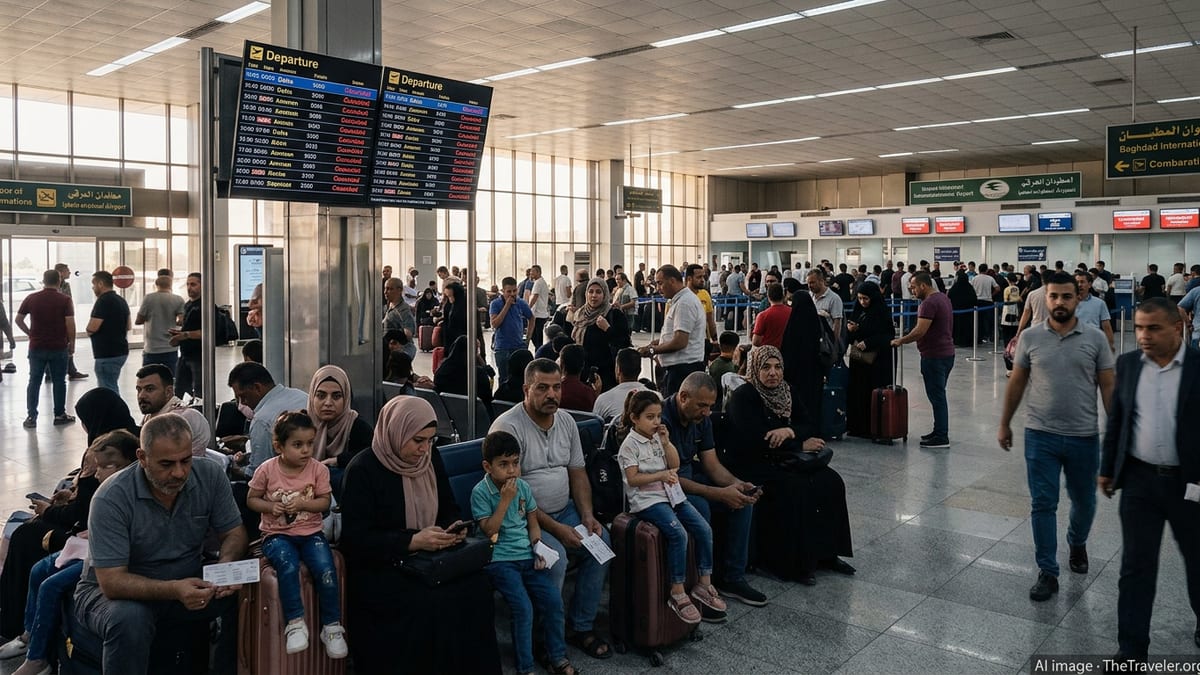
Passengers at Oslo Gardermoen Airport faced fresh disruption on June 6 as four SAS flights were cancelled and several others delayed, affecting a growing web of routes across Norway and popular European holiday destinations at the height of the early-summer travel period.
Get the latest news straight to your inbox!
Targeted Cancellations Ripple Across the SAS Network
Publicly available flight-status data for June 6 show at least four SAS departures linked to Oslo Gardermoen cancelled or heavily disrupted, including services involving Stockholm Arlanda and other Scandinavian hubs. The cancellations have come on top of rolling delays on routes connecting Norway with southern Europe, intensifying pressure on a network that is already operating close to peak capacity.
Tracking platforms indicate that one of the affected services was the SK495 Stockholm to Oslo rotation, listed as cancelled on Friday, interrupting an important regional link between the Swedish and Norwegian capitals. Other schedules show irregular operations on domestic services such as Oslo to Stavanger and Kristiansand to Oslo around June 5 and 6, suggesting knock-on effects on aircraft and crew positioning rather than isolated technical issues.
The pattern fits with what SAS has previously described in public communications as short term, targeted cancellations designed to contain wider disruption across its timetable. Earlier this year, the airline announced that it would trim parts of its schedule after a sharp rise in jet fuel prices, describing the move as a limited number of short term cancellations to protect overall reliability. The current situation at Oslo Gardermoen appears to be another example of that strategy being felt by passengers on specific days and routes.
Oslo Gardermoen is the main base for SAS in Norway and one of the airline’s most important hubs. Any concentrated disruption at the airport tends to spread quickly along the network, particularly during busy travel periods when spare aircraft and crew are limited and many flights are already operating close to full.
Holiday Routes to Spain, Italy, France and the UK Affected
The latest disruption is particularly visible on leisure-heavy routes between Oslo and southern Europe. Flight boards at Oslo on June 6 show changes and delays on departures to sun destinations such as Malaga, with at least one SAS-operated service to the Spanish resort city departing significantly behind schedule. Similar pressure is evident on other routes serving Spain and Italy that rely on tight aircraft rotations throughout the day.
Summer schedules from Oslo Gardermoen feature a dense mix of seasonal services to Spain, Italy and France, as well as additional capacity to the UK and central Europe. Destinations such as Malaga, Palma de Mallorca, Pisa, Venice and French regional cities are typically operated with limited weekly frequencies, meaning passengers affected by a single-day cancellation may have fewer same-day alternatives than on core business routes.
In practice, this can translate into missed onward connections and lost nights of pre-booked accommodation, especially for travelers heading to package holidays along the Mediterranean coast. Reports from passenger-rights platforms highlight an uptick in SAS-related claims this year, with travelers on routes into and out of Scandinavia seeking compensation and reimbursement for disruption affecting trips to Spain, Italy, France and the UK.
Airports across Norway and northern Europe are also reporting higher than usual congestion this summer as carriers ramp up capacity to meet demand. That leaves limited room in the system to absorb last-minute changes, amplifying the impact when even a small number of flights are cancelled on a busy travel day.
Domestic Norwegian Links Under Strain
Alongside the high-profile international services, domestic Norwegian routes are also feeling the strain. Flight-data services mapping SAS operations into and out of Oslo indicate irregular operations on key links such as Oslo to Stavanger, Kristiansand and Kirkenes in recent days, including schedule changes and occasional cancellations.
These domestic connections are lifelines for many communities, carrying both business travelers and residents connecting onto long haul and European flights via Oslo. When a short hop from a regional airport to Gardermoen is cancelled, passengers can easily miss onward flights to destinations such as London, Paris, or southern Europe, multiplying the overall impact of a single disruption.
Travel discussion forums are reflecting that reality, with Norwegian and international passengers alike sharing accounts of missed connections, hotel stays and rebooked itineraries following last-minute changes to SAS domestic services. While many travelers are ultimately rebooked via alternative airports such as Copenhagen or Stockholm, the process can add hours or even days to journeys, especially when school holidays push load factors close to 100 percent.
The situation underscores the vulnerability of Norway’s domestic air network at peak times. When the primary carrier adjusts its timetable or experiences operational difficulties at its main hub, travelers in smaller cities can face longer detours and fewer immediate options than those flying between major European capitals.
Airline Guidance, Passenger Rights and Rebooking Options
SAS has issued broad travel alerts this season outlining options for passengers whose flights are cancelled or significantly delayed. Publicly available guidance indicates that affected travelers may rebook at no extra charge onto a later SAS-operated flight within a defined travel window, typically to the same destination and in the same booking class when seats are available.
Consumer advocacy and legal information sites also note that travelers on routes into and out of Oslo Gardermoen may be covered by European passenger-protection rules if their flight is severely delayed or cancelled at short notice. Under those rules, eligible passengers may request rerouting or refunds and, in certain cases, fixed-sum compensation. However, the application of these rights can depend on factors such as the cause of disruption, advance notice, and whether extraordinary circumstances were involved.
Rebooking is not always straightforward, particularly when cancellations occur on popular leisure routes with limited frequencies. Reports from recent weeks describe passengers being rebooked onto next day SAS departures or, in some cases, rerouted via partner or competitor airlines using other European hubs. For those with fixed holiday accommodation or cruise departures, even a 24 hour delay can have significant knock-on effects.
Travelers impacted at Oslo Gardermoen are being encouraged by consumer groups and online travel communities to document their disruption, keep receipts for meals and accommodation, and use official airline channels and complaint forms when seeking reimbursement or compensation. With demand surging into the core summer period, understanding these processes in advance can help passengers respond more quickly if their flight is suddenly changed or cancelled.
What Travelers Through Oslo Gardermoen Should Expect Next
The early-summer cancellations at Oslo Gardermoen come as SAS rolls out one of its most extensive seasonal programs in recent years, with additional routes and frequencies across Europe. The carrier’s published plans include expanded services from Oslo to cities such as Hamburg and an increased focus on Mediterranean leisure destinations, reflecting strong demand from both Norwegian and international travelers.
Analysts note that this strategy leaves little margin for error on peak travel days. With aircraft and crew heavily utilized, any technical issue, air traffic control restriction or weather-related delay can trigger a chain of knock-on effects, culminating in targeted cancellations at key hubs such as Oslo. The four SAS cancellations observed on June 6 fit into this broader pattern of network management under pressure.
For travelers, this means that the coming weeks could bring a mix of smooth journeys for most and sudden disruption for a minority unlucky enough to be on affected flights. Those transiting Oslo Gardermoen to or from destinations in Norway, Spain, Italy, France, the UK and other parts of Europe may wish to build extra buffer time into itineraries, particularly when connecting to cruises, events or long haul departures that are not easily rebooked.
As the season progresses, operational performance at Oslo Gardermoen and across the SAS network will be closely watched by travelers and industry observers alike. Any sustained improvement or deterioration is likely to show quickly in publicly accessible flight status data, giving an early indication of how well the airline and the wider Scandinavian aviation system are coping with one of the busiest summers on record.