


Planning a trip to the Nordic countries and debating whether to focus on Sámi culture or Viking heritage is a good problem to have. Both offer powerful, place-specific experiences that you will not easily find elsewhere in the world. Yet they feel very different on the ground. One is rooted in living Indigenous traditions across Arctic landscapes; the other channels the seafaring past through museums, reconstructed ships and lively festivals. With limited time and budget, knowing which to prioritize can shape your entire journey.
Get the latest updates straight to your inbox!
Understanding the Basics: Who Are the Sámi and Who Were the Vikings?
The Sámi are the Indigenous people of Sápmi, a cultural region stretching across northern Norway, Sweden, Finland and the Kola Peninsula in Russia. Today, many Sámi continue traditions such as reindeer herding, handicrafts and joik chanting while also working in modern professions and cities. Visiting Sámi destinations like Karasjok and Kautokeino in Norway, Jokkmokk in Sweden or Inari in Finland means stepping into a living culture rather than a historical re-creation.
By contrast, Vikings were seafaring Scandinavians active roughly from the late 8th to the 11th century. They sailed from what is now Norway, Denmark and Sweden to trade, raid and settle as far away as Iceland, Greenland and coastal North America. Their world survives today through archeological sites, reconstructed longhouses, preserved ships and detailed museum exhibitions rather than through a continuous community calling itself “Viking.”
For travelers, that difference matters. A Sámi-focused journey often revolves around meeting local families, visiting reindeer enclosures and learning about how an Indigenous community is navigating the pressures of tourism and climate change. A Viking-themed trip is more about interpreting the past: walking through UNESCO-listed ring fortresses in Denmark, boarding replica longships at museums in Norway, or attending historical reenactment festivals in Sweden.
Understanding this distinction at the outset helps set your expectations. Sámi culture offers a chance to engage with living traditions and contemporary political realities, whereas Viking experiences typically deliver immersive storytelling about people who lived a thousand years ago.
What a Sámi Cultural Trip Feels Like on the Ground
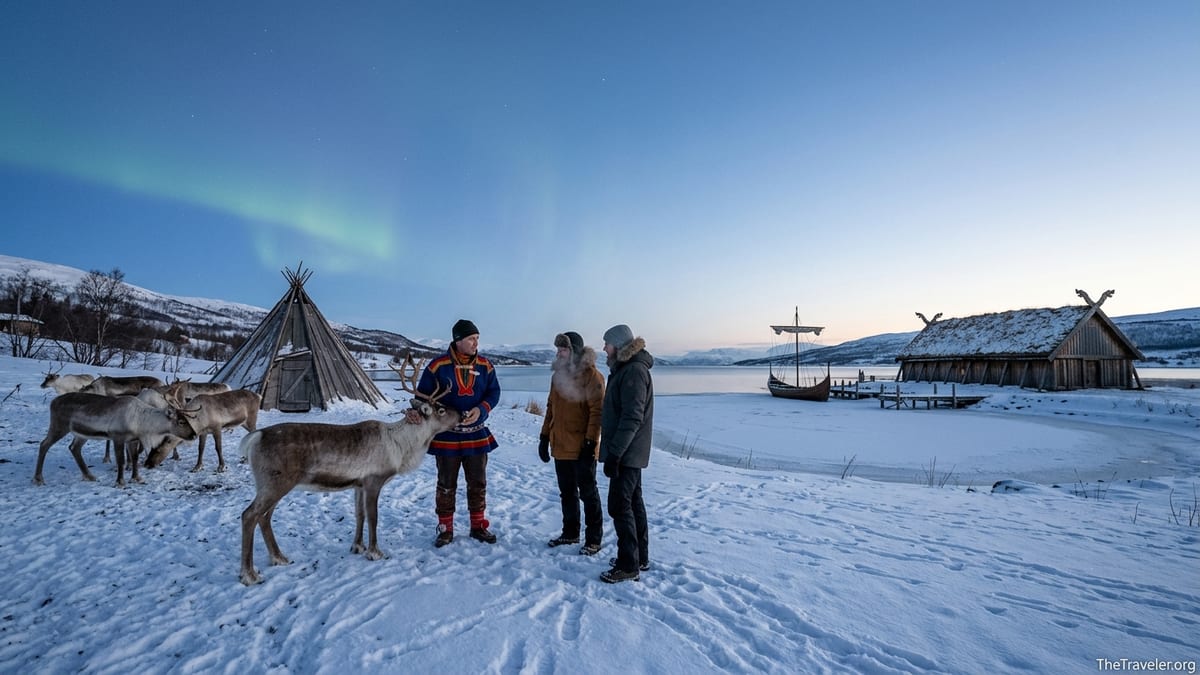
A typical Sámi-focused itinerary might take you to Arctic Norway in winter. Near Alta or Tromsø, operators work closely with Sámi families to offer small-group visits to reindeer herds. At places such as Sorrisniva outside Alta, guests can combine a reindeer and Sámi culture experience with overnight stays in a riverside lodge or an ice hotel, pairing northern lights excursions with storytelling sessions in a traditional lavvu tent. It feels intimate, often involving feeding reindeer, sharing simple meals around a fire and listening to personal accounts of herding life.
In Swedish Lapland, visitors base themselves in Jokkmokk or around Kiruna for similar experiences. A day might include snowshoeing or wooden-ski outings with a guide, learning how herders read snow conditions, then returning to a fire-warmed tent to taste smoked reindeer or Arctic char. Museums such as Ájtte in Jokkmokk add context with exhibits on traditional clothing, sacred drums and historical land use, making it easier to understand how modern reindeer herding fits into centuries of Sámi presence in the region.
Summer offers a different side of Sámi life. With midnight sun instead of auroras, you are more likely to join hikes across tundra grazing lands, try lake fishing with Sámi guides or visit small handicraft workshops producing duodji items like knives with carved reindeer-horn handles or finely embroidered gákti garments. You might attend local markets in places like Inari or Jokkmokk, where Sámi artisans sell jewelry and textiles directly to visitors.
The reality is that many Sámi experiences are purposefully small-scale. Operators emphasize that they are not mass attractions. A “reindeer encounter” in northern Sweden, for instance, may be limited to a few hours with one family and a modest herd, with hot drinks and a basic meal included. This intimacy is part of the appeal, but it also means you should reserve well ahead in peak winter and expect a quieter, more reflective pace than you might find on large-group excursions elsewhere in Europe.
Viking Heritage in Practice: Longhouses, Ring Fortresses and Ships
If you decide to prioritize Viking heritage, your map will look very different. In northern Norway, Lofotr Viking Museum in Borg on the Lofoten Islands is a standout example. Here, a towering 80-plus‑meter chieftain’s longhouse has been reconstructed on the original archeological site, furnished with carved wooden benches, fire pits and period-style textiles. Outdoors, you can usually see animals like ancient-breed sheep and perhaps join short sailings on reconstructed ships in the nearby fjord during the summer season.
Further south, Denmark has built a network of Viking attractions anchored by UNESCO-listed ring fortresses. At Fyrkat near Hobro, visitors can walk through the remains of one of King Harald Bluetooth’s circular fortresses and then head to a reconstructed chieftain’s farm where costumed interpreters demonstrate crafts like blacksmithing and weaving. At Borgring near Køge, a newly opened museum lets you peer into the dramatic discovery of a previously unknown fortress and the broader story of how Denmark became a kingdom during the Viking Age.
Museums play a central role in many Viking-focused trips. In Roskilde, Denmark’s Viking Ship Museum preserves five original Viking ships excavated from a nearby fjord, alongside full-scale sailing replicas that operate in summer. In Oslo, the famous Viking Ship Museum on Bygdøy is undergoing a major redevelopment, with a new facility planned to showcase the Oseberg and Gokstad ships in updated galleries; travelers in the next few years should check its reopening timeline as construction continues. In Stockholm, the Swedish History Museum devotes entire sections to the Viking Age, including runestones, grave finds and gold hoards that can absorb visitors for several hours.
Beyond permanent sites, seasonal festivals add an energetic, participatory dimension. Denmark’s Moesgård Viking Moot near Aarhus, for example, gathers reenactors for mock battles, crafts markets and communal feasts. Smaller Viking markets pop up throughout the Nordic countries in summer, where you can wander among stalls selling replica jewelry and try your hand at archery or axe throwing under the guidance of enthusiasts in linen tunics.
Ethics, Authenticity and Respect: What Travelers Should Know
When comparing Sámi and Viking experiences, ethics and authenticity come into play in different ways. Because Sámi culture is living and the Sámi are a recognized Indigenous people, tourism can have a direct impact on community well-being. The Sámi Parliament in Finland and other Nordic bodies have issued ethical tourism principles that emphasize respectful representation, consent for using cultural symbols and fair economic benefits for Sámi participants. Choosing locally owned Sámi operators, asking permission before photographing people in traditional dress and listening carefully to how guides frame their own stories are simple but important steps.
Travelers should also be aware that reindeer and grazing lands are more than just a backdrop. In parts of northern Sweden and Norway, for example, conflicts have arisen between large events, industrial projects and reindeer migration routes. When you book small-scale, Sámi-run experiences, you are more likely to hear directly about these pressures and how they influence seasonal herding patterns. Some tours explicitly market themselves as ways to support Sámi livelihoods by pairing cultural storytelling with modest-scale reindeer feeding or sledding.
With Viking tourism, the ethical questions are different. There is no living “Viking people,” but there are ongoing debates over how to present the era without romanticizing violence or oversimplifying complex societies. Many leading museums now present Vikings as traders, farmers and craftspeople in addition to warriors, and they discuss slavery, religious change and gender roles with increasing nuance. As a visitor, it is worth paying attention to whether an attraction leans heavily on stereotypes of horned helmets and endless raiding or offers more balanced context grounded in archaeology.
Another subtle issue is the way some groups today appropriate Viking imagery for modern political agendas. Reputable museums and heritage sites tend to distance themselves from extremist uses of Norse symbols and instead focus on historical evidence and cultural diversity within the Viking world. If you see an event or attraction that appears to glorify a narrow, exclusionary version of “Viking” identity, consider whether it aligns with the inclusive, curious spirit you want your travels to embody.
Practicalities: Costs, Seasons and Accessibility
From a purely practical standpoint, Viking heritage is generally easier and more affordable to sample as an add‑on to a broader city trip. Major museums in capitals like Copenhagen, Oslo and Stockholm are accessible by public transport and often included in city passes. Entry fees tend to be in line with other European museums, and you can visit them year‑round regardless of weather. A day trip by train from Copenhagen to Roskilde to see the Viking Ship Museum, for instance, is a straightforward and relatively budget‑friendly outing.
Sámi experiences usually require traveling farther north, often beyond the Arctic Circle. That can mean additional flights or long train journeys to hubs like Tromsø, Alta, Kiruna or Rovaniemi, followed by transfers to smaller towns or rural lodges. Organized Sámi cultural tours that include reindeer feeding, storytelling in a lavvu and a simple meal often run as half‑day or evening excursions, with prices reflecting small group sizes and the cost of operating in remote, high‑latitude environments. Many winter visitors pair these with northern lights tours, which can further raise the overall budget.
Seasonality is also more critical for Sámi-focused trips. Winter, from roughly December to March in much of Arctic Lapland, is peak time for snow-based activities, reindeer sledding and aurora hunting. Shoulder seasons like late autumn or early spring can provide quieter experiences but may see some tours paused due to unstable snow conditions or critical herding periods. Summer brings milder weather and long days for hiking and fishing, but classic winter imagery like snowy forests and glowing skies will be missing.
For Viking heritage, summer is still the most vibrant season because outdoor festivals, ship sailings and living-history programs are usually scheduled between late May and early September. However, core museum collections and many reconstructed longhouses remain open in some form across the year. This flexibility makes Viking experiences easier to incorporate into school holidays, business trips or shoulder-season city breaks when Arctic travel may be less appealing.
Matching the Experience to Your Travel Style
Choosing between Sámi culture and Viking heritage ultimately comes down to your travel style and what you want to remember most from your Nordic journey. If you are drawn to remote landscapes, quiet encounters and contemporary Indigenous perspectives, a Sámi-focused itinerary is likely to resonate more deeply. You might imagine yourself arriving in a snow-blanketed valley outside Tromsø, following lanterns to a lavvu, then sitting on reindeer skins around an open fire while your host explains the family’s migration routes and how climate shifts are altering the ice conditions they rely on.
On the other hand, if you love museums, detailed exhibits and immersive historical storytelling, Viking heritage has a clear edge. Picture a day where you start at a ring fortress in Denmark, tracing the curve of its earthworks as a guide explains Harald Bluetooth’s political maneuvers, then move on to a coastal town where you can board a reconstructed longship and see firsthand how little space crews had on weeks-long voyages. For many travelers with an interest in European or diaspora history, this kind of tangible contact with the early medieval past is particularly compelling.
Time is another factor. In a long weekend based in Oslo or Copenhagen, you can explore Viking collections, visit at least one major outdoor site and still have evenings free for contemporary Nordic dining. Crafting a comparable Sámi experience in the same time frame is harder, since reaching Sápmi usually takes an extra travel day and weather can disrupt plans. With a week or more to play with, though, you could feasibly combine a few days of Viking heritage in southern Scandinavia with a flight north to join Sámi guides on the tundra.
Personality matters as well. Some travelers thrive in quiet, small‑group settings where conversation flows slowly and moments of silence feel natural. Others prefer the energy of busy museums and open‑air festivals where they can drift anonymously through crowds. Thinking honestly about how you recharge, what kinds of social situations you enjoy and how you handle cold, darkness or long summer daylight will help you decide which side of Nordic culture to emphasize.
Can You Combine Both in One Trip?
For travelers with ten days or more, combining Sámi culture and Viking heritage is not only possible but highly rewarding. One common pattern is to start in a southern city, such as Stockholm, Oslo or Copenhagen, for museums and historic sites, then fly north to Arctic Norway, Sweden or Finland for Sámi-led activities. For example, you might spend three days in Stockholm exploring the Swedish History Museum and nearby runestone sites, then fly to Kiruna for four days of reindeer encounters, aurora watching and conversations with Sámi guides about life in the far north.
Norway offers a particularly natural blend. You could land in Oslo, visit the city’s major history museums and perhaps join a day trip to a Viking-age site on the coast, then take a domestic flight to Alta or Tromsø. There, you shift gears into Arctic mode: thick boots, rental thermal suits, dog-sledding, reindeer sledding and evenings spent under the night sky. The contrast between walking through glass cases of thousand-year-old artifacts and then sharing modern Sámi stories around a fire within days of each other can be powerful.
If your base is Copenhagen, Denmark’s efficient train network makes it easy to see multiple Viking sites in a few days, from the Viking Ship Museum in Roskilde to one of the ring fortresses recognized by UNESCO. From there, a short flight to northern Finland or Sweden connects you with Lapland hubs that act as gateways to Sámi communities and reindeer landscapes. While this kind of itinerary adds logistical complexity and costs, it gives a more complete picture of the broader Nordic story, from early medieval seafarers to today’s Indigenous stewards of the Arctic.
Even on shorter trips, you can weave in small threads of both. In cities like Tromsø or Kiruna, for instance, local museums often include sections on both Sámi history and the Norse past, while craft shops may sell jewelry inspired by Viking motifs alongside contemporary Sámi designs. You might not get a full Viking fortress or an overnight stay on the tundra, but you will still gain a layered sense of place.
The Takeaway
If your heart is set on face‑to‑face encounters with a living culture, prioritize Sámi experiences. Expect modest group sizes, simple but atmospheric settings and storytelling that may range from traditional myths to candid discussions of land rights and climate change. You will likely come home remembering not just the reindeer or northern lights but the specific people who hosted you.
If you are more excited by tangible artifacts, large-scale sites and clear chronological narratives, Viking heritage deserves top billing. The combination of ship burials, ring fortresses, longhouses and high‑quality museum displays can easily fill several days and appeal to travelers of all ages, from schoolchildren to dedicated history buffs.
Both options are deeply rooted in Nordic landscapes and histories, and neither is inherently “better.” The real question is which aligns more closely with your interests, budget, time frame and tolerance for cold or remote travel. With enough days, you do not have to choose at all; instead, you can let Vikings and Sámi experiences illuminate different chapters of the Nordic story, side by side.
FAQ
Q1. Is it more ethical to choose Sámi experiences over Viking tourism?
It is not a matter of one being more ethical by default. Sámi tourism directly affects a living Indigenous community, so choosing Sámi-owned operators and smaller, respectful tours is crucial. Viking sites are mostly archaeological and museum-based, where the main ethical questions involve how history is presented rather than current community rights.
Q2. Can I see both Sámi culture and Viking heritage in a one-week trip?
Yes, but you will need to plan carefully. A common approach is to spend a few days in a southern city such as Oslo, Stockholm or Copenhagen for Viking museums, then fly north to a hub like Tromsø, Kiruna or Rovaniemi for two or three days of Sámi-led activities.
Q3. Are Sámi reindeer experiences suitable for children?
Most are, provided children are comfortable around animals and cold weather. Feeding reindeer, sled rides and short walks to a lavvu tend to be very engaging for families. Check age limits and activity levels when booking, and ensure everyone has proper winter clothing or access to rental gear.
Q4. Do I need to book Sámi experiences far in advance?
For peak winter months, advance booking is highly recommended. Many Sámi-run tours are intentionally small, sometimes accommodating only a handful of guests per outing. Waiting until arrival in Arctic towns can mean limited choice or fully booked departures during busy holiday periods.
Q5. Will I learn accurate history at Viking festivals and markets?
Quality varies. Major museums and well-established sites tend to collaborate with historians and archaeologists, offering thoughtful interpretations. Smaller markets or entertainment-focused events may emphasize costumes and combat demonstrations over nuanced history. If depth matters to you, pair festivals with visits to serious museum collections.
Q6. Is winter the best time to experience Sámi culture?
Winter offers classic images of snow, reindeer sleds and northern lights, which many visitors seek out. However, summer and shoulder seasons can be just as rich culturally, with opportunities for hiking on grazing lands, fishing with Sámi guides and attending markets or festivals in milder weather and nearly endless daylight.
Q7. How physically demanding are typical Viking heritage visits?
Most Viking museums and reconstructed sites are relatively accessible, involving walking on level paths, indoor galleries and short outdoor stretches. Some ring fortresses and longhouses are on uneven ground, but you can usually tailor your visit to your comfort level. Always check site information for accessibility details if mobility is a concern.
Q8. Can I visit Sámi communities independently without a tour?
You can travel to Sámi-majority towns using public transport, visit local museums and shop for handicrafts on your own. However, access to reindeer herds and private lands typically requires joining organized visits or being invited by families. Tours help ensure that visits happen with consent and provide meaningful context.
Q9. Are there respectful ways to buy Sámi and Viking-inspired souvenirs?
For Sámi items, look for labels or shop signage indicating Sámi ownership or collaboration, and be cautious of mass-produced “Sámi-style” goods with no community involvement. For Viking-inspired pieces, museum shops and reputable artisans specializing in historical replicas are generally reliable sources.
Q10. If I have Scandinavian ancestry, should that influence my choice?
Ancestry can shape what feels meaningful, but it does not have to dictate your itinerary. Some travelers of Scandinavian descent focus on Viking heritage to connect with early medieval roots; others are more interested in learning about today’s Indigenous Sámi, regardless of personal background. Let curiosity and respect guide your decision more than genealogy alone.