


More news on this day
Saudi Arabia is deepening tourism ties with Greece and Spain in a move that links the Red Sea and Mediterranean into a more coordinated coastal travel corridor focused on sustainability, investment and higher-value visitor experiences, according to recent government announcements and regional policy initiatives.
Get the latest news straight to your inbox!
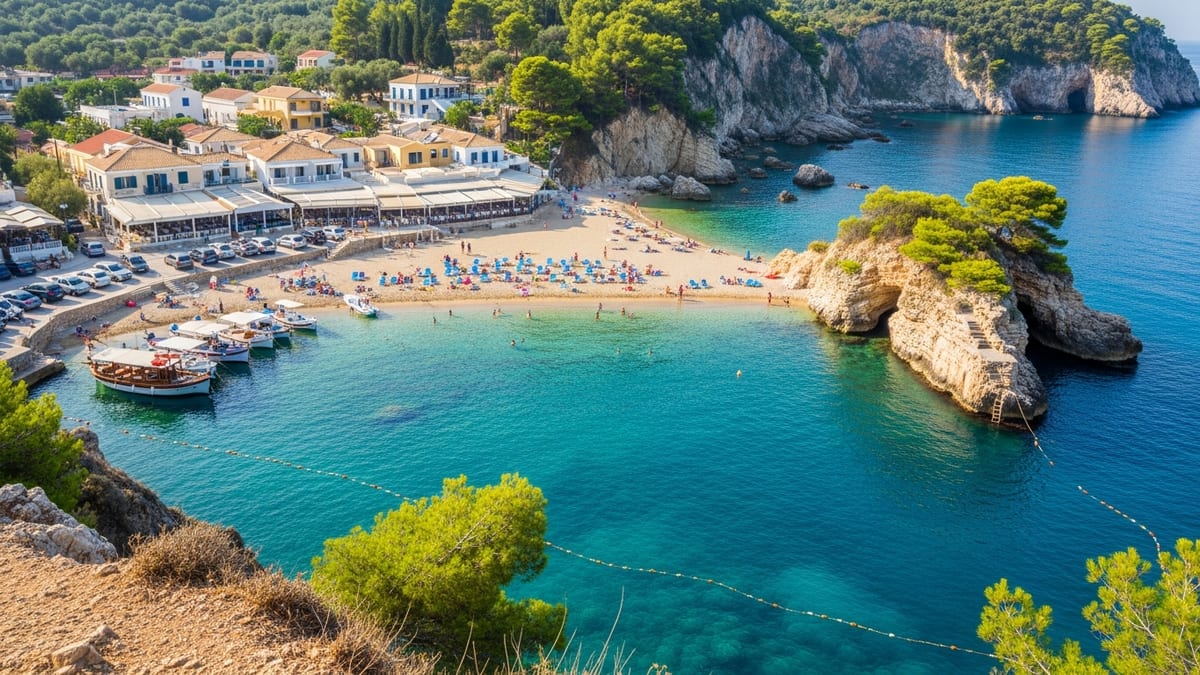
New Agreements Strengthen Saudi Greek Tourism Links
Recent coverage from regional media shows Saudi Arabia and Greece advancing a series of tourism cooperation frameworks designed to elevate visitor experiences and jointly promote both countries as complementary sun-and-sea destinations. A meeting of the tourism committee under the Saudi Greek Strategic Partnership Council in Spain this week reviewed progress on a Joint Action Program signed in 2024 and an earlier agreement on sustainable coastal and maritime tourism originally concluded in 2021. Together, these arrangements aim to align strategies on cruise development, yachting, island and coastal promotion, and the exchange of expertise on seasonality management.
The cooperation gives Greek tourism authorities a direct line into Saudi Arabia’s rapidly expanding outbound market, which has been growing in parallel with major investment in airports and digital visa systems. For Saudi Arabia, closer work with Greece offers access to long-established know how in managing intensive coastal tourism flows, as well as joint marketing opportunities that position the Red Sea alongside the Aegean and Ionian Seas in multi-stop travel campaigns.
Officials have framed the partnership as part of a broader shift toward “blue economy” collaboration in the Mediterranean, where environmental protection and tourism growth are meant to advance in tandem. For travelers, the immediate impact is likely to be seen in more coordinated promotion, additional air and possibly cruise capacity over time, and a gradual standardization of quality benchmarks across experiences that link Greek islands with Red Sea resorts.
The dialogue also comes as Greece works with European platforms on maritime spatial planning and sustainable coastal tourism, setting rules for how recreation, conservation, shipping and energy projects share sea space. Lessons from that process are expected to feed into technical exchanges with Saudi entities seeking to grow Red Sea tourism without repeating earlier Mediterranean overdevelopment.
Spain’s Role in Shaping a Mediterranean Red Sea Arc
Spain, which ranks among Europe’s largest coastal tourism markets, is emerging as a key reference point in how the wider region balances economic dependence on beach tourism with climate resilience and local community interests. European Commission data published in 2024 shows Spain and Greece among the countries with the highest coastal bed capacity, underscoring their influence in setting standards for sustainable resort development and visitor management.
Spanish regions bordering the Mediterranean have been actively involved in initiatives under the European Union’s blue economy agenda, including efforts to encourage less resource-intensive visitor behavior, slow tourism products and better integration of inland cultural routes with coastal hotspots. These experiences are increasingly relevant to Saudi Arabia as it shapes new island and waterfront destinations along the Red Sea, where authorities are seeking to avoid the congestion and environmental stress seen in some older mass-market resorts.
For visitors, Spain’s participation in broader Mediterranean coastal cooperation means that innovations in areas such as waste reduction in resorts, water reuse, reef and dune protection, and digital visitor flow monitoring are more likely to be shared across borders. Saudi tourism planners are already drawing on such practices in new giga-projects that advertise low-carbon operations and strict nature protection criteria.
Travelers considering multi-country itineraries that combine Spain, Greece and Saudi Arabia could see more consistent messaging around responsible travel, including guidance on reef-safe sunscreen, respect for marine protected areas and support for local businesses away from the busiest beachfront strips. Over time, this may translate into linked marketing campaigns promoting a “Mediterranean and Red Sea” arc of coastal experiences, from Spanish costas to Greek islands and Saudi coral archipelagos.
Saudi Red Sea Authority Pushes Sustainable Coastal Governance
Within Saudi Arabia, the Saudi Red Sea Authority has become a focal point for the country’s coastal tourism strategy, working as a regulator and coordinator for activities along the Red Sea coast. Public information shows the authority signing a series of memorandums of understanding with partners including academic institutions, heritage bodies and destination developers, all aimed at embedding environmental safeguards and community benefits into tourism expansion.
Recent agreements with research institutions focus on biodiversity mapping, monitoring the impact of coastal tourism and developing conservation programs to protect coral reefs and mangroves. Separate cooperation frameworks with heritage and regional development commissions seek to integrate cultural sites and historic coastal towns into the tourism offer, broadening visitor itineraries beyond new-build resorts.
Another strand of work targets governance and investor readiness. Memorandums with major projects such as NEOM, and with local authorities in places like AlUla, outline shared approaches to zoning, marine activity regulation, data sharing and investor support. The objective is to build a coherent regulatory environment that gives international and domestic operators clear rules for water sports, cruising, marinas and coastal accommodation while prioritizing safety and ecosystem health.
For travelers, these developments should gradually translate into clearer information on where and how they can dive, sail, camp or visit heritage sites along the Red Sea, backed by standardized safety protocols and conservation rules. It also signals that coastal sites are being planned with carrying capacities in mind, which could help preserve underwater visibility and beach quality as visitor numbers rise.
What the Shift Means for Future Visitors
For tourists, the growing web of cooperation among Saudi Arabia, Greece and Spain is likely to be felt less in headline-grabbing announcements and more in the texture of the travel experience. Over the next few years, industry observers expect to see greater alignment in service standards, sustainability labels and product design across coastal regions in the Mediterranean and Red Sea.
Travel planners and tour operators may begin offering more cross-regional itineraries that treat the two seas as complementary rather than competing destinations. A traveler, for example, could combine cultural stays in Spanish or Greek cities with sailing or diving in the Aegean, then continue to Red Sea islands that market themselves with similar sustainability credentials and digital booking tools. Shared promotion could also bring more shoulder-season offers, as destinations experiment with spreading demand beyond peak summer.
On the ground, visitors can anticipate more visible sustainability measures in resorts and ports, such as reduced single-use plastics, clear signage on protected habitats and expanded options for low-impact excursions run by local communities. In Saudi Arabia, where many new tourism sites are being built from scratch, these standards are being incorporated at the master-planning stage, informed in part by Mediterranean experience.
At the same time, industry watchers caution that success will depend on how rigorously standards are enforced and how benefits are distributed to coastal communities. Travelers interested in responsible tourism are likely to scrutinize whether claims about carbon neutrality, conservation funding and cultural preservation translate into real-world outcomes. The new cooperation among Saudi Arabia, Greece and Spain suggests that these questions are moving closer to the center of regional tourism policy, and that visitors will increasingly be encouraged to play an active role in protecting the very coastlines they come to enjoy.