


More news on this day
Hundreds of passengers across the Middle East and beyond faced disrupted plans this week as a fresh wave of flight delays and cancellations involving Saudia, flynas, flyadeal and Qatar Airways rippled through major hubs including Jeddah, Riyadh, Dubai, Cairo and Istanbul, according to publicly available operational data and regional aviation coverage.
Get the latest news straight to your inbox!
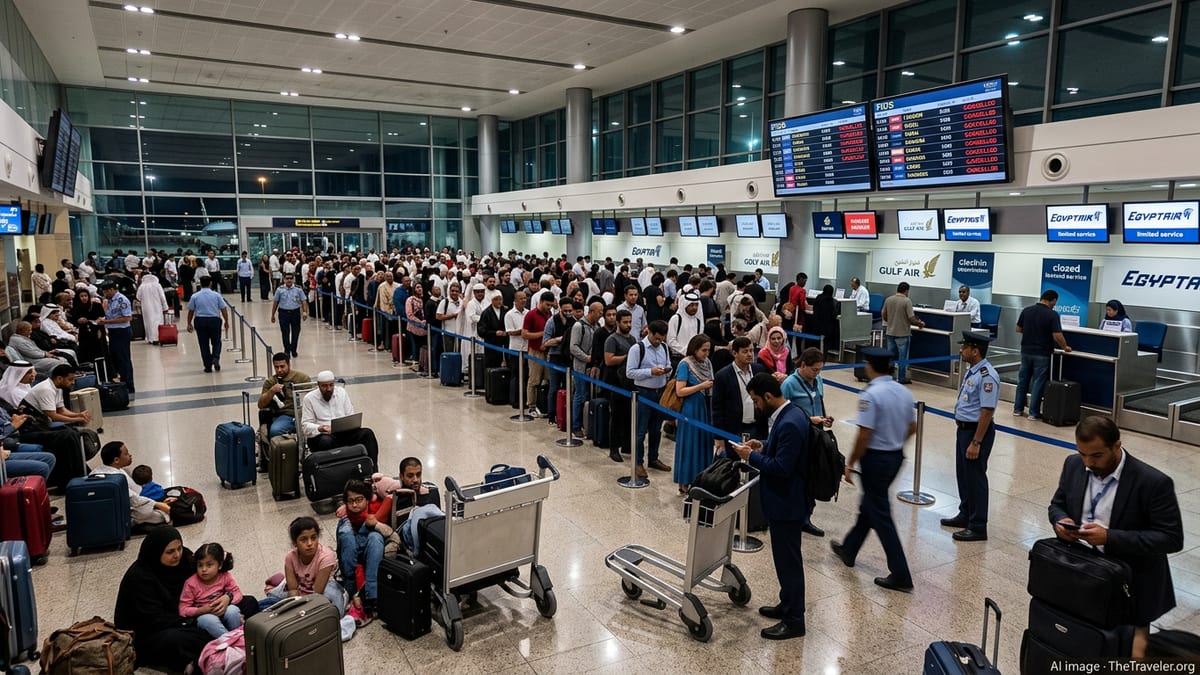
Network Disruptions Across Five Major Gateways
Travel industry monitoring and regional aviation reports indicate that at least 85 flights were delayed and 23 cancelled across Jeddah, Riyadh, Dubai, Cairo and Istanbul over recent days, with the greatest concentration of disruption on routes linking Saudi Arabia to nearby regional hubs. The affected services primarily involved Saudia and its low cost competitors flynas and flyadeal, along with a smaller number of Qatar Airways operations transiting through the Gulf.
Jeddah and Riyadh, Saudi Arabia’s busiest gateways, experienced the heaviest strain. Flight tracking snapshots show repeated schedule slippages on high frequency domestic services between the two cities, as well as on international sectors to Cairo and Istanbul. Similar patterns emerged at Dubai and Cairo, where banks of regional flights arrived significantly behind schedule, creating missed connections for onward passengers.
According to published coverage focused on Middle East aviation performance, the latest disruption builds on a broader pattern of operational volatility seen since late April, when regional hubs recorded hundreds of delays in a single day. That earlier wave affected large full service carriers and low cost airlines alike and has left many travelers wary of tight connections in and out of Gulf and Red Sea airports.
While today’s figures are smaller in scale than the April peak, travel data platforms and passenger accounts suggest that the clustering of delays around a few key hubs significantly magnified the impact, stranding travelers overnight and forcing last minute itinerary changes.
Impact on Saudia, flynas, flyadeal and Qatar Airways
Saudia, the Saudi national carrier, appears to have borne the largest share of the latest disruptions, reflecting its dense network from Jeddah and Riyadh to Cairo, Istanbul and beyond. Operational histories for several Saudia rotations on these routes show extended ground times and arrival delays, particularly on services connecting Jeddah with Cairo and Istanbul, as well as on the trunk route between Jeddah and Riyadh.
Low cost affiliates flynas and flyadeal, which operate many of the same city pairs at high frequency, were also affected. Tracking data for narrow body aircraft in their fleets reveals multiple recent flights between Jeddah, Riyadh, Cairo and Istanbul operating well behind schedule, with some rotations returning late into already congested evening banks. In a few cases, the delays appear to have cascaded across the day, leading to cancellations of late night departures as aircraft and crews fell out of position.
Qatar Airways, which relies on Saudi feeder traffic into its Doha hub, has also been drawn into the turbulence. Passenger discussions and itinerary adjustments shared on public forums indicate that some travelers holding Qatar Airways tickets have built in contingency routings via Jeddah or Riyadh, only to face schedule changes or outright cancellations on the Saudi domestic or regional sectors that were meant to connect with Qatar’s long haul flights.
The combined effect for travelers has been a patchwork of disrupted journeys, with some forced to backtrack through alternative regional hubs or to accept extended layovers as airlines work through rescheduled rotations and aircraft availability constraints.
Stranded Passengers and Missed Connections
Accounts posted by travelers on public forums over the past several weeks describe passengers left overnight in Jeddah and Riyadh after short notice cancellations on both domestic and regional services. Many of these reports reference flights to or from Cairo, Dubai and Istanbul, suggesting that the current pattern of disruption is particularly acute on high demand routes used by religious pilgrims, migrant workers and leisure travelers.
Some passengers recount a chain of schedule changes, with an initial delay followed by repeated rebooking and, in some cases, an eventual cancellation once they had already arrived at a transit point in Saudi Arabia. Others describe difficulty obtaining clear information on revised departure times, or uncertainty about whether later flights would operate, prompting them to purchase costly alternative tickets via other carriers and hubs such as Doha or Istanbul.
Publicly available airline policy documents note that in cases of extended delay or cancellation, options may include rebooking, meal vouchers or overnight accommodation, particularly when disruptions are linked to operational issues rather than extraordinary circumstances. However, recent anecdotal reports suggest that implementation on the ground has varied significantly depending on the carrier, airport and time of day.
The mismatch between official policies and individual experiences has intensified frustration among affected travelers, especially those undertaking long itineraries with multiple connections who depend on tight coordination between regional and long haul flights.
Operational and Regional Factors Behind the Chaos
Aviation analysts and regional travel coverage point to several overlapping factors behind the current wave of delays and cancellations. High seasonal demand on Saudi routes, particularly around religious travel and peak leisure periods, has compressed airline schedules and reduced the margin for recovery when earlier flights run late. This is especially visible on core sectors such as Jeddah to Riyadh and Jeddah or Riyadh to Cairo and Istanbul, where fleets operate intense daily rotations.
Reports also highlight continuing knock on effects from earlier disruptions across Middle Eastern airspace and airports, including congestion at key hubs and intermittent weather or security related constraints that force temporary rerouting or ground holds. Even when an individual flight experiences only a modest delay, the resulting displacement of aircraft and crews can ripple across subsequent departures, generating uneven performance across a carrier’s network.
Low cost operators such as flynas and flyadeal typically run tighter turnarounds and higher daily utilization than traditional full service airlines. While this model supports competitive fares, it leaves little buffer when operational issues arise. The sequence of delays seen on some of their aircraft operating between Jeddah, Riyadh, Cairo and Istanbul appears consistent with this dynamic, where early morning or midday disruption sets the stage for evening cancellations.
For Qatar Airways, whose network is centered on timed banks of connections in Doha, even modest delays on feeder flights from Saudi Arabia, Egypt or the United Arab Emirates can cause missed long haul departures, leading to rebookings that further strain capacity on later services.
What Travelers Can Do as Disruptions Continue
With regional operations still under pressure, travel experts advising through public channels are encouraging passengers booked on Saudia, flynas, flyadeal or Qatar Airways itineraries touching Jeddah, Riyadh, Dubai, Cairo or Istanbul to monitor their flights closely in the 24 hours before departure. Airline apps and airport departure boards, combined with third party flight tracking tools, can provide early indications of schedule slippage or equipment changes.
Travel guidance shared by consumer groups suggests building in longer connection windows at Middle Eastern hubs during this period, particularly when linking a regional flight to a long haul service to Europe, Asia or North America. Where possible, travelers are also urged to familiarize themselves with each carrier’s disruption policy and to retain receipts for any out of pocket expenses incurred as a result of delays or cancellations.
Some passenger advocates recommend considering travel insurance products that explicitly cover missed connections and extended delays, especially for complex itineraries involving multiple airlines. Others advise booking through a reputable travel agency that can assist in real time with rerouting options if a key sector is cancelled at short notice.
While there is no clear indication yet of when operational performance across the affected carriers and hubs will normalize, the recent pattern suggests that travelers planning to transit Jeddah, Riyadh, Dubai, Cairo or Istanbul in the coming weeks should plan conservatively, remain flexible and be prepared for last minute changes to their journey.