


More news on this day
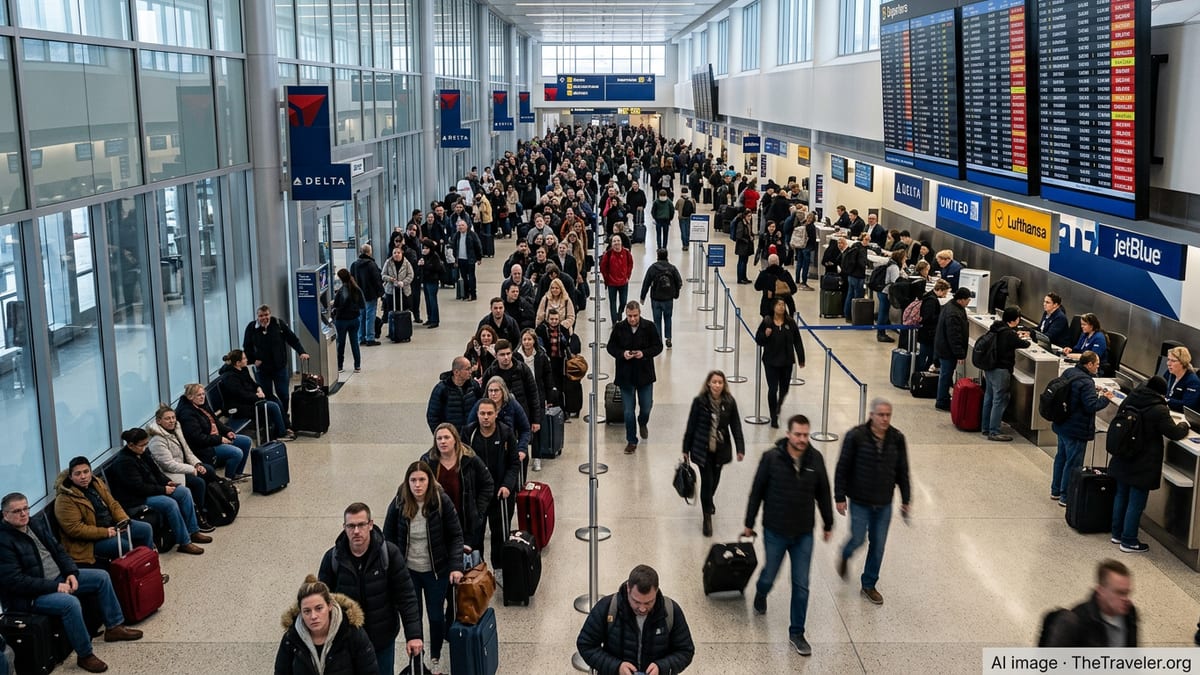
Record Memorial Day travel across the United States is colliding with severe weather, packed highways and strained airline operations, leaving many holiday travelers facing long delays on roads and at airports.
Get the latest news straight to your inbox!
Record Numbers Hit the Road and Skies
Travel volumes for Memorial Day 2026 are reaching historic highs, according to widely cited projections. Recent forecasts based on AAA data indicate that roughly 45 million people are traveling at least 50 miles from home over the long weekend, with more than 39 million of them driving. Publicly available analysis of travel spending suggests this continues a post‑pandemic trend of year‑over‑year growth, even as the cost of gas and airfare remains elevated.
Gasoline prices are hovering well above levels seen a year ago in many parts of the country, yet reports note that demand for leisure trips is proving resilient. Transportation analysts point to accumulated vacation time, pent‑up demand for family visits and the symbolic start of summer as key forces overriding cost concerns. As a result, both interstates and airport terminals have been crowded since late last week.
Air travel is also surging. Several airport authorities and transportation agencies around major hubs have warned that passenger counts over the Memorial Day period could match or exceed prior records. Travel security throughput patterns from recent holiday weekends show that the Friday ahead of Memorial Day and the Monday return are consistently among the busiest days of the year for passenger screening.
This combination of record demand and tight capacity has set the stage for widespread congestion and schedule disruptions, particularly as storms sweep through key travel corridors.
Storms and Tight Schedules Snarl Flights
In the air, the run‑up to the holiday has already been marked by thousands of delays. Aviation disruption trackers and airline performance dashboards show that more than 5,700 flights were delayed nationwide on the eve of the long weekend as storms crossed major regions and air‑traffic managers imposed flow restrictions to keep operations safe.
Thunderstorms along the East Coast and in parts of the South and Midwest have led to temporary ground stops and reroutes at several large hubs. When weather reduces runway and airspace capacity at airports such as Atlanta, Dallas and the New York area, delays can quickly cascade across the network. Analysts who follow federal transportation statistics note that cancellation and delay rates during early 2026 have been running ahead of comparable periods last year, leaving airlines with little margin when severe weather hits.
Airlines entered the holiday with schedules that were already dense, in part to capture strong seasonal demand. Industry research published this spring highlighted how tightly timed turnarounds, full flights and limited spare aircraft can amplify the impact of even brief disruptions. When one leg is delayed by storms, crews and planes often arrive late for subsequent segments, extending delays into the evening.
Consumer forums and social media posts over the past several days describe passengers experiencing multi‑hour waits on the tarmac and at gates, with some opting to rebook for early‑morning departures in hopes of avoiding further disruption. Publicly shared airline advisories have encouraged travelers to monitor their flight status closely and allow extra time at the airport.
Highway Congestion Peaks Around Major Cities
On the ground, traffic is heaviest on key interstate corridors feeding coastal destinations, lake regions and national parks. State transportation departments in Texas, Georgia, Washington and Michigan have released congestion forecasts showing peak volumes on outbound routes Thursday and Friday afternoons and on return routes Monday, particularly between midday and early evening.
Traffic analytics from firms that work with AAA indicate that travel times on some urban segments can jump by 40 percent or more during peak windows. In Metro Detroit, for example, modeling shared publicly ahead of the weekend highlighted likely bottlenecks on I‑75 and I‑94, especially through ongoing construction zones. In Kansas City, forecasts singled out stretches of I‑70 where long‑running bridge work has closed lanes and is expected to intensify backups when holiday traffic merges with regular commuter flows.
Along parts of the West Coast, including the busy I‑5 corridor between cities in Washington state, state transportation agencies have posted color‑coded charts projecting when lanes are expected to reach capacity. Red bands on those charts, signifying heavy congestion, cluster around midday and late‑afternoon periods as vacationers, freight haulers and local traffic converge.
While conditions vary by region, the overall pattern remains consistent: relatively lighter traffic during early morning hours and Saturday, followed by renewed slowdowns Sunday evening in some areas and a broad surge in volumes on Memorial Day itself as travelers head home.
Regional Variations Add to an Uneven Picture
Despite the national surge, local experiences are not uniform. In Virginia, for example, AAA‑based projections cited in regional coverage suggested a modest dip in Memorial Day travel compared with last year, which some analysts attribute to higher fuel prices and shifting vacation patterns. In parts of New England and the Southeast coast, scattered reports from local observers over the weekend described lighter‑than‑expected traffic at certain times, potentially influenced by unsettled weather that discouraged day trips.
Urban areas with intensive construction programs are seeing sharper slowdowns. Drivers in fast‑growing metros face lane closures and work zones that compress traffic into fewer lanes just as volumes spike. Transportation officials in several states have urged drivers to slow down in those zones, citing a recent rise in work‑zone crashes and near‑misses, even as they attempt to suspend some nonessential closures for the holiday.
Airports also show significant regional variation. Facilities in gateway cities such as New York are preparing for millions of passengers across the holiday period, according to operational bulletins and local transportation updates. Smaller regional airports, while busy, may see more manageable flows, though they can still be vulnerable to knock‑on delays when connecting flights from major hubs run late.
These regional differences mean that while national statistics point to record travel, individual travelers may encounter anything from gridlock to unexpectedly smooth sailing, depending on timing, route and local conditions.
Travelers Adapt as Summer Season Opens
As disruptions mounted in the days leading into Memorial Day, travelers have been adjusting plans in real time. Publicly shared advice from travel analysts and transportation agencies continues to emphasize classic strategies: traveling early in the day, avoiding the busiest midday and late‑afternoon windows, and building generous buffers into connections and return trips.
For drivers, guidance circulating ahead of the weekend recommended departing before late‑morning on peak outbound days or waiting until evening, and shifting return drives away from Monday afternoon if possible. Some highway agencies highlighted Sunday as the comparatively lightest day on many corridors, barring major crashes or weather‑related incidents.
For those flying, data‑driven tips based on historical delay patterns stress the value of morning departures, nonstop itineraries when available, and flexible plans that can accommodate rolling schedule changes. Airlines have encouraged the use of mobile apps for rebooking and notifications, reflecting lessons learned from prior holiday periods with high disruption levels.
With the unofficial start of summer now underway, transportation forecasters expect robust travel to continue into June and July. The performance of the system over Memorial Day, from flight punctuality to highway safety statistics, is likely to guide how carriers, agencies and travelers prepare for the next wave of seasonal getaways.