


More news on this day
Hundreds of flights across Asia have been cancelled or delayed as Super Typhoon Bavi and wider operational strains disrupt schedules from Taiwan and South Korea to Hong Kong, the Philippines and Russia, leaving travelers facing rolling timetable changes and airport congestion.
Get the latest news straight to your inbox!
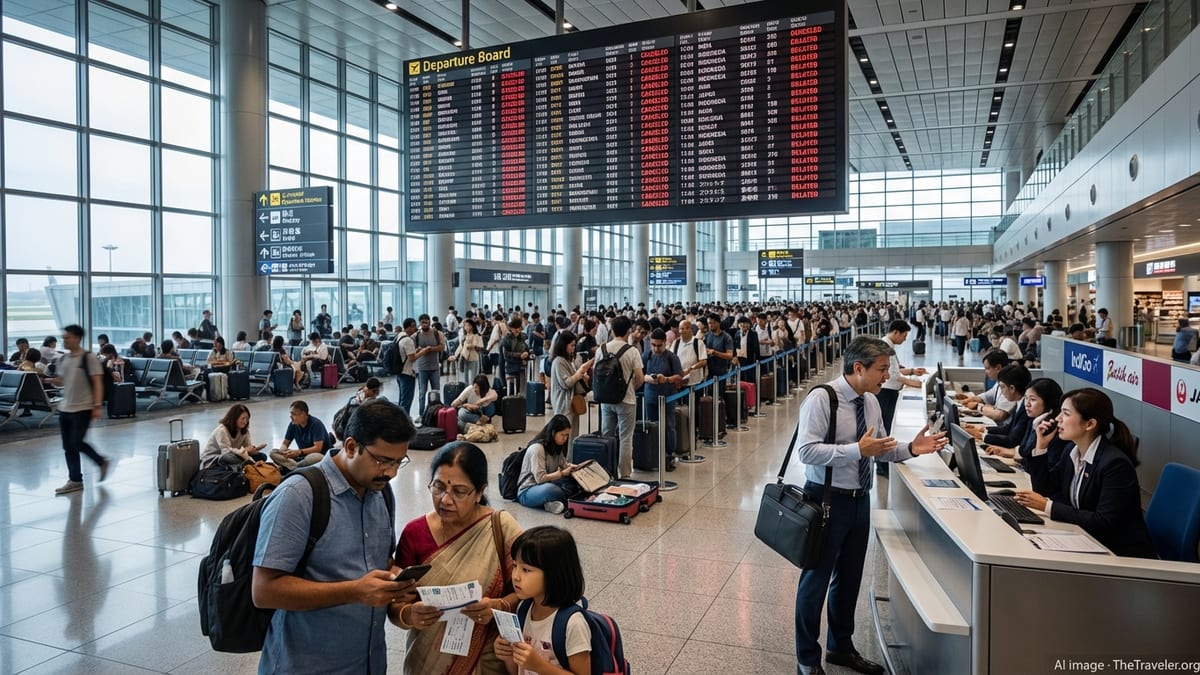
Storm-Battered Taiwan Becomes Epicenter of Regional Disruption
Publicly available information shows that Taiwan has become one of the hardest hit points in the region as Super Typhoon Bavi closes in on the island. Taoyuan International Airport, the main international gateway for Taipei, is suspending all services by domestic carriers on July 11, with local media reports indicating that national airlines have cancelled their entire day’s schedules in anticipation of severe winds and heavy rain.
Flight notices and airport statements compiled in Taiwanese news coverage indicate that China Airlines, EVA Air, Starlux Airlines and Tigerair Taiwan have either halted or sharply reduced operations over the peak of the storm window. Several outlets report that flights operated by national airlines from Friday evening through early Sunday morning are being cancelled or heavily reshaped, concentrating the bulk of disruptions into a roughly 34-hour period when conditions are expected to be worst.
The suspension of national carrier operations at Taoyuan is rippling outward to connecting hubs across Asia and beyond. Services linking Taipei with major cities including Seoul, Hong Kong, Manila and multiple Japanese destinations have been cancelled or retimed, contributing to a wider tally of at least 709 cancellations and more than 10,000 delays across the region as carriers adjust aircraft rotations and crew schedules.
Travel forums and airline advisories reviewed on Friday show passengers bound for or transiting through Taipei being urged to rebook or delay travel where possible. With affected flights often part of long-haul itineraries to North America and Europe, disruptions at Taoyuan are creating knock-on effects far beyond East Asia.
Seoul and Hong Kong Struggle With Knock-On Cancellations
In South Korea, information published by local aviation trackers and airport departure boards indicates a marked rise in cancellations and delays on services to and from Taiwan and Japan, as carriers preemptively cut frequencies that would otherwise route through the projected path of Bavi. Jeju Air and other Korean low-cost airlines have adjusted selected Northeast Asia routes, while major foreign carriers have trimmed or retimed Seoul flights that connect with Taipei.
Hong Kong has also seen mounting disruption. A recent check by regional media found dozens of flights cancelled and additional services delayed at Hong Kong International Airport as Bavi’s outer bands affected traffic flows and airlines restructured their networks. Cancellations have included services operated by Cathay Pacific, HK Express, Hong Kong Airlines, Greater Bay Airlines and EVA Air, particularly on short-haul routes to Taiwan and nearby Japanese islands.
Flexible ticket policies announced on airline websites allow many passengers traveling between Hong Kong and Taiwan this weekend to change dates or routes without penalty. However, publicly available flight-status data suggests that real-time conditions remain fluid, as carriers continue to adjust operations in response to changing forecasts and airport capacity constraints.
The combined effect in Seoul and Hong Kong, two of Asia’s busiest hubs, has been a sharp increase in regional delays. Even flights not directly in the storm’s path are experiencing extended ground times as air traffic management systems re-sequence departures and arrivals to accommodate diversions, slot shortages and weather-related congestion on key air corridors.
Philippines and Russia Face Secondary Impacts
Further south, travelers in the Philippines are encountering their own wave of disruptions as services into the typhoon-affected zone are curtailed. Monitoring of Manila’s departure boards and published airline notices shows multiple cancellations and retimings on flights linking the Philippine capital with Taipei, Hong Kong and selected Northeast Asian cities. Low-cost and full-service carriers alike have either suspended sectors or reduced frequencies in anticipation of poor onward connectivity.
Manila’s role as a major transfer point for Southeast Asian travelers heading to North Asia means that cancellations there quickly echo through the network. When flights into Taiwan or Hong Kong are scrubbed, connecting passengers from cities such as Cebu, Davao and regional island destinations often face missed onward links or forced overnight stays, adding to the regional disruption count.
Russia is also feeling the effects, though in a different way. While current published schedules show far fewer direct links between Russian airports and Taiwan than in past years, services between Moscow and East Asian hubs such as Seoul and Hong Kong are contending with reroutes, extended flight times and schedule changes as carriers navigate both weather systems and existing geopolitical constraints. These adjustments are contributing to broader delay statistics across the region, even where outright cancellations are less frequent.
Industry data and historical patterns indicate that during major weather events, long-haul flights are often prioritized for completion, sometimes at the cost of short-haul legs being cancelled to free up aircraft and crew. This dynamic appears to be at play in the way connections between Russia and East Asia are being managed, with some shorter regional sectors dropped so that intercontinental services can still operate, albeit with delays.
Major Asian Carriers Under Pressure as Networks Buckle
The latest disruptions are testing the operational resilience of several of Asia’s best-known airlines. Public data from flight-tracking services, airline advisories and regional aviation reports point to Air China, Cathay Pacific, EVA Air, Jeju Air and others implementing rolling adjustments across their networks as they respond to Bavi and a tight global aircraft and crew market.
Air China’s recent pattern of selective international cancellations, documented in consumer reports and traveler accounts, has left some passengers concerned about last-minute changes when weather or operational constraints arise. The current episode is adding an additional layer of uncertainty for itineraries touching Taipei, Seoul or Hong Kong, particularly where aircraft are scheduled for rapid turnarounds between multiple regional sectors.
EVA Air, which operates a dense network from Taipei to Asia, North America and Europe, is heavily exposed to any shutdown at its home hub. Publicly available information shows that the carrier, along with other Taiwan-based airlines, has significantly reduced flying over the peak storm window, leading to cascading schedule changes on connecting routes. Travelers connecting through Taipei on EVA services to or from cities such as Manila, Hong Kong, Seoul and various North American gateways are among those most affected.
Jeju Air and other Korean low-cost carriers, meanwhile, are contending with both demand fluctuations and the immediate weather threat. Route data compiled by aviation analysts indicates that adjustments on leisure-heavy routes linking Korea with Japan, Taiwan and Southeast Asia have intensified as airlines seek to balance safety, regulatory constraints and commercial considerations.
Regional Totals Highlight Ongoing Vulnerability of Asian Air Travel
Aggregated figures from airport operations data, airline advisories and independent flight-tracking platforms indicate that at least 709 flights have been cancelled and more than 10,449 delayed across affected Asian markets in the current disruption cycle. These totals encompass not only Bavi-related weather impacts but also secondary effects such as aircraft repositioning, crew duty-time limits and constraints in already busy airspace.
The numbers underscore how quickly local weather events can scale into region-wide disruptions in an interconnected aviation system. With key hubs such as Taipei, Seoul, Hong Kong and Manila all linked by dense short-haul networks, a shutdown at one airport can reverberate through dozens of routes within hours, complicating recovery efforts and stretching airline resources.
Industry assessments published by international aviation bodies in recent months suggest that Asia’s air travel recovery has brought traffic back near or above pre-pandemic levels, but infrastructure, staffing and fleet capacity have not always kept pace. This mismatch leaves airlines and airports more vulnerable when major shocks occur, whether from extreme weather, geopolitical tensions or technical outages.
For travelers, the current wave of cancellations and delays is a reminder of the importance of monitoring flight status closely and building flexibility into itineraries, particularly during typhoon season in the Western Pacific. With forecasts indicating that extreme weather events may become more frequent and severe, periods of sudden, large-scale disruption like the one now gripping parts of Asia may become a more regular feature of the regional travel landscape.