


More news on this day
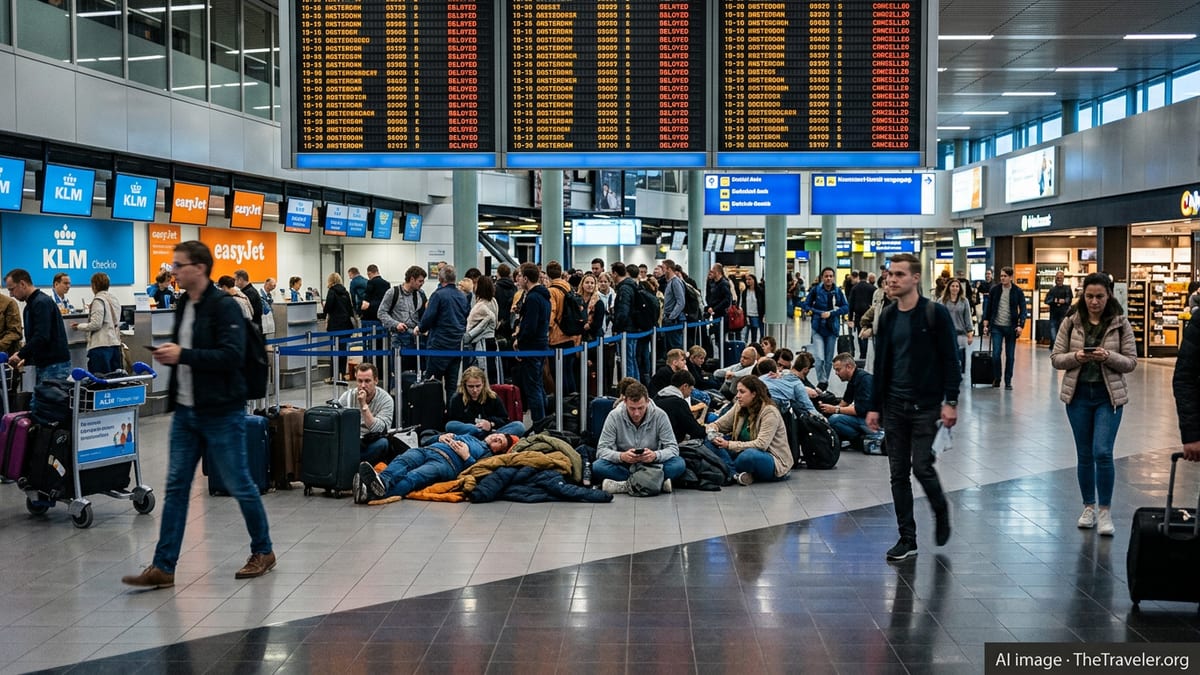
Hundreds of passengers were left stranded at Amsterdam Schiphol Airport today after a fresh wave of cancellations by KLM, Air France, Delta Air Lines, easyJet and other carriers wiped more than 30 key flights from departure boards, disrupting links to major cities including London, Paris, Madrid, Barcelona, Los Angeles, Houston and Washington.
Get the latest news straight to your inbox!
Wave of Cancellations Hits Key European and U.S. Routes
Published coverage from aviation and travel outlets indicates that Schiphol’s latest disruption has centered on a cluster of short and long haul services that together form core links in the transatlantic and intra European network. Flights to London Heathrow, London City and other UK airports, as well as Paris Charles de Gaulle, Madrid and Barcelona, were among those removed from schedules with limited advance notice.
Reports describe multiple KLM departures within Europe being withdrawn alongside partner and codeshare services operated by Air France and Delta Air Lines on routes to the United States. Services bound for Los Angeles, Houston and Washington were particularly affected, reducing capacity on corridors that are already busy in early summer and leaving many travelers with no same day alternatives.
Low cost and leisure carriers, including easyJet, also appear on cancellation lists, cutting additional options to popular Mediterranean and city break destinations. The combined effect has been to concentrate demand on the remaining flights out of Amsterdam, driving up fares and sharply reducing the availability of rebooking options for stranded passengers.
The disruption comes against a backdrop of repeated operational strains at Schiphol in recent months, where bouts of bad weather, staffing challenges and broader European air traffic congestion have periodically forced airlines to trim schedules or consolidate services. Industry observers note that when multiple carriers adjust timetables simultaneously, the impact on hub connectivity is magnified.
Stranded Passengers Face Long Queues and Limited Rebooking Options
Passengers traveling through Schiphol have reported crowded departure halls, long lines at customer service desks and seating areas filled with travelers waiting for updates. With more than 30 flights canceled and others delayed, many customers saw onward connections fall apart mid journey, particularly those relying on Amsterdam as a transfer point between European and North American destinations.
Publicly available accounts indicate that queues for airline help desks and general information counters stretched for hours as travelers attempted to secure hotel rooms, meal vouchers or seats on the next available flights. At peak times, screens showed multiple services to the same destinations marked as canceled, reducing the likelihood of straightforward rebooking on later departures.
For long haul passengers due to continue from Amsterdam to cities such as Los Angeles, Houston and Washington, the situation has been especially difficult. In several cases highlighted in travel coverage, the only viable alternatives involved indirect routings via other hubs such as Paris or London, many of which were themselves operating with tight capacity and limited spare seats.
Families with children, elderly travelers and those with fixed cruise departures or tour start dates were among the most vulnerable to the knock on effects. Some passengers opted to leave the airport to seek accommodation in Amsterdam when it became clear that no replacement flights would be available until at least the following day.
Operational Pressures and Network Knock On Effects
While precise causes vary by carrier and individual service, analysis of recent disruption patterns at Schiphol and other major European hubs points to a combination of factors that can quickly cascade into widespread cancellations. Weather related constraints, crew and ground handling shortages, and limits on air traffic control capacity have all resulted in trimmed schedules in recent months.
Travel industry reports show that when hub airlines such as KLM and partner carriers remove a block of flights to recover schedules or ease pressure on ground operations, the decision often targets shorter European sectors first. These flights normally act as feeders into long haul departures, so their cancellation can leave transiting passengers stranded in Amsterdam or at their origin airport while the long haul service operates with fewer connecting customers.
Once initial flights are canceled, knock on delays tend to spread through the network, particularly during busy morning and evening banks. Aircraft and crew may no longer be in the right place for subsequent rotations, forcing airlines to make further late adjustments. This effect is amplified during the summer peak when spare aircraft and crews are in short supply and many flights are already close to full.
The Schiphol situation has also fed into wider European operations. Disruptions in Amsterdam can trigger missed connections and capacity shortages at partner hubs in Paris, London and other cities as passengers are rerouted. Coverage of recent events in Spain and France shows that delays and cancellations in one major hub can quickly ripple into neighboring markets, as airlines juggle limited resources and try to protect their most critical routes.
Passenger Rights and What Affected Travelers Can Do
Consumer guidance from passenger rights organizations emphasizes that travelers whose flights are canceled or significantly delayed at European airports may be entitled to assistance and, in many circumstances, financial compensation. Under European regulations, airlines are generally required to offer a choice between rebooking at the earliest opportunity, rebooking at a later convenient date, or a refund of the unused portion of the ticket.
When passengers are stranded overnight, publicly available information explains that carriers are typically expected to provide meals, refreshments, and hotel accommodation along with transport between the airport and the place of lodging. However, implementation can vary, particularly during large scale disruption when hotel rooms near major hubs may sell out quickly and customer service teams are under heavy pressure.
Travel experts advise affected passengers to document all expenses related to the disruption, including food, transport and accommodation, and to retain boarding passes and cancellation notices. This documentation can support later claims made directly to the airline or via specialist compensation services. Travelers are also encouraged to monitor official airline apps and the Schiphol departures and arrivals information for real time updates to avoid unnecessary trips to the airport.
Those with onward non refundable arrangements, such as separately booked connecting flights, rail tickets or accommodation, may wish to contact providers proactively to explain the situation and request flexibility. While such providers are not legally bound by aviation regulations, some will allow date changes or partial credits when customers can show they were affected by large scale airline disruption.
Tips for Future Travel Through Busy European Hubs
The latest wave of cancellations at Schiphol adds to a growing body of evidence that travelers transiting major European hub airports should build additional resilience into their itineraries, particularly during periods of peak demand or unsettled weather. Industry commentators often recommend allowing longer minimum connection times than the bare minimum suggested by booking engines, especially when combining short haul feeder flights with long haul departures.
Booking through a single ticket and carrier group can make it easier to secure assistance when things go wrong, as airlines are more likely to take responsibility for the entire journey. Passengers with critical time sensitive plans are also encouraged to consider earlier departures or even traveling a day in advance, reducing the risk that a late cancellation will cause them to miss cruises, tours or major events.
Carrying essential items, medication and a change of clothes in hand luggage can provide a measure of comfort if checked bags are delayed or if an unplanned overnight stay becomes necessary. Many travel advisors also suggest keeping digital copies of travel insurance policies, booking confirmations and identity documents readily accessible, as these can speed up claims and rebooking processes.
As airlines and airports continue to grapple with capacity constraints and intermittent disruptions, experts widely agree that flexibility is becoming a key asset for international travelers. Monitoring conditions at major hubs such as Amsterdam, Paris and London before departure, and having a backup plan in mind, can help reduce stress when unexpected cancellations leave aircraft grounded and passengers waiting for their next opportunity to depart.