


More news on this day
Residents in parts of Bucyrus, Ohio, were asked to leave their homes on July 6 after a freight train derailed in Crawford County, prompting concerns over a possible hydrochloric acid leak and the risk of an explosion.
Get the latest news straight to your inbox!
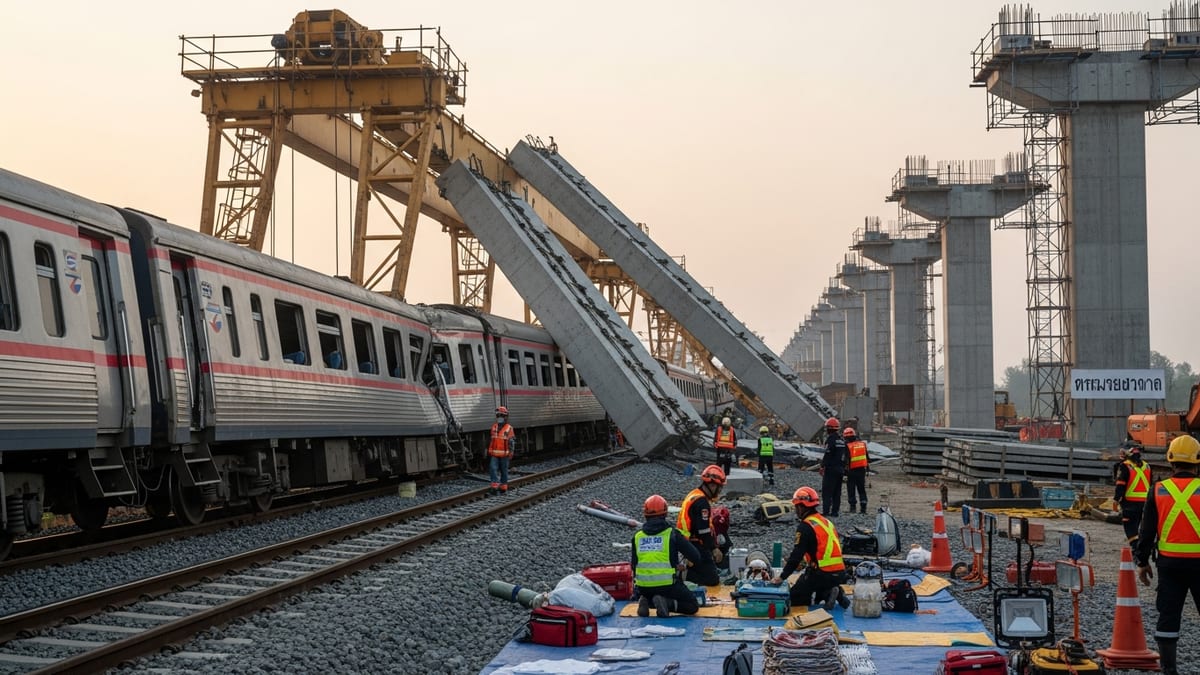
Evacuation order follows derailment near Bucyrus rail crossing
Initial reports indicate that the derailment occurred near the intersection of Whetstone Street and Auto Avenue in Bucyrus, a small city in Crawford County in north central Ohio. A freight train traveling through the area left the tracks, sending several cars off the rail line and triggering a rapid emergency response.
According to published coverage, residents within roughly one third of a mile of the derailment site were instructed to evacuate as a precaution. The request applied to homes and businesses closest to the scene, where a cluster of freight lines runs through mixed residential and light industrial blocks.
Images from local media show emergency vehicles positioned around the intersection and rail cars scattered near the crossing. Rail traffic through the area was brought to a halt while crews assessed the condition of the train, the track and nearby utilities.
Publicly available information suggests that the incident occurred in the early hours of Monday, July 6, with the evacuation guidance following shortly afterward as responders evaluated potential chemical hazards.
Concerns over possible hydrochloric acid leak and explosion risk
Reports from local outlets indicate that at least one tanker car on the derailed train was believed to be carrying hydrochloric acid, a corrosive industrial chemical used in manufacturing, metal processing and a variety of other applications. Early assessments raised concerns that the tank might be leaking.
Hydrochloric acid can release irritating vapors that pose health risks at higher concentrations, particularly to people with respiratory conditions. In confined or low-lying areas, a significant leak can require rapid evacuation to limit exposure.
Coverage of the incident notes that responders also identified a potential risk of explosion associated with the derailed tanker car. While hydrochloric acid itself is not typically explosive, fears often stem from the possibility of chemical reactions with other materials on site or pressure issues inside damaged tanks that could lead to a violent release.
Emergency management guidelines for hazardous materials incidents generally call for conservative action when there is uncertainty about the integrity of a chemical tanker. That approach appears to have guided the decision to ask nearby residents to leave the area until the situation could be stabilized.
Emergency crews work to stabilize site and assess hazards
Local news coverage describes a substantial response from fire, police and specialized hazardous materials teams. Crews focused on securing the scene, monitoring air quality and examining the derailed cars for signs of active leakage.
Railroad hazardous materials specialists typically coordinate closely with local responders in these situations, providing information about cargo, tank design and standard procedures for handling different chemicals. Public information released so far indicates that teams on site were working to verify whether any hydrochloric acid had escaped and to prevent additional movement of the damaged cars.
Traffic in the surrounding neighborhood was rerouted while the assessment continued, limiting access to the derailment area to response personnel. Residents were urged to avoid the immediate vicinity, both to reduce the risk of exposure and to keep roads clear for emergency vehicles.
As of the latest available reports, no injuries had been publicly reported in connection with the derailment. Updates on the status of the suspected leak and the condition of the tanker car are expected as inspections progress and cleanup planning advances.
Derailment renews focus on rail safety and hazardous cargo
The Crawford County incident joins a series of recent train derailments across the United States that have raised questions about the movement of hazardous materials through populated areas. In several recent cases, such as derailments in Pennsylvania and the Midwest, concerns about chemical leaks have led to temporary shelter-in-place orders or evacuations even when major releases were ultimately not confirmed.
Publicly available policy discussions show that federal regulators and state rail safety boards have been examining issues such as track maintenance, train length, inspection practices and the design of tank cars used to transport dangerous goods. Communities located along busy freight corridors have become increasingly aware of the risks associated with chemical cargo, especially in the wake of high-profile incidents involving toxic releases.
Local hazard mitigation plans for counties like Crawford often identify rail corridors as potential sources of large-scale emergencies, particularly where tracks run close to homes, schools or industrial facilities. These planning documents typically call for evacuation mapping, communication strategies and joint training between rail operators and first responders to improve readiness for derailments involving hazardous materials.
The Bucyrus derailment is likely to feed into those ongoing debates, as residents and local officials examine how effectively warnings were issued, how quickly information about the train’s cargo was shared and what additional steps might reduce risk in the future.
Community disruption and next steps for residents
The evacuation order upended daily routines for residents in the affected zone, many of whom were asked to leave with little notice while the situation was still being evaluated. Some people reportedly moved in with friends or family elsewhere in Bucyrus or in neighboring parts of Crawford County while waiting for clearance to return.
Short-term displacements of this kind can create challenges for households, from caring for pets and vulnerable family members to managing work obligations and transportation. Businesses near the derailment site also faced uncertainty, with access restricted and operations paused until emergency crews determined that it was safe to reopen the area.
Published coverage indicates that local agencies planned to provide updates through public alerts and media briefings as testing continued at the scene. Residents were encouraged to monitor trusted local news outlets and official channels for information about when evacuation guidance might be lifted and what health or safety recommendations would apply once they return.
In the longer term, the incident may spur renewed interest in community-level preparedness, including understanding evacuation routes, assembling basic emergency kits and staying informed about the types of industrial and transportation risks present in Crawford County. For many residents, the derailment is a reminder that major transportation corridors bring both economic benefits and potential hazards that require ongoing attention.