


More news on this day
Residents in parts of Bucyrus, Ohio, were urged to leave their homes on July 6 after a freight train derailed in Crawford County, triggering concerns about a potential hydrochloric acid leak and the risk of an explosion from a damaged tanker car.
Get the latest news straight to your inbox!
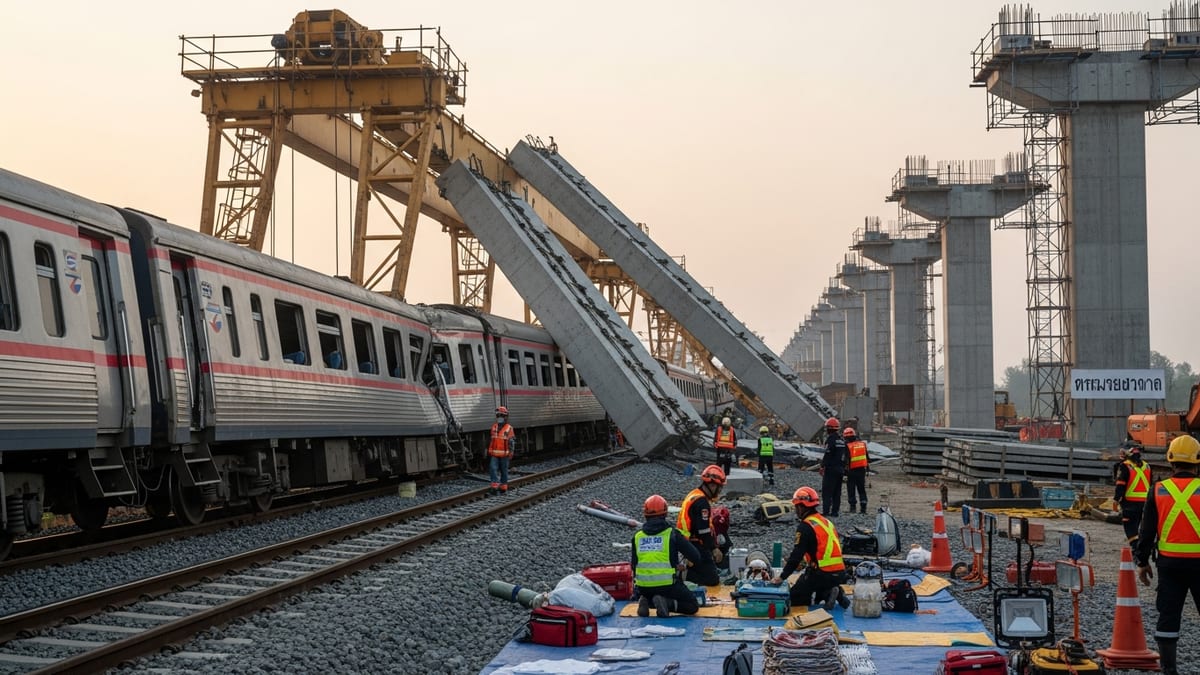
Derailment Near Residential Area Prompts Urgent Response
Published coverage indicates that the derailment occurred near the intersection of Whetstone Street and Auto Avenue in Bucyrus, a small city in north-central Ohio’s Crawford County. Images from the scene show multiple railcars off the tracks close to homes and local businesses, raising immediate concern about the proximity of hazardous cargo to populated areas.
Initial reports describe a section of a freight train leaving the rails with at least one tanker car among the derailed equipment. Early information from local public safety updates indicated that the tanker may be carrying hydrochloric acid, a corrosive chemical widely used in industry and capable of releasing dangerous fumes if compromised.
Rail traffic through Bucyrus includes mixed freight consists that commonly carry both general goods and specialized chemical products. Planning documents for Crawford County have previously highlighted the presence of hazardous materials along regional rail corridors and the potential need for rapid evacuations if a derailment were to occur near residential neighborhoods.
The derailment occurred during daytime hours, when traffic and activity in the area are typically higher, complicating efforts to quickly seal off streets and establish a safe perimeter while responders assessed the risk.
Evacuation Zone Established Around Suspected Leak
According to local news coverage, residents within roughly one third of a mile of the derailment site were instructed to evacuate as a precaution. The guidance focused on households closest to the damaged tanker car, where any leak or ignition could have the most immediate impact.
Reports indicate that emergency personnel advised people in the zone to leave the area promptly and avoid returning until the scene could be stabilized. Those outside the evacuation boundary were asked to steer clear of the site and keep roadways open for responding vehicles and heavy equipment brought in to support the operation.
Hydrochloric acid can form a toxic, low-lying vapor cloud if released in significant quantities. Risk assessments used by emergency planners often recommend conservative evacuation distances around potential releases, especially when the scale of a leak is not yet clear and weather conditions such as wind and humidity may change quickly.
Residents in Bucyrus have become part of a broader national pattern, as communities in several states have recently faced sudden evacuation or shelter-in-place instructions following freight train incidents involving hazardous or potentially hazardous cargo.
Concerns Over Possible Explosion and Chemical Exposure
Public updates from the scene referenced a specific concern that pressure or damage to the tanker car could trigger an explosion, intensifying the hazard beyond a contained spill. The combination of corrosive material and the possibility of ignition led responders to establish a cautious buffer around the rail line.
Hydrochloric acid itself is not generally considered highly flammable, but it can react with other substances, and tanker cars involved in a derailment may be exposed to heat, sparks, or other chemicals transported in adjacent cars. The uncertainty in the immediate aftermath of such incidents often leads to decisions that prioritize distance and dispersal of people over uninterrupted daily routines.
Nearby communities in Ohio are already sensitive to rail-related chemical risks after previous high-profile derailments in the wider region. Hazard mitigation plans for counties across the state cite scenarios in which a single damaged tank car can require large-scale evacuations, temporary closures of major roads, and extended environmental monitoring.
For Bucyrus residents, the evolving situation has raised questions about long-term protective measures, including air-quality surveillance, potential soil or water testing, and how quickly rail service and normal traffic patterns can safely resume once the site is cleared.
Emergency Response and Rail Safety Under Renewed Scrutiny
Publicly available information shows that multiple fire, police, and emergency management agencies converged on the Bucyrus derailment, working alongside hazardous materials specialists to determine whether the suspected leak was ongoing and to evaluate structural damage to the tanker car. Rail company representatives were also expected to be involved in recovery operations and assessment of the line.
Across the United States, recent derailments involving hazardous materials or potential chemical releases have kept rail safety in the national spotlight. Investigative reports and safety reviews in other states have drawn attention to tank car design, train length, speed, track conditions, and placement of hazardous cars within long consists.
In Crawford County, local planning documents already identify rail incidents as a key risk factor due to the combination of freight traffic and nearby residential areas. The Bucyrus derailment is likely to feed into future discussions about evacuation planning, community notification systems, and whether additional physical barriers or routing changes are needed in locations where tracks run close to homes and businesses.
Transportation analysts note that while most freight trains move without incident, the consequences of a single derailment involving chemical cargo can be far-reaching, affecting public health, local economies, and confidence in the safety of essential supply chains.
Community Impact and Next Steps
As residents temporarily displaced by the Bucyrus evacuation wait for clearance to return, attention is turning to both immediate and longer-term impacts. For those inside the evacuation zone, access to homes, pets, and personal belongings has been interrupted, and local businesses near the tracks face unexpected closures at the start of the workweek.
Public information shared so far indicates that emergency crews are focused on stabilizing the site, confirming the condition of the tanker, and preventing any chemical release from spreading beyond the immediate area. Once the rail line is secured, environmental specialists are expected to evaluate whether additional remediation is necessary and whether follow-up monitoring will be required.
Communities throughout Crawford County and across Ohio are closely watching developments in Bucyrus as another reminder of the intersection between rail infrastructure and daily life. The incident is likely to feature in future discussions at the local and state level about rail safety practices, hazardous-materials routing, and the resources needed to keep evacuation procedures and public communication plans up to date.
For travelers and residents alike, the Bucyrus derailment underscores how quickly transportation disruptions and chemical concerns can unfold, even in small cities where trains are a familiar daily presence but the potential risks associated with their cargo often remain out of sight.