


More news on this day
Hundreds of passengers were left stranded on July 5, 2026, as Paris Charles de Gaulle/Roissy airport saw at least 38 flight suspensions and 42 delays, disrupting services by Air France, HOP!, Aer Lingus, United, Brussels Airlines, Emirates and several other carriers across key routes linking Ireland, Belgium, the United States, Tunisia, Japan and Côte d’Ivoire.
Get the latest news straight to your inbox!
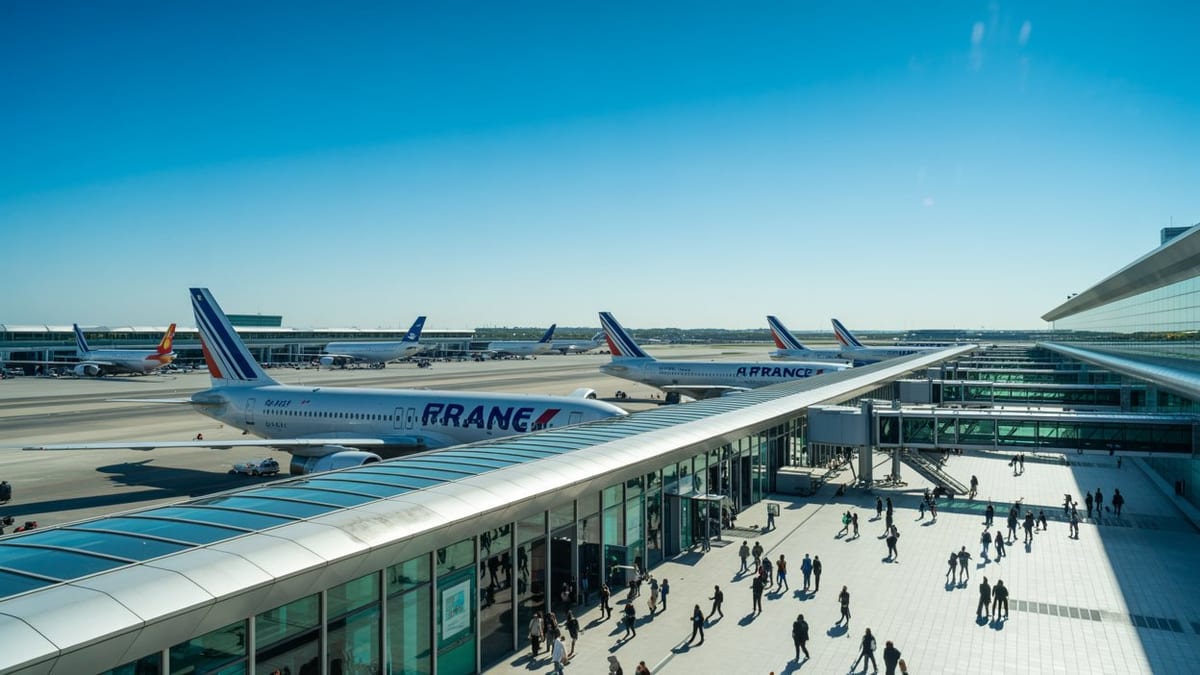
Major Disruptions Across Paris’s Primary Global Hub
According to recent operational data cited in industry coverage, the disruption at Charles de Gaulle on July 5 involved both short haul and long haul services, with cancellations and lengthy delays affecting departures and arrivals. As France’s busiest international airport and a central European transfer point, even a limited number of suspended flights created a ripple effect across the broader network.
Publicly available information shows that Air France and its regional arm HOP! were among the most heavily affected, reflecting the carrier’s dominant hub presence at Charles de Gaulle. Additional cancellations and delays were recorded for Aer Lingus flights connecting Ireland, Brussels Airlines services linking Belgium, and long haul operations by United Airlines and Emirates serving North American and Middle Eastern gateways.
Travel-industry reporting indicates that the 38 cancellations and 42 delays were concentrated on routes connecting Paris with Dublin, Brussels, multiple U.S. cities, Tunis, Abidjan and Japanese destinations. The combination of cross-continental and regional routes made it particularly difficult for passengers to find alternative connections, compounding the impact for those relying on tight transfer windows.
Operational data services tracking day-of-travel performance at Charles de Gaulle show elevated disruption levels compared with a typical early-July weekend, although not a full shutdown. Analysts note that this type of mixed pattern of scattered cancellations and delays can be more challenging for travelers than a complete suspension, because schedules remain in flux and information often changes quickly.
Hundreds Stranded as Cancellations Trigger Knock-on Effects
Travel and aviation outlets report that several hundred passengers were left stranded in terminals across the Roissy complex as cancellations mounted through the day. Families returning from holidays, long haul travelers crossing between continents, and business passengers on weekend connections all found themselves queuing for rebooking and accommodation assistance.
The suspension of dozens of services at a hub the size of Charles de Gaulle can disrupt aircraft rotations and crew positioning for hours or even days. When multiple airlines adjust their schedules simultaneously, available seats on remaining flights become scarce, especially on popular transatlantic and North African routes at the height of the summer travel season.
Observers note that passengers connecting through Paris from Ireland and Belgium were particularly vulnerable, as cancellations on feeder flights led to missed long haul departures to the United States, Japan and West Africa. In some cases, travelers who had already flown one leg of a journey found that their onward connection was either heavily delayed or no longer operating, forcing overnight stays in the airport area.
Travel forums and social media posts from July 5 describe dense crowds around airline service desks, with many customers attempting to secure rebooking on partner carriers or later departures. While some travelers were able to reroute via other European hubs, others reported waiting several hours for confirmed alternatives because of limited seat availability and the knock-on effects of earlier disruptions across the continent.
Airlines and Routes Most Affected by the Roissy Disruption
Industry summaries of the July 5 event suggest that the heaviest operational impact fell on Air France and HOP!, whose combined network at Charles de Gaulle spans domestic French, European and intercontinental routes. Suspensions on regional segments such as Ireland and Belgium links can quickly cascade into long haul connections, as missed inbound feeds reduce passenger loads and trigger schedule adjustments.
Reports indicate that Aer Lingus services between Dublin and Paris experienced both cancellations and extended delays, adding pressure for travelers attempting to connect onward to North America and beyond. Brussels Airlines flights on the Brussels to Paris corridor were also affected, interrupting one of the key short haul links feeding the French hub from neighboring Belgium.
On the long haul side, publicly available information points to disruption on selected United Airlines transatlantic flights, with itineraries involving Paris facing delays and equipment changes. Emirates operations between its Gulf hub and Paris also recorded schedule irregularities that contributed to the overall totals, affecting travelers heading to or from Asia, Africa and the South Pacific via the Middle East.
Travel-news analysis notes that routes linking Paris with Tunis and Abidjan were among those impacted, highlighting the vulnerability of North African and West African connections to disruption at major European hubs. Japan services also featured in the tally of delayed and suspended flights, underscoring the global reach of schedule problems originating at Charles de Gaulle.
What Travellers Need to Know Before Flying via Charles de Gaulle
Travel advisories published in the wake of the disruption stress that passengers scheduled to fly via Charles de Gaulle in the coming days should monitor their bookings closely. Airlines routinely adjust schedules following a day of concentrated cancellations and delays, and seat availability on popular routes can remain tight as carriers work through backlogs of rebooked customers.
Experts in passenger rights highlight that travelers affected by cancellations and long delays on European itineraries may be covered by EU air passenger protection rules, depending on the cause of the disruption and the specific routing. Under these regulations, qualifying passengers could be entitled to meals, hotel accommodation, rebooking assistance or financial compensation when services are significantly disrupted for reasons within an airline’s control.
Consumer advocates recommend that passengers retain boarding passes, booking confirmations and any written notices of delay or cancellation, as these documents are often required when submitting claims. It can also be helpful to document the actual arrival time at the final destination, since eligibility for certain forms of compensation is calculated based on the total arrival delay rather than departure timing alone.
Travel specialists note that, while events of the scale seen on July 5 at Charles de Gaulle remain relatively infrequent, the combination of high summer demand and tight airline schedules means that even modest disruptions can escalate quickly. For those planning to connect through major hubs, building longer layovers into itineraries and checking flight status regularly on the day of travel are common strategies to reduce the risk of missed connections and extended overnight stays.
Ongoing Concerns Over Network Resilience in a Busy Summer
The events at Charles de Gaulle on July 5 come amid a broader pattern of strain across the European aviation network this summer, as airports and airlines operate near capacity during peak travel weeks. Earlier in June, passenger-advocacy platforms documented heavy disruption at Paris-area airports and other major hubs, highlighting how quickly schedule reliability can deteriorate when weather, staffing, or technical constraints arise.
Aviation analysts point out that while individual days of disruption are not unusual, the recurrence of large-scale delays and cancellations across multiple hubs raises questions about overall network resilience. When airports like Charles de Gaulle experience simultaneous operational challenges, the impact is felt not just locally but on long haul routes linking Europe with North America, Africa and Asia.
For travelers, the latest Roissy disruption reinforces the importance of contingency planning. Industry observers suggest that passengers consider flexible tickets where possible, travel insurance that explicitly covers delays and cancellations, and digital tools that provide real-time status updates and rebooking options.
As airlines and airport operators work to stabilize schedules in the days following the July 5 turmoil, passengers connecting through Charles de Gaulle are likely to watch closely for signs of lingering knock-on effects. The episode has once again highlighted how central the Paris hub is to global air travel, and how quickly problems in one corner of the network can spread across multiple continents.