


More news on this day
Southern Cross Travel Insurance has partnered with insurtech provider Blink Parametric to roll out a real-time flight delay benefit for eligible policyholders in Australia and New Zealand, introducing what the company describes as an Australasian first in automated disruption support.
Get the latest news straight to your inbox!
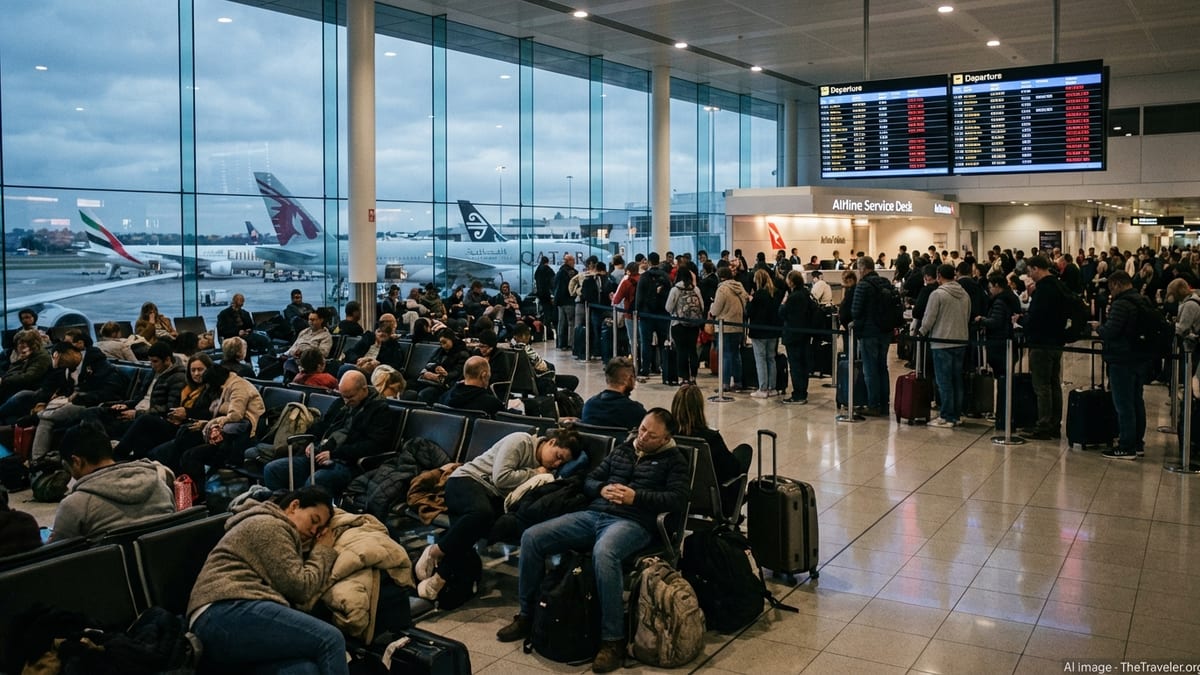
New real-time benefit targets growing delay frustrations
The new feature, branded TravelCare Delay Assist, applies to eligible Single Trip International Comprehensive policies purchased from 1 July 2026 and is designed to respond to flight disruption while customers are still in transit. Publicly available information indicates that Southern Cross Travel Insurance has positioned the service as an added layer of help, rather than a replacement for existing travel delay and additional expenses cover within its policies.
TravelCare Delay Assist was announced as carriers across the region continue to grapple with congested routes and tight schedules. Figures published by Southern Cross Travel Insurance for Australian customers show that from 2023 to 2025, more than 4,000 delay-related claims were lodged, with payouts exceeding 5 million Australian dollars. The insurer reported an average documented delay of 14.5 hours for those travellers, highlighting the scale of inconvenience that the new real-time feature is intended to address.
In New Zealand, publicly released data covering 2023 to April 2026 shows more than 11,000 delay-related claims and over 15 million New Zealand dollars paid. The company has framed the new benefit as a direct response to those travel “pain points,” describing customer accounts of long waits with children, sleeping at airports and losing the first night of pre-paid accommodation.
The rollout across both Australia and New Zealand places Southern Cross Travel Insurance among a small but growing group of brands globally that are experimenting with parametric-style solutions, where pre-agreed benefits are automatically triggered by specific events, such as a defined length of delay.
How TravelCare Delay Assist works for policyholders
According to product information on the insurer’s Australian and New Zealand sites, TravelCare Delay Assist relies on Blink Parametric’s real-time flight monitoring to detect when a registered departure is delayed by at least two hours within 24 hours of its scheduled time. When that threshold is met, eligible customers are contacted by email and text message, and the benefit is processed without the need for a separate claim under the delay assist feature.
For Australian policyholders on eligible International Comprehensive Single Trip policies, the benefit is described as a 40 Australian dollar digital voucher. The New Zealand version of the product states a 50 New Zealand dollar digital voucher for qualifying delays. These amounts are intended as small, practical contributions towards meals, refreshments or other minor expenses that arise while travellers wait for their flights.
To access the service, policyholders must register their flight details at least 24 hours before the scheduled departure. The flight then remains under active monitoring in the lead-up to departure. If no qualifying delay occurs, there is no change to the customer’s cover, and existing policy benefits for more significant disruption remain in place under the usual terms and conditions.
The insurer notes that the TravelCare Delay Assist benefit is separate from any larger claims related to missed connections, accommodation or transport costs, which continue to be assessed through standard claims channels. The automated voucher is instead presented as a low-friction, immediate support tool, intended to reduce the administrative burden on both travellers and the insurer for minor but common incidents.
Blink Parametric brings automation to travel insurance
The technology underpinning TravelCare Delay Assist is supplied by Blink Parametric, a specialist insurtech focused on real-time travel disruption solutions. Blink’s platform integrates with global flight data sources to track departures and arrivals, comparing live information against scheduled times to determine when pre-set conditions are met.
When those conditions are triggered, the system can automatically authorise benefits such as vouchers, lounge access or cash-equivalent payouts, depending on how an insurance partner has configured the product. In this case, Blink’s infrastructure powers the delay detection and notification process for Southern Cross Travel Insurance customers who have registered their flights under the eligible policies.
Parametric-style solutions such as this differ from traditional travel insurance in that they do not rely on manual submission of receipts and supporting documents for small claims. Instead, the occurrence of a measurable event, like a two-hour delay, is treated as sufficient proof that the traveller has incurred inconvenience and potential out-of-pocket expenses.
Industry analysts have noted that automated, event-triggered payouts are increasingly being used to handle high-frequency, low-severity travel incidents. This trend is viewed as a way to enhance customer experience, speed up assistance and reduce administrative costs for insurers, while giving travellers a clearer expectation of what they will receive when something goes wrong.
Australasian first amid rising competition in travel cover
Southern Cross Travel Insurance describes TravelCare Delay Assist as the first real-time flight delay benefit of its kind offered to retail travel insurance customers across both Australia and New Zealand. While some airlines and credit card issuers in other markets have trialled similar solutions, this move marks a notable development in the trans-Tasman insurance landscape.
The launch also comes at a time when travellers are paying closer attention to the detail of policy wordings, following several years of pandemic-related disruptions and mounting scrutiny of traditional claims processes. Public commentary on travel insurance in Australia and New Zealand has frequently highlighted confusion around what constitutes a covered delay, which documents are required, and how long it can take for benefits to be paid.
By contrast, the new delay assist benefit seeks to remove much of that ambiguity for a narrow class of minor incidents. Once a flight is registered and meets the delay threshold, the automated system determines eligibility and issues the voucher without further action from the traveller. The insurer continues to advise customers to review full policy documents for broader cover on cancellations, missed connections, medical events and other major disruptions.
Competitors in the market are yet to announce comparable real-time delay benefits across both Australia and New Zealand, but observers note that such innovations can quickly influence consumer expectations. If the service proves popular among Southern Cross Travel Insurance customers, similar offerings from other brands are likely to follow, potentially reshaping how small-scale travel inconveniences are managed.
What it means for Australian and New Zealand travellers
For travellers in Australia and New Zealand, the introduction of TravelCare Delay Assist represents a shift toward more immediate and digitally enabled support during a trip. The benefit is relatively modest in dollar terms, yet it may provide timely relief in situations where passengers face unexpected meal costs, additional transport around the airport or minor purchases to make long waits more bearable.
Travel advisers note that the automation of such benefits can also help reduce stress at the time of disruption. Rather than queuing at service desks or worrying about saving every receipt for a small claim, eligible policyholders who have registered their flights can receive a notification that assistance is on the way, often before they have left the departure gate.
The initiative also offers a glimpse of how travel insurance products across the region could evolve over the coming years. As real-time data and automation become more embedded in the industry, travellers may see further integration of parametric triggers, digital payouts and app-based support, complementing but not replacing traditional cover for large, complex claims.
For now, Southern Cross Travel Insurance is emphasising that customers should carefully check the eligibility criteria, registration requirements and policy wording associated with TravelCare Delay Assist. The benefit currently applies to specific international comprehensive single-trip products sold from July 2026, and does not extend to every policy in the insurer’s portfolio, reinforcing the importance of reviewing documentation before departure.